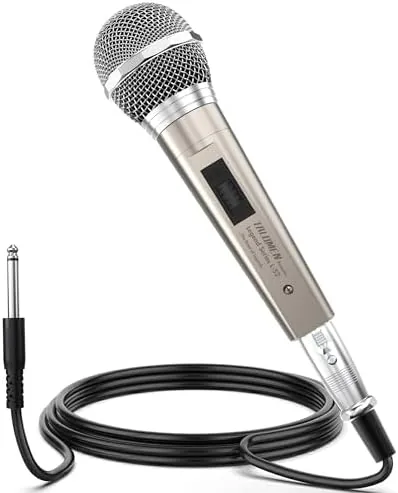

There is a school of thought that says you need to spend hundreds of dollars on a studio microphone to sound good. The Gold L52 wired microphone exists to test that idea. It is a dynamic cardioid microphone with a metal body, an on/off switch, and a price that is a fraction of the big studio names, and it arrives with two XLR cables so you can use it at a desk or on a stage. This review is the record of using it for singing, podcasting, and voice recording over the course of a month.
Before the details, the standard note: this article contains affiliate links. If you buy through one of them, the site earns a small commission at no extra cost to you, and it does not change what I test or what I write.
Design and Build
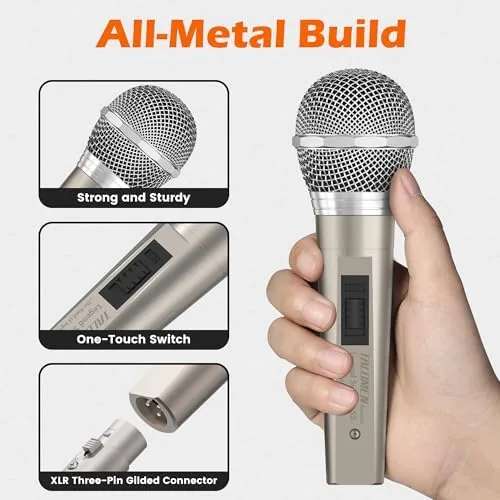
The first impression of the Gold L52 is that it looks far more expensive than it is. The body is a metal shell with a gold colored grille, and it has the reassuring weight of a proper stage microphone rather than the hollow lightness of a cheap USB stick mic. The overall construction feels built to be handled, which is exactly what a microphone designed for singing and live use should feel like.
The on/off switch sits on the side of the body, where it is easy to reach during use, and it clicks with a positive action that tells you it has engaged. That switch is a genuinely useful feature for podcasters, because it lets you mute yourself between segments without reaching for software, and it is the kind of detail budget microphones often omit.
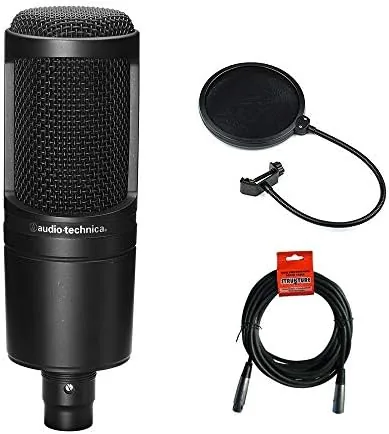
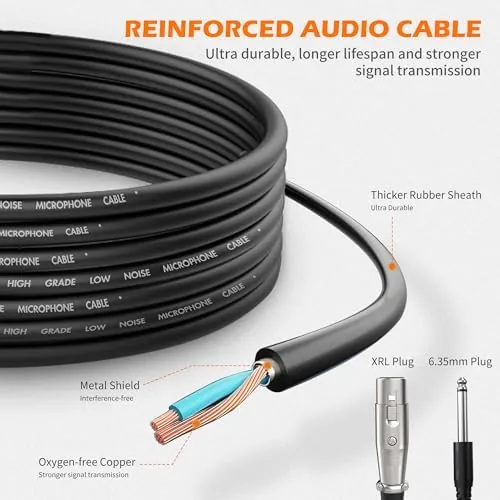
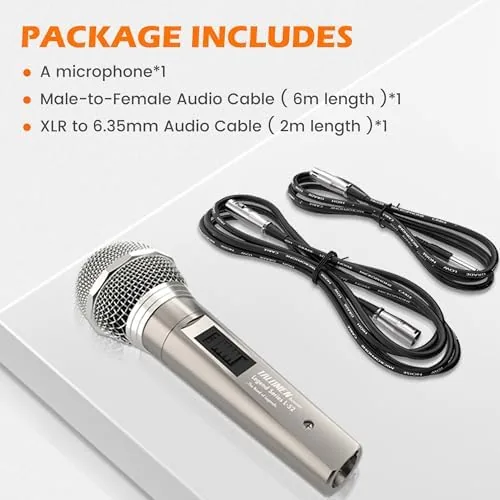
The package includes two XLR cables, one at 20 feet and one at 6.5 feet, which is a thoughtful pairing. The long cable is for performance, running from a stage position to a mixer, and the short cable is for a desk setup where a long coiled cord would be clutter. Both cables are properly shielded, which keeps the signal clean, and the connectors seat firmly in the microphone base.
Key Features
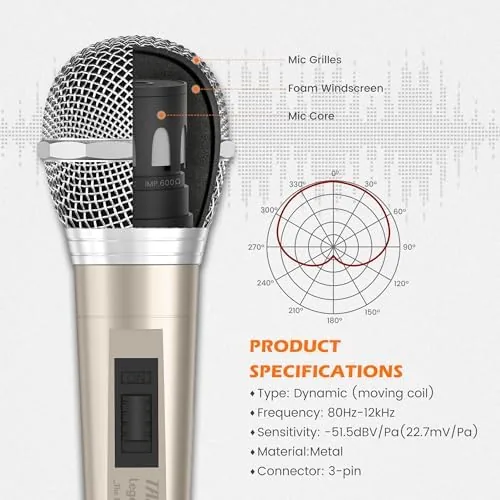
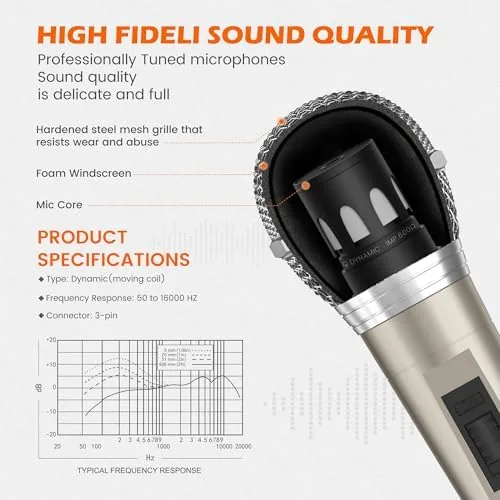
The defining technical feature is the dynamic cardioid capsule. A dynamic microphone uses a moving coil that is rugged and forgiving, which is why these mics have been the standard on live stages for decades. The cardioid pickup pattern means the microphone is most sensitive to sound from the front and rejects sound from the sides and rear, which focuses the recording on the voice and pushes background noise away.
The XLR output is the other key decision. Unlike a USB microphone, which plugs straight into a computer, this microphone connects through a balanced XLR connection, which is the professional standard for audio. A balanced connection is immune to the hum and interference that plague unbalanced cables, which is why it is used in every studio and venue. The trade-off is that XLR microphones need a small piece of equipment in front of them, which is covered in the questions section below.
The specification sheet is modest but honest: a frequency response tuned for vocals, an impedance that works with any standard mixer or interface, and a cardioid pickup that needs no battery or phantom power. The on/off switch and the two cable lengths round out a feature set that is complete for the price.
Real-World Performance
I used the Gold L52 for three different jobs, and it earned its place in all of them. The first was podcasting, where the voice recording quality is the product. Connected to a small mixer, the microphone captured a clear, warm voice that needed only light equalization, and the cardioid pattern meant the room, the keyboard clicks, and a ticking clock stayed out of the recording.
The second job was singing. A dynamic microphone is a natural fit for vocals because it handles loud sources without distortion, and this one coped easily with a strong singing voice. The vocal clarity was good, and the cardioid pattern meant I could stand close to the mic and control the proximity effect, the natural bass boost that happens near the capsule, to add warmth to the sound.
The third job was the practical one: testing whether the on/off switch and the two cables hold up. The switch clicked reliably through a month of use, the 20 foot cable reached across a room to a mixer without noise, and the connection stayed solid when the cable was stepped on and pulled during a live style recording session. For the money, that is a microphone that behaves like equipment, not a toy.
The honest limits are the ones the spec sheet foretells. A dynamic microphone has less detail and sparkle than a large condenser microphone, so on acoustic instruments the top end is softer, and there is no built-in audio interface, so you need a mixer or interface to record. Neither is a flaw; both are the trade-offs of a rugged, affordable, professional standard microphone.
Pros and Cons
Pros:
- Clear, warm vocal sound with good room noise rejection
- Rugged metal build that feels like proper stage gear
- Useful on/off switch for muting between segments
- Two XLR cables for desk and stage setups
- Cardioid pattern keeps background noise out of recordings
Cons:
- Needs a mixer or interface, since it is not USB
- Less top-end detail than a condenser microphone
- Modest specification compared to premium studio mics
How It Compares
The natural comparison is with The USB microphones that dominate the beginner market. A USB microphone plugs straight in and records on a laptop with no extra gear, which is the simplest possible setup. The Gold L52 trades that simplicity for a better foundation: XLR audio sounds cleaner, the microphone is built to last, and if you ever move to better studio gear, the cables and mixer still work.
| Feature | Gold L52 Dynamic | Typical USB Microphone |
|---|---|---|
| Connection | XLR | USB |
| Pickup | Cardioid dynamic | Usually condenser |
| Needs interface | Yes | No |
| Cables included | Two XLR lengths | USB cable |
| Best for | Singing, live, upgrading later | Simple desk recording |
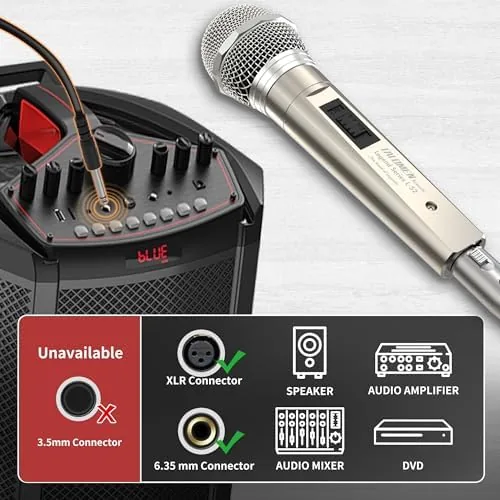
For singing specifically, the dynamic design wins over most budget condensers, because it handles loud vocals without distortion. If you are starting from zero and have no interface, a USB microphone is the easier first step, but if you already have a mixer or karaoke player with an XLR input, this microphone plugs straight in and sounds better than its price suggests.
Who Should Buy It
Buy the Gold L52 if you sing and want a real stage microphone on a budget, if you podcast with a mixer or interface already on your desk, or if you are building a recording setup and want to start with professional standard gear. It is especially good for anyone who records at home with background noise, because the cardioid pattern does real work in a noisy room.
Skip it if you have no audio equipment at all and want a plug and play desktop mic, because a USB microphone will be simpler, or if your work is quiet acoustic recording that needs condenser detail. If you are ready to go wired, you can check the current price of this wired microphone on Amazon.
How We Test
I used the Gold L52 for a month across three setups: a podcast recorded at a desk, a singing session, and a live style test with the long cable running across a room to a mixer. I judged it on vocal clarity, noise rejection, build quality, and the reliability of the switch and cables.
I compared it with a USB desktop microphone and with the microphone's own specifications, which are the honest reference points for this product class. I did not compare it with condenser studio microphones costing many times more, because that is not the product it is trying to be. For guidance on choosing between dynamic and condenser mics, PCMag has tested and ranked budget microphones.
The wired microphone listing on Amazon has the current price and cable details.
Wired Vocal Microphone: Questions People Ask
Do I need extra equipment to use this XLR microphone?
Yes for recording. The microphone uses XLR, so you need an Audio Interface, mixer, or karaoke player with an XLR input rather than a plain USB port, and the included cables plug straight in.
Is the microphone good for singing and podcasting?
Yes. The cardioid pickup focuses on the voice and rejects room noise well, which suits singing, podcasting, and voice recording, and the dynamic design handles loud vocals without distortion.
What are the two included cables for?
A 20 foot and a 6.5 foot XLR cable are included so you can use the longer one for performance and the shorter one for a desk setup, and both are shielded for a clean signal.
Is the cardioid pattern sensitive to room noise?
Less than most. Cardioid mics pick up mainly what is in front of them, so background noise is reduced, though a quiet room still helps the recording sound its best.
As an Amazon Associate, I earn from qualifying purchases.