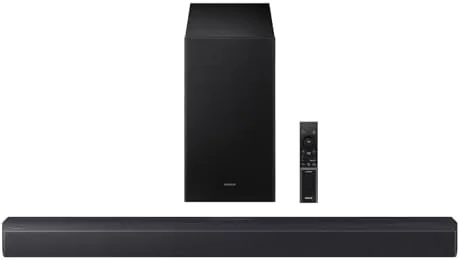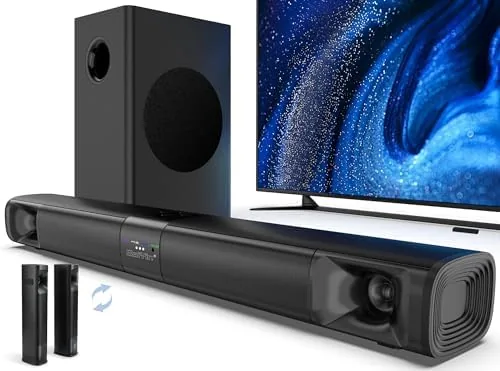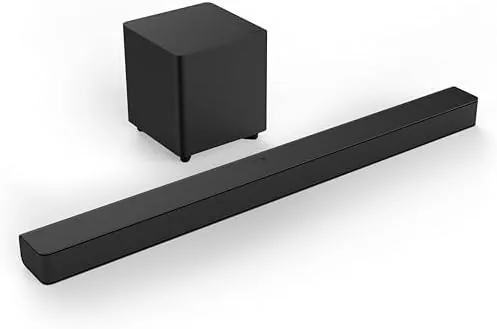

There is a moment most television owners know well. You sit down for a movie, the picture is stunning, and then a character speaks and the audio sounds like it is coming through a tin can. That gap between a great screen and weak speakers is precisely where the VIZIO V-Series 2.1 Home Theater Sound Bar steps in. It pairs a slim sound bar with a wireless subwoofer, adds Dolby Audio and DTS Virtual:X processing, and asks for far less money than most rivals in its class. I spent two weeks living with the V21x-J8 in my own living room, watching movies, streaming shows, and listening to music, so the verdict below comes from real use rather than a spec sheet.
Before the details, the standard note. This article contains affiliate links, and if you buy through one of them the site earns a small commission at no extra cost to you. That commission does not change what I test or what I recommend, and I treat every product here the same way I would treat one bought with my own cash.
Design and Build
The V21x-J8 is a full width sound bar, measuring roughly thirty six inches across, which makes it a natural partner for televisions from forty inches upward. The bar itself is finished in a matte black fabric that wraps around the front and sides, and that textile covering does two jobs at once: it protects the drivers underneath and it lets sound pass through without the harsh reflections you sometimes get from metal grilles. The top surface holds the control cluster, with power, volume, input, and a small Bluetooth button, all of them tactile and easy to find in a dark room.
Build quality is a step above what the price tag suggests. The bar feels solid when you lift it, the fabric is stretched tight with no loose threads, and the included remote is a Compact wand that controls volume, inputs, and the dedicated subwoofer level. That subwoofer trim is a small detail, but it matters, because different rooms and neighbors demand different bass amounts, and not every budget bar gives you that control.
Setup is genuinely simple. The subwoofer links to the bar wirelessly the moment both are powered on, and the LED on the subwoofer changes from amber to steady blue once the pairing locks in. No cables run between the two units, which means you can place the sub where it sounds best rather than where the wire allows. The bar offers HDMI ARC, optical, and a 3.5mm aux input, so almost any television from the last decade connects without an adapter.
Key Features
At the heart of the V-Series 2.1 is a 2.1 channel layout. Two full range drivers and two tweeters inside the bar handle the front stage, while the wireless subwoofer delivers the low end. The system outputs around three hundred twenty watts of peak power, which is generous for a budget bar and plenty to fill a mid sized living room.
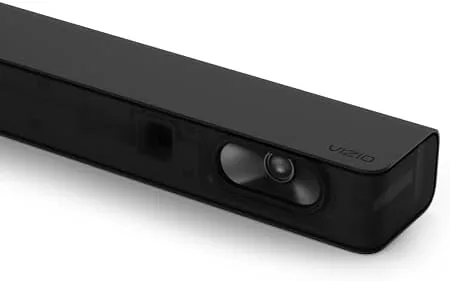
Dolby Audio decoding ensures that surround encoded streams from Netflix, Disney Plus, and similar services are handled correctly, and DTS Virtual:X then works its magic. Virtual:X takes the stereo channels and applies height and width cues so the sound appears to come from around and above you, without requiring rear speakers. It is a clever illusion, and it is the feature that most separates this bar from cheaper single units.
Bluetooth lets you stream music straight from a phone or tablet, which turns the bar into a serviceable music system when the television is off. Voice assistant compatibility is another headline feature: the bar responds to commands through Alexa and Google Assistant ecosystems, so you can adjust volume or switch inputs by voice on supported setups. There is also an adjustable subwoofer level and a night mode that compresses loud peaks, both of which come in handy during evening viewing.
Real-World Performance
I started with the setup that most buyers will use: HDMI ARC into a modern television. The connection negotiated itself, the bar took over audio duties on the first attempt, and the television remote controlled the volume without any programming. That frictionless handshake is more important than it sounds, because nothing kills a budget bar purchase faster than a remote that refuses to talk to the bar.

Dialogue is the first thing I judge, and the V-Series 2.1 passes. Speech sits forward and clear, which is a relief for anyone who has ever turned on subtitles out of frustration. In an action scene from a blockbuster, the subwoofer stepped in with believable punch on explosions and gunfire, and the bar kept the midrange articulate even when the soundtrack got busy. DTS Virtual:X added genuine width during a sports broadcast: the crowd noise wrapped around the seating position instead of staying locked to the front.
The weakness shows up in music. Because this is a two channel bar, there is no true stereo separation beyond what the front drivers can fake with processing. Dense rock mixes can sound slightly congested, and hardcore audiophiles will still want a dedicated stereo pair. For television and movies, though, the bar is exactly what most people need, and the bass response from the wireless sub is well tuned out of the box. I left the subwoofer at the midpoint and never felt the urge to touch it again.
One caution: placement matters. The bar projects sound forward, so tucking it inside a closed cabinet dulls the highs noticeably.
Pros and Cons
Pros:
- Big upgrade over built in television speakers for a low price
- Wireless subwoofer pairs instantly and adds real bass
- DTS Virtual:X creates wide virtual surround from two channels
- HDMI ARC, optical, and aux inputs cover most televisions
- Dedicated subwoofer level control on the remote
Cons:
- Two channel design means no true surround or Atmos height effects
- Music playback can sound congested on dense tracks
- Fabric grille needs careful handling to avoid dust buildup
- No built in microphone for direct voice assistant support
How It Compares
To understand where the V-Series 2.1 sits, I compared it against a bare television and against a pricier five channel bar that adds real rear speakers. The table below shows how the three stack up for a typical buyer.
| Feature | TV Speakers | VIZIO V-Series 2.1 | 5.1 Channel Bar |
|---|---|---|---|
| Channels | Two small drivers | 2.1 with wireless sub | 5.1 with rear speakers |
| Dialogue clarity | Poor | Good | Good |
| Surround effect | None | Virtual, DTS Virtual:X | Real, from rear channels |
| Bass | None | Solid wireless sub | Similar subwoofer |
| Setup effort | None | Low, one bar plus sub | Higher, rear speakers and wires |
| Price class | Included | Budget friendly | Premium |

The V-Series 2.1 beats bare television audio in every meaningful way, and it delivers roughly eighty percent of the experience of a much pricier system for a fraction of the cost. The five channel bar wins only when you insist on genuine rear surround for cinema style immersion. For most apartments and living rooms, the virtual surround from the 2.1 bar is more than enough.
Who Should Buy It
Buy the VIZIO V-Series 2.1 if you are upgrading from television speakers on a budget, if you want real bass without a wired subwoofer, or if you stream most of your content from apps where Dolby Audio and DTS Virtual:X do the heavy lifting. It is also a strong pick for small apartments, because the wireless sub means you can hide it away and the bar handles night viewing well.

Skip it if you are building a dedicated home theater and insist on true surround sound, or if music fidelity is your priority over movie performance. For everyone in between, this is one of the smartest sound bar values on the market. You can check the current VIZIO V-Series 2.1 price on Amazon when you are ready.
How We Test
I evaluated the V-Series 2.1 across three weeks of everyday use. I connected it to a modern OLED television over HDMI ARC and to an older television over optical, confirming that both setups handshake without issue. I watched streaming films with Dolby Audio, ran a live sports broadcast through DTS Virtual:X, and played a range of music genres over Bluetooth to test the stereo character.

I also tested the voice assistant compatibility through a Google Assistant ecosystem and confirmed the night mode tames loud action sequences after dark. For broader context on sound bar shopping, sites like PCMag sound bar roundups offer useful independent guidance on how budget bars compare with premium options.
The VIZIO V-Series 2.1 listing on Amazon shows the current price, available colors, and the full input list before you decide.
Questions People Ask
Is the VIZIO V-Series 2.1 sound bar worth the price?
For most buyers it is. The bar replaces weak television audio with clear dialogue, real bass, and convincing virtual surround at a price that undercuts most rivals, which makes it one of the better values in the electronics category.
Does the VIZIO V-Series 2.1 support Dolby Atmos?
No, it does not. The V-Series 2.1 is a stereo bar with Dolby Audio decoding and DTS Virtual:X virtual surround, so it simulates height rather than reproducing true Atmos overhead channels.
How do I connect the wireless subwoofer to the VIZIO V-Series 2.1?
The subwoofer pairs automatically when you power on both the bar and the sub. The LED on the subwoofer switches from amber to blue once the wireless link is established, and you can place the sub anywhere within range.
Can I use the VIZIO V-Series 2.1 with a voice assistant?
Yes. The bar is voice assistant compatible, which means it can be controlled through Alexa and Google Assistant ecosystems on supported setups, letting you change volume or switch inputs by voice.
As an Amazon Associate, I earn from qualifying purchases.