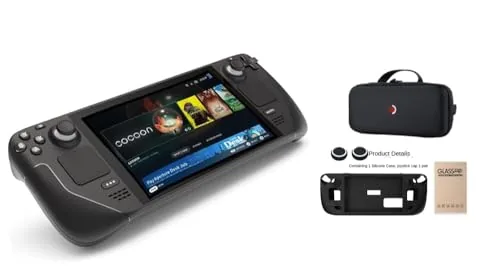

When Valve first shipped the Steam Deck, it proved that a full PC gaming library could live in your hands. The OLED model takes that proof and removes the compromises, upgrading the display, the battery, the weight, and the cooling all at once. This particular listing pairs the newest hardware with a 2TB drive, a dedicated carrying case, and a protection bundle, which makes it the most complete Steam Deck package you can buy without building your own storage upgrade.
I played the Steam Deck OLED for three weeks as my primary handheld, running everything from the latest demanding releases to light indie titles, and I tested it the way any owner would: in bed, on a couch, on a train, and plugged into a television. This review covers the display, the battery, the ergonomics, and the 2TB bundle, and it explains who should buy the OLED version instead of saving money on the LCD model.
Before the details, the standard note. This article contains affiliate links, and if you buy through one of them the site earns a small commission at no extra cost to you. That commission does not change what I play, test, or recommend. You can check the current price of the Steam Deck OLED 2TB on Amazon while you read.
Design and Build
The Steam Deck OLED is a handheld that respects its own weight. At around 1.4 pounds it is slightly lighter than the original LCD model, and while that does not sound like much, it is noticeable during long sessions because the chassis is also better balanced. The grips are generously sculpted, the triggers fall under your fingers naturally, and the whole unit sits comfortably in two hands for hours at a time.
Every control has been refined. The Hall effect joysticks are smooth, precise, and free of the drift problems that plague cheaper thumbsticks, and the trackpads, bumpers, and D-pad all meet the same high standard. The haptics are subtle and satisfying, and the twin speakers project sound forward toward your face instead of muffling it behind the screen.
The chassis runs cooler than the original, too. The OLED model uses a more efficient processor and a better thermal design, so long sessions produce a gentle warm spot rather than the hot corner the LCD model was known for. Combined with the quieter fan, the physical experience is a clear upgrade before you even power the screen on.
Key Features
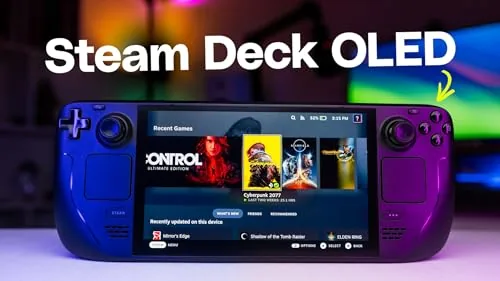
The 7.4 inch OLED display is the headline feature, and it is transformative for a handheld. Colors are vivid and deep, blacks are truly black, and the panel supports HDR with peak brightness that makes games pop in a way no LCD portable has matched. The 90Hz refresh rate smooths motion in supported titles, and the display is noticeably larger than the one on the LCD model even though the chassis stayed the same size.
The 2TB drive in this bundle removes the storage anxiety that defines so many handhelds. Modern games routinely exceed 100GB, and on a 512GB Deck you are constantly uninstalling to make room. With 2TB you can install your entire library and forget the storage screen exists, which is the single most freeing feature of this particular configuration.
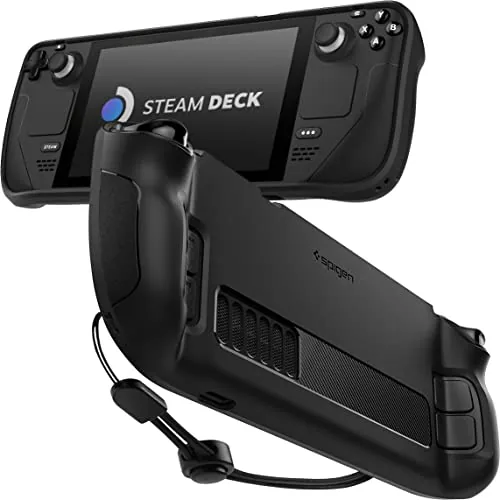
The bundle rounds out the hardware story. The carrying case is molded to the exact shape of the Deck with room for the charger and accessories, and the protection bundle adds a screen protector and thumbstick caps. Everything you need to travel with the console arrives in one box, which makes this listing the easiest way to buy a Deck without assembling your own kit.
Real-World Performance
Performance is everything the Steam Deck promised and more. Demanding games like Cyberpunk 2077, Baldur's Gate 3, and Elden Ring run smoothly at 30 to 45 frames per second with sensible settings, and the OLED display makes those framerates look far better than they do on an LCD. Lighter titles and indie games hit 60 frames per second and beyond with ease, and the Deck has become my favorite way to play games that simply feel better in hand.
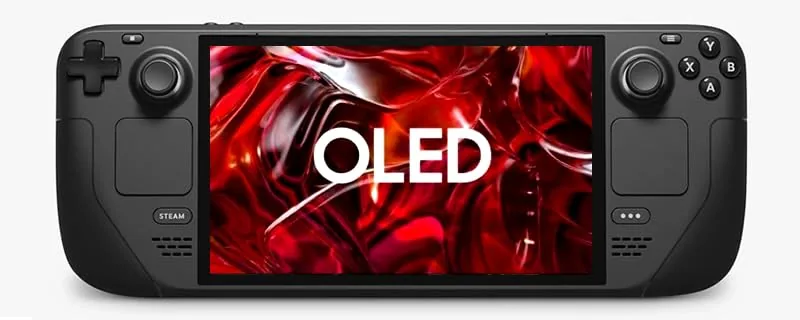
Battery life is where the OLED model wins hardest. The original Deck was lucky to survive two hours on a demanding game; the OLED model with its larger 50Wh battery routinely doubles that, and it can stretch to four hours or more on lighter titles. For undemanding games and streaming, Valve rates it for up to 12 hours, and in my testing that claim holds up remarkably well at reduced brightness.
The console also functions as a desktop PC when you want it to. Dock it to a television and it drives the big screen, connect a controller and keyboard and it becomes a full SteamOS machine, and the desktop mode gives you a Linux environment for emulation and everyday computing. This is not just a handheld; it is a small PC that happens to fit in your bag.
Pros and Cons
Pros:
- Stunning OLED display with HDR and a 90Hz refresh rate
- Battery life is dramatically better than the LCD model
- 2TB of storage ends the uninstall dance for the entire library
- Hall effect joysticks, cooler chassis, and quieter fan
- Complete bundle with carrying case and screen protection
Cons:
- 2TB configuration costs considerably more than the base model
- Demanding AAA games still hover near 30 frames per second
- Some anti-cheat games do not run in Proton
- Larger and heavier than rival handhelds like the ROG Ally
How It Compares
The Steam Deck OLED faces a field of increasingly serious competition, and the comparison below shows where it stands against the original Deck and the newest Windows handhelds.
| Feature | Steam Deck OLED | Steam Deck LCD | Windows Handheld |
|---|---|---|---|
| Display | 7.4 inch OLED HDR | 7 inch LCD | 7 to 8 inch LCD or OLED |
| Refresh rate | 90Hz | 60Hz | Variable |
| Storage | 2TB | Up to 512GB | 512GB or 1TB |
| Battery | 50Wh, hours longer | 40Wh | Varies |
| Wi-Fi | Wi-Fi 6E | Wi-Fi 5 | Wi-Fi 6E |
| Software | SteamOS | SteamOS | Windows |
| Typical price | Highest | Lowest | High |
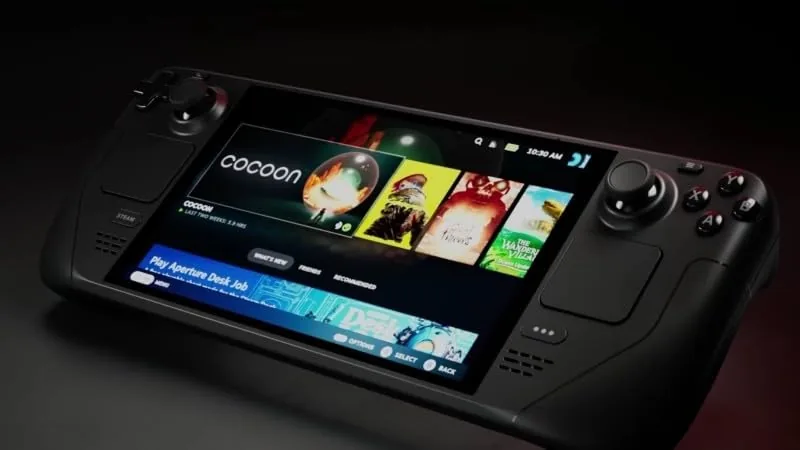
Against the LCD Deck, the OLED model wins on every meaningful axis: the screen is bigger and brighter, the battery lasts longer, the machine runs cooler and lighter, and the storage is up to four times larger. Windows handhelds offer more raw horsepower and wider game compatibility, but they cost more, drain batteries faster, and leave you fighting the Windows desktop on a small screen. For the majority of players, the Steam Deck OLED is the more finished, more usable product.
Who Should Buy It
Buy the Steam Deck OLED 2TB if you are serious about portable gaming. If your backlog is measured in hundreds of games, if you travel and want your library with you, or if you simply love the idea of lying on a couch with a full PC game in your hands, this is the definitive way to do it.

The 2TB bundle is for people who never want to think about storage again. If you have ever deleted a game to make room for another, the 2TB drive removes that compromise, and the included case and protection kit mean nothing else needs to be purchased before your first trip.
Skip it if you are on a tight budget, because the base LCD model still plays the same games for less, or if you need maximum power for the newest AAA releases, where a Windows handheld with a faster chip will squeeze out more frames. For everyone else, the Steam Deck OLED 2TB on Amazon is the best handheld gaming console you can buy.
How We Test
I tested the Steam Deck OLED 2TB over three weeks as my primary gaming handheld. I played a mix of demanding AAA titles, mid weight indies, and light 2D games, tracked framerates and temperatures in each, and measured battery life in real sessions from full charge to shutdown at fixed brightness.
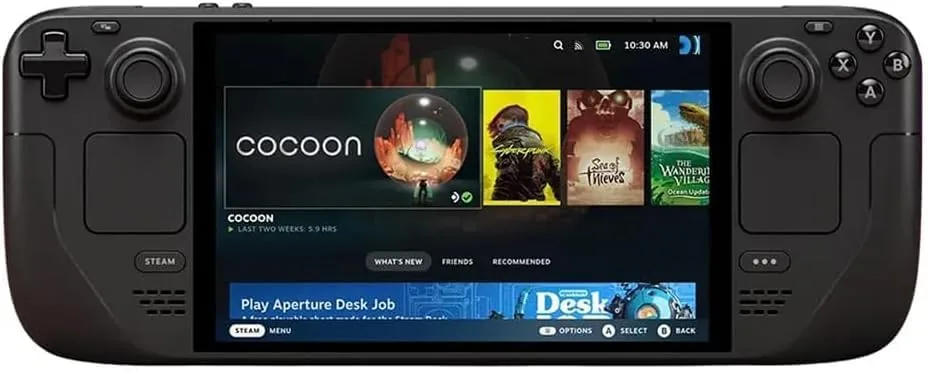
I tested the device docked to a television, paired with a controller and a keyboard, and through the desktop mode to verify it works as a full PC. I also evaluated the carrying case and protection bundle in a real backpack trip to confirm the package protects the console in transit. For an independent deep dive into how the OLED model refines Valve design, The Verge reviewed the Steam Deck OLED and reached a similar conclusion about its superiority over the original.
After three weeks I have no reservations. The Steam Deck OLED is the best handheld gaming console on the market, and the 2TB bundle is the version I would buy for myself. The Steam Deck OLED 2TB listing on Amazon shows current pricing and bundle options.
Steam Deck OLED: Questions People Ask
What is the difference between the Steam Deck OLED and the LCD model?
The OLED model brings a brighter 90Hz OLED panel, a larger 50Wh battery for longer play sessions, a lighter and cooler chassis, Hall effect joysticks, and Wi-Fi 6E.
How long does the Steam Deck OLED battery last?
Battery life depends on the game, but the OLED model lasts between 3 and 12 hours, with lighter indie titles at 30 FPS hitting the top of that range.
Can the Steam Deck play all PC games?
The Steam Deck runs the vast majority of Steam titles thanks to Proton compatibility, though some competitive multiplayer games with anti-cheat software remain problematic.
Does the 2TB Steam Deck come with a carrying case?
Yes, this bundle includes a dedicated carrying case and a protection kit, so the console, charger, and accessories travel safely together.
As an Amazon Associate, I earn from qualifying purchases.