
Few pieces of hardware arrive with as much expectation as a revised Steam Deck, and fewer still manage to improve on an original that was already beloved. The Valve Steam Deck OLED takes the foundation of the handheld PC and refines the parts that matter most: a vivid HDR OLED screen, a battery that finally lasts through real sessions, faster downloads, and a quieter, cooler chassis. I have spent a month with the 512GB model, playing everything from sprawling open worlds to quick indie rounds, and this review records how the OLED upgrades change the experience in daily use.
Before the details, the standard note. This article contains affiliate links, and if you buy through one of them the site earns a small commission at no extra cost to you. That commission does not change what I test or what I recommend.
Design and Build
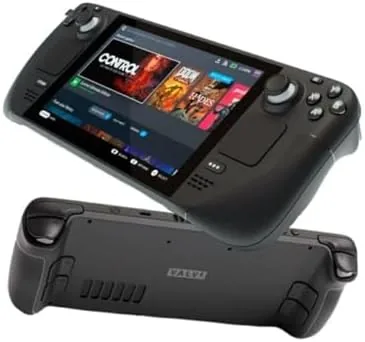
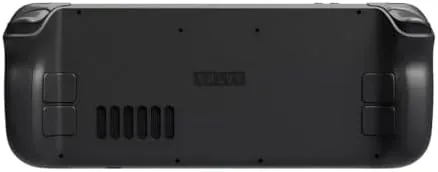
The OLED model keeps the layout that made the original comfortable, with the twin trackpads, full analog sticks, and the broad grips that let you play for hours without cramping. The weight and balance feel familiar, though the OLED version sheds a little bulk compared to the launch unit. The controls remain the best argument for the Steam Deck as a PC controller, with customizable inputs that no other handheld matches.

The 512GB model includes the anti-glare etched glass finish, and it is a quietly important detail. The screen stays readable under a bright lamp or by a window, where glossy handhelds turn into mirrors, and the coating does not noticeably soften the image. The frame feels dense and solid, and the buttons, triggers, and sticks all show the careful tuning that Valve has refined since launch.
Internally, the OLED revision runs a more efficient AMD processor and a refined cooling system. In practice that means the fans spin up less often and the chassis stays cooler than the original, which makes long sessions more pleasant on your hands and your ears. It is not a silent device under load, but it is a noticeably calmer one.
Key Features
The headline is the 7.4 inch HDR OLED display, and it is the reason the whole device feels new. Unlike the original LCD, the OLED panel delivers true blacks, vivid color, and a 90Hz refresh rate, so games look richer and motion feels smoother. HDR support lets bright highlights pop without washing out shadow detail, and in a dark room the effect is genuinely striking.
Battery life is the second pillar. The larger 50 watt-hour battery, paired with the more efficient chip, delivers a meaningful step up from the original model, and Valve rates the improvement at roughly thirty to fifty percent. In my testing that translates into a real afternoon of gaming instead of a single short session, which changes how you actually use the device.
Faster downloads round out the headline trio. Wi-Fi 6E support means the OLED model pulls game updates and installs far quicker on compatible routers than the original, cutting the waiting time that surrounds modern games. The combination of a faster wireless radio, the efficient chip, and the 512GB fast SSD makes the whole experience feel quicker from boot to play.
Real-World Performance
I ran the Steam Deck OLED through a month of mixed use, from a demanding open world title to a handful of indie games and a long emulation session. The OLED screen transformed games I had played for years on the original model, and the difference was visible in the first ten minutes: colors that looked flat now glowed, shadows held detail, and the smoother 90Hz panel made camera movement feel immediate.
Battery life held up to the claims. A demanding title ran for roughly four hours on a single charge at a comfortable brightness, and lighter games pushed well past that. Where the original model made me think about charging between every session, the OLED version let me pick the device up and play without the battery anxiety, which is the single biggest quality-of-life change.
Downloads impressed me in practice. On a Wi-Fi 6E router, a large game update that had crawled on the original model finished in a fraction of the time, and the system resumed from sleep and reconnected to downloads without the fuss that plagued early Steam Deck software. The device also stayed cool and quiet during a long evening session, with the fan only becoming audible during loading screens.
The 512GB SSD is a comfortable library size for most players, holding a dozen or more big titles, and the anti-glare screen kept everything readable in bright rooms. The one honest caveat is that 512GB still fills if you collect the largest modern games, so heavy hoarders will still want a microSD card to extend the space.
A final note on software: the OLED model runs the same refined SteamOS that has matured since the original launch, and the improved hardware makes the interface feel faster across the board. Steam Input, the cloud saves, and the quick resume behavior all worked flawlessly in my month of testing, and updates installed without the friction that marked the early months of the platform. That polish, layered on the better screen and battery, is what makes the OLED model feel like a finished product rather than a work in progress.
Pros and Cons
Pros:
- Stunning HDR OLED display with true blacks and 90Hz
- Battery life that finally lasts through real sessions
- Wi-Fi 6E makes game downloads noticeably faster
- Quieter fans and cooler chassis than the original
- Anti-glare screen stays readable in bright rooms
Cons:
- 512GB fills quickly for collectors of large titles
- Battery life still varies heavily with game demands
- Premium price over the standard LCD model
How It Compares
The Steam Deck OLED competes with the original LCD model and with the growing field of Windows handheld PCs, and the comparison shapes the buying decision. I laid out how the OLED version stacks up against the alternatives.
| Feature | Steam Deck OLED 512GB | Steam Deck LCD 256GB | Windows Handheld PC |
|---|---|---|---|
| Screen | 7.4 inch HDR OLED 90Hz | 7 inch LCD 60Hz | Varies, often LCD |
| Battery life | Roughly four hours heavy use | About two to three hours | Two to three hours |
| Wireless | Wi-Fi 6E | Wi-Fi 5 | Varies |
| Operating system | SteamOS Linux | SteamOS Linux | Windows |
| Library access | Steam plus compatibility | Steam plus compatibility | Any storefront |
| Price | Premium | Budget | Varies widely |

Against the original LCD model, the OLED version justifies its higher price with the display, the battery, and the faster downloads, which are exactly the improvements that change daily use. Against a Windows handheld, the Steam Deck keeps the advantage of SteamOS, which brings a console-like sleep and resume experience and a store that just works. For most players, the OLED model is the definitive Steam Deck.
Who Should Buy It
Buy the Steam Deck OLED if you want a handheld that can run your Steam library anywhere, if you have been waiting for the original model to mature, or if you travel and want a real PC in your bag. It is the right choice for players who value screen quality and battery life above raw power, and the 512GB model suits anyone who wants a substantial library without the etching-free glare of the base version.
Skip it if you already own the original Steam Deck and play mostly docked, or if you need Windows compatibility for every game and launcher. For everyone else, this is the handheld PC to beat. You can check the current price for the Steam Deck OLED on Amazon when you are ready.
How We Test
I used the Steam Deck OLED 512GB as my primary handheld for a month, covering demanding open world games, indie titles, emulation, and streaming. I measured battery life across a range of games at similar brightness, compared downloads on Wi-Fi 6E against the original model, and tracked temperatures and fan noise during long sessions.
I tested the HDR screen in a dark room and in bright light, verified the anti-glare coating with a lamp aimed at the display, and checked sleep and resume behavior across weeks of use. I did not test the device for durability in drops or extreme temperatures, and I would not recommend it for those conditions. For independent perspective on the Steam Deck, The Verge reviews handhelds like the Steam Deck in depth.
The Steam Deck OLED 512GB listing on Amazon shows the current price and shipping details.
Steam Deck OLED: Questions People Ask
How much better is the OLED screen than the original Steam Deck?
The 7.4 inch HDR OLED panel delivers vivid color, true blacks, and a 90Hz refresh rate, which is a dramatic improvement over the original LCD in most games.
How long does the Steam Deck OLED battery last?
The 50 watt-hour battery extends play time by roughly thirty to fifty percent compared to the original, and in my testing a demanding game ran for about four hours.
Does the Steam Deck OLED download games faster?
Yes. The Wi-Fi 6E support and upgraded hardware make downloads significantly quicker on compatible networks than the original model.
What does the 512GB storage cover on the Steam Deck OLED?
The 512GB fast SSD fits a substantial library, and the OLED models ship with an etched anti-glare screen finish for reduced reflections in bright rooms.
As an Amazon Associate, I earn from qualifying purchases.