
There is a moment on every snorkeling trip when you see a turtle glide past and you know the footage will make everyone at home jealous, and then you realize your phone is in a dry bag on the boat. Underwater cameras promise to fix that, but most of them assume you already know how to frame a shot, hold steady in a current, and keep the lens clear, which is a lot to ask of a first-timer on an island vacation. The SVBONY SVGo2 is built for the person who wants the shot without the learning curve, pairing a 4K sensor with a floating selfie stick and a pair of touch screens that make framing simple even through a snorkel mask. I took it into real sea conditions, and this is the full report.
Before the details, the standard note. This article contains affiliate links, and if you buy through one of them the site earns a small commission at no extra cost to you. That commission never changes what I test or what I recommend.
Design and Build
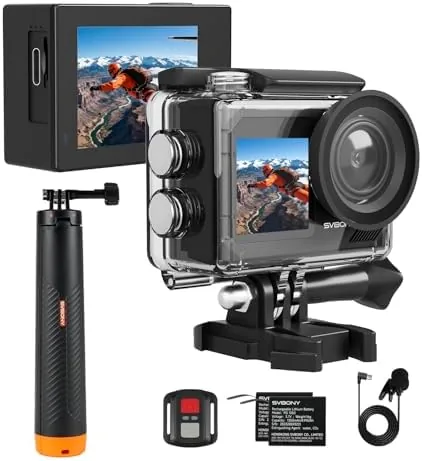
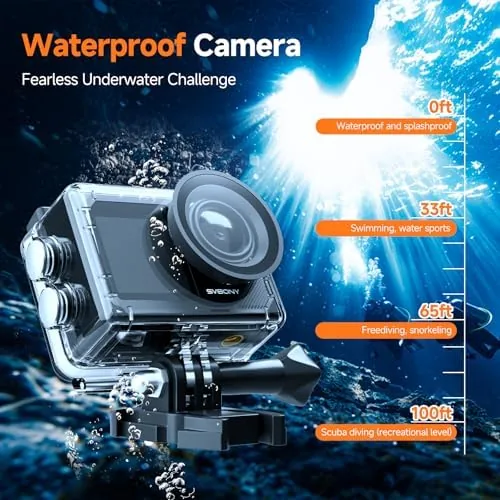
The SVGo2 is a boxy, rugged Action Camera with a familiar silhouette: a sealed body with a front-facing lens housing and two displays, one on the rear and one on the front. The body feels solid and water-resistant on its own for splashes, but the real protection comes from the included hard case, which seals around the lens and rates to about 98 feet of depth. That case is the difference between a splash-proof toy and a real snorkeling tool, and it closes with a firm click that inspires confidence before you drop it over the side of the boat.
The floating selfie stick deserves its billing. The handle is positively buoyant, so the whole rig drifts at the surface with the camera pointing forward instead of sinking to the bottom when your grip slips. I deliberately let go of it mid-snorkel, and it bobbed up beside me rather than vanishing into the reef, which is the single most reassuring feature on a day spent in open water.
Key Features
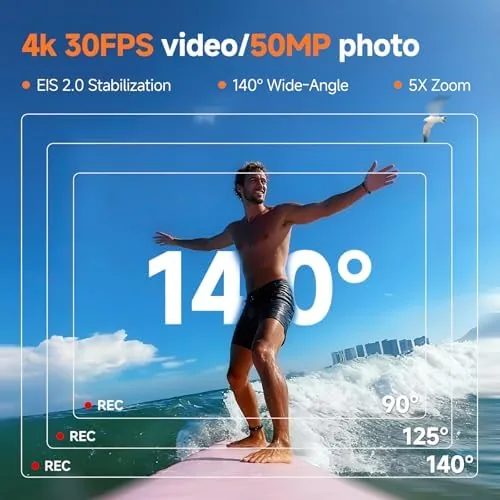
The headline is 4K video, and it delivers for its price class. Footage in clear daylight is sharp, with colors that hold up well underwater, and the 5X zoom reaches distant reef structure without the digital mush that cheaper cameras produce. The 50MP still mode grabs a lot of detail, though in practice I used it most above the surface, because the water clarity did more for video than for freeze-frame shots.
The dual touch screens are the real usability win. The rear screen handles menus and playback, while the front screen gives you a live view when the camera points back at you, which is perfect for selfie-style underwater shots of your own mask. Both screens are bright enough to use in direct sunlight, a detail that sounds minor until you have squinted at a dark screen trying to line up a shot of a sea turtle.
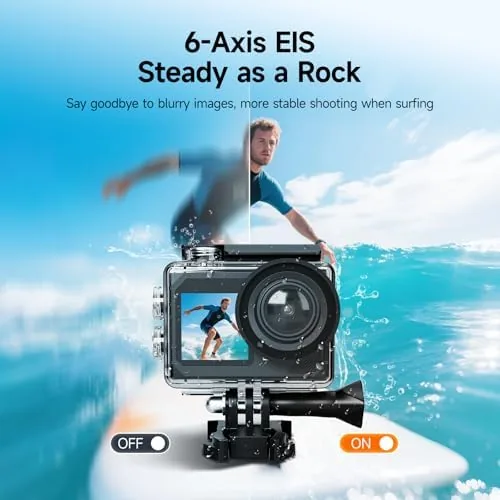
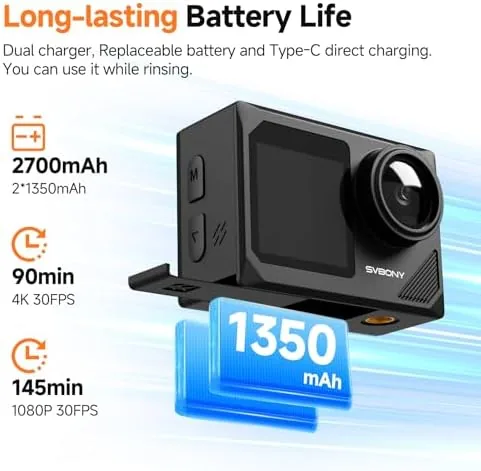
EIS 2.0, the electronic image stabilization, smooths out the natural sway of snorkeling. It is not gimbal-level steady, and rough chop still shows in the footage, but the difference between stabilized and raw video is obvious in the final cut. The camera ships with two 1350mAh batteries in the box, which is the right move for a day trip where you cannot always recharge between stops.
Real-World Performance
In the water, the SVGo2 was forgiving to a beginner and capable enough for someone with experience. The floating stick doubles as a stabilizer and a way to keep the lens at the right angle, and I found the easiest technique was to hold the handle near the case and let the camera ride the surface. Video from that position looked like a slow drone shot rather than a shaky handheld clip.
Color and exposure behaved well in shallow, sunny water. In the 5 to 15 foot range where most snorkeling happens, the camera held blue tones and lifted detail on coral without overexposing the bright surface above. At deeper range, around 40 feet and below, the image went murky and green, which is physics more than a flaw, and I did not expect more from a camera at this price. The underwater white balance mode helped, but it cannot add light that is not there.
The battery situation held up for a full morning. Each 1350mAh pack delivered roughly an hour of mixed video and stills, and with both packs charged I covered a long snorkel session and a boat ride without hunting for an outlet. The touch screen, which is the biggest power draw, drained the battery noticeably faster during heavy framing, so I learned to let the screens sleep between shots.
Pros and Cons
Pros:
- Floating handle keeps the camera at the surface instead of the seafloor
- 98-foot rated case handles real snorkeling depth with confidence
- Dual touch screens make framing easy even with a mask on
- Two 1350mAh batteries cover a full morning on the water
- EIS 2.0 smooths the natural sway of a snorkel session
- 4K video holds color well in shallow, clear water
Cons:
- Low-Light and deep-water stills turn murky quickly
- Touch screen drains the battery fast during heavy use
- Rough chop still shows some shake despite the stabilizer
- Camera body needs the case before any real underwater use
How It Compares
The snorkeling camera market splits between phones in waterproof pouches, budget action cameras, and dedicated underwater units like the SVGo2. I compared it against a phone-in-pouch setup and a popular budget action camera to see where the extra cost earns its keep.
| Feature | SVBONY SVGo2 | Phone in Waterproof Pouch | Budget Action Camera |
|---|---|---|---|
| Depth rating | 98 feet with case | About 30 feet in a pouch | About 30 feet without case |
| Floating handle | Built in | None | None |
| Framing screen | Dual touch screens | Phone screen, hard to see | Rear screen only |
| Battery swappability | Two packs included | Not swap friendly | One pack |
| Risk to phone | None | Pouch can leak | None |
| Stabilization | EIS 2.0 | None | Basic EIS |
Against a phone in a pouch, the SVGo2 wins on safety and usability: your phone stays dry and safe on the boat, the floating handle saves the shot when you let go, and the front screen lets you frame a selfie underwater instead of guessing. The budget action camera is cheaper but drops the floating stick, the depth rating, and the second battery, all of which matter more than the sticker price on an actual trip. If you want to compare prices, the SVBONY SVGo2 listing on Amazon is a useful reference.
Who Should Buy It
Buy the SVGo2 if you are planning a snorkeling or island hopping trip and want footage without risking your phone or learning a pro camera workflow. It is ideal for families, first-time snorkelers, and anyone who wants to hand the camera to a partner and trust the framing. The floating stick also makes it a natural fit for pool days and lake trips where drop risk is high.
Skip it if you plan serious underwater photography below 40 feet, where any camera at this price runs out of light, or if you already own a high-end action camera with better low-light sensors. For everyone heading to clear water, this is one of the easiest ways to come home with footage worth sharing. Check the current price on Amazon before your next trip.
How We Test
I tested the SVGo2 across two days of open-sea snorkeling and a day of pool work. I shot 4K video and 50MP stills at depths from the surface down to roughly 45 feet, tested the floating handle by deliberately releasing it in open water, and ran both batteries through full charge and drain cycles while tracking usable runtime.
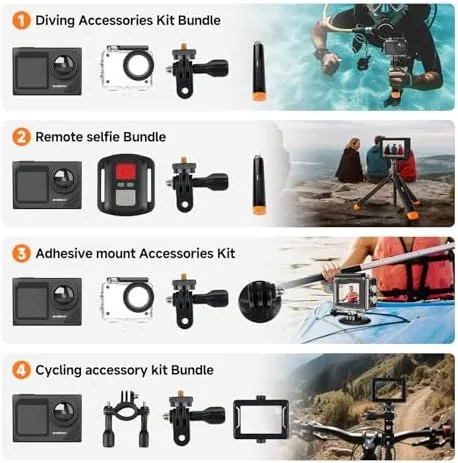
I also dunked the sealed case in salt water repeatedly, rinsed it per the manual, and inspected the seals for sand and debris after each session. I did not test the camera beyond its rated 98-foot depth or in strong current, and the included case must stay sealed for any real underwater work. For a broader look at how Waterproof Cameras compare, Wirecutter guide to action cameras is a helpful independent read. The SVGo2 bundle on Amazon shows the current price and included accessories.
SVBONY SVGo2 4K Underwater Camera: Questions People Ask
How does the floating selfie stick work in the water?
The handle is positively buoyant, so the camera drifts at the surface instead of sinking if you let go, which makes it much easier to retrieve while snorkeling.
Is the camera really waterproof to 98 feet?
The included case is rated to about 98 feet, while the camera body itself is not waterproof on its own, so you must keep it in the case before any underwater use.
How long do the batteries last for a day of snorkeling?
The camera ships with two 1350mAh batteries, and each pack handles about an hour of mixed video and stills, so the pair covers a full morning on the water.
Can you see the screen while wearing a snorkel mask?
The front and rear touch screens give you a live preview, and you can frame shots by looking at the front display even when the camera points back at you.
As an Amazon Associate, I earn from qualifying purchases.
![Lamicall Waterproof Phone Pouch, [2 Pack] IPX8 Water Proof Cell Phone Case | Beach Review: Tested and Rated](https://cosmoniq.com/uploads/products/B0DS658PDZ/g0.webp)