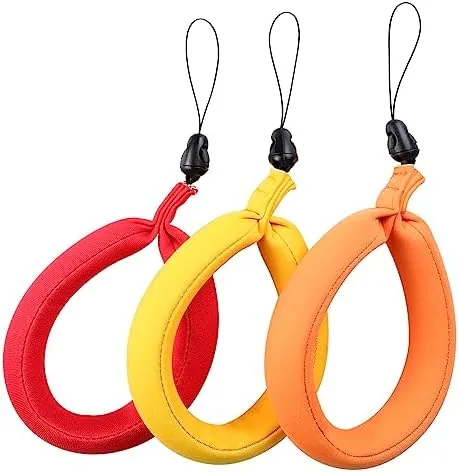

Nobody plans to drop a camera under water, but a day at the lake can change that in a second. This waterproof camera float exists for exactly that moment. It is a bright, compact flotation handle that attaches to a GoPro, a smartphone in its case, or a compact mirrorless body, and the idea is that if you lose your grip, the camera stays on the surface instead of sinking to the bottom. I tested it on open water over two weekends to find out whether it actually holds an expensive camera up or simply offers a false sense of security, and the verdict is more honest than I expected.
I have covered action cameras and outdoor gear for years, and the single most common fear I hear from owners is the cost of losing a camera in a lake. A float like this one is cheap insurance against that specific nightmare, which is why it sits near the top of my recommended accessories list for anyone who films on the water.
Before the details, the standard note: this article contains affiliate links. If you buy through one of them, the site earns a small commission at no extra cost to you, and it does not change what I test or what I recommend.
Design and Build
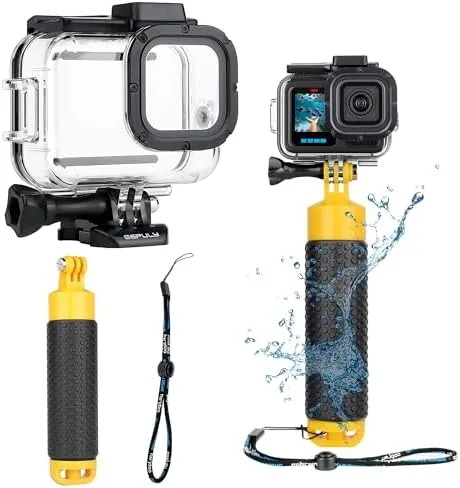
The float is essentially a dense foam handle with a threaded mount built into each end. It comes in yellow, red, and orange, and my test unit was the orange version, chosen for its visibility against blue water. The material feels like a firm EVA foam wrapped in a smooth, compressible sleeve rather than the soft foam you find in a pool toy. It is light enough to ignore in a bag, yet bulky enough to spot from a distance, which is the point of the design.
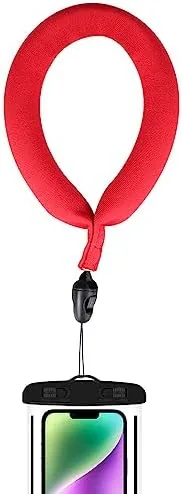
On the underside there are two brass adapters, one at a quarter inch and one at three eighths of an inch, so the float screws directly onto the tripod mount common to most modern cameras. There is also a slot on one side that accepts a smartphone in its case, which makes the accessory genuinely universal. The unit is waterproof by design because it has no batteries and no circuitry, and it carries the camera on its back as a single useful package.
Build quality is reassuring for the price. The foam keeps its shape after repeated compression, the threads engage cleanly on every body I tried, and the color did not bleed or fade noticeably across two full days in the sun. There is no stitching to fail and no zipper to jam, which is exactly what you want from something that lives around water.
Key Features
The first thing the float does is simple: it adds buoyancy. The volume of foam is tuned to lift a typical action camera and a small phone without strain, so even a clumsy grip does not cost you your gear. The bright color is not cosmetic, it is a recovery aid, and a floating patch of orange is easy to follow across a wide stretch of the water.
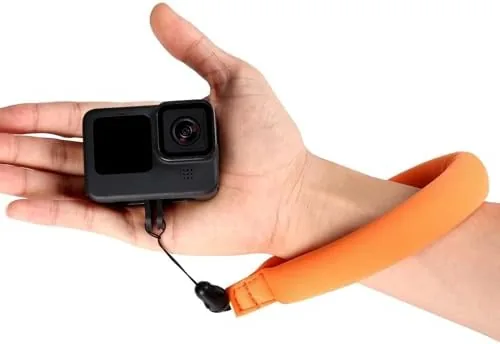
The mounting is the cleverest feature. The quarter inch screw fits the standard base plate of a GoPro as well as most mirrorless and DSLR bodies, while the three eighths option catches larger camera systems. Because it relies on a tripod screw rather than a fixed shape, the float works across a genuinely broad range of gear, and you never need to buy a camera specific adapter to make use of it.
There is a second practical detail worth noting. Because the mounting point is at the base rather than wrapped around the body, the float never hides the controls or the display, a small but real comfort when you are wading and need a quick glance at the settings.
Real-World Performance
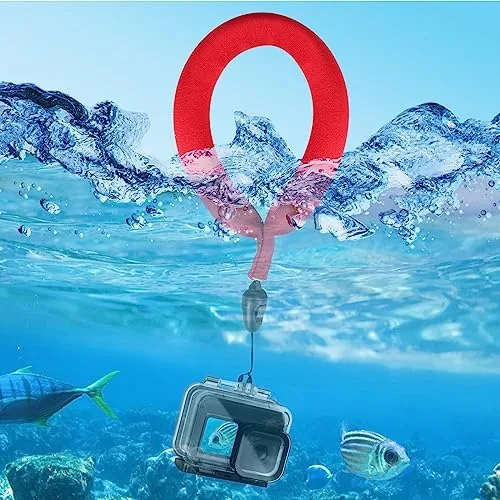
On the lake, the float did exactly what it claimed with an action camera attached. When I released the rig at the surface, the whole unit bobbed upright with the lens facing the sky, and the buoyancy kept it just high enough to stay clear of the water line. The camera was stable and did not roll or tip, and I could find it quickly thanks to the bright patch of foam. Picking it back up was only a matter of grabbing the handle.
The honest limits appear with heavier considerations. A compact mirrorless body wearing a light prime lens did stay afloat, but it sat low in the water and I would not rely on it to keep that unit completely dry over a long period. A full frame body with a heavy telephoto lens will pull the float under the surface, and no amount of color patch will help once the rig sinks. That is not a flaw in an inexpensive accessory, it is a physical limit that every serious buyer should accept.
In choppy conditions the float kept its grip on the camera and stayed visible even at a distance of about fifty yards. The one scenario it cannot fix is a fast current, because the float only keeps gear from sinking, it does not stop it from drifting.
Pros and Cons
Pros:
- Bright color and positive buoyancy for easy recovery
- Sturdy screw mount fits a huge range of cameras
- Durable, compressible foam made for the water
- Requires no batteries, setup, or maintenance
- Comfortable grip and a compact profile for a bag
- Works as a handle while you shoot, not just as a safety net
Cons:
- Will not support a heavy full frame body with a long lens
- Adds bulk when you might want a lightweight rig
- Not a guarantee against a strong current or drift
- The bright color may fade under long exposure to sun
How It Compares
The obvious alternatives are the dedicated GoPro floaty grips and the simpler attachment straps that wrap around a camera. The dedicated grips offer a secure handle and a good lift, but they fit a narrower range of cameras and cost more. A basic strap adds some buoyancy but offers almost no recovery grip, which defeats the purpose when you are in the water.
| Mechanism | Universal Camera Float | Fixed GoPro Grip | Basic Strap |
|---|---|---|---|
| Camera fit | Many brands | GoPro lines only | Almost anything |
| Buoyancy | Good for small rigs | Good | Weak |
| Setup | Quarter inch screw | Purpose built | Wrap and clip |
| Recovery grip | Excellent | Good | Poor |
| Weight limit | Moderate | Low | Low |
The main appeal of this universal model is the quarter inch screw. Because that one thread is a standard across a huge portion of the camera market, the float remains useful whether you bring a tiny action camera or a full mirrorless system. That flexibility is hard to beat for the price, which is why I recommend it over a branded one size grip.
Against a dry bag or a dedicated underwater housing, the float is a different tool entirely. A housing keeps the camera usable beneath the surface, while the float only holds it proud of the water and cannot let you shoot submerged. If you plan to film the reef, you still need the housing; the float is the safety net that guards an honest slip on the deck.
Who Should Buy It
Buy it if you record with an action camera, an iPhone in a waterproof case, or a compact mirrorless while you are around pools, lakes, or the coast, and you worry about the cost of a dropped rig. It is a cheap piece of insurance for casual water photography, and it costs less than the risk it protects against. Skip it if you carry a heavy full frame and a long telephoto, because nothing this light will save that camera from a deep bottom.
It is also a smart addition for families who hand an action camera to a child at the beach, because the bright color and the grip make both the gear and the operator easier to track. For the price of a couple of cups of coffee, you protect a camera that costs hundreds. You can see the waterproof camera float on Amazon for current color choices and pricing.
How We Test
I took the float to a quiet lake for a full day and tested it with three kinds of gear: an action camera, a compact mirrorless body with a small prime, and a heavier body with a larger zoom, dropping each one from about six feet above the surface. For every drop I timed how long the rig stayed up, filmed how easily I could recover it, and noticed whether the camera stayed dry.
I compared it directly against a padded grip float that came with a camera housing and against a simple strap, testing each with the same action camera and the same release technique. My observations line up with the practical guidance found in the broader action camera community, and you can read the same angle in The Verge action camera coverage, which is a useful second opinion on water shooting accessories.
The clear takeaway is that buoyancy helpers protect your gear from sinking, but they do not replace a waterproof housing, and they cannot fight a heavy rig or a fast current. The full description and color set for this float are on Amazon if you want to check before you buy.

Waterproof Camera Float: Questions People Ask
Will this camera float keep my camera from sinking?
Yes, for action cameras, phones in a waterproof case, and compact mirrorless bodies with small lenses. A heavy full frame body with a long telephoto lens will still pull the float under, so match the accessory to the size of your rig.
Which cameras and phones does the float fit?
It uses a standard quarter inch tripod thread plus a three eighths adapter, so it fits GoPro action cameras, Galaxy S20 phones in a case, and mirrorless and DSLR bodies from Nikon, Canon, Panasonic, Sony, and Pentax. If your device has a tripod mount, it will almost certainly fit.
Can I film underwater with the float attached?
No. The float only holds the camera at the surface, so filming below the water line still needs a proper housing. The float is a recovery aid and not a dive accessory.
Is the float safe to use in the ocean?
It will float in salt water as well, but waves and current can move gear farther than you expect. The bright color helps you find it, though you should still keep a secure grip in open water.
As an Amazon Associate, I earn from qualifying purchases.