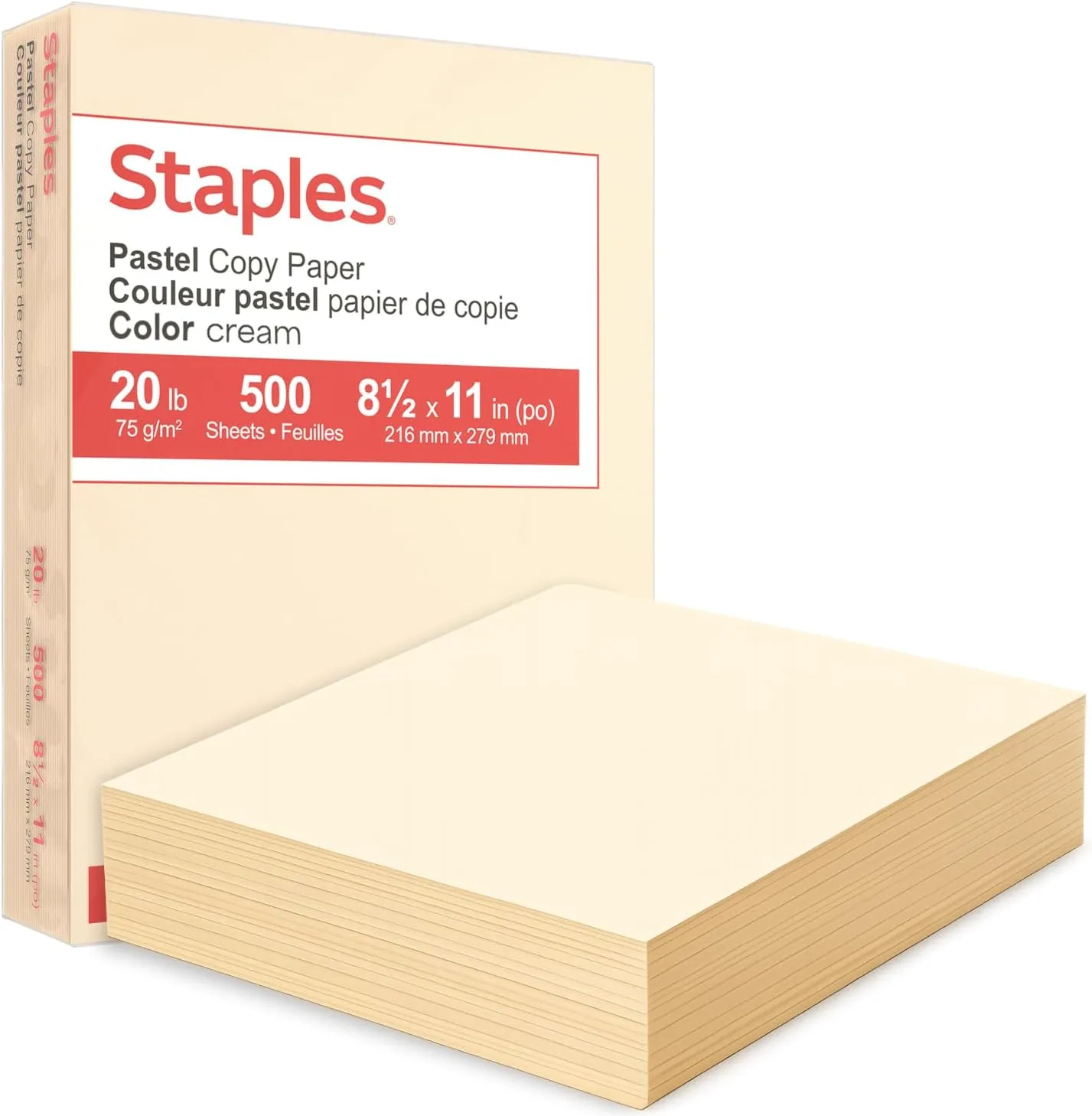

White paper is the default for a reason, but every so often a job asks for something softer. A cream pastel sheet turns a plain announcement, a menu, or a set of forms into something that reads as designed rather than merely printed, and it does that without the cost or fuss of specialty stock. The Staples pastel recycled copy paper is one of the most common ways to buy that effect, a 20 lb ream of cream sheets that sits comfortably in the multipurpose aisle. This is the record of a ream put through flyers, forms, menus, and a stretch of double-sided work, with the honest notes on where a tinted sheet helps and where it gets in the way.
Before the details, the standard note. This article contains affiliate links, and if you buy through one of them the site earns a small commission at no extra cost to you. That commission never changes what I test or what I recommend.
Design and Build
The first thing you notice is the color. This is not a beige that reads as dirty or a yellow that shouts; it is a soft, warm cream, noticeably lighter than a manila folder but clearly not white. Hold a sheet next to standard white copy paper and the difference is obvious, the cream has a warmth that makes white look cool and clinical by comparison.
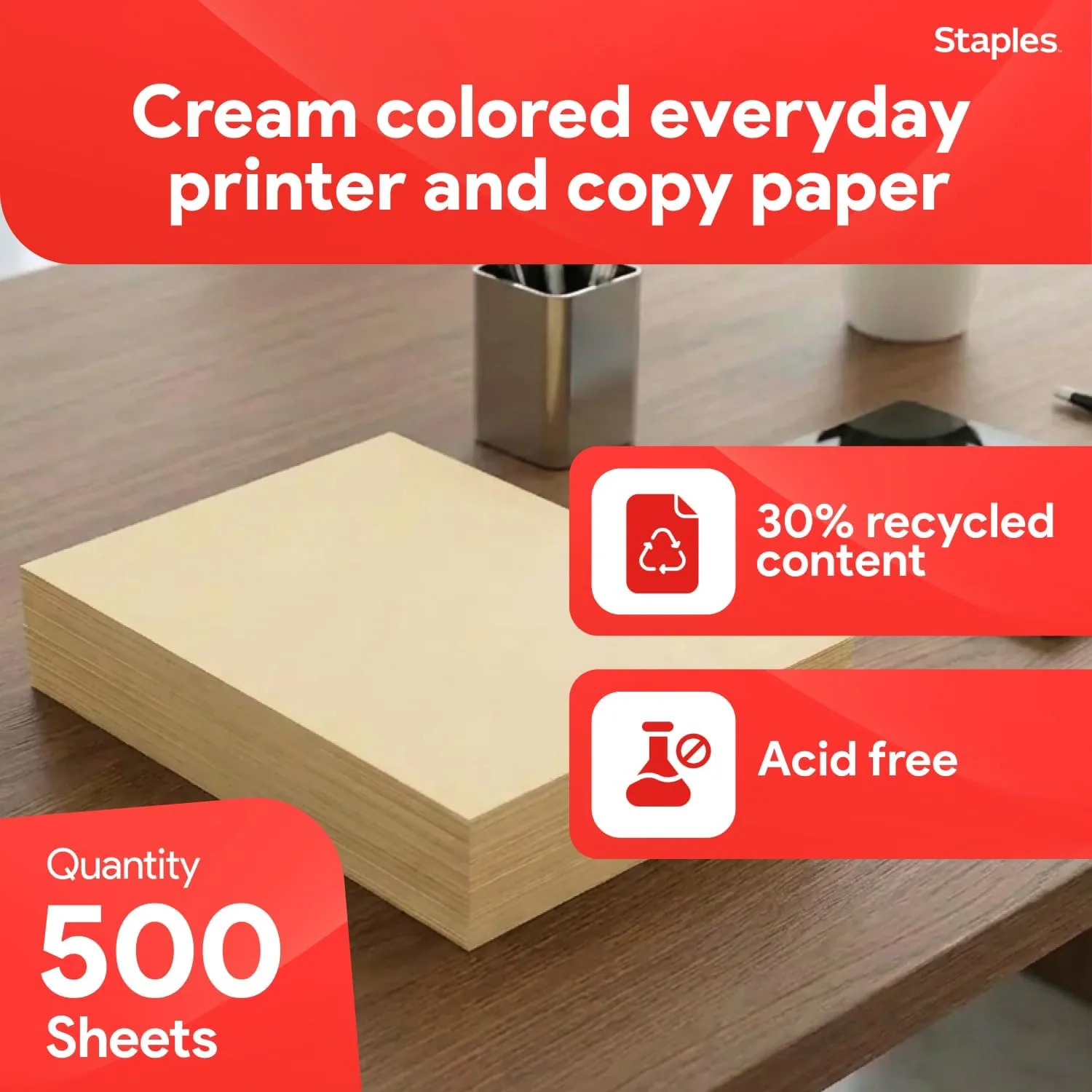
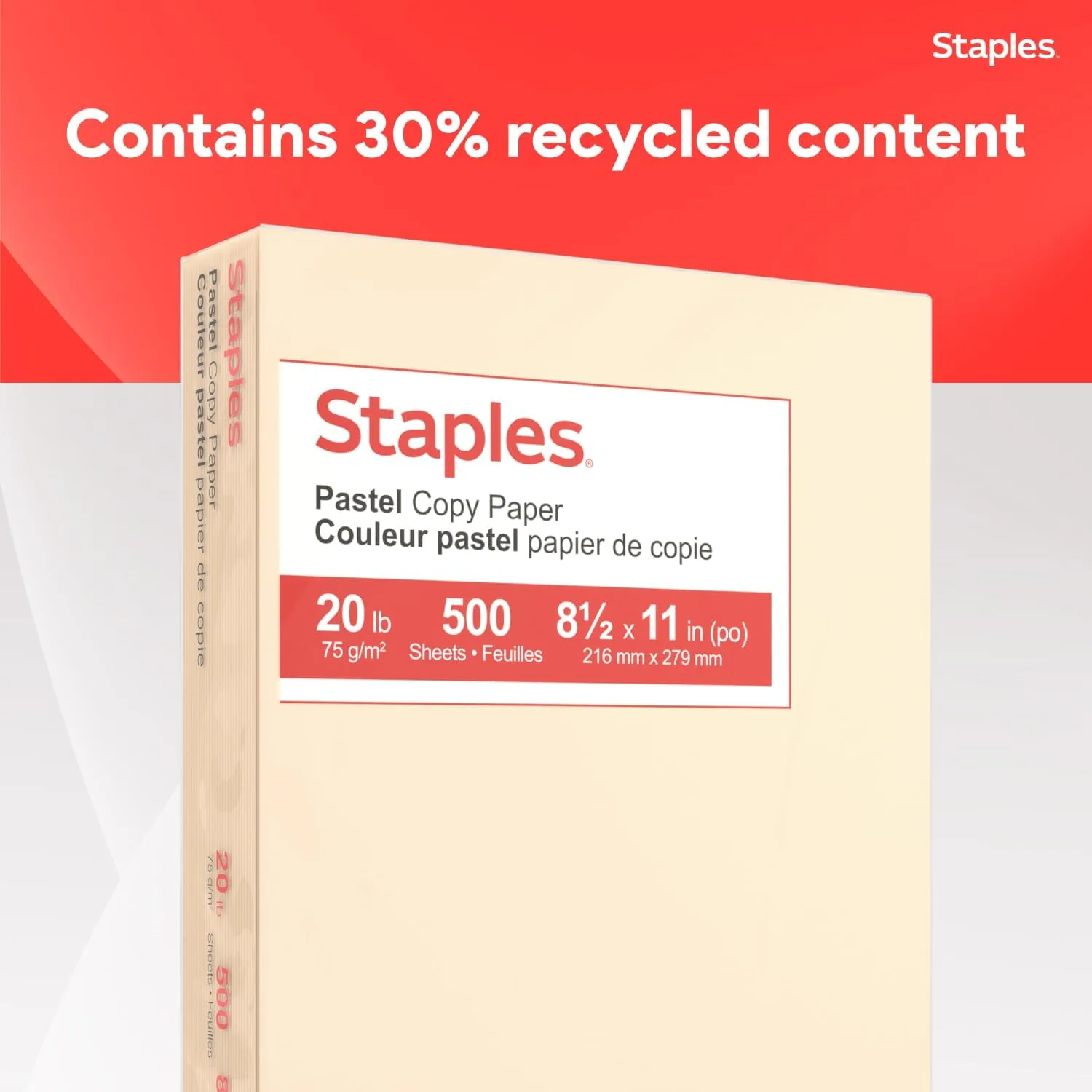
The sheet itself is standard 20 lb multipurpose stock, 8.5 x 11 inches, with a smooth, even surface that takes ink and toner predictably. The fiber has a slightly softer feel than a bright white office sheet, which is typical of recycled content, but the sheets cut cleanly with no curling or waviness out of the ream. The wrapper marks the paper as 30% recycled, a detail that matters if you track the environmental footprint of your printing.
Key Features
The defining feature is the cream tint itself. The color comes from the fiber rather than a printed coating, so the shade is uniform across every sheet and stays consistent from the first page to the last in the ream. For menus, wedding announcements, certificates, thank-you cards, and flyers, that warm tone does the aesthetic work that white paper cannot.
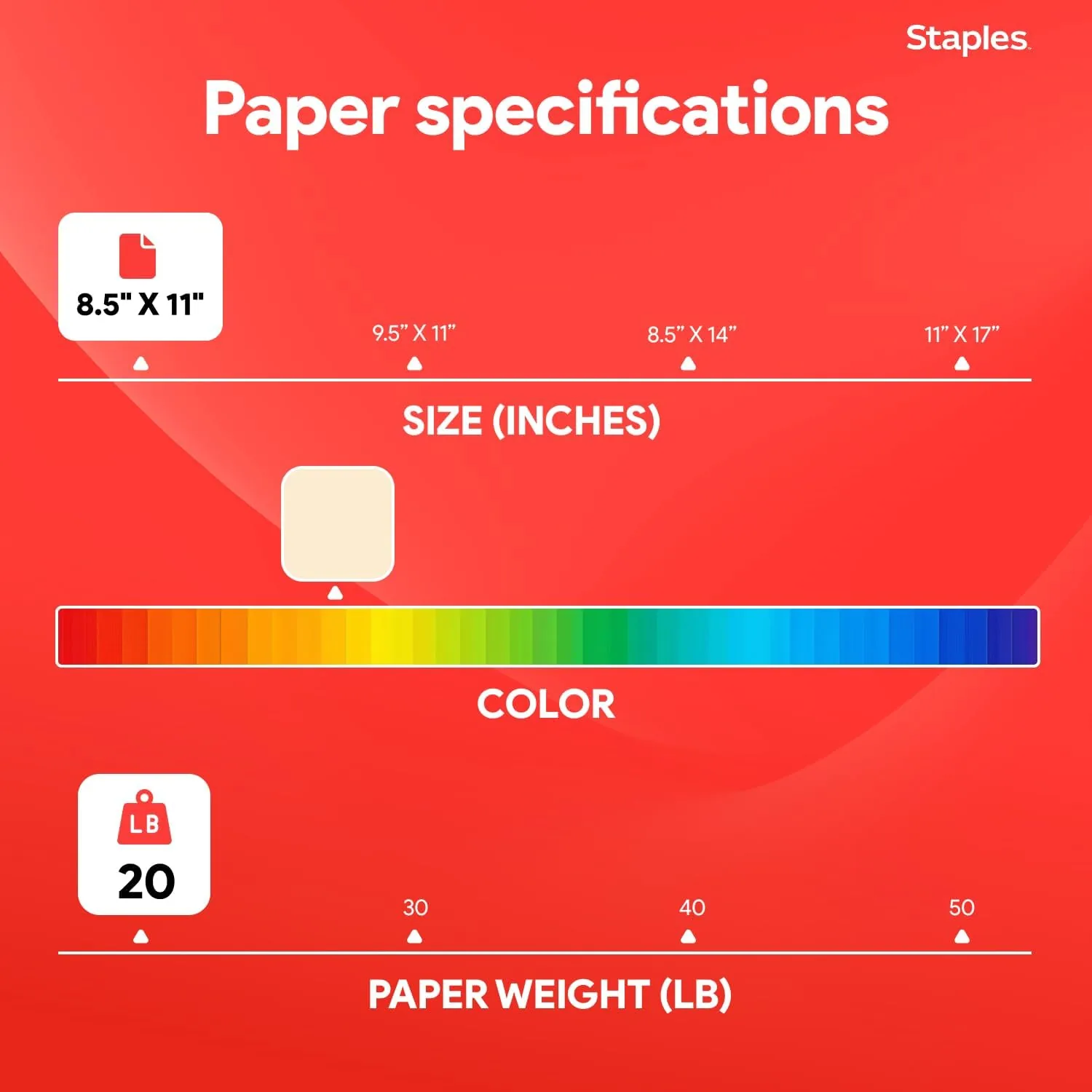
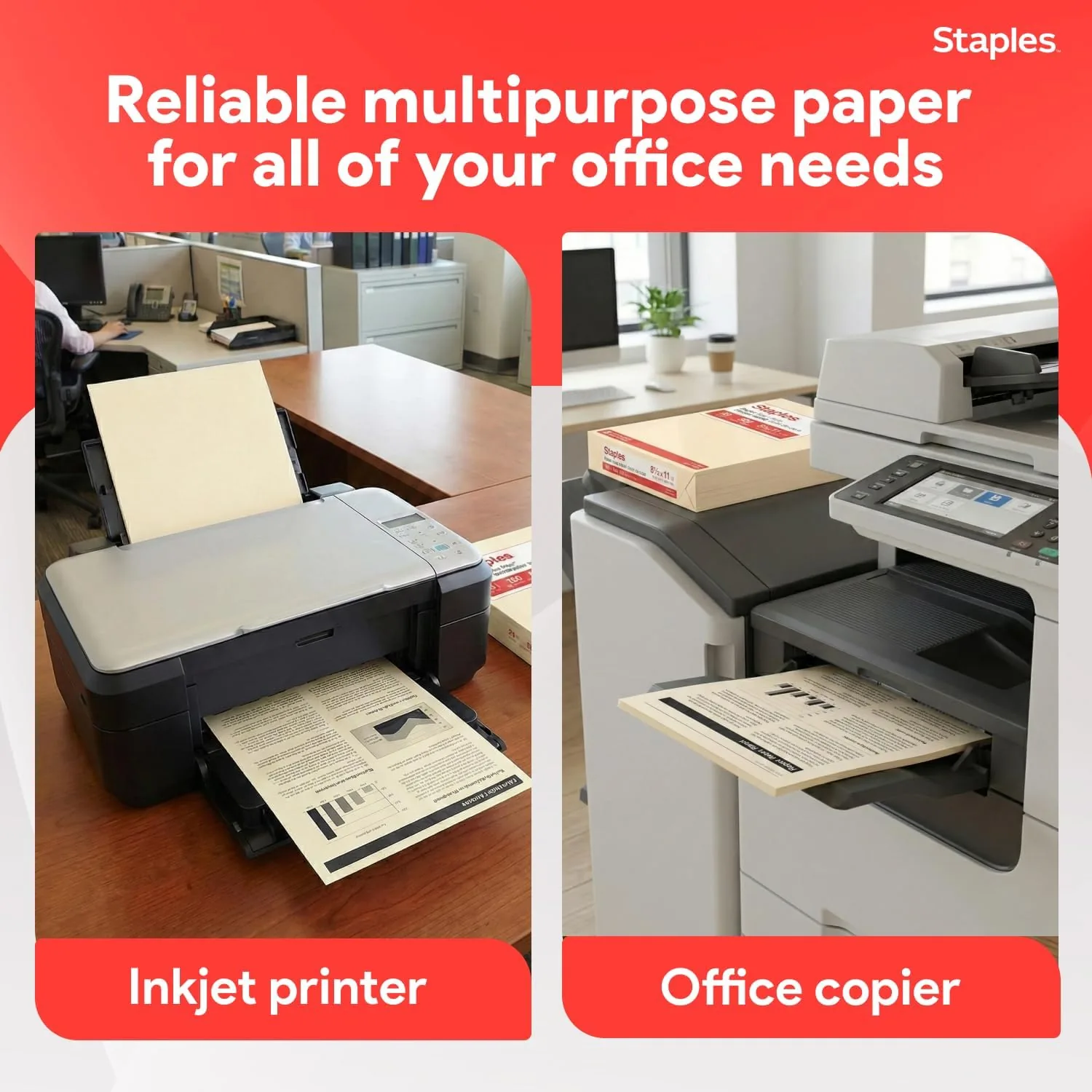
Beyond the color, it is a genuine multipurpose sheet. It is rated for both laser and inkjet printers, it handles standard copying without issue, and the 20 lb weight keeps it compatible with any office machine that runs plain paper. The 30% recycled fiber is the environmental feature, a meaningful portion of post-consumer content that the packaging states plainly on the ream wrapper. At 500 sheets per ream, the pack is sized for a specific project or a modest print habit rather than a bulk office supply run. If you want to compare the current price against other colored multipurpose papers, the Amazon listing for the Staples cream pastel paper is a useful reference.
Real-World Performance
I started with the straightforward stuff: a two-page form printed on an inkjet, and a text-heavy memo on the laser. Both fed cleanly with no jams, and the text came out sharp. The interesting part was the color of the page itself. Black text on cream looks warmer and slightly softer than the same text on white, which is exactly the effect the paper exists to produce, and the forms took notes written in pen without the ink bleeding into the fiber or feathering at the edges.
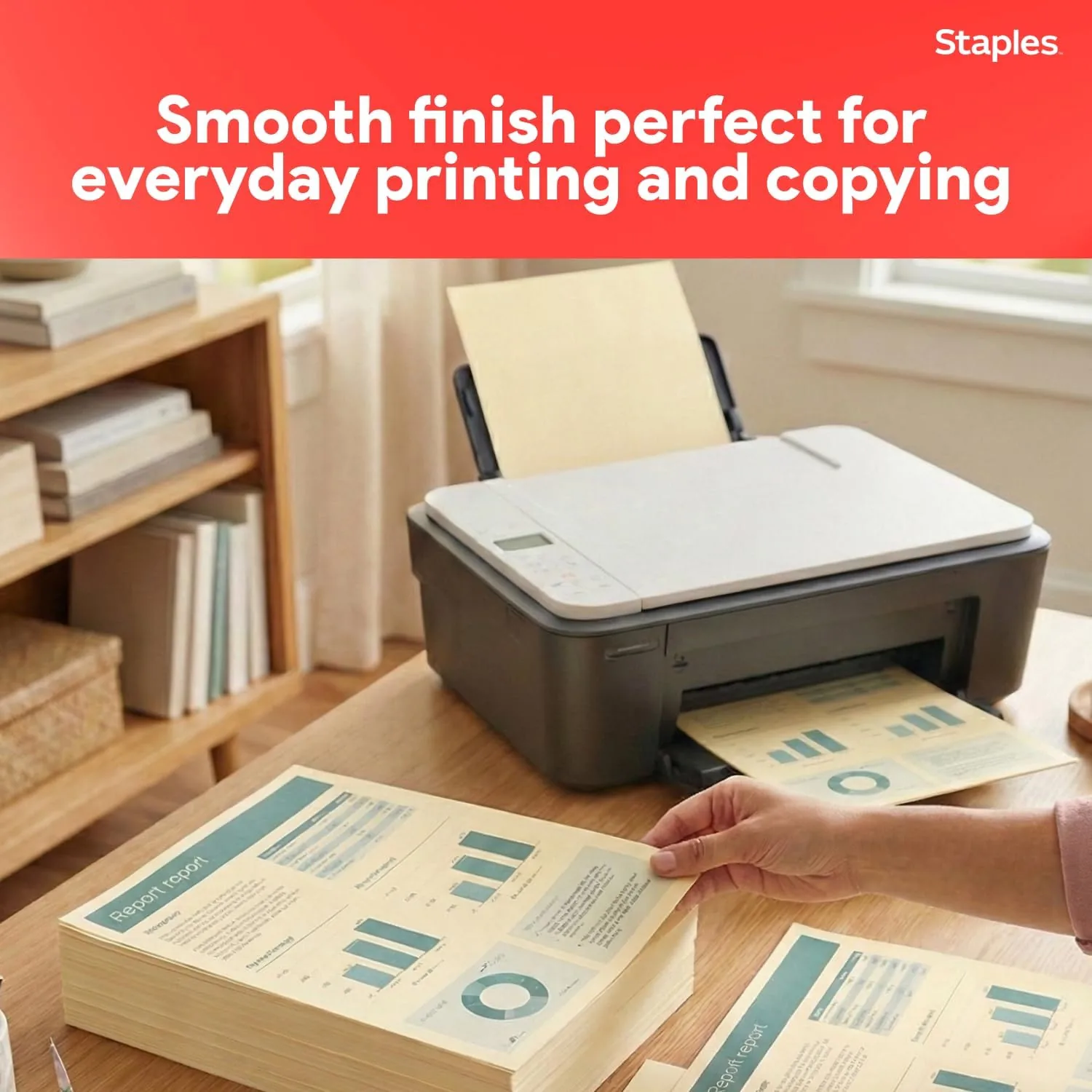
The decorative jobs were where the paper shined. A small run of menus printed on the laser came out with a warm, understated look that white paper cannot match, and a stack of event flyers with a brown and rust color scheme looked cohesive, the cream acting as a natural extension of the palette. Photographs printed on the paper picked up a slight warm cast, which flattered portraits but dulled cool, blue-toned images, a trade-off worth knowing before you print a full photo spread on it.
The one honest caveat is contrast. Because the paper is not white, white text on a color background loses some pop, and bright color graphics look slightly muted against the cream. This is inherent to the product, not a flaw, and it is why the paper suits menus, invites, and flyers far better than marketing pieces that need punchy color. The 20 lb sheet is also not heavy enough for business cards or postcards, which need a thicker card stock, and the single ream runs out quickly if you feed the machine daily. For its intended jobs, the ream performed exactly as promised.
Pros and Cons
Pros:
- Warm, uniform cream tone that elevates menus and invitations
- Reliable feeding with no jams across laser and inkjet testing
- True multipurpose sheet that also handles copying and pen work
- 30% recycled fiber for a lighter environmental footprint
- Color is in the fiber, so every sheet matches the next
Cons:
- Softer tone mutes bright colors and white text contrast
- Single ream pack is not economical for high volume printing
- 20 lb weight is too light for business cards or postcards
How It Compares
Cream pastel paper competes with white multipurpose paper, true colored card stock, and handmade textured papers. I compared the Staples cream sheet against standard white 20 lb Paper and a heavier pastel card stock to see where each belongs.
| Feature | Staples Cream Pastel 20 lb | White 20 lb Multipurpose | Pastel Card Stock 80 lb |
|---|---|---|---|
| Color | Warm cream | Bright white | Soft pastel |
| Weight | 20 lb | 20 lb | 80 lb |
| Recycled content | 30% | Varies | Varies |
| Printer compatibility | Laser and inkjet | Laser and inkjet | Usually laser and inkjet |
| Best use | Menus, flyers, forms | Everyday documents | Cards, covers, invites |
| Color reproduction | Warm cast | Accurate | Warm cast |
Against white multipurpose paper, the cream sheet loses on color accuracy and price per sheet but wins on the decorative look for jobs where warmth matters. Against pastel card stock, the 20 lb paper is far easier to run through a printer and cheaper, but it will not stand up in the mailbox the way a card weight does. For flyers, menus, and forms, the Staples cream paper is the better value, and it is the ream I kept on hand when the test ended.
Who Should Buy It
Buy this paper if you print menus, event announcements, invitations, certificates, or any job that benefits from a warm, understated backdrop, and you want it in a plain multipurpose sheet that runs in any printer. It is also a reasonable choice if you want a small step toward recycled printing without switching your whole supply chain.
Skip it if you need punchy color reproduction, if you print mostly business correspondence that should stay white, or if you need card weight for mailers and covers. For everyone else, the Staples cream pastel ream is an easy way to make print jobs feel designed, and the 30% recycled content gives it a mild point in its favor over a pure white alternative. You can check the current price for the Staples cream pastel paper on Amazon when you are ready to order a ream.
How We Test
I ran the full ream across an inkjet printer, a laser printer, and a multifunction copier. I printed text forms, flyers with color graphics, a photo test page, and a two-sided menu, and I tracked feeding, jams, ink behavior, and how the cream tone affected different content. I also compared the paper against white 20 lb multipurpose stock and a pastel card stock to see how the color and weight change the result.
I did not test the paper in a commercial press or for archival storage, and color perception varies with the printer and the viewing light. For background on how paper weight, brightness, and recycled content affect print quality, Wirecutter's review of printer paper is a useful starting point. The Staples cream pastel paper listing on Amazon shows the current price and shipping details.
Staples Cream Pastel Paper: Questions People Ask
Is pastel cream paper suitable for laser and inkjet printers?
Yes. It is a 20 lb multipurpose sheet engineered to run in both laser and inkjet machines, and it handled dense text and graphics without jams or smudging in testing.
How many sheets are in the pack?
The pack holds a single ream of 500 sheets, so it is sized for a specific project or a modest printing habit rather than a bulk office supply run.
What makes pastel paper different from white copy paper?
The fiber is tinted cream during manufacturing, which softens the look of text and photos and gives prints a warmer, more decorative feel than a stark white sheet.
Is the Staples pastel paper recycled?
Yes. The paper is made with 30% recycled fiber, which makes it a reasonable choice for projects where a softer color and a lower environmental footprint both matter.
As an Amazon Associate, I earn from qualifying purchases.