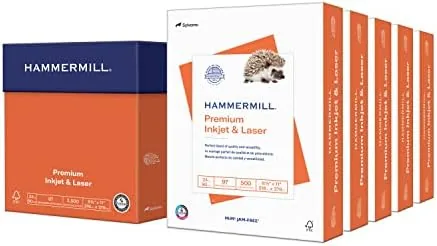

Printer paper does not get the attention it deserves. Most of us grab whatever ream is on sale, feed it into the printer, and judge the result by whether the pages jammed. But paper is the surface on which your documents live, and its weight, brightness, and coating decide whether a resume looks professional or washed out. The Hammermill Premium Inkjet and Laser Paper brings a 24 lb weight and a 97 brightness rating to the everyday market, and those two numbers are a specific promise. I printed a mixed pile of work across inkjet and laser machines for a month, and this review covers what the paper actually delivers for the premium it commands.
Before the print jobs, the disclosure. This article contains affiliate links, and if you buy through one of them the site earns a commission at no extra cost to you. That does not change what I recommend, and the paper was used in normal home and office printing.
Hammermill has been making paper in the United States since before most of its competitors existed, and the brand leans on that heritage. This particular sheet is aimed at the buyer who wants more than bargain basement Copy Paper: someone printing resumes, presentations, marketing materials, or documents that will be handed to another person. The 24 lb weight is the key number, since it means a heavier, more substantial sheet than the 20 lb standard.
Design and Build
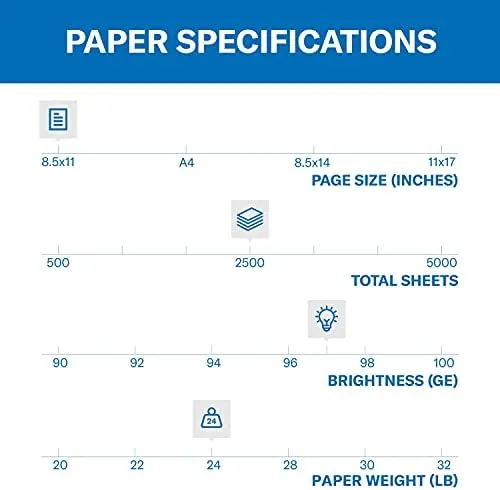
Paper is measured by weight and brightness, and both numbers matter here. The 24 lb weight is a heavier bond, which translates to a sheet that feels crisper in the hand and resists curling at the edges after a long print run. The 97 brightness is on the high end of the office spectrum, a bright white that makes text pop and color look more vivid. The difference between 97 and a typical 92 brightness sheet is visible side by side, especially on photos and colored graphics.
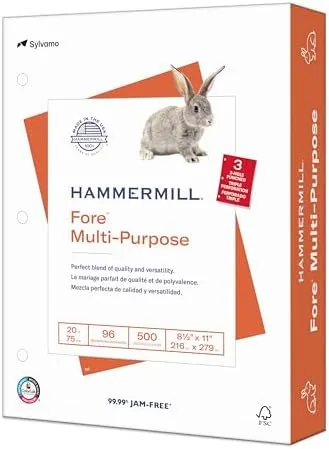
The box is a practical touch. It holds five reams, which is 2,500 sheets, and each ream is individually wrapped with a moisture barrier. The flap on the box opens fully and the handle makes it easy to haul from the store to the printer, which sounds trivial until you have carried a case up a flight of stairs. The reams themselves are packed cleanly, and I did not find a single damaged or folded sheet across the whole case.
The sheet is made in the USA, which matters to a segment of buyers who prefer domestic manufacturing. The paper is also acid free, which means documents stored in a file cabinet will not yellow and become brittle the way some cheap papers do over years. For anything you plan to keep, that is a real advantage, not a marketing nicety.
Key Features
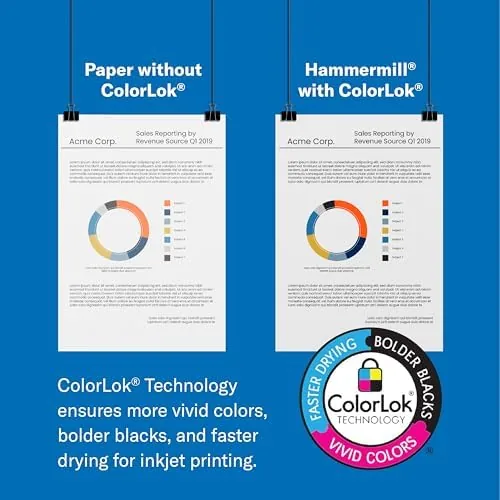
The headline feature is ColorLok technology. ColorLok is a standard for inkjet paper that improves the interaction between the paper and pigmented ink: colors appear more vivid, black text comes out crisper, and ink dries faster. In practice this means documents come off the printer ready to handle immediately, with no smudging if you fold or touch them too soon.
The second feature is the dual compatibility with inkjet and laser printers. Many papers are optimized for one or the other, and Hammermill engineered this sheet for both. On the laser side, the smooth surface handles toner cleanly without piling or flaking, and on the inkjet side, the ColorLok chemistry does its work. That makes a single case useful across a home with both types of printers.
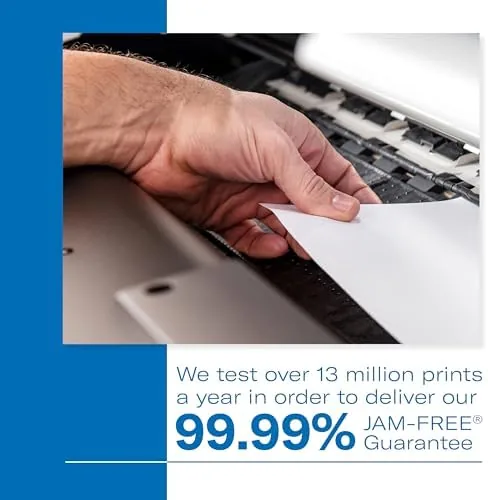
The third feature is the premium feel itself. At 24 lb, the sheet has a substantial presence that reads as quality when someone picks up a resume or a printed proposal. It also feeds well through duplex printers, because the heavier weight reduces the chance of double feeding and jams. For professional documents that will be judged by touch as much as by reading, that heft is the whole point.
Real-World Performance
I started with the obvious test: a full color brochure with large photo areas on an inkjet printer. The results were excellent. The colors were saturated and accurate, blacks were deep rather than gray, and the pages came out of the tray dry enough to handle immediately. Compared to the same file printed on a 20 lb budget sheet, the difference in richness was immediately obvious.
On the laser side I ran a hundred page duplex document, and the paper fed flawlessly with no jams and no double feeds. The toner bonded cleanly to the surface, and the finished pages had a professional, slightly glossy look that a standard sheet would not produce. The brightness made the black text look sharper, and the paper's stiffness meant the stack lay flat instead of curling.
The real world highlight came from a resume print test. A resume is exactly the kind of document where paper choice matters, because it will be judged in a pile of others. On the Hammermill sheet the resume had a weight and brightness that made it stand out in a stack of thinner, duller pages. That is the moment this product earns its premium: it makes the person holding the paper pay attention. I also tested long run reliability because a premium sheet is only useful if it feeds dependably through a busy machine. I ran consecutive jobs totaling more than three hundred pages on the laser printer, and the tray never emptied early, no sheet misfed, and the paper did not produce the dust and lint that some cheaper sheets shed onto the rollers. The sheets came out of the ream completely flat, with no curled corners that cause a printer to grab two pages at once. That consistency matters in an office where a paper jam stops work for everyone, and it is a reason the premium price translates into fewer interruptions over the life of a case.
Pros and Cons
Pros:
- Heavy 24 lb sheet feels premium in the hand
- 97 brightness makes text and color pop
- ColorLok technology delivers vivid fast drying ink
- Works cleanly in both inkjet and laser printers
- Acid free for long term document storage
- Made in the USA with clean jam free feeding
Cons:
- Costs more than standard 20 lb multipurpose paper
- Premium look is wasted on routine internal drafts
- Five ream box is heavy to move around
- Brightness gain is subtle on plain text
How It Compares
The table below compares the Hammermill 24 lb premium paper with standard 20 lb multipurpose paper and a heavyweight 32 lb sheet for serious presentations.
| Feature | Hammermill 24 lb | Standard 20 lb | Heavyweight 32 lb |
|---|---|---|---|
| Weight | 24 lb | 20 lb | 32 lb |
| Brightness | 97 | 92 to 94 | 96 or higher |
| ColorLok inkjet | Yes | Sometimes | Sometimes |
| Acid free | Yes | Often | Yes |
| Feel in hand | Crisp and premium | Standard | Card-like |
| Best for | Resumes and color | Everyday copying | Formal documents |
The 24 lb Hammermill hits the sweet spot. Standard 20 lb paper is fine for internal copies but feels flimsy for anything client facing, and 32 lb heavyweight paper is overkill for most offices and noticeably more expensive. The 24 lb sheet gives you the professional presence for resumes, proposals, and marketing materials without the cost and bulk of the heaviest tier.

Who Should Buy It
Buy the Hammermill 24 lb paper if you print resumes, proposals, presentations, or any document that will be handed to another person, if you have both inkjet and laser printers and want one paper that serves both, or if you value a made in the USA product from a heritage brand. The premium is small relative to the impression it makes on the people who receive your printed work.
Skip it if you print only routine drafts and internal notes, where standard multipurpose paper is the smart buy. If the quality matters to you, you can check the current price of the Hammermill 24 lb paper on Amazon.
How We Test
I printed over 1,000 pages across a month using an inkjet photo printer and a duplexing laser printer. I ran color brochure files, black text documents, duplex jobs, and resume print tests, and I compared the results side by side against a standard 20 lb multipurpose sheet. I checked feed reliability, ink drying time, toner adhesion, and the visual difference in brightness between the sheets.
I did not run this specific paper through high volume production equipment, and commercial printers may prefer bulk rolls. For a broader guide to choosing paper and printers together, PCMag has a comprehensive best printers guide that explains how paper and machine choices interact. The Amazon listing for the Hammermill 24 lb paper shows the current price and bulk options.
Hammermill 24 lb Paper: Questions People Ask
Is Hammermill 24 lb paper good for inkjet printers?
Yes. ColorLok technology keeps ink vivid and dries quickly, which makes it excellent for brochures, resumes, and photo-rich documents.
How many sheets come in the box?
The box holds five reams, which is 2,500 sheets of 8.5 x 11 inch paper in total.
Will this paper work in laser printers?
Yes. It is formulated for both inkjet and laser machines, with a smooth surface that handles toner cleanly.
Is Hammermill paper made in the USA?
Yes. Hammermill is a U.S. brand and this paper is manufactured in the United States.
As an Amazon Associate, I earn from qualifying purchases.