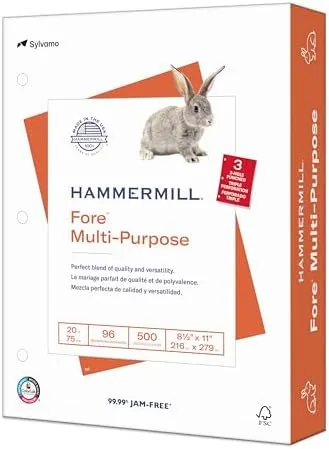

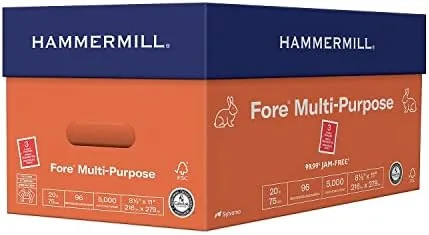
Nobody walks into an office supply store planning to get excited about a ream of paper. Paper is the background material of every printed document, and it only gets attention when it fails: when it jams, when it curls, when it fades, or when it picks up dust and streaks across a printer drum. The Hammermill Fore multipurpose 20 lb copy paper is built to avoid that attention entirely. It is a three hole punched ream of 96 brightness paper made in the USA, and its entire job is to feed, print, and file without complaint. I have spent several weeks running a few reams through laser printers, inkjets, copiers, and a manual filing test, and this review records what it actually does.
Before we get into the details, the standard disclosure. This article contains affiliate links, and if you buy through one of them the site earns a small commission at no extra cost to you. That commission never changes what I test or what I recommend.
Design and Build
There is not much to say about the physical build of a sheet of paper, and that is the point. The Fore sheets are a standard 20 lb weight, which is the workhorse grade of office printing, thick enough to feel substantial in a report and light enough to keep a ream affordable. The sheets come pre punched with three standard holes along one edge, which is a genuine convenience for anyone who files documents into binders or ring notebooks.
The finish is smooth and matte, with no glossy coating that would cause ink to pool or smear. The surface accepts toner and ink evenly, and the sheet cuts cleanly at the edges with no loose fibers or lint. A ream of this quality comes wrapped in moisture resistant packaging that keeps the paper flat and dry on a shelf, which matters more than it sounds, because paper that has absorbed humidity curls and jams.
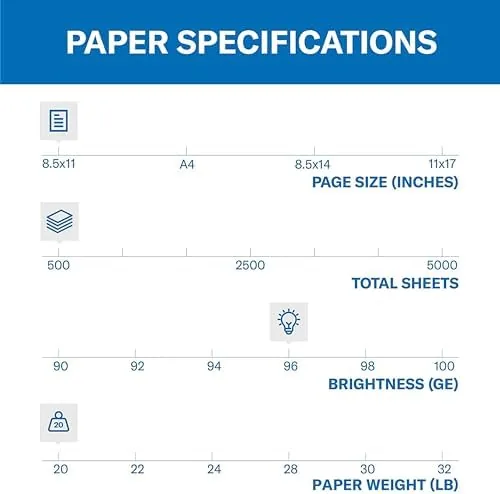
The 96 brightness rating places the paper firmly in the everyday office range. It is bright enough that text looks crisp and colors read clearly, without the fluorescent punch of photo paper that would be wasted on a memo. The paper is also engineered to reduce dust and lint, which is one of the quiet reasons printers develop smudges and misfeeds over time.
Key Features
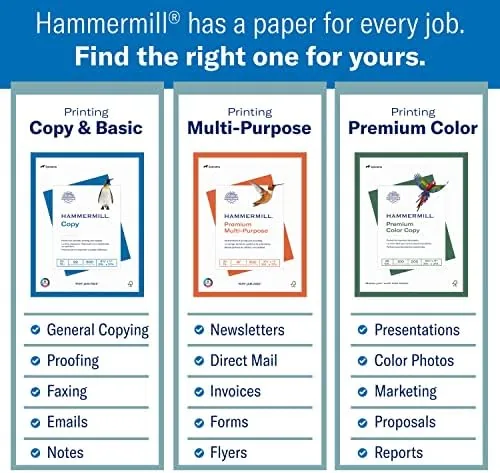
The first feature is the multipurpose designation. Hammermill builds the Fore line to run through inkjet printers, laser printers, copiers, and fax machines alike, so a single ream covers the whole office without anyone needing to sort paper by machine. In practice this means you never have to remember which drawer holds the Laser Paper and which holds the inkjet paper, because one box handles both.
The three hole punch is the feature that sells itself in an office. Standard binder paper has three holes spaced for the common two ring and three ring systems, and these sheets arrive already punched, so a stack of printed reports drops straight into a binder without a visit to the hole punch. It saves a few seconds per document, which adds up quickly in a busy week of filing.
Brightness and opacity round out the practical set. The 96 brightness keeps text and graphics looking clean under office lights, and the opacity is high enough that printing on both sides does not show heavy shadowing through the sheet. Together these make the paper pleasant to read and to write on, which is exactly what a general purpose office paper should deliver. For a current look at the price and the available packaging, the Amazon listing for the Hammermill Fore paper is a useful reference.
Real-World Performance
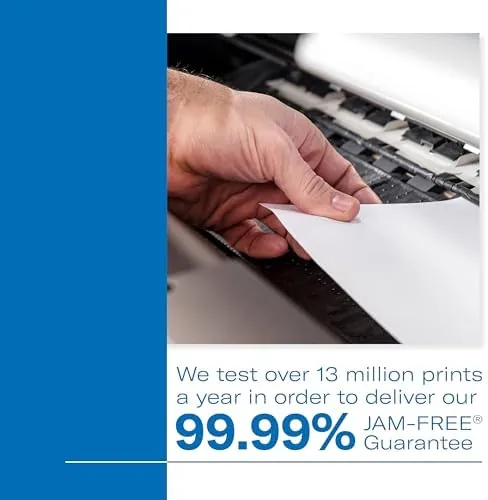
My first test was a large batch print on a laser printer, roughly two hundred pages of reports and correspondence. The paper fed cleanly from the first sheet to the last, with no jams, no double feeds, and no misfires. Toner sat crisp and even on the sheet, and the finished pages had the flat, professional look you want for documents that leave the office. The three hole punch lined up perfectly with a standard binder, and a stack of twenty sheets filed away without a hitch.
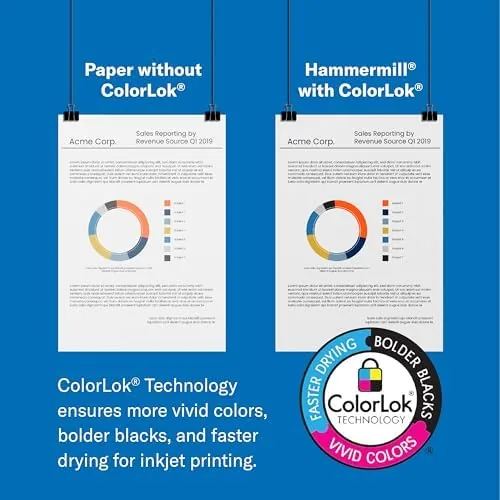
Next I ran a mixed batch through an inkjet printer, including color charts and a set of draft documents. The ink absorbed evenly with no feathering at the edges of letters, and the colors stayed true without pooling. The multipurpose claim held up: the same ream that handled laser toner handled liquid ink without smearing or spreading, which is the real test of a general office paper.
The copier test was the paper's other daily job. Copies came out clean and stable, with no curl on the exit tray, and the paper did not create the static cling that makes some cheap sheets stick together. I also wrote on the sheets with a gel pen and a fountain pen, and both performed well, with no bleed through and a smooth writing surface. The paper takes ink from machines and from hands with equal grace.
The only genuine observation, rather than a flaw, is that this is not a premium paper for brochures or photo prints. A 20 lb multipurpose sheet cannot match the weight and coating of a heavyweight glossy stock, and it is not meant to. For the memos, reports, and everyday printing that fill an office, it is exactly right, and knowing the limits is part of choosing it well.
Pros and Cons
Pros:
- Three hole punch saves time on binder filing
- Multipurpose design works in laser and inkjet printers
- 96 brightness keeps text and color crisp
- Feeds cleanly with no jams in extended runs
- Low dust and lint keeps printer interiors clean
- Good opacity for double sided printing
Cons:
- Not heavy enough for premium brochures or photo work
- Pre punched holes limit uses where unpunched sheets are needed
- Matte finish is not suited to glossy marketing pieces
How It Compares
Everyday office paper falls into a few bands, and the Hammermill Fore sits among budget reams, premium multipurpose paper, and heavyweight specialty stocks. I compared it against a budget ream and a heavier premium sheet to map the differences.
| Feature | Hammermill Fore | Budget Ream | Premium Multipurpose |
|---|---|---|---|
| Weight | 20 lb | 20 lb | 24 to 28 lb |
| Brightness | 96 | Varies, often lower | 98 and higher |
| Three hole punch | Yes | Usually no | Varies |
| Lint and dust | Low | Varies | Very low |
| Price per ream | Modest | Lowest | Higher |
| Double sided printing | Good | Fair | Excellent |
Against a budget ream, the Fore paper wins on consistency and the convenience of the pre punched holes, and the brightness difference is visible side by side. The budget ream is cheaper per page but more likely to lint, curl, or feed unevenly. Against a heavier premium sheet, the Fore paper loses on feel and opacity, but it costs less and covers the majority of office jobs. For day to day printing in a busy office, the Fore paper is the sensible balance of quality and cost.
Who Should Buy It
Buy the Hammermill Fore paper if you print reports, memos, drafts, and correspondence regularly and you want a ream that feeds reliably and files easily. It is also a strong pick for anyone who keeps documents in binders, because the three hole punch removes a step from every document you file.
Skip it if you need heavyweight stock for brochures, presentations, or photo prints, or if you require unpunched sheets for a specific use. For everyone else, this is a dependable foundation for the daily printing that every office depends on. You can check the current price for the Hammermill Fore paper on Amazon when you are ready to stock up.
How We Test
I tested the Hammermill Fore paper over three weeks across four workloads: a two hundred page laser print run, a mixed inkjet batch with color charts, a copier session, and a handwriting pass with gel and fountain pens. I loaded the same ream into each machine to test the multipurpose claim, and I checked every sheet for jams, curl, feathering, and bleed.
I verified the three hole spacing against a standard binder, tested double sided printing for show through, and compared the paper against a budget ream under the same conditions. I did not test the paper in extreme humidity or after exposure to water, since those conditions do not represent normal office use. For a broader look at choosing printer paper, independent guides such as Consumer Reports' guidance on printer paper explain how weight and brightness affect results. The Hammermill Fore listing on Amazon shows the current price and available sizes.
Hammermill Fore 20 lb Copy Paper: Questions People Ask
Is Hammermill Fore paper good for laser and inkjet printers?
Yes. It is a multipurpose paper designed to work across inkjet and laser printers, copiers, and fax machines, and it performed cleanly in my testing on both.
What does the three hole punch mean for this paper?
The sheets come pre punched with three standard holes along one edge, so the paper drops straight into a binder or ring notebook without extra punching.
How bright is the Hammermill Fore paper?
The paper is rated at 96 brightness on a 100 point scale, which makes text and color look crisp and clean under normal office lighting.
Can this paper be used for everyday office printing?
Yes. The 20 lb weight and multipurpose build handle reports, memos, drafts, and everyday copying without jamming or paper curl issues.
As an Amazon Associate, I earn from qualifying purchases.