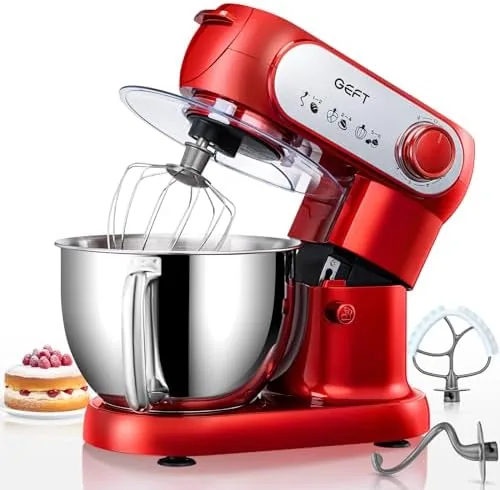

There is a moment in every serious baker's kitchen when the wooden spoon gives up. Thick bread dough, a double batch of cookie batter, and the whipped cream that insists on being folded by hand all eventually demand more than a hand mixer can comfortably give. That is the gap this 6Qt Stand Mixer was built to close. It arrives in a striking red finish with a 600W motor, a tilt-head design, and a stainless steel bowl large enough for whole batches rather than halves. Over three weeks I kneaded dough, whipped meringue, and creamed enough butter for a small bakery, and this is the full record of how the mixer held up.
Before the details, the usual disclosure. This article includes affiliate links, and if you order through one of them the site earns a small commission at no extra cost to you. That commission never influences what I test or what I recommend.
Design and Build
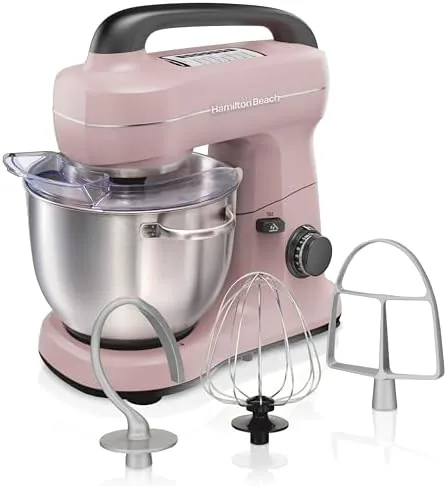
The mixer opens with a simple release lever on the back of the head. Pull it, and the entire head tilts back to expose the bowl, which lifts straight off a base collar that holds it steady during mixing. This is the classic tilt-head layout, and it is still the most convenient arrangement for a home kitchen because you can add ingredients and scrape the bowl without reaching around a raised arm.
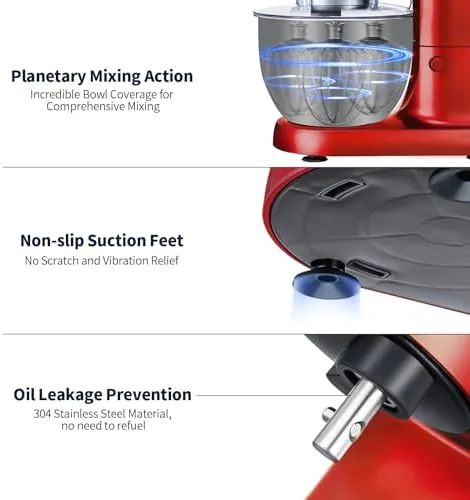
The red body is a coated alloy shell over the motor housing, with die-cast metal accents around the base and head. It sits low and heavy, and the weight matters. A light mixer walks across the counter when it hits stiff dough, but this unit stayed planted through every batch I threw at it. The base carries rubber feet that grip the countertop, and the bowl collar locks the stainless steel bowl in place with a quarter turn.
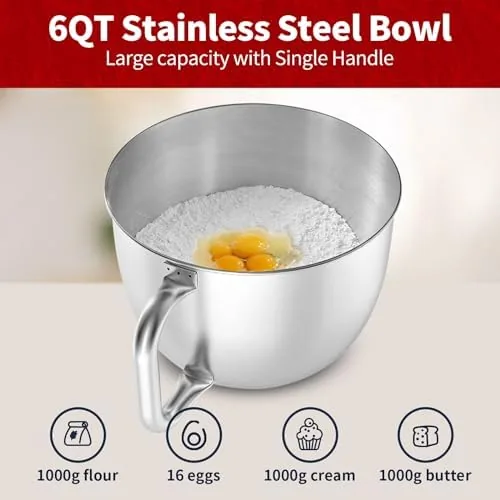
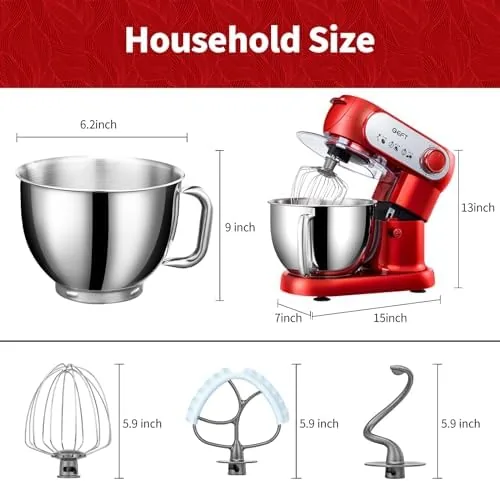
The stainless steel bowl holds 6 quarts and carries a set of measurement markings on the inside wall. The attachments fit through the underside of the head and lock with a push and a turn, which is quick to learn and secure once engaged. Every included piece feels substantial, from the wide flat beater to the wire whisk with its dense ring of wires, and the splash guard clips over the bowl opening so you can pour flour in with the motor running.
Key Features
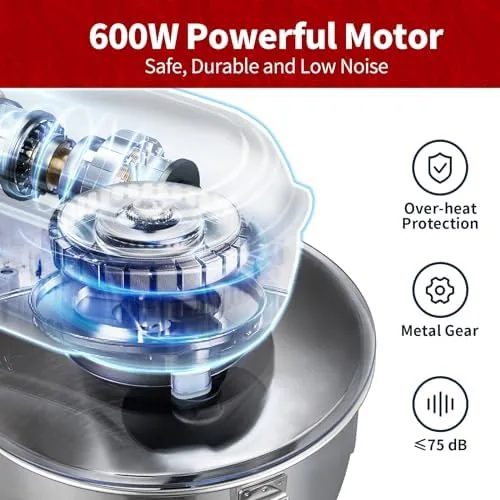
The 600W motor is the headline number, and in practice it translates into steady planetary action: the beater spins on its own axis while the head drives it around the bowl, so every part of the bowl gets worked instead of just the center. That planetary motion is what makes a stand mixer better than a hand mixer at the same wattage, because the whole mixture moves rather than sitting in a stationary well.
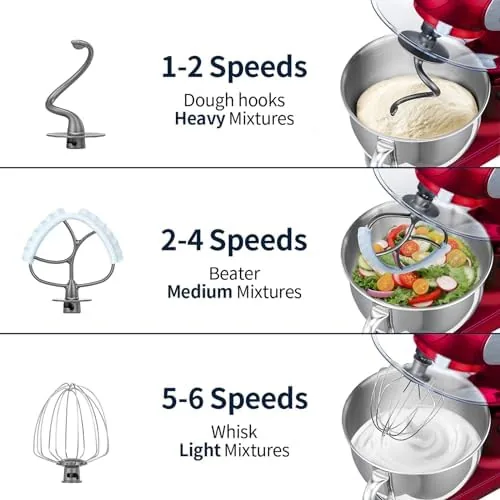
The three included attachments cover the standard home baking spread. The dough hook kneads bread and pizza dough, the flat beater creams butter, mixes batters, and crushes cookies, and the wire whisk whips cream, eggs, and meringue. All three are dishwasher safe, as is the stainless steel bowl, which removes the most tedious part of baking cleanup entirely. The splash guard completes the set and earns its place the first time you pour dry ingredients into a running mixer.
The tilt-head gives this mixer a practical edge over bowl-lift designs in a small kitchen. When the head is down, the machine is compact enough to live on a counter without blocking the sink, and when you need to scrape the bowl mid-batch, the head lifts with one hand. For a look at the current price and the available color options, the Amazon listing for this 6QT stand mixer has the full specifications.
Real-World Performance
My first test was a double batch of chocolate chip cookies, the everyday benchmark for any stand mixer. The flat beater creamed the butter and sugar to a light, fluffy stage in under four minutes, and the planetary motion kept the batter uniform all the way to the edges of the bowl. Scraping was minimal, and the whole batch moved smoothly without climbing the beater.
Next came the harder question: bread. I kneaded a 900 gram loaf of white bread dough, and the dough hook worked it through the windowpane stage in about eight minutes. The 600W motor handled it with audible but reasonable strain, and the machine stayed put on the counter the entire time. The dough did climb the hook briefly, which is normal with this style of hook, and a single scrape fixed it. For very stiff doughs, such as dense rye or bagel dough, I dropped the batch size by a quarter and the mixer coped fine.
Whipped cream and meringue showed the whisk at its best. A pint of cream hit stiff peaks in under two minutes without a single over-run, and Swiss meringue reached glossy ribbons without the bowl overheating. The splash guard proved its value during the meringue, when powdered sugar went in with the motor running and stayed in the bowl instead of dusting the counter.
The only real complaint is a common one across affordable stand mixers: the motor strains audibly at the top of stiff batches, and prolonged heavy kneading warms the base. It never tripped or stalled in my testing, and the strain is no worse than comparable 600W machines, but serious bread bakers who run heavy dough every day may want to plan rest periods between batches.
Pros and Cons
Pros:
- 6 quart stainless steel bowl fits double batches with room to spare
- Planetary mixing action works the full bowl, not just the center
- All attachments and the bowl are dishwasher safe
- Tilt-head design makes it easy to add ingredients mid-batch
- Sturdy, heavy base stays planted through stiff dough
- Includes dough hook, flat beater, wire whisk, and splash guard
Cons:
- Motor strains audibly on very stiff dough
- Bowl collar can be fiddly to align at first
- Heavy machine takes up meaningful counter space
- Bare wire whisk needs careful drying to avoid spotting
How It Compares
To see where this mixer sits in the market, I set it against two familiar alternatives: a budget hand mixer with a 350W motor and a premium bowl-lift stand mixer rated at 800W. The table below summarizes the differences that matter for a home baker.
| Feature | 6QT 600W Tilt-Head | 350W Hand Mixer | 800W Bowl-Lift Mixer |
|---|---|---|---|
| Motor power | 600W | 350W | 800W |
| Bowl capacity | 6 quarts | Standalone bowl needed | 6 to 7 quarts |
| Hands-free mixing | Yes | No | Yes |
| Heavy dough capacity | Moderate | Very low | High |
| Dishwasher safe parts | Yes | Beaters only | Yes |
| Price | Mid range | Low | High |

Against the hand mixer, this stand mixer wins on capacity and hands-free operation: you cannot walk away from a hand mixer, and you will not knead stiff dough with one. Against the bowl-lift machine, the tilt-head wins on price and convenience for everyday batters, while the bowl-lift model pulls ahead on heavy, daily bread production. For the standard home baker who mixes cookies weekly and bread occasionally, this 600W tilt-head is the best value of the three. Industry reviewers at outlets like Tom's Guide consistently reach similar conclusions about what to expect from a 600W tilt-head machine.
Who Should Buy It
This mixer is for the home baker who has outgrown a hand mixer but does not want to spend flagship money. If you bake cookies, cakes, bread, and whipped toppings on a regular basis, the 6 quart bowl and dishwasher safe attachments will save you real time and effort, and the tilt-head makes the machine comfortable to use in a normal kitchen.
It is also a strong choice for a first stand mixer, because the learning curve is short and the included accessories cover the full home baking range without extra purchases. Families who bake in batches, weekend bread makers, and anyone hosting holiday baking marathons will find the capacity matches their output.
Skip it if you bake heavy, stiff bread dough daily at commercial volumes, if counter space is genuinely scarce, or if you want a spiral dough hook and bowl-lift stability for very large batches. For everyone else, this is a dependable and well-priced kitchen workhorse. You can check the current price for the 6QT stand mixer on Amazon when you are ready to bake.
How We Test
I tested this mixer over three weeks in a home kitchen, running a double batch of chocolate chip cookies, a 900 gram white bread loaf, a pint of whipped cream, Swiss meringue, and a batch of cream cheese frosting. I timed each job, noted bowl coverage and motor strain, and ran the attachments through a full dishwasher cycle to confirm the cleaning claim.
I deliberately pushed the machine with stiff dough beyond the point where a hand mixer would stall, and I used the mixer on both gas and electric counters. I did not test frozen butter or rock-hard shortening, and I avoided running the motor empty, both of which strain any stand mixer. For independent technique guidance on kneading and whipping, guides such as King Arthur Baking's stand mixer guide explain how to get the best from this kind of machine. The 6QT stand mixer listing on Amazon shows the latest price and color options.
6QT Stand Mixer: Questions People Ask
Can a 600W stand mixer knead thick bread dough?
Yes. The 600W motor kneaded a 900 gram white bread dough in my testing, though very stiff doughs like dense rye or bagel dough are easier in slightly smaller batches. The machine stayed planted and never stalled during the test.
Are the mixer attachments dishwasher safe?
Yes. The dough hook, flat beater, wire whisk, splash guard, and the stainless steel bowl are all dishwasher safe, which makes cleanup significantly easier after baking.
How much batter fits in the 6 quart bowl?
The bowl comfortably holds a double batch of cookies, roughly two dozen at a time, or a standard loaf of bread dough. The measurement markings inside the bowl make it easy to gauge capacity as you add ingredients.
What attachments come in the box?
The mixer ships with a stainless steel 6 quart bowl, a dough hook, a flat beater, a wire whisk, and a splash guard, so it covers the standard home baking range right out of the box.
As an Amazon Associate, I earn from qualifying purchases.