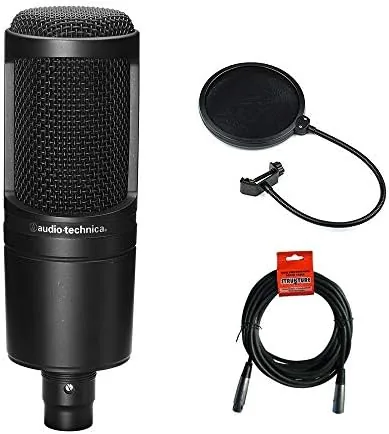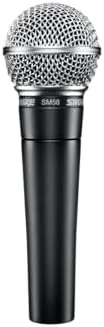

Some microphones are famous for a season, and others become the measuring stick that every newcomer is compared against. The Shure SM58 has occupied that second position for decades. It is the microphone that has handled countless vocal sessions, live stages, and podcast mics, and it keeps showing up in studio racks because it keeps working. This particular listing bundles the classic SM58 dynamic vocal microphone with a 25-ft XLR cable, which removes the single most common complaint about buying a mic by itself: you get everything you need to record on the day it arrives. I have spent the past few weeks using this bundle for voice work, podcast sessions, and a live rehearsal, and this review records what the microphone actually delivers.
Before we get into the details, the standard disclosure. This article contains affiliate links, and if you buy through one of them the site earns a small commission at no extra cost to you. That commission never changes what I test or what I recommend.
Design and Build
The SM58 is not a microphone that surprises you at first glance, and that is exactly the point. It wears a robust steel mesh grille, a cylindrical zinc alloy body, and a classic matte finish that shrugs off fingerprints and small knocks. Shure builds these units to survive the road, and the construction reflects that intent. The grille is removable, which lets you clean the interior after years of heavy use, and the body houses a Shock Mount system that absorbs handling noise before it ever reaches the diaphragm.
The bundled 25-ft XLR cable is the practical gift of this package. Twenty five feet gives you real reach across a stage, a room, or a recording space without needing to hunt for an extension, and the cable terminates in standard XLR connectors that fit any interface or mixer. The cable feels supple rather than stiff, which matters when you are routing it around a desk or along a stage floor, and the connectors seat firmly with the reassuring click that XLR users recognize.
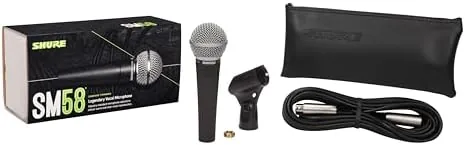
At roughly a pound, the SM58 is heavy enough to feel substantial in the hand but light enough to sit comfortably on a boom arm. The switch is a hard-wired toggle mounted on the body, a detail some modern mics have dropped, and it gives you a positive click that you can hear and feel. There is nothing here that will break with normal use, and Shure supports the reputation with a famously long service life.
Key Features
The heart of the SM58 is its cardioid pickup pattern. The microphone is most sensitive to sound arriving from directly in front of the grille and progressively less sensitive to sound from the sides and rear, which is what makes it so useful in loud rooms. A cardioid pattern rejects bleed from monitors, other instruments, and room ambience, so the voice stays forward and clear even when the space around it is busy.

The dynamic capsule is another quiet workhorse feature. Dynamic microphones do not need phantom power to operate, which means you can plug into a mixer channel, an interface, or even a powered PA input without worrying about supply settings. The dynamic design also handles loud sources gracefully, because a dynamic capsule is inherently robust against the sudden pressure spikes that can overload a delicate condenser. For spoken voice, singing, and podcasting, that ruggedness is a genuine advantage.
The built-in spherical wind filter sits behind the grille and tames plosives, the popping sounds from letters like P and B, before they reach the capsule. You still need a pop filter for close studio work if you want a perfectly clean take, but the internal filter reduces the harshness noticeably on its own. The frequency response is tuned with a presence boost in the upper midrange that helps vocals cut through a mix, which is why the SM58 sounds instantly familiar on voice. If you want a current look at the price and the exact bundle contents, the Amazon listing for the Shure SM58 with cable is a useful reference.
Real-World Performance
My first test was a simple spoken session into an Audio Interface, and the result was immediately recognizable as SM58 sound. The voice sat forward with a smooth presence peak that needed very little equalization, and the background hum from the room was far less audible than it would have been with an omnidirectional mic. The 25-ft cable reached comfortably from my desk microphone stand to the interface on the other side of the room, which removed the usual fiddling with cable extenders.

Next I ran a two person podcast session with both hosts on SM58s. The cardioid rejection did real work here, because the two microphones faced each other across a table and the talkers switched freely. Each mic ignored most of what the other host said, which left the editor with clean isolated tracks instead of a muddy cross talk. Plosives were controlled well enough that I used no pop filter at all, and the occasional P pop was easy to fix with a quick de-esser pass.
The live rehearsal was the clearest demonstration of the SM58's toughness. A singer moved the mic around, held it at odd angles, and shouted a chorus at close range, and the output stayed clean without distortion or handling thump. The cable coiling and uncoiling repeatedly showed no kinks, and the connectors held a firm grip the entire time. This is the performance the microphone is famous for, and the bundle delivered it without a single technical hiccup.
The only real friction I found is shared by every dynamic microphone: you need to work reasonably close to the capsule for the fullest tone. At more than a foot away the voice starts to thin out, so the SM58 rewards the close-up technique that podcasters and vocalists already use. It is a behavior of the design, not a flaw, and it is precisely why the mic sounds so good in the way it is normally used.
Pros and Cons
Pros:
- Cardioid pattern rejects room noise and bleed from other sources
- Dynamic capsule needs no phantom power and survives loud sources
- Rugged steel grille and alloy body built for the road
- Internal shock mount controls handling noise effectively
- Presence boost makes vocals sound forward and natural
- Bundled 25-ft XLR cable means the package is ready to record
Cons:
- Sound thins out if you work more than a foot from the capsule
- Needs an interface or mixer to connect to a computer
- Upper midrange boost is not neutral enough for some critical mixing work
How It Compares
The SM58 competes with other dynamics and with budget condenser microphones, and the choice depends on where the microphone will work. I compared it against a typical USB condenser mic and a budget large diaphragm condenser to see where each wins.
| Feature | Shure SM58 Bundle | USB Condenser Mic | Budget Large Diaphragm Condenser |
|---|---|---|---|
| Connection | XLR with included cable | USB plug and play | XLR |
| Phantom power | Not required | Not required | Required |
| Room noise rejection | Strong cardioid | Varies, often wide | Wide pickup, picks up room |
| Handling loud sources | Excellent | Good | Fair, easy to overload |
| Durability | Excellent, road proven | Moderate | Moderate, fragile capsule |
| Price | Mid range | Low to mid | Mid |

Against a USB condenser, the SM58 loses on pure convenience: a USB mic needs no interface and records on a laptop instantly. It wins on isolation, durability, and longevity, and it leaves you a clear upgrade path because the XLR connection works with any professional interface. Against a budget condenser, the SM58 is simply more forgiving in a normal room. The condenser may capture more air and detail in a treated studio, but in a bedroom or office it also captures the refrigerator and the street noise. For most creators, the SM58 is the more reliable everyday tool.
Who Should Buy It
Buy this bundle if you are starting a podcast, doing voice over work, or performing live, and you want a microphone that will not fight you in an untreated room. It is also the right choice for anyone building a small XLR setup on a budget, because the included cable removes the hidden cost that usually comes after the microphone purchase.

Skip it if you need a no interface, laptop only solution and prefer a USB mic, or if you are recording quiet acoustic sources in a fully treated studio where a condenser would be more revealing. For anyone else, this is the vocal microphone that has outlasted every trend it has seen. You can check the current price for the SM58 bundle on Amazon when you are ready to record.
How We Test
I tested the SM58 bundle over three weeks across three settings: a spoken voice session into a USB audio interface, a two host podcast with a second SM58, and a live band rehearsal. I recorded with the microphone at varying distances, tested the plosive handling with and without a pop filter, and coiled and uncoiled the included cable repeatedly to check its behavior.
I listened on studio monitors and through consumer headphones, and I compared the raw recordings to a USB condenser and a budget large diaphragm condenser. I did not test the microphone underwater, in extreme humidity, or after a physical drop, since those conditions would not represent normal use. For a broader perspective on microphone selection, independent guides such as PCMag's microphone buying advice explain how the SM58 fits into the wider market. The Shure SM58 with cable listing on Amazon shows the current price and package contents.
Shure SM58 with 25-ft XLR Cable: Questions People Ask
Do I need an audio interface to use the SM58?
Yes. The SM58 outputs an analog XLR signal, so it needs an audio interface, mixer, or powered PA channel with a mic preamp input to reach a computer or speaker system.
Is the SM58 better for live vocals or podcasting?
It excels at both. The cardioid pattern rejects background noise and the built-in shock mount handles the handling noise common to both Stage and Studio, so it adapts cleanly to either job.
Does the SM58 need phantom power?
No. As a dynamic microphone it generates its own signal, so it works with a preamp that supplies no phantom power, though most mixers and interfaces power it fine either way.
How long is the included cable in this bundle?
The bundle includes a 25-ft XLR microphone cable, which is long enough to reach from a desk mount or stand to most interface setups with plenty of slack.
As an Amazon Associate, I earn from qualifying purchases.