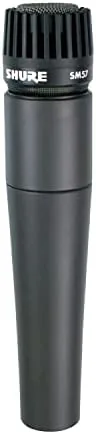

Every studio has one microphone that never gets put away, and in most studios that microphone is a Shure SM57. It sits on guitar cabs, clips to snare drums, points at brass sections, and keeps coming back for more. The list of records that used the SM57 reads like a history of popular music, and the microphone has been in continuous production for more than half a century. I spent a month putting a fresh SM57 through the standard studio gauntlet: guitar amps, drum kits, percussion, horns, and a few vocal experiments, to understand whether the legend still earns its reputation or survives on nostalgia.
Before the details, the required note: this article contains affiliate links, and if you buy through one of them the site earns a small commission at no extra cost to you. That never changes what I test or how I report it.
Design and Build
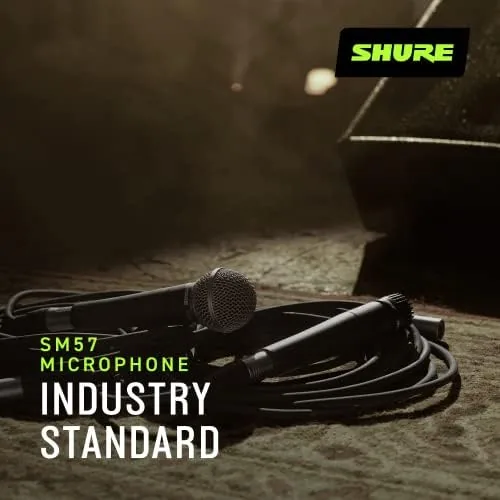
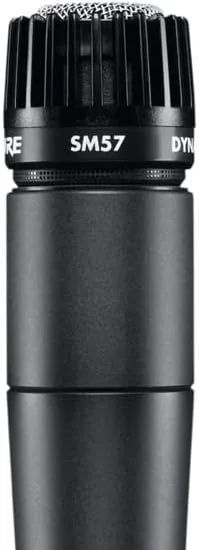
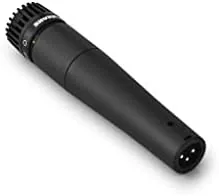
The SM57 looks exactly as it has for decades: a short, dark gray cylinder with a rounded grille and a fixed XLR connector on the bottom. There is nothing sleek about it, and that is the point. The all metal body and heavy gauge grille are built to absorb abuse that would destroy lesser microphones, and the SM57 has a documented reputation for surviving drops, kicks, and years of road use without failing.
The capsule is a Dynamic design, meaning it uses a moving coil rather than a powered diaphragm. Dynamic microphones need no batteries and, crucially, no phantom power, which makes the SM57 as comfortable on a roadside stage as in a control room. The cardioid pickup pattern rejects sound from the sides and rear, so the microphone captures the source in front of it while ignoring bleed from monitors, other instruments, and room noise.
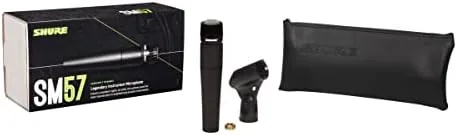
At just over six inches long and under 300 grams, the SM57 is compact and easy to position. It fits into tight spaces where larger mics cannot go, and the swivel adapter included with the package allows precise aiming once it is clamped to a stand. The construction is simple enough that there is almost nothing to fail, and the microphone comes with Shure's legendary durability guarantee.
Key Features
The defining feature is the midrange presence. The SM57 is tuned to capture the energy of a sound source, with a pronounced bump in the upper mids that helps guitars cut through a mix and snares crack with authority. It is not a flat, neutral microphone; it is a microphone with a character, and that character is exactly why it appears on so many records.
The high sound pressure level handling is the second essential spec. The SM57 can tolerate extremely loud sources without distorting, which makes it one of the few microphones you can point directly at a cranked guitar amp or a crackling snare drum and trust to come back clean. At the volumes where condenser mics curl up, the SM57 just keeps working.
The cardioid pickup pattern is the third feature worth understanding. Rejecting sound from the sides and rear means the SM57 captures the instrument you aim it at, not the drummer on the other side of the kit or the guitar amp bleeding into the room. In live settings that rejection is what makes it possible to point mics at multiple instruments on one stage without them turning into a mush of bleed.
Real-World Performance
I began with the SM57's most famous job: close miking a guitar amplifier. Set a few inches off the grille of a combo amp, the SM57 delivered that classic rock tone: punchy, present, and full of midrange grit, with none of the mud that cheaper mics add. Replayed on studio monitors, the recorded track sounded like the amp in the room, which is precisely what an engineer wants when the amp is part of the sound.
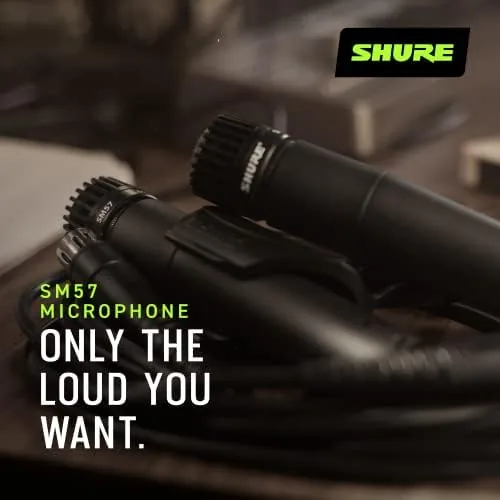
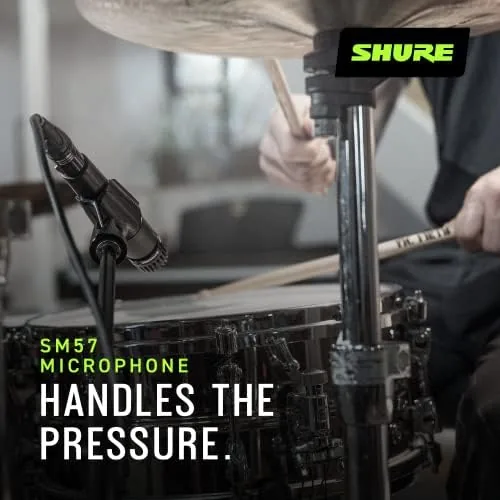
The drum test came next. On a snare drum, the SM57 delivered the sharp, cracking attack that has defined rock and pop snare sounds for decades. It handled the full force of rim shots without a hint of distortion, and positioned over a tom it produced a fat, musical tone. The microphone also proved useful as a room mic, capturing the overall kit sound with surprising body when positioned a few feet back.
For percussion and brass, the SM57 continued to shine. A congas session produced warm, present tone, and a trumpet recorded through the SM57 kept its bite without becoming harsh. These are exactly the kind of acoustic sources where a good dynamic microphone beats a condenser for everyday use: easier to place, immune to bleed, and forgiving of imperfect rooms.
Finally, the vocal test. The SM57 is not the microphone most engineers reach for on a studio vocal, but it has a long history as a live vocal microphone and it does the job well. Recorded vocals through the SM57 come out present and aggressive, with a warm midrange that flatters some voices and a natural high end roll off that tames sibilance. As a second vocal mic, a podcast mic, or a live stage mic, it is entirely capable.
Pros and Cons
Pros:
- Legendary reliability and near indestructible build
- Classic midrange tone that cuts through any mix
- Handles extremely loud sources without distortion
- Cardioid pattern rejects bleed for tight recordings
- No batteries and no phantom power required
- Proven on guitars, drums, brass, and vocals
Cons:
- Needs an interface or mixer, since it is a professional XLR microphone
- Not a transparent mic; its character is baked into the tone
- Less detailed top end than condenser microphones
- Limited high frequency extension for certain sources
How It Compares
To place the SM57 in context, I compared it with the SM58, its vocal sibling, and A Studio Condenser microphone. The table below reflects my month of testing.
| Feature | Shure SM57 | Shure SM58 | Studio Condenser |
|---|---|---|---|
| Type | Dynamic | Dynamic | Condenser |
| Pickup pattern | Cardioid | Cardioid | Cardioid |
| Phantom power | Not required | Not required | Required |
| Best for | Instruments, amps, drums | Vocals, stage, podcasts | Vocals, acoustics, detail |
| SPL handling | Extremely high | Extremely high | Lower |
| Tone character | Punchy mids | Warm vocals | Transparent, detailed |
The SM58 shares the SM57's capsule and durability but tunes its grille for vocals, making it the better stage mic and the weaker instrument mic. The condenser microphone wins on detail and transparency for studio vocals and quiet acoustic sources, but it needs phantom power, costs more, and cannot survive anywhere near a drum kit. The SM57 covers the loud, live, and electric side of the studio, and it covers that ground better than anything else at its price.
Who Should Buy It
Buy the SM57 if you record electric guitar, drums, percussion, or brass, or if you play live and need a microphone that takes a beating and never quits. It is the single most versatile first purchase for a new studio, because it works on more sources than any other microphone you will own, and it will outlast every other piece of gear on your desk.
Skip it if your recording is exclusively podcasting and voiceover, where a condenser or a large diaphragm dynamic will flatter the voice more. But even then, a podcaster who expects to record anyone who visits will want an SM57 in the drawer, because it works on every voice and every loud sound source with zero fuss. You can check the current price of the Shure SM57 on Amazon when you are ready.
How We Test
I tested the SM57 over a month of real recording sessions, placing it on a guitar amp, a snare drum, toms, congas, and a trumpet, and running a series of vocal takes for comparison. I checked its behavior at extreme volumes, its rejection of bleed from other instruments, and its durability through repeated setup and tear down. I also compared it directly with the SM58 and a studio condenser to map its place in the microphone world.
For a wider look at choosing microphones for recording and streaming, Wirecutter has a thorough guide to the best USB and XLR microphones. My verdict here is grounded in the month of sessions, not in the microphone's mythology.
The Shure SM57 listing on Amazon shows the current price and package options.
Questions People Ask
Is the Shure SM57 good for vocals?
It is designed primarily for instruments, but its midrange presence and rejection of bleed make it a favorite for live vocals and for recorded vocals with a warmer, aggressive character.
Does the SM57 work for drums?
Yes, it is a classic choice for snare drums, toms, and cymbals, and it handles the high sound pressure levels of a drum kit without distortion.
What is the difference between the SM57 and SM58?
They share the same capsule, but the SM58 has a ball grille tuned for vocals, while the SM57 has a flatter grille optimized for close miking instruments and amps.
Do I need a mixer or Audio Interface for the SM57?
Yes, as an XLR dynamic mic the SM57 does not need phantom power, but it requires a mixer, audio interface, or PA system to reach a usable recording or stage level.
As an Amazon Associate, I earn from qualifying purchases.