 Ceramic Frying Pan in white sitting on a stovetop" width="1200" height="800" loading="lazy" style="height:auto">
Few pans get used as often as a small skillet. It makes the morning omelette, reheats a single portion, toasts nuts, and turns out a perfect fried egg without a whisper of sticking. The SENSARTE 8 inch ceramic nonstick frying pan is built for exactly this kind of work, and it makes a specific promise that sets it apart from the crowded field of budget nonstick cookware: the ceramic coating is free of PFOA, PFAS, and PTFE, the chemicals that have made traditional nonstick surfaces a point of concern for many cooks. I spent three weeks cooking eggs, vegetables, and delicate fish in this little pan across gas and induction cooktops, and this is the honest record of what daily ownership looks like.
A quick note before the details. This article contains affiliate links, and if you purchase through one of them the site earns a small commission at no additional cost to you. That commission never influences what I test or what I recommend.
Design and Build
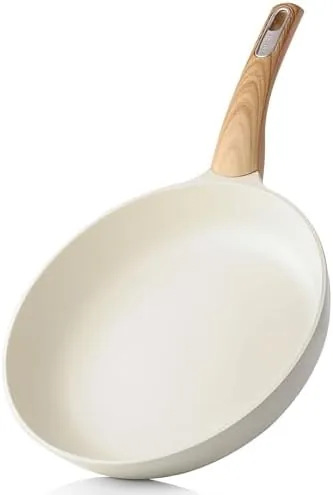
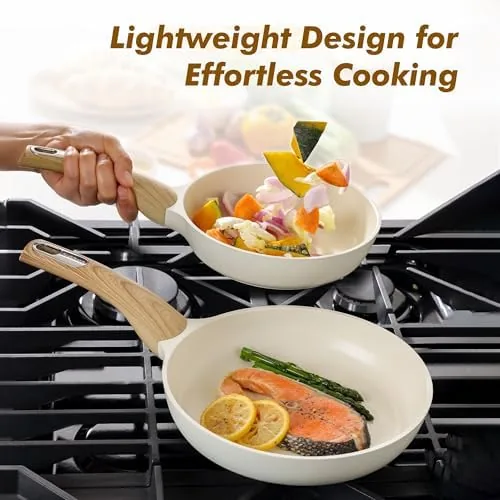
The pan arrives in a clean white ceramic finish that looks more expensive than its price suggests. The exterior is a smooth, glossy white, while the interior carries the same ceramic surface in a matching tone, so there is no jarring visual split between the two. The overall silhouette is compact and shallow, with gently sloped sides that make flipping an omelette or sliding a crepe onto a plate feel natural. The short, wide footprint sits comfortably on a standard burner and leaves plenty of room beside it when cooking several dishes at once.
The build itself is where the value shows. The pan has an aluminum core for even heat distribution, and the base is flat and stable with no wobble on a grate or a glass top. The handle is comfortable in the hand and stays noticeably cool during normal stovetop cooking, which I appreciated on mornings when I was juggling a coffee cup in the other hand. The pan is light enough to toss with one wrist, yet it does not feel flimsy when you lift it full of food.
Fit and finish are tidy across the board. The rim is smooth with no rough casting marks, and the coating is applied evenly with no thin patches at the edges, which is the area where cheap pans fail first. It is a simple pan, and that simplicity works in its favor.
Key Features
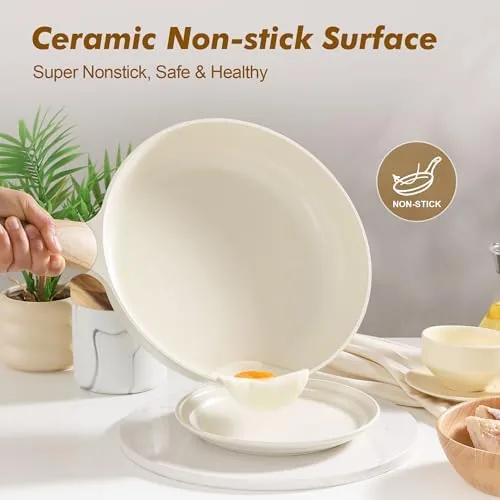
The headline feature is the ceramic nonstick coating, and it deserves the attention it gets. Unlike PTFE based coatings, this surface is made without PFOA, PFAS, or PTFE, which means the pan offers a nonstick release without the chemical footprint of traditional nonstick pans. For cooks who worry about what their cookware releases at high heat, that distinction is meaningful, and the coating also handles acidic ingredients like tomatoes without the reaction you sometimes see on bare metal.
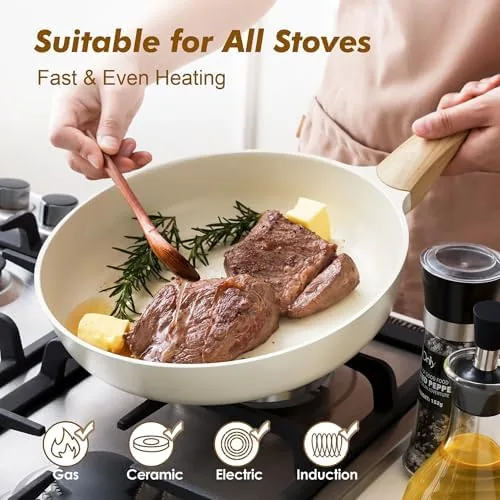
The second big feature is induction compatibility. A lot of cheap nonstick pans are aluminum through and through, which leaves them useless on induction burners. The SENSARTE pan has a ferromagnetic base, so it locks onto an induction coil within a second and heats fast and evenly. It also works on gas, electric, and halogen cooktops, which makes it a rare universal performer in this price band.
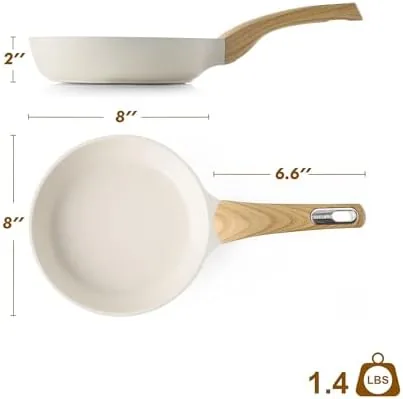
The size is the third feature that matters in practice. Eight inches is small enough for a single serving of eggs or a crepe, yet deep enough for a quick vegetable saute or a single fish fillet. It heats quickly because of its small mass, which keeps your energy bill down and gets breakfast on the table faster. For a current look at the price and available sizes, the Amazon listing for the SENSARTE 8 inch ceramic frying pan is a useful reference.
Real-World Performance
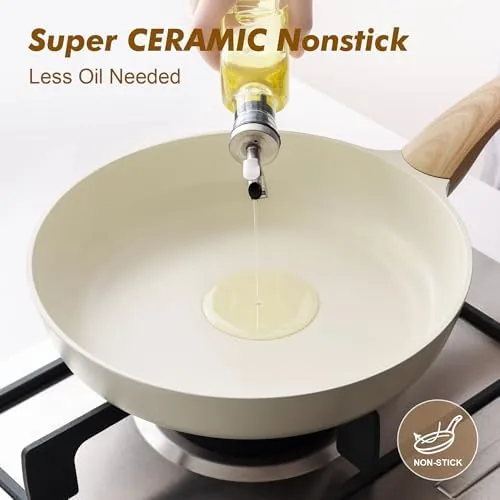
My first test was the classic stress test: a fried egg cooked in a lightly buttered pan. The egg slipped around freely with no sticking at the edges, and the white cooked evenly without browning too fast at the rim. That evenness carried over to a two egg omelette, which folded cleanly with a silicone spatula and slid out of the pan in one piece, no tearing, no piling up on the plate.
I moved on to a hash of diced potatoes and onions with a light oil coating. The potatoes browned nicely without scorching, and any bit that tried to stick lifted free with a gentle scrape. Then came a delicate piece of tilapia, which can disintegrate into mush in an aggressive pan. The fish seared, released, and flipped without breaking, which tells you the surface is working as advertised even on foods that are brutal on nonstick coatings.
On induction, the pan impressed most. It went from cold to a sizzle in well under a minute, and the heat spread across the whole base instead of concentrating in a hot ring. Temperature control felt direct and responsive, which matters for delicate egg work where a few degrees can be the difference between creamy and rubbery.
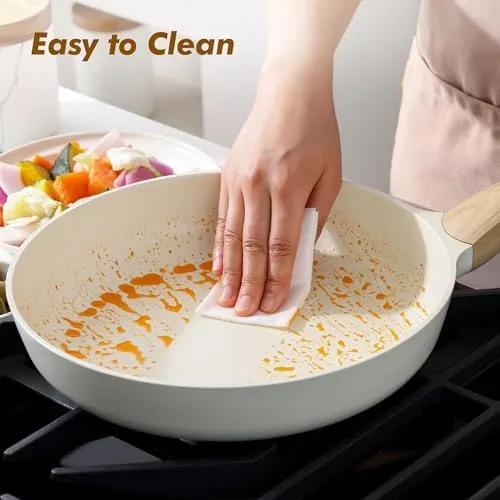
The honest caveat is that ceramic nonstick does not last forever, and its lifespan depends on care. By the end of my three weeks the pan still released food perfectly, but I stuck to silicone and wooden tools, washed it by hand, and never heated it empty, all of which protect the coating. Treat it well and it rewards you; abuse it with metal utensils and high heat and you will shorten its life. Cleanup was consistently a thirty second job with warm water and a sponge.
Pros and Cons
Pros:
- Ceramic coating is free of PFOA, PFAS, and PTFE
- Truly nonstick release for eggs, fish, and vegetables
- Induction compatible base that heats fast and evenly
- Light and compact, ideal for single servings and small kitchens
- Handle stays cool during normal stovetop use
- Easy cleanup with warm water and a sponge
Cons:
- Ceramic coating needs gentle care and hand washing
- Eight inch size is too small for family sized portions
- Not the best choice for very high heat searing
- Coating will wear over time with heavy use
How It Compares
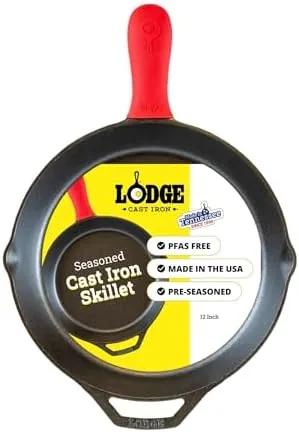
To judge the SENSARTE fairly, I compared it with a traditional PTFE Nonstick Skillet and a seasoned cast iron skillet in the same size range. Each approach has real strengths, and the differences show up fast in the kitchen.
| Feature | SENSARTE Ceramic Pan | PTFE Nonstick Skillet | Cast Iron Skillet |
|---|---|---|---|
| PFOA and PFAS free | Yes | Usually yes | Yes, bare metal |
| Egg release | Excellent | Excellent | Good when seasoned |
| Induction compatible | Yes | Depends on model | Yes |
| Weight | Light | Light to medium | Heavy |
| High heat searing | Limited | Limited | Excellent |
| Care | Hand wash | Hand wash | Seasoning needed |
Against a PTFE skillet, the SENSARTE matches it on release while offering a coating chemistry that some cooks prefer. Against cast iron, it loses on heat retention and high heat searing, but it wins dramatically on weight and ease of cleanup. Cast iron also needs regular seasoning and patience, while the SENSARTE is ready to go out of the box. If your cooking is mostly eggs, vegetables, and light proteins, the ceramic pan is the most convenient everyday choice of the three.
Who Should Buy It
Buy this pan if you cook eggs most mornings, live in a small kitchen or cook for one or two, and want a nonstick surface without the PFOA, PFAS, and PTFE chemistry of traditional pans. It is also a smart pick for anyone who recently moved to induction and discovered their old nonstick cookware does not work anymore, since this pan steps onto the coil without hesitation.
Skip it if you regularly feed a family of four with one pan, if your cooking is built around aggressive high heat searing, or if you prefer the heft and durability of cast iron or stainless steel. For most daily cooks, though, this is an affordable, genuinely pleasant small skillet. You can check the current price for the SENSARTE 8 inch ceramic pan on Amazon when you are ready to upgrade.
How We Test
I tested the SENSARTE pan over three weeks of near daily use on a gas cooktop and an induction burner. I cooked fried eggs, folded omelettes, a potato hash, and a delicate fish fillet, and I tracked how the coating handled sticking, browning, and cleanup after every session. I also ran temperature checks to confirm that the base heated evenly rather than in a hot spot.
I limited myself to silicone and wooden utensils and hand washing to reflect realistic owner behavior, and I did not heat the pan empty or take it to extreme temperatures, which damage any nonstick coating. For broader context on how nonstick cookware is made and what the PFOA and PFAS questions mean, independent reporting such as Wirecutter's guide to nonstick skillets explains the trade offs in detail. The SENSARTE 8 inch ceramic pan listing on Amazon shows the current price and available sizes.
SENSARTE 8 Inch Ceramic Frying Pan: Questions People Ask
Is the SENSARTE ceramic pan really free of PFOA, PFAS, and PTFE?
Yes. The ceramic coating on this pan is formulated without PFOA, PFAS, and PTFE, so you get a nonstick surface that avoids the chemicals traditionally associated with nonstick cookware.
Does the 8 inch pan work on induction cooktops?
Yes. The pan has a ferromagnetic base that engages induction burners quickly, and it also works on gas, electric, and halogen cooktops, making it a flexible addition to most kitchens.
Can I use metal utensils with this pan?
The ceramic surface is tougher than traditional nonstick, but it is still a coating. Silicone or wooden utensils are the safest choice and will keep the release surface smooth for much longer.
How do I clean and care for the ceramic surface?
Warm water and a soft sponge handle most residue. Let the pan cool before washing, avoid harsh abrasives, and you will protect the glossy finish and the nonstick performance.
As an Amazon Associate, I earn from qualifying purchases.