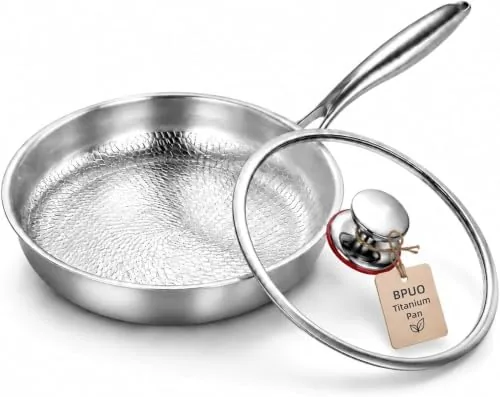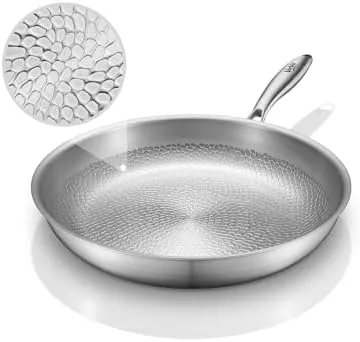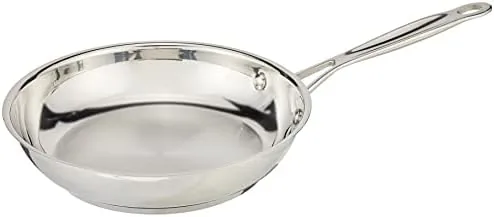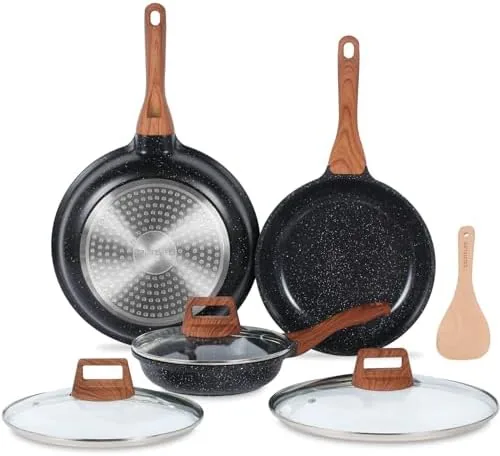

Few things feel as good in a kitchen as a pan that releases an omelette cleanly. The egg slides free, the flip is confident, and the clean up is a quick wipe instead of a soak and a scrub. The ESLITE LIFE Nonstick Ceramic Frying Pans Skillets Set promises that experience without the chemicals that make some people hesitate about traditional nonstick, and it adds glass lids plus induction compatibility to the bargain. I cooked with this set across gas and induction for several weeks to see whether the ceramic coating really delivers.
Before the details, the standard note. This article contains affiliate links, and if you buy through one of them the site earns a small commission at no extra cost to you. That commission does not change what I test or what I recommend, and these pans were cooked on in my own kitchen exactly the way a home cook would use them.
Ceramic nonstick has become a popular middle ground in cookware: it aims for the slippery release of traditional nonstick while skipping the PTFE coating that some cooks avoid. The ESLITE LIFE set is a budget friendly entry into that category. The rest of this review covers the build, the coating, how the pans behave on different stovetops, and how long the nonstick really lasts.
Design and Build
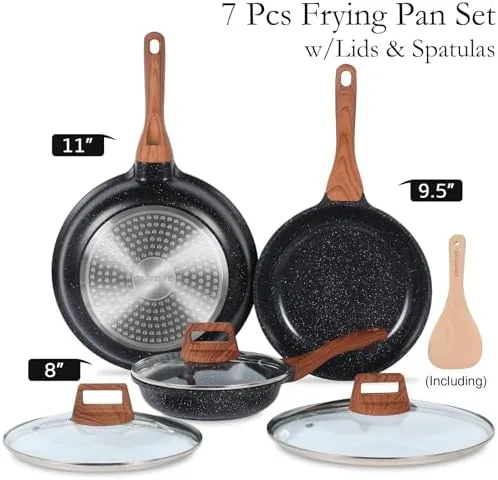
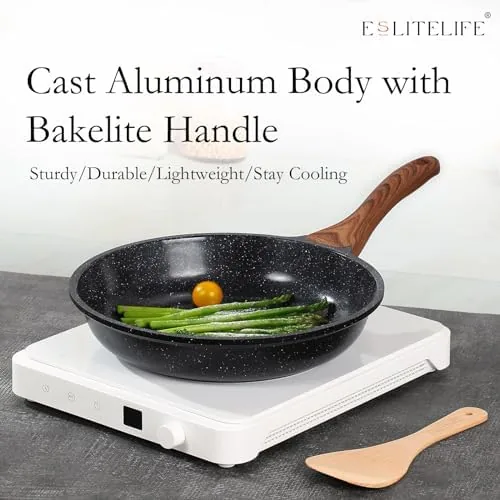
The set includes two frying pans, a smaller one for eggs and a larger one for family sized cooking, and each pan comes with a snug glass lid. The pans have a matte black ceramic finish on the outside and a light ceramic interior, and the look is clean and modern rather than cheap. The handles are riveted to the bodies and stay cool enough to grab during cooking, with a comfortable shape that does not wobble when you lift a loaded pan.
The construction feels heavier than the price suggests. The pan bases are thick enough to hold heat without warping, and the flat, heavy bottom sits level on the burner instead of rocking. The lids are tempered glass with a small steam vent and a metal rim, and they fit their pans tightly enough to trap steam when you want a simmer but come off easily with the handle. Nothing about the build feels flimsy out of the box.
Key Features
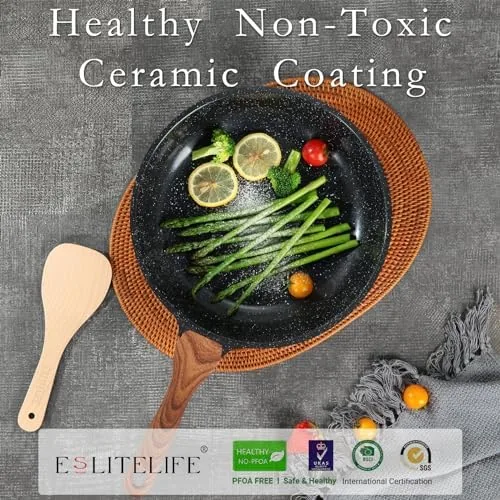
The headline feature is the ceramic nonstick coating, which is advertised as PTFE and PFOA free. Traditional nonstick pans use a coating family that has raised questions over the years, and the ceramic finish on these pans gives the same slippery release while skipping that ingredient entirely. For cooks who have been waiting for a nonstick option without the chemical worry, this is the entire point of the set.
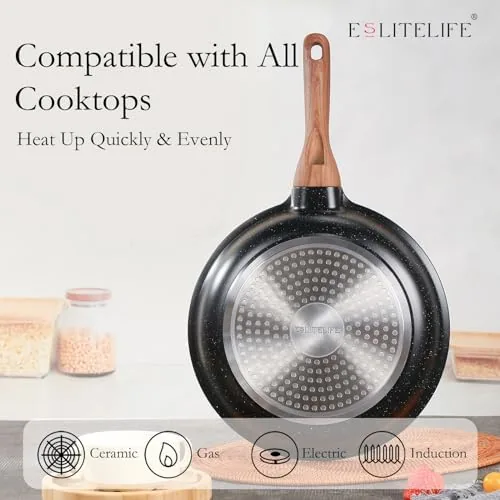
The induction compatibility is the second feature that earns attention. Not every budget nonstick set works on an induction cooktop, but these pans have a steel friendly base that responds well to induction heating, alongside gas, electric, and ceramic stovetops. The pan base is flat and stable, which is exactly what an induction burner needs to make good contact.
The glass lids round out the package. A lid that fits well turns a frying pan into a shallow braising vessel, and these lids let you steam vegetables, melt cheese, or simmer a sauce without splattering the stovetop. The oven safe rating on the pans means they can finish in the oven as well, which extends the set well beyond basic stovetop frying.
Real-World Performance
The egg test is the honest measure of any nonstick pan, and the smaller skillet passed it on the very first morning. A buttered omelette slid around the surface with a light shake, folded cleanly, and released onto the plate without a single tear. A fried egg needed no more than a whisper of oil, and the flip was effortless. For anyone who cooks eggs daily, the pan earns its place in the drawer within a single breakfast.
On the induction cooktop, the larger pan impressed me. Induction can be unforgiving with thin pans, but the ESLITE base heated evenly across the surface, with no hotspot in the center and no cold edge that left food raw in the middle. A batch of pancakes browned uniformly, and a quick sear on a chicken breast produced an even crust. The pans come up to temperature quickly on induction, which is exactly what you want on a busy weeknight.
The lids did real work during the review. A pot of green beans steamed under the smaller lid without the stove turning into a splatter zone, and the larger pan became a quick braising vessel for chicken thighs in a sauce, with the steam trapped and the flavor concentrated. The pans are advertised as oven safe, and I finished a frittata under the broiler in the larger skillet without any damage to the coating.
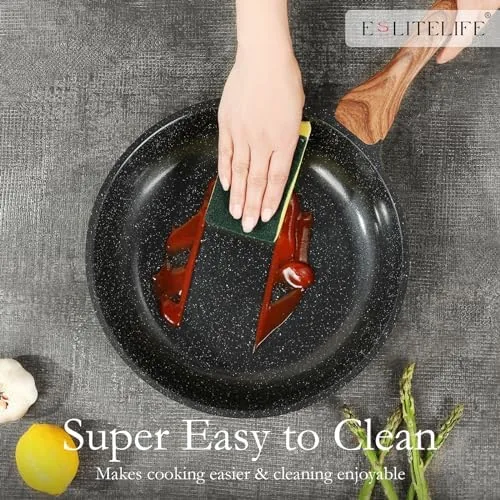
Clean up was the quiet win. Food releases so completely that most meals need only a warm rinse and a wipe, which is the whole promise of nonstick done right. I hand washed the pans through the review rather than risking the dishwasher, and the coating kept its slick feel and matte finish with no scratches, no discoloration, and no signs of the surface breaking down.
The honest trade offs are the ones that apply to every ceramic pan. The coating is more delicate than traditional nonstick, so metal utensils are a hard no, and the pans ask for gentle heat, medium or below, to keep the surface healthy. Over the weeks I found the pans still very nonstick, but ceramic is not as forgiving as some traditional nonstick finishes, and a heavy metal spatula would shorten its life quickly. The handle also gets warm over long cooking, so a trivet is a good idea when the pan comes off the burner.
Pros and Cons
Pros:
- Ceramic coating is PTFE and PFOA free
- Excellent nonstick release on eggs and delicate foods
- Works on gas, electric, ceramic, and induction cooktops
- Even heating with no hotspots on induction
- Included glass lids trap steam for braising
- Oven safe pans extend the cooking options
Cons:
- Ceramic coating needs metal free utensils and gentle heat
- Handles warm up during longer cooking
- Dishwasher is advertised but hand washing is safer
How It Compares
The main choice in nonstick cookware is ceramic versus traditional PTFE coating, and the trade off is worth seeing in a table.
| Feature | ESLITE Ceramic | Traditional Nonstick |
|---|---|---|
| Coating type | Ceramic, PTFE and PFOA free | Polymer based coating |
| Egg release | Excellent with light oil | Excellent, often even slicker |
| Heat limit | Prefers medium or below | Usually higher heat safe |
| Utensil rules | Metal free only | Metal free recommended |
| Durability | Good with care | Good with care |
| Chemical concern | None advertised | Depends on the brand |
Traditional nonstick is often slicker right out of the box and tolerates more heat, while ceramic offers the same daily cooking experience without the chemical ingredient that some cooks want to avoid. Both need careful treatment to last. For a budget conscious kitchen that cooks mostly eggs, vegetables, and delicate proteins, the ceramic set is the reassuring choice.
Who Should Buy It
Buy the ESLITE LIFE set if you cook eggs and delicate food daily, if you want a nonstick option without PTFE or PFOA, or if you need pans that work on an induction cooktop without spending stainless steel money. It is also a strong choice for a first apartment, a small kitchen, or anyone downsizing to a focused set of good pans.
Skip it if you cook mostly over high heat, or if you know you will reach for metal utensils, because ceramic needs gentler treatment. For the right cook, this is a set that makes daily cooking easier. You can check the current price of the ESLITE LIFE ceramic pan set on Amazon when you are ready to buy.
How We Test
I cooked with the ESLITE LIFE set on both a gas burner and an induction cooktop over several weeks, testing egg release, even heating, searing, and braising with the glass lids. I tracked the condition of the ceramic coating through hand washing and checked the pans for warping, discoloration, and loss of nonstick performance.
I did not run the pans through the dishwasher, and I did not push them beyond the medium heat range that ceramic coatings prefer. For a deeper look at how nonstick coatings differ, America's Test Kitchen has a detailed buying guide to nonstick cookware that explains the coating trade offs clearly. The ESLITE LIFE pan set listing on Amazon shows the sizes included and the current price.
ESLITE LIFE Ceramic Frying Pan Set: Questions People Ask
Are ESLITE LIFE ceramic pans truly PTFE and PFOA free?
Yes, the nonstick coating is a ceramic based finish that contains no PTFE or PFOA, which is the main reason many home cooks choose ceramic over traditional nonstick.
Can the pans be used on an induction cooktop?
Yes, the pan bases are compatible with gas, electric, ceramic, and induction cooktops, and they heat evenly across the full base on induction settings.
How long does the ceramic nonstick coating last?
The coating holds up well for daily cooking when you avoid metal utensils, high heat, and the dishwasher, and with that care it stays slippery through many months of use.
Are the pans dishwasher safe?
The pans are advertised as dishwasher safe, but hand washing is the better choice for ceramic coatings, because the dishwasher detergent and heat can wear down the nonstick over time.
As an Amazon Associate, I earn from qualifying purchases.