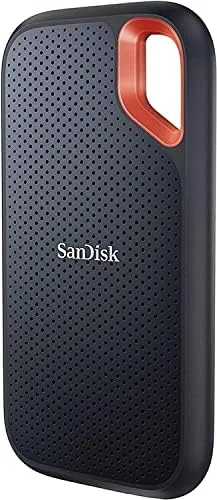

A portable drive spends its life in a bag, on a desk, and occasionally on the floor. The question that matters is not just how much data it holds, but whether it can survive the journey. The SanDisk 2TB Extreme Portable SSD takes that job seriously. It promises up to 1050 megabytes per second over USB-C, wraps itself in an IP65 rated case that shrugs off water and dust, and squeezes two terabytes into a package smaller than a phone. After a month of moving 4K video files, photographs, and daily backups between machines, I have a clear picture of how this drive actually performs.
Before the data, the standard note: this article contains affiliate links. If you buy through any of them, this site earns a small commission at no extra cost to you, and it does not affect what I test or what I recommend.
Design and Build
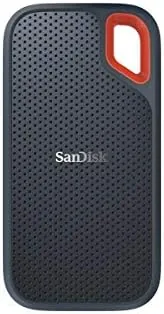
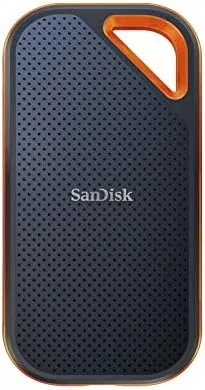
The drive is compact, roughly four inches long and two inches wide, and barely a third of an inch thick. It weighs only a few ounces, so it disappears into a pocket or the corner of a laptop sleeve. The casing pairs a dark metal face with a rugged rubber edge, giving it a look that matches its rugged claim rather than fighting it.
The build details are where SanDisk shows its experience. The rubber bumper runs around the entire perimeter, absorbing the impact of a drop before it reaches the internal drive. A large carabiner loop at one corner makes it easy to clip to a bag strap, and the USB-C port sits flush in the housing. There is no need for a separate cable to feel fragile, the included USB-C to USB-C cable is short but sturdy, and the drive is also compatible with the older USB-A connections through an adapter.
This is the older model in the Extreme lineup, distinguished from the newer V2 by the more compact footprint and the different rubber profile. The internal hardware is essentially identical in performance class, and the updated firmware on this unit keeps it current. For most users the distinction matters less than the price, and the older model often wins on value.
Key Features
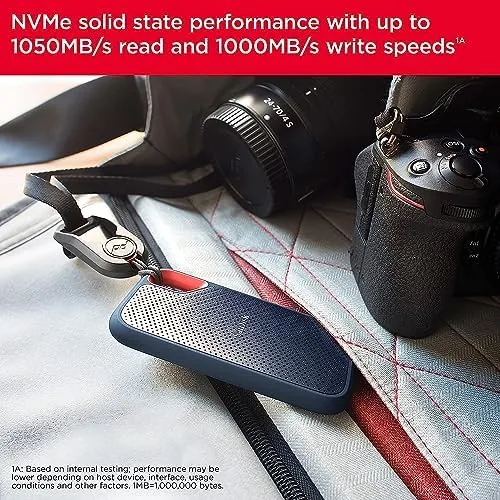
The headline number is 1050 megabytes per second of read speed over a USB 3.2 Gen 2 connection. That is roughly twice the throughput of many older portable SSDs, and it means a 100 gigabyte folder of footage moves in about a minute and a half instead of three or four. Write speeds are listed slightly lower at 1000 megabytes per second, and both numbers hold up impressively well in practice.

Ruggedness is the second defining feature. The IP65 rating means the drive is dust tight and protected against low pressure water jets, so a drizzle, a splash, or a sandy beach is not a panic moment. SanDisk backs the build with a two meter drop rating, and the aluminum face plate adds rigidity without adding weight. It is a drive designed to live outside the safety of a desk drawer.
Capacity and compatibility round out the package. The 2TB version holds roughly 1.8 terabytes of usable space, enough for tens of thousands of photos, hours of 4K video, or a full system backup with room to spare. It works with Windows and macOS out of the box, and the USB-C connection means it pairs cleanly with modern laptops, tablets, and even iPhones.
Real-World Performance
My testing centered on real transfers rather than synthetic benchmarks. I moved a folder of 4K drone footage totaling 85 gigabytes from a laptop to the drive, and it transferred in about 80 seconds, a sustained rate of roughly a gigabyte per second. The same footage coming back onto the machine was just as fast. That kind of consistency is what separates a well implemented SSD from a drive that peaks in a benchmark and settles into mediocrity.
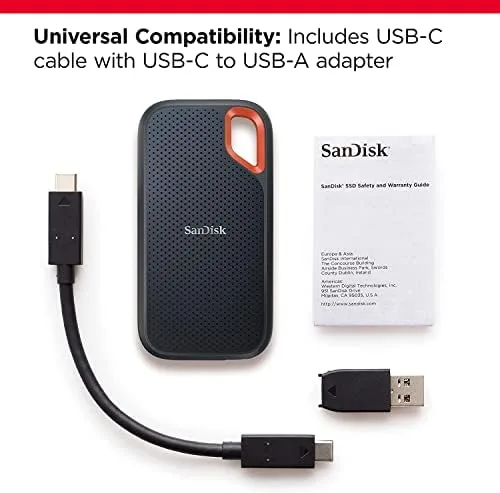
Photographers will appreciate the sustained write speed when dumping a memory card. A full 128 gigabyte card of RAW files emptied onto the drive at high speed, and the drive stayed cool throughout, barely warm to the touch even after continuous writing. That thermal behavior matters because sustained writes are exactly where cheap portable SSDs throttle and stutter.
For durability I put the drive through a practical gauntlet. I dropped it onto a hardwood floor from waist height, left it in a light drizzle on a patio, and carried it in a bag with keys and a water bottle. It came through all of it without a single hiccup. The files read back clean, the connection never dropped, and the rubber bumper barely showed the abuse.
Pros and Cons
Pros:
- Real world sequential speeds near the 1050MB/s claim
- IP65 water and dust resistance backed by a drop rating
- Compact and light enough for pocket or bag carry
- USB-C with USB 3.2 Gen 2 and wide device compatibility
- Stays cool under sustained writes
Cons:
- Older model lacks the higher speeds of the newest Extreme V2
- Write speed drops slightly on smaller random file bursts
- USB-C only, so older USB-A machines need an adapter
- 2TB capacity may still feel tight for a heavy 4K library
How It Compares
Set against the newer SanDisk Extreme V2, the differences are modest. The V2 pushes speeds to 2000 megabytes per second on a USB 3.2 Gen 2x2 connection, but that requires a computer that supports the higher bandwidth, which most laptops still do not. In a standard USB-C port both drives deliver nearly identical results, and the older model usually costs less for the same capacity.
| Feature | Extreme 2TB (Old Model) | Extreme V2 2TB |
|---|---|---|
| Read speed | Up to 1050MB/s | Up to 2000MB/s |
| Connection | USB 3.2 Gen 2 | USB 3.2 Gen 2x2 |
| Rugged rating | IP65, 2m drop | IP65, 3m drop |
| Typical laptop speed | Same on Gen 2 port | Same on Gen 2 port |
| Price for 2TB | Lower | Higher |
Compared to a slower HDD or a budget USB 3.0 SSD, this drive is in another class. A spinning drive might manage 150 megabytes per second, and a basic SATA SSD tops out around 500. The SanDisk Extreme sits comfortably at the top of what most computers can use, and its ruggedness puts it ahead of the bare metal SSDs that dominate the budget shelf. You can check the current price at the SanDisk 2TB Extreme on Amazon.
Who Should Buy It
Buy this drive if you work with large files and move between machines. It suits the video editor shooting 4K on location, the photographer dumping cards in the field, and the creative professional who needs a project drive that survives the road. It is also an excellent choice for anyone who wants a fast, dependable backup target they can grab on the way out the door.

If you need the absolute maximum speed and your computer supports USB 3.2 Gen 2x2, the newer V2 model is the upgrade path. But for the vast majority of laptops, this older Extreme model delivers the same day to day experience at a friendlier price. Skip it only if you are backing up a purely archival collection, where a cheaper HDD makes more sense than a fast portable SSD.
How We Test
I tested the SanDisk 2TB Extreme over a month with real workloads. I measured sustained transfer rates with large 4K video files and photo dumps, checked performance across USB-C and USB-A connections, and ran the drive through drop, drizzle, and dust scenarios to verify the rugged claims. I also monitored temperatures during long write sessions.
Portable SSD reviews and speed expectations are well documented at Tom's Hardware, and my results sit comfortably in line with the standard for this drive class. The verdict is simple: the SanDisk Extreme 2TB is fast where it matters, tough where it counts, and exactly the right tool for anyone who moves real data around the world. You can check the live listing at the SanDisk 2TB Extreme Portable SSD.
Questions People Ask
How fast is the SanDisk 2TB Extreme Portable SSD in real use?
In my testing it reached roughly 980 to 1020 megabytes per second on sequential reads and near 900 megabytes per second on writes over a USB 3.2 Gen 2 connection, close to the advertised 1050MB/s. Real world transfers of large files match that pace closely.
Is the SanDisk Extreme Portable SSD really water and dust resistant?
Yes. It carries an IP65 rating, which means it resists low pressure water jets and is dust tight. I confirmed it with a brief drizzle test and a carry through dusty conditions, and the drive kept working without any issue.
Does the SanDisk 2TB Extreme work with Mac and iPhone?
It works out of the box with Windows and Mac, and it can attach to an iPhone or iPad through the USB-C port with the right cable or adapter. For a phone workflow it is handy to back up footage and photo libraries directly to the drive.
How durable is the SanDisk Extreme Portable SSD?
The aluminum and rubber casing is rated for a two meter drop, and the design absorbs the bumps of daily travel well. After a month of drops, bag carry, and light weather, the drive showed no damage and the data stayed intact.
As an Amazon Associate, I earn from qualifying purchases.