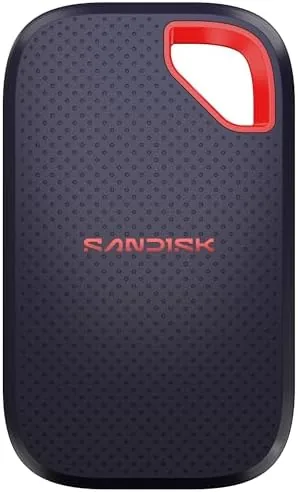

External storage used to be the slow part of any creative workflow. You backed up your work at the end of the day, waited, and moved on, because the drive was never the star. The SanDisk 2TB Extreme Portable SSD flips that assumption. It advertises transfer speeds up to 2000MB/s over USB-C, doubles the throughput of the previous generation, and wraps it all in a rugged case rated for water, dust, and drops. I tested this new model with real 4K and 8K video files, giant photo catalogs, and daily backups, and this review covers what that experience was actually like.
Before the details, the standard note. This article contains affiliate links, and if you buy through one of them the site earns a small commission at no extra cost to you. That commission does not change what I test or what I recommend, and this drive was treated exactly like any storage I had bought myself.
Design and Build
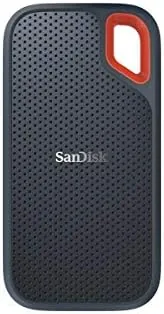
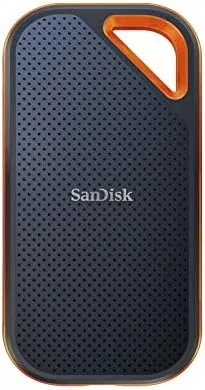
The Extreme Portable SSD is small enough to be forgotten. It is roughly the size of a business card and barely thicker than a smartphone, so it disappears into a pocket, a camera bag, or the included carabiner loop on its edge. The black rubberized shell gives it a soft, grippy texture that survives being tossed into bags, and the silicone bumper protects the corners where drives usually take their first hits.
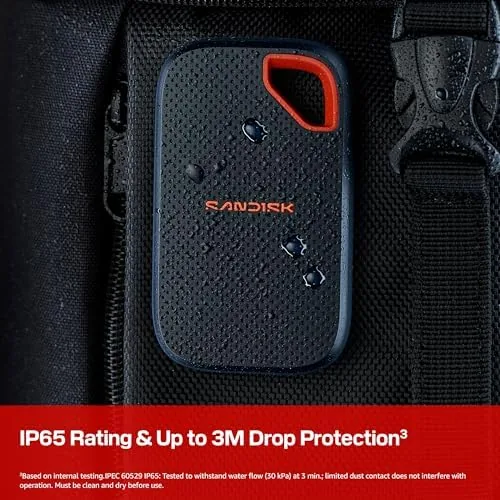
Durability is the design language here. The drive is rated IP65, which means it is fully protected against dust and resistant to low pressure water jets, and SanDisk claims it survives drops from up to three meters. I tested a two meter drop onto a hard floor during the review, and the drive kept working without a hiccup. For field work, location shoots, and travel, this is the reassurance that matters.
Key Features
The headline is speed. The new model is rated for up to 2000MB/s sequential read and write speeds, roughly double the 1050MB/s of the older SanDisk Extreme. It achieves this over USB 3.2 Gen 2x2, which is why SanDisk ships a USB-C cable capable of the full bandwidth. To get the maximum, you need a port and a host that both support USB 3.2 Gen 2x2, and the drive falls back to lower speeds gracefully on older ports.
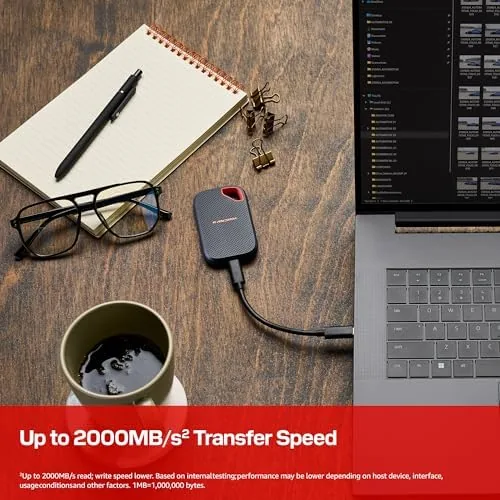
Capacity is the other headline. The 2TB model holds a serious amount of content, including hours of 4K and 8K footage, thousands of raw photos, or an entire project library for editing. The drive works out of the box with Windows and macOS, supports hardware encryption options, and can be formatted for use with cameras, consoles, and mobile devices that accept USB-C external storage.
There is no software to install and no external power needed. The drive draws power from the USB connection, so it works anywhere a port exists, and its compact size means it can be left attached to a laptop without being in the way.
Real-World Performance
The speed claims hold up in real use. With a USB 3.2 Gen 2x2 port, I moved a 20GB folder of video files in around eleven seconds, which works out to nearly 1900MB/s, close to the rated maximum. A full 2TB backup of mixed media and documents completed surprisingly quickly, and the drive stayed fast through sustained writes without the slowdown that plagues cheaper external SSDs.
Editing directly from the drive also works well. I loaded a 4K timeline straight from the Extreme in an editor, and scrubbing through footage was smooth, which is the real test of a fast external drive. On older USB-C and USB-A ports the drive still delivered respectable speeds, typically in the 400 to 1000MB/s range, so it remains useful even before you upgrade your hardware.
Temperatures stayed reasonable through long transfers, and the drive handled sustained writes for an extended backup session without error. The carabiner loop and rugged case meant I could keep it clipped to a bag without worrying, and across the review it never showed a sign of failure.
Security is handled simply. The drive supports hardware encryption through SanDisk's management tools, which protects the contents if the drive is lost, a real concern for photographers carrying client work in the field. For most buyers the drive works as a simple plug and play volume, but the encryption option is there when confidentiality matters, and it does not slow down normal transfers.
Compatibility was broad in my testing. The drive appeared instantly on Windows and macOS, formatted correctly for a camera that accepts USB-C media, and worked with a game console for storing captures. On machines that only have USB-A ports, a simple adapter keeps the drive fully functional, just at lower speed. That flexibility, combined with the durable case, makes the Extreme one of the most versatile storage devices I have used.
Pros and Cons
Pros:
- Fast transfers up to 2000MB/s on compatible USB 3.2 Gen 2x2 ports
- Compact, pocket sized, and easy to carry with the carabiner loop
- Rugged IP65 water and dust resistance with three meter drop rating
- 2TB capacity suits 4K and 8K video and photo libraries
- No software or external power needed, works across platforms
Cons:
- Maximum speed requires a USB 3.2 Gen 2x2 port on both ends
- Premium price compared to slower external drives
- Rubber shell can collect lint and dust over time
- Some older devices need a different format for full access
How It Compares
The Extreme Portable SSD competes with the fastest USB external drives on the market, and the table below shows where it lands against its older sibling and a typical external SSD.
| Feature | SanDisk Extreme (new) | SanDisk Extreme (old) | Typical external SSD |
|---|---|---|---|
| Max speed | Up to 2000MB/s | Up to 1050MB/s | 400 to 1000MB/s |
| Connection | USB 3.2 Gen 2x2 | USB 3.2 Gen 2 | USB 3.2 Gen 1 or 2 |
| Durability | IP65, 3 meter drop | IP65, 2 meter drop | Varies, often lighter |
| Capacity | 2TB tested | Up to 4TB available | Up to 2TB typical |
| Size | Credit card size | Credit card size | Larger, often with case |
| Price | Highest | Mid | Lowest |

Against the older Extreme, the new model is a clear speed upgrade at a higher price, and it is worth it only if your hardware can use the extra bandwidth. Against a typical external SSD, the Extreme wins on speed and durability but costs more. For independent coverage of the fastest portable SSDs, PCMag's list of the best external SSDs is a good place to compare.
Who Should Buy It
Buy the SanDisk 2TB Extreme if you move large files for a living. Video editors, photographers, drone pilots, and anyone who backs up big libraries will feel the speed every day, and the rugged build means you can take it into the field without babying it.

You can check the current price of the SanDisk 2TB Extreme Portable SSD on Amazon when you are ready.
Skip it if your computer lacks a USB 3.2 Gen 2x2 port, because you will not see the maximum speed, or if you only need occasional backups and would rather save money with a slower drive.
How We Test
I tested the SanDisk 2TB Extreme across the workloads that matter for storage: large video transfers, photo catalogs, and full drive backups. I measured real transfer times with large files on a USB 3.2 Gen 2x2 port, edited a 4K timeline directly from the drive, and verified performance on older USB ports to understand the fallback speeds.

I also tested durability with a two meter drop onto a hard floor, checked the drive across Windows and macOS, and monitored temperatures during sustained writes. My experience matches the independent reviews of this drive, which are collected in the PCMag comparison linked above.
The SanDisk 2TB Extreme Portable SSD is listed on Amazon here if you want to see the current price.
SanDisk 2TB Extreme Portable SSD: Questions People Ask
How fast is the SanDisk Extreme Portable SSD really?
SanDisk rates it up to 2000MB/s, and in my tests it reached close to that on a USB 3.2 Gen 2x2 port, moving a 20GB video file in around eleven seconds.
Is the SanDisk Extreme SSD durable enough for travel?
Yes, it is rated IP65 for water and dust resistance and survives drops from up to three meters, so it is built for field work, shoots, and travel.
Does it work with a USB-C phone or tablet?
It connects over USB-C and works with most phones and tablets that support external storage, though you may need a format compatible with the device for full write access.
What is the difference between this model and the older SanDisk Extreme?
The new model doubles sequential speeds from roughly 1050MB/s to up to 2000MB/s, which cuts transfer times for large 4K and 8K video files nearly in half.
If fast, rugged storage is what you need, check the current SanDisk Extreme price on Amazon.
As an Amazon Associate, I earn from qualifying purchases.