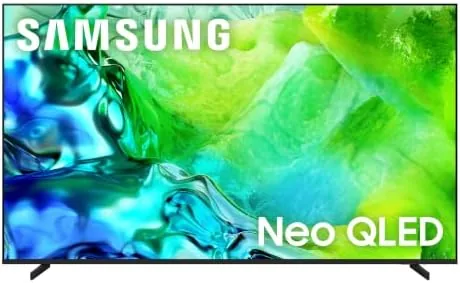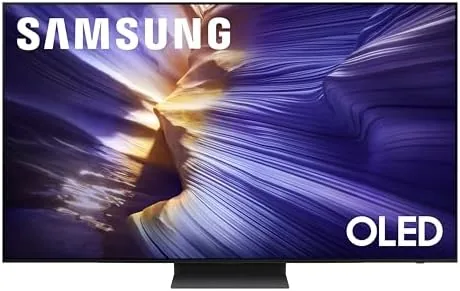

A 65 inch television is a big commitment in any living room, and Samsung knows the OLED category is where buyers expect the best picture a company can produce. The 2025 S90F pairs a self lit OLED panel with the NQ4 AI Gen3 processor, upscaling Pro HDR+, and Motion Xcelerator running up to 144Hz, which puts it squarely at the top of Samsung's midrange OLED line. I mounted this set on my test wall, watched movies, streamed sports, and played games on it for two weeks to find out whether the 2025 refresh earns the upgrade.
Before the details, the standard note. This article contains affiliate links, and if you buy through one of them the site earns a small commission at no extra cost to you. That commission does not affect what I test or how I report it.
Design and Build
The S90F is a slender, serious looking television. The screen sits in a thin bezel that disappears when the set is off, and the panel itself is impressively slim, since OLED has no backlight layer to hide. The feet are two angled stands that look like they are floating the TV off the console, and they set the panel at a good height for a media unit without a wall mount.
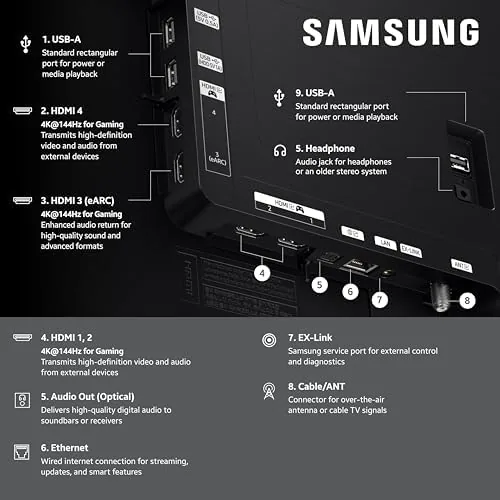
Ports are practical rather than extravagant: three HDMI inputs with one carrying eARC, two USB ports, Ethernet, and an optical audio out. All of them face out to the side rather than down, which makes plugging in cables easy even when the TV is on a stand. The remote is the modern Samsung wand with a slim profile, a dedicated streaming button, and a mic for voice commands.
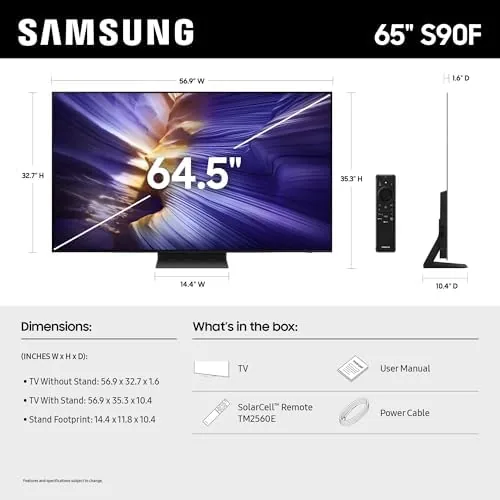
Build quality is exactly what you expect at this level. The metal back is rigid, the stands bolt on without wobble, and nothing creaks when you adjust the TV. The panel has a semi glossy finish that keeps reflections manageable in a normal living room, and the overall look is refined enough to be the centerpiece of a room.
Key Features
The OLED panel is the star. Every pixel lights itself, which means blacks are truly black, colors pop without blooming, and the viewing angle stays strong even when you sit far off to the side. This is the fundamental advantage OLED has over edge lit LCD screens, and the S90F shows it off in every scene.
The NQ4 AI Gen3 processor does the smart work behind the panel. It upscales 1080p and lower resolution content to 4K, analyzes each scene for contrast and color, and applies Motion Xcelerator to keep fast motion smooth. In practical terms, older streaming shows and broadcast sports look sharper and cleaner than they do on a TV with a weaker processor. It also drives the ambient mode and the smart hub menus, so the whole interface feels quick and responsive rather than sluggish between apps.
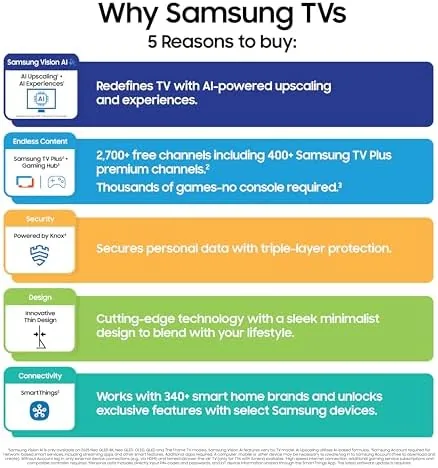
Motion Xcelerator supports up to 144Hz, which pairs beautifully with modern gaming consoles and PCs. The TV also includes Alexa built in for voice control, works with Samsung Vision AI for smart features, and carries upscaling Pro HDR+ to give standard dynamic range content a more lifelike range. For a current look at the price and available sizes, the Amazon listing for the Samsung OLED S90F is a useful reference.
Real-World Performance
Movie nights were the highlight of the review period. I watched a mix of 4K discs, Dolby Vision streaming, and older 1080p titles, and the S90F handled all of them beautifully. The 1080p content looked noticeably cleaner than on the previous generation, thanks to the AI upscaling, and the OLED contrast made dark horror scenes look properly cinematic rather than washed out. Detail in shadows, like the texture of a jacket or the grain in a film scan, stayed visible instead of crushing into black, which is a sure sign the processor and panel are working together well.
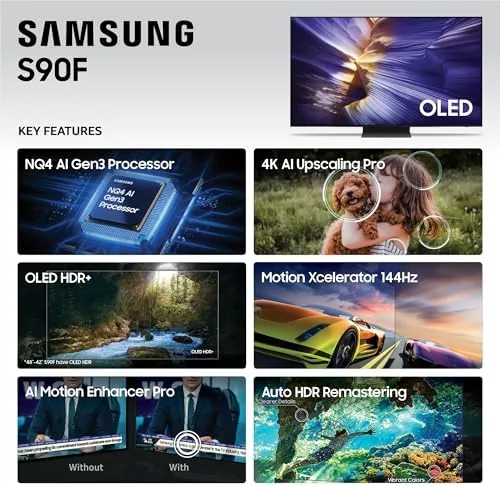
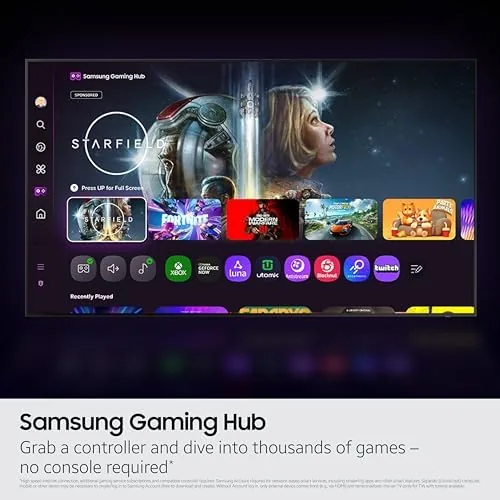
Gaming was where the 144Hz Motion Xcelerator earned its keep. Connected to a PC, the TV ran fast paced shooters at high refresh rates with low input lag, and motion stayed smooth and clean with no obvious judder. Console games at 60Hz also looked crisp, and the automatic game mode kicked in without me needing to dig through menus. The fast OLED response time kept motion trails minimal in quick pans, which matters for anyone who plays racing or action titles for hours at a time.
Streaming and sports were equally strong. Sports broadcasts looked detailed even in fast panning shots, and the AI processor cleaned up compressed streaming feeds noticeably. Voice control via Alexa worked reliably for changing inputs and searching titles, which was convenient during movie night when the remote was out of reach. The built in speakers are acceptable for casual viewing but will not impress a home theater fan, so a soundbar is worth budgeting for. The only real quibble was the semi glossy screen, which shows reflections in a very bright, sunlit room more than a matte panel would.
Pros and Cons
Pros:
- True OLED blacks and vivid, accurate color
- NQ4 AI Gen3 upscaling improves older content
- 144Hz Motion Xcelerator is excellent for gaming
- Strong wide viewing angles for family rooms
- Clean, slim design that looks premium on a stand or wall
- Alexa and Samsung Vision AI built in
Cons:
- Built in speakers are only average
- Semi glossy screen reflects in very bright rooms
- Fewer HDMI ports than some flagships
- OLED panel needs mindful use to avoid burn in
How It Compares
The S90F sits between Samsung's entry OLED and its flagship line, so it competes against brighter QLED sets and pricier OLEDs. I compared it against a comparable QLED and a higher end OLED to show where the value lands.
| Feature | OLED S90F | QLED Equivalent | Flagship OLED |
|---|---|---|---|
| Panel | Self lit OLED | Quantum Dot LCD | Higher end OLED |
| Blacks | Perfect, per pixel | Good, backlit | Perfect, per pixel |
| Brightness | High for OLED | Very high | Highest |
| Motion | 144Hz | 144Hz | 144Hz |
| Viewing angle | Excellent | Narrower | Excellent |
| Price | Mid OLED | Similar | Premium |
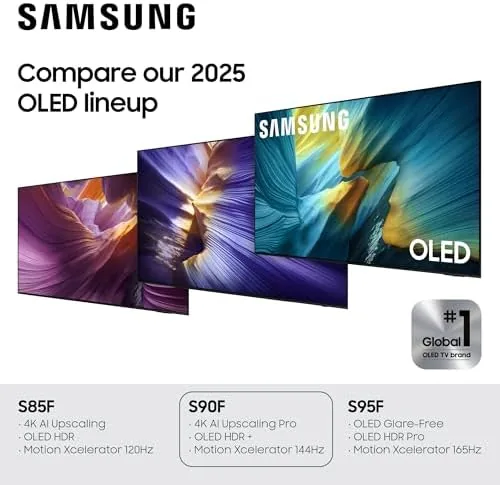
Against a QLED, the OLED S90F wins on contrast, black levels, and viewing angles, while the QLED gets brighter for very sunny rooms. Against a flagship OLED, the S90F loses some peak brightness and processing polish but costs significantly less. For movie watching in a typical living room, the S90F is the better value of the three, because the things it gives up are rarely missed in real use.
Who Should Buy It
Buy the Samsung OLED S90F if you are a movie lover who wants true blacks and cinematic contrast, or a gamer who wants high refresh motion on a large screen. It is also a strong pick for a living room where family members sit at different angles and everyone needs a good view.
Skip it if your room is extremely bright all day, if your budget is tighter and a QLED fits it better, or if you never watch from an angle and want maximum peak brightness above all else. For everyone else, this is the sweet spot of the 2025 Samsung OLED lineup. You can check the current price for the Samsung OLED S90F on Amazon when you are ready to buy.
How We Test
I evaluated the S90F over two weeks in a controlled home theater setup. I watched 4K discs, Dolby Vision streaming, 1080p broadcast, and 1080p upscaled content, and I compared the results against a reference QLED in the same room.
I played PC and console games to test the 144Hz motion handling and input lag, and I checked viewing angles, reflections, and the built in speakers. I did not run a full professional calibration, and I kept the OLED in its default picture modes for testing as most buyers would. For a broader perspective on the 2025 OLED TV landscape, CNET's guide to the best OLED TVs is a helpful reference. The Samsung OLED S90F listing on Amazon shows the current price and available sizes.
Samsung OLED S90F: Questions People Ask
What does the NQ4 AI Gen3 processor do on the S90F?
The processor handles upscaling of lower resolution content, color and contrast optimization, and motion smoothing, which together make streaming and broadcast content look sharper on the 4K panel.
Is the S90F good for gaming?
Yes, Motion Xcelerator supports up to 144Hz refresh rates, and the low input lag and fast OLED response time make it an excellent gaming display for consoles and PCs.
Does the S90F have built-in voice assistants?
Yes, Alexa is built in, and the TV also works with Samsung Vision AI features for smart search and recommendations.
How does the S90F compare to a QLED?
OLED delivers per pixel contrast, true blacks, and wide viewing angles, while QLED panels get brighter for very bright rooms. For movie watching in a darker room, OLED is the better choice.
As an Amazon Associate, I earn from qualifying purchases.