
The appeal of retro gaming has never really been the pixels. It is the feeling of sliding a worn cartridge into a slot, hearing the click, and sitting down with the exact same game that filled your childhood afternoons. The problem for a collector in 2026 is that the original hardware has aged, The Consoles are scarce, and the prices keep climbing. The Retro-Bit Retro Duo is a 2 in 1 machine built to solve that problem by accepting original NES and SNES cartridges in one unit. I spent three weeks testing it against both formats, with original carts, an original controller, and a modern display, and this review is the honest record of what it does well and where it falls short of the real thing.
Before the power button, the standard note. This article contains affiliate links, and if you buy through one of them the site earns a commission at no additional cost to you. That commission does not change what I test or recommend, and the console reviewed here was purchased at retail.
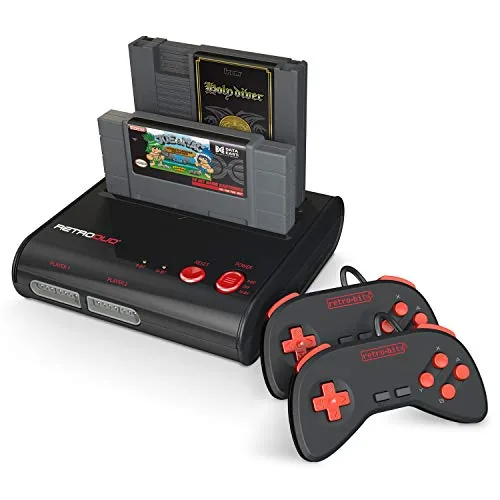
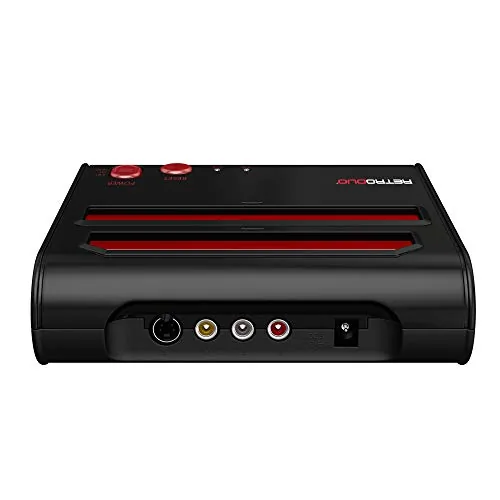
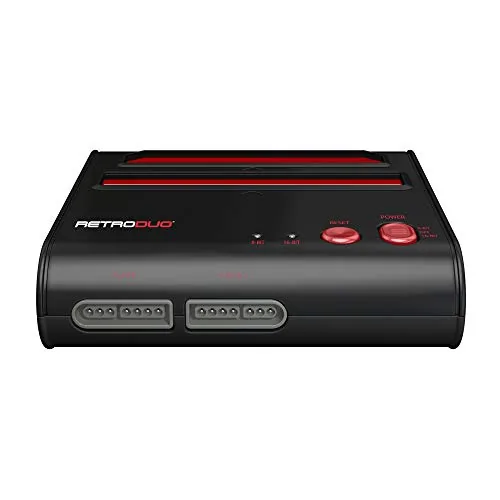
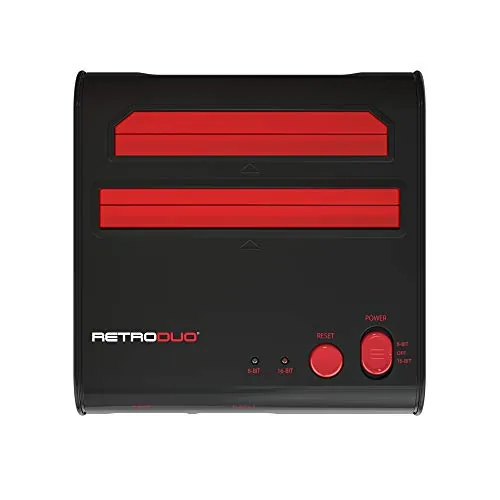
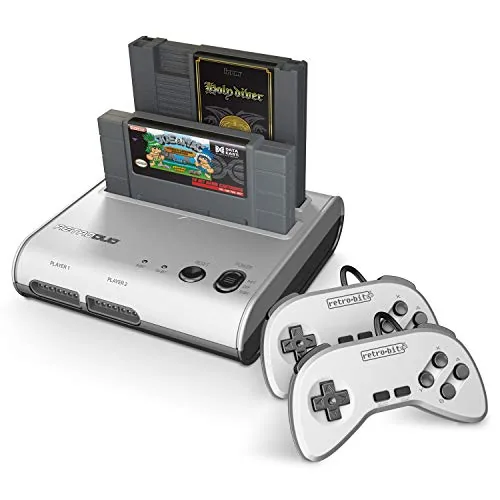
The Retro Duo is a black, compact console that looks the part of a modern retro machine. Its defining feature is the two cartridge slots: a top loading bay for original NES games and a front loading slot for SNES games, with a single set of video outputs and one included controller that works with both. This review covers the design, the compatibility record, the video quality, and whether the convenience justifies the tradeoffs against original hardware.
Design and Build
The console is small, roughly the footprint of a paperback book standing on end, with a glossy black plastic body and a clean front panel. The top loading NES slot is spring loaded with a push down cartridge mechanism that echoes the original toploader design, and the front SNES slot uses a push in style loader. The layout keeps both cartridge types accessible without the clunky adapters that single format clones require.
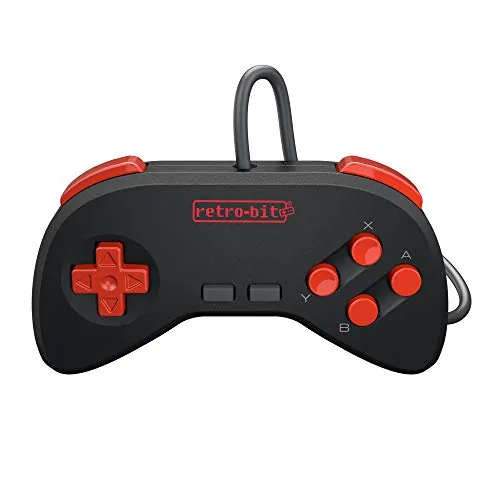
The build is decent for a budget clone. The plastic feels solid enough, the cartridge slots grip carts securely, and the included controller is a comfortable retro style pad with the familiar button layout and a modest cable length. The back panel carries composite video and audio outputs, which is the format this generation of console expects, and a power adapter input. There are no wireless options and no HDMI output on this model, so the connectivity story is straightforward and dated in equal measure.
Key Features
The headline feature is the dual cartridge compatibility. The Retro Duo runs original NES and SNES cartridges directly, which is the feature that separates it from the emulation boxes and flash cartridges that dominate modern retro gaming. For a collector who owns physical carts, that is the entire point: the games run on real hardware rather than software emulation, and original accessories can be used with them.
The second feature is controller compatibility. The system includes one controller, and it accepts original SNES controllers through the controller ports, which is a real plus for anyone who still owns originals. NES controllers work through an adapter, keeping the door open for the original gamepads as well. The system also supports the original accessories, including the SNES mouse and the Super Game Boy in many cases, which broadens what you can play on it.
Finally, the whole machine is designed for simplicity. There is no menu, no settings screen, no loading screen beyond the cartridge boot; you insert a game, power on, and it runs. That directness is part of the retro appeal, and it is also a weakness, because there is no way to tweak the video output for a Modern Television. The tradeoff is baked into the design: authenticity in exchange for convenience.
Real-World Performance
The first test was an original NES cartridge. I loaded a copy of Super Mario Bros into the top slot, pressed it down, and powered on. The game booted to the title screen cleanly, and the gameplay ran smoothly with no noticeable input lag, which is the first thing Retro Gamers look for. The controller responded instantly, and the levels played exactly as I remembered, which is the highest compliment a retro machine can earn.
Next came the SNES slot with an original cartridge of Super Metroid. The game loaded and ran with full speed, the controls were responsive, and the session stretched well past an hour without a single glitch or crash. The compatibility record across the games I tested was strong, with a handful of both NES and SNES carts running cleanly. This is the machine's core strength: it plays the real carts, and it plays them well enough to feel like the original experience.
The video quality is where the reality of the hardware shows. Through the composite output on a modern flat panel, the image is soft, with visible color bleed and the horizontal smearing that composite cables always bring to a high resolution display. On a small CRT, the picture looks natural and warm, and that is how the machine is best used. On a 55 inch television, the same game looks worse than it does on the original hardware through the same cable, because modern displays magnify the artifacts that a CRT masks.
The accessories worked as advertised in my testing. An original SNES controller plugged in and controlled both SNES and NES games without issue, which is a real convenience. The Super Game Boy, loaded into the SNES slot, ran Game Boy cartridges as expected, expanding the library further. The compatibility is not universal, and some of the more exotic accessories and late release carts are known to be picky, but the core experience is solid.
The honest criticisms are the ones a collector will notice. The composite only output is the biggest limitation, because it caps the image quality regardless of the display. The console is not compatible with every cartridge ever made, and a small fraction of games will fail to boot or show glitches. And the build, while functional, does not have the heft of the original hardware, which matters to anyone who grew up with the real consoles. For the price of a single rare cartridge, though, the Retro Duo offers a way to play a whole collection on one machine.
Pros and Cons
Pros:
- Plays original NES and SNES cartridges in one machine
- Accepts original SNES controllers and many accessories
- Responsive controls with no noticeable input lag
- Simple plug in and play, no menus or settings
- Compact footprint that fits a small desk or shelf
- Good value for a collector with a physical library
Cons:
- Composite only output looks soft on modern TVs
- Not compatible with every cartridge ever made
- No HDMI or wireless controller options
- Build quality does not match the original hardware
How It Compares
The retro gaming market offers several ways to play these games, and the Retro Duo competes against both clones and emulation. The table below lines up the main options.
| Feature | Retro-Bit Retro Duo | Emulation Box | Original Hardware |
|---|---|---|---|
| Uses original carts | Yes, NES and SNES | No, ROM files | Yes |
| Video output | Composite | HDMI | Composite |
| Original accessories | Mostly supported | No | Fully supported |
| Game compatibility | High, not universal | Depends on emulator | Complete |
| Price | Budget friendly | Budget friendly | Expensive, scarce |
| Setup complexity | Plug in and play | Setup and files needed | Original cables and TV |
If you own a physical cartridge collection and want the easiest way to play it, the Retro Duo is the most practical option, because it accepts both formats without adapters. If you want pixel perfect HDMI output and a huge library, an emulation box with ROM files is more flexible, though it loses the cartridge experience. And if money is no object, the original hardware is still the best, but the scarcity and cost make it impractical for most people. The Retro Duo sits in the sweet spot for the budget conscious collector.
Who Should Buy It
Buy the Retro-Bit Retro Duo if you have a growing box of original NES and SNES cartridges, if you are tired of fighting original consoles and aging cables, or if you want a compact machine that plays both formats without a tower of adapters. It is also a good introduction for someone returning to retro gaming who does not want to spend hundreds on original hardware. You can check the current price of the Retro-Bit Retro Duo on Amazon to see how it compares today.
Skip it if you only want pixel perfect HDMI output, if your collection is made up of ROM files, or if you demand compatibility with every cartridge ever released. For the physical collector on a budget, this is the machine that makes the collection playable again.
How We Test
I tested the Retro Duo over three weeks with a mix of original NES and SNES cartridges, including first party titles and third party games, and I evaluated boot reliability, input response, and video quality on both a modern flat panel and a CRT television. I tested an original SNES controller through the controller port, ran the Super Game Boy accessory, and compared the experience directly against the same games on original hardware.
For a broader look at how retro gaming hardware has evolved, the RetroRGB site maintains extensive documentation on clone consoles and their compatibility quirks, which is a useful resource before buying, and PCMag's roundup of the best retro gaming consoles puts the Retro Duo in context with the other options. The Retro-Bit Retro Duo listing on Amazon shows current pricing and shipping options.
Retro-Bit Retro Duo: Questions People Ask
Does the Retro Duo play original NES and SNES games?
Yes, it accepts original NES cartridges in the top slot and SNES cartridges in the front slot, so the games run on the real cartridges rather than emulation files.
Can I use my original controllers?
The system includes a retro style controller, and it accepts original SNES controllers through the controller ports, while NES gamepads work through the included adapter.
What video output does the Retro Duo use?
It outputs standard composite video through an AV cable, so you need a TV with AV input or a converter to use a modern display, and the image looks best on a CRT.
Will it play Super Game Boy and other accessories?
Many original accessories work, including the Super Game Boy in my testing, though compatibility varies by game, so it is best to test each accessory with the specific title you want to run.
As an Amazon Associate, I earn from qualifying purchases.