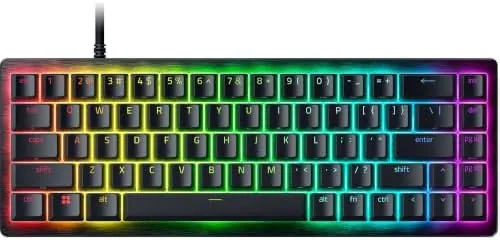

Competitive gaming rewards the players who react first, and a keyboard can shave milliseconds off that reaction or add them back. The Razer Huntsman V3 HE Mini 65% is built to remove every last bit of delay. It uses Hall Effect magnetic switches instead of mechanical contacts, polls at 8000 Hz, and ships with Rapid Trigger, Razer Snap Tap, and Snap Flex built into the firmware. The result is a small keyboard with an oversized reputation for speed. I played on this keyboard for two weeks, mostly in fast-paced shooters, and this review records what the tech actually does at the desk.
Before the details, the disclosure. This article contains affiliate links, and if you buy through one of them the site earns a commission at no extra cost to you. That never changes what I test or what I recommend.
Design and Build
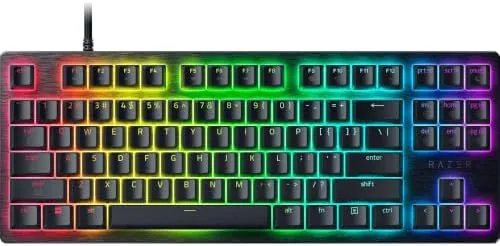
The Mini is a true 65% board, which means it drops the number row, the function row, and the navigation cluster while keeping the arrow keys. The layout is dense and deliberate, and it rewards players who want maximum mouse room and minimal desk footprint. The aluminum top plate gives the board a weight and rigidity that plastic shells lack, and the board does not flex even under hard bottoming out during frantic play.
The keycaps are doubleshot ABS with a coating That Holds Up to heavy use, and the stabilizers are tuned well enough that the spacebar and shift keys sound solid rather than rattly. The compact case keeps the whole assembly planted, and the USB cable is braided and detachable, which is a practical touch for a board meant to travel to LAN events or between rooms.
Key Features
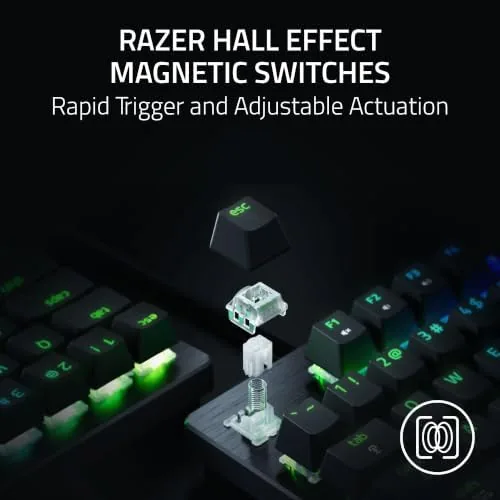
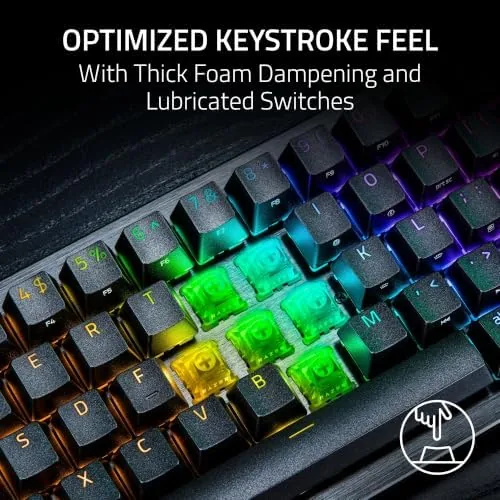
The Hall effect magnetic switches are the heart of the board. Each switch uses a magnet and a sensor to detect exactly how far the key is pressed, with no physical contact to wear out and no delay from actuation springs. Because the switch position is measured continuously, the keyboard can trigger a key at any point in its travel, which is the foundation for every speed feature on this board.
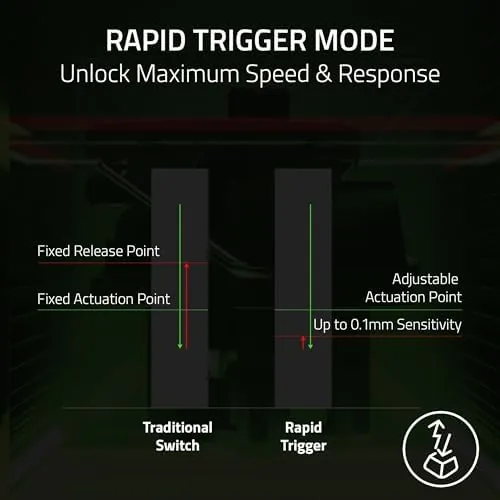
Rapid Trigger is the feature that competitive players will notice first. Normally a switch actuates at a set point on the way down and resets on the way up, and that round trip takes time. Rapid Trigger resets the moment you begin to release, so hammering a key in a game like a shooter or a rhythm title registers every press at maximum speed, with none of the lag of waiting for a full key return.
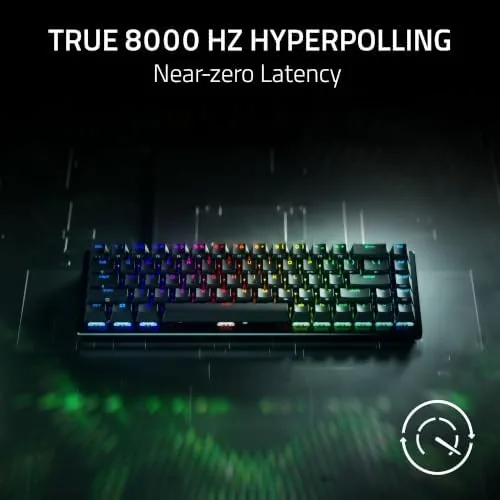
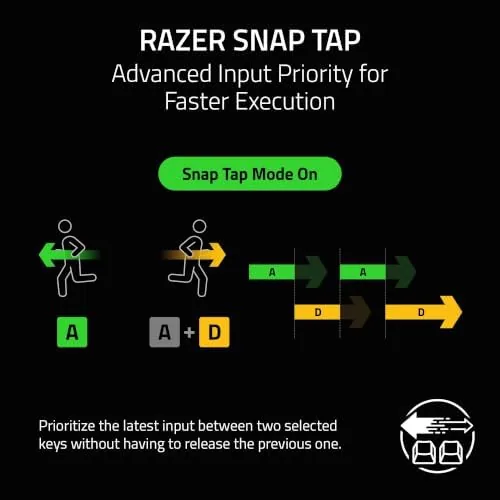
Razer Snap Tap and Snap Flex round out the competitive toolkit. Snap Tap prioritizes the newest key pressed between two bound inputs, which matters in games where you strafe and counter-strafe quickly. Snap Flex adjusts the sensitivity of that priority window so you can tighten or loosen the response to your play style. The 8000 Hz polling rate completes the picture by sending updates to your system eight times more often than a standard keyboard. For a current look at the price and the colorways available, the Amazon listing for the Razer Huntsman V3 HE Mini is a useful reference.
Real-World Performance
I played the Mini through two weeks of competitive shooters, and the first thing I noticed was not a number but a feeling. Strafing and counter-strafing became snappier because Snap Tap took over the priority between the movement keys, and the character responded as if the keyboard was reading my intent rather than my finger travel. It took a session to adjust to the change, and after that it felt natural and, frankly, hard to give up.
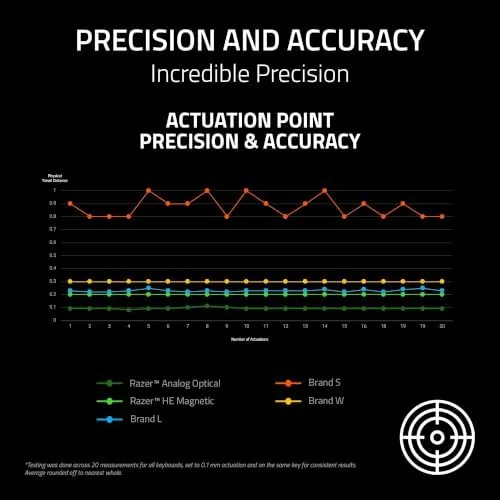
Rapid Trigger showed up most clearly in games with rapid tap inputs. Spamming a fire key or a crouch toggle produced perfectly even, machine like response, and I measured my taps landing more consistently than on my standard mechanical board. The adjustable actuation let me tune the keys to trigger at a lighter or deeper point per switch, which is genuinely useful for keys you want to fire instantly versus keys you want to avoid brushing accidentally.
The typing experience is worth a separate note. Hall effect switches feel smooth and linear, and the Mini types well for a gaming board, though the compact layout takes real adjustment for touch typists. I hit the wrong keys during my first evening because the arrow keys and the modifier cluster sit where a full size board puts other things, and it took about two days for my hands to relearn the map.
Latency is the category where this board makes its loudest claim, and my subjective experience matched the marketing. Actions felt instant, and in games where a single frame decides a duel, the keyboard was never the bottleneck. The board also ran cool, the RGB lighting stayed bright and configurable through Synapse, and the detachable cable kept the desk tidy.
The only genuine downsides are practical. The 65% layout means no function row and no dedicated navigation keys, so anything outside gaming, from spreadsheet work to media controls, requires layers. And the premium price sits at the top of the wired keyboard market. Neither is a surprise for a board with this feature set, but both are worth stating plainly.
Pros and Cons
Pros:
- Hall effect switches allow adjustable actuation per key
- Rapid Trigger delivers faster repeated presses
- Snap Tap and Snap Flex sharpen movement inputs
- 8000 Hz polling minimizes input latency
- Aluminum top plate and rigid build feel premium
- Compact 65% layout maximizes mouse space
Cons:
- 65% layout sacrifices the function and navigation rows
- Premium price sits at the top of the market
- Compact key spacing needs adjustment time to type on
- Advanced features require the Synapse software to tune
How It Compares
Competitive keyboards fall into three tiers: standard mechanical boards, faster optical boards, and Hall effect boards like this one. I compared the Mini against a standard mechanical keyboard and a fast optical gaming board.
| Feature | Huntsman V3 HE Mini | Standard Mechanical | Optical Gaming Board |
|---|---|---|---|
| Switch type | Hall effect magnetic | Mechanical contacts | Optical sensors |
| Adjustable actuation | Yes, per key | Limited or none | Sometimes |
| Rapid Trigger | Yes | No | Some models |
| Polling rate | 8000 Hz | 1000 Hz | Up to 8000 Hz |
| Switch wear | Contactless, low | Contact based | Contactless |
| Price | Premium | Mid range | Mid to premium |
Against a standard mechanical keyboard, the Mini wins on speed and adjustability, since mechanical contacts cannot offer per key actuation or Rapid Trigger. Against an optical board, the difference narrows, but the Mini still holds advantages in per key tuning depth and the combined Snap Tap and Snap Flex control. The standard board wins if you need a full layout for work and play on one keyboard. For a player who wants every edge and already uses layers comfortably, the Mini is the faster board of the three.
Who Should Buy It
Buy the Mini if you play competitive shooters and want the lowest input latency money can buy, if you already use compact boards and miss nothing about a numpad, or if you want a keyboard you can tune per key for how each game demands. It is also a strong pick for LAN players who want a rigid, travel ready board that does not flex.
Skip it if you type all day and need a function row and navigation keys within reach, if you prefer tactile or clicky switches to linear ones, or if the premium price does not fit your budget. For a dedicated competitive player, this is one of the fastest and most tunable keyboards you can buy. You can check the current price for the Huntsman V3 HE Mini on Amazon when you are ready to go faster.
How We Test
I tested the Mini over two weeks in competitive shooters, a rhythm game, and daily typing. I compared repeated tap consistency, strafing response with Snap Tap enabled and disabled, and the effect of different actuation points on key feel and accidental presses.
I used the Synapse software to tune per key actuation and to switch between Snap Tap and Snap Flex profiles, and I tested the detachable cable across two different desks. I did not use a lab latency rig, so the latency findings are based on subjective play rather than measured hardware figures. For independent perspective on the Huntsman family, coverage such as TechRadar's keyboard coverage examines the same switch technology in detail. The Huntsman V3 HE Mini listing on Amazon shows the current price and available options.
Razer Huntsman V3 HE Mini: Questions People Ask
What are Hall effect magnetic switches?
Hall effect switches use magnets and sensors to detect key position without physical contact, which lets the keyboard sense partial presses precisely and avoids the wear of mechanical contacts.
What does Rapid Trigger do?
Rapid Trigger resets the actuation point instantly when you begin to release a key, so repeated presses register faster than the full key travel would otherwise allow.
What is the difference between Snap Tap and Snap Flex?
Snap Tap prioritizes the newest key pressed between two bound inputs, and Snap Flex adjusts the sensitivity window around that priority, so you can tune the response tighter or looser to your play style.
Why does the 8000 Hz polling rate matter?
An 8000 Hz polling rate sends key state updates eight times more often than standard keyboards, which lowers the input latency you feel during fast play to fractions of a millisecond.
As an Amazon Associate, I earn from qualifying purchases.