
Radio control equipment has a reputation for being bulky, complicated and expensive. The RadioMaster Pocket is built to challenge all three assumptions at once. It is a full EdgeTX transmitter with ExpressLRS support that fits in a jacket pocket, and it costs a fraction of what serious pilots once paid for a radio with this much capability.
I flew with the Pocket for two weeks across indoor whoops, outdoor quads and a lightweight fixed wing. The goal was to find out whether downsizing the radio body also downsized the flying experience. The honest answer is that the Pocket delivers most of what a full size transmitter offers, with a few ergonomic compromises that make sense at the price. This review covers the build, the gimbal quality, the ELRS performance, and the real-world flying results that matter.
Disclosure first. The links in this article are affiliate links, and purchases made through them may earn the site a commission at no extra cost to you. My opinions come from hands-on flying and are not shaped by the affiliate arrangement.
Design and Build
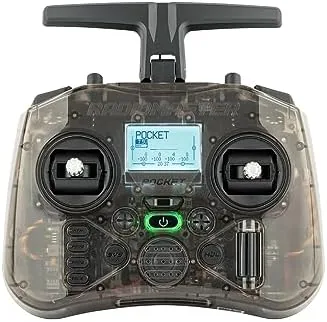
The Pocket is genuinely small. It is roughly the size of a game controller, and that is exactly the point. The charcoal finish looks understated and professional, and the lightweight body means you can fly for hours without the shoulder fatigue that full size radios cause. It fits easily in a backpack side pocket, and the foldable antenna tucks down flat when you are done.
The build quality is better than the price suggests. The plastic chassis feels rigid, the switches click with confidence, and the gimbal area is protected by the recessed design. There are two gimbal types available, and this unit ships with the Hall effect version, which uses magnetic sensors instead of mechanical pots for stick position.
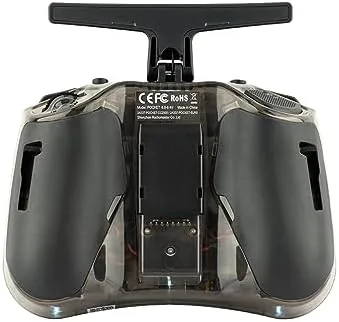
The stick feel is the highlight of the build. Hall effect gimbals deliver smooth, precise movement with no detectable dead zone, and the centering is accurate. On a budget radio, you would expect a little stick wobble or slop. The Pocket does not have it. The gimbals feel like they came from a much more expensive radio, which is the strongest compliment I can give this transmitter.
The layout is Mode 2, with throttle on the left stick and elevator and aileron on the right, which is the default for most modern pilots. The antenna is a 2.4GHz module built into the foldable arm, and there is a small LED built into the front of the case that lights up the workspace when you fly at dusk.
Key Features
The Pocket runs EdgeTX, the open source firmware that powers most serious hobby radios today. That means full model profiles, Lua scripting, and the ability to tune just about any setting without paying a premium for software. EdgeTX also means the radio works out of the box with a huge library of receiver types and community presets.
ExpressLRS, or ELRS, is the radio link. ELRS is a long range, low latency protocol that has taken over the hobby in recent years, and the Pocket puts it right on board. You get up to 500mW of output power on the 2.4GHz band, which is more than enough for almost any flying most pilots will ever attempt.
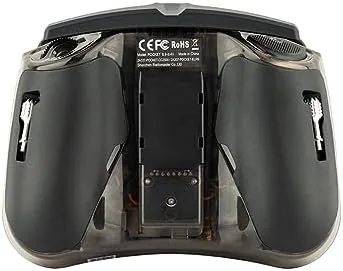
The transmitter supports both ELRS and the older 2.4GHz protocols through its module bay, so you can bind to legacy receivers without replacing them. The built in LED light is a small touch, but it is genuinely useful for evening sessions, and the foldable antenna keeps the whole package compact without sacrificing the 2.4GHz performance.
Real-World Performance
I started with an indoor whoop on ELRS. Binding was straightforward through the EdgeTX menu, and the receiver connected on the first attempt. The stick response felt instant, with no perceptible lag between a stick move and the quad reacting. For a transmitter at this price, that responsiveness is impressive.
Outdoor range testing came next. I flew a five inch quad out to several hundred meters in an area with light trees, and the link held solid the entire time. The RSSI stayed healthy, and at no point did the radio warn of a weak signal. For a compact transmitter with 500mW, the range comfortably exceeds what most pilots need for normal park and field flying.
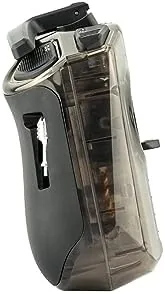
The Hall gimbals made the biggest difference in real flying. Precision maneuvers like throttle control in tight gaps and smooth coordinated turns felt locked in. The sticks returned to center cleanly, and there was no drift or jumpiness, which is exactly what you want from a radio at this price point.
I also tested the Pocket with a lightweight fixed wing. The smaller form factor was a slight adjustment at first, because my hands were used to a full size radio with more space between the sticks. After a few minutes I adapted, and the reduced weight actually made long flying sessions more comfortable.
The LED light is bright enough to see the throttle stick position at dusk but subtle enough that it does not wash out the workspace. The foldable antenna locks securely in place, and I had no issues with it drooping or losing alignment during use.
Battery life was strong across the test period. The Pocket uses a built in rechargeable battery, and I managed several full days of flying before needing to top it up. The USB-C charging is convenient and fast, which matters when you fly every day.
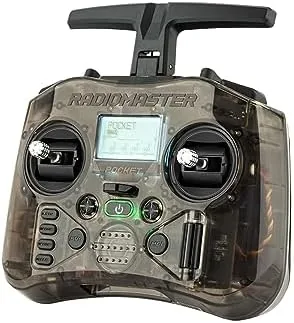
The only real performance complaint is the physical footprint of the screen. It is small, so reading telemetry and menus takes a moment longer than on a full size radio. For most flying, the audible alerts and spoken telemetry options in EdgeTX cover the gap well.
Pros and Cons
- Pros: excellent Hall effect gimbals, compact and lightweight, full EdgeTX firmware, built in ELRS with long range, strong battery life, low price, useful built in LED.
- Cons: small screen, ergonomics take adjustment for large hands, no removable battery module, single antenna form factor limits some advanced setups.
How It Compares
| Spec | RadioMaster Pocket | Full Size Radio | Basic Budget Radio |
|---|---|---|---|
| Gimbals | Hall effect | Hall effect | Potentiometer |
| Firmware | EdgeTX | EdgeTX | Proprietary |
| ELRS | Built in 500mW | Module required | Not included |
| Weight | Ultra light | Heavy | Light |
| Screen | Small | Large color | Minimal |
Against a full size radio, the Pocket gives up the large screen and physical size but keeps the same EdgeTX power and better ergonomics for travel. Against basic budget radios, the Pocket wins decisively because of the Hall gimbals and built in ELRS, which budget options simply do not offer. The comparison is a trade of screen space for portability, and for most pilots the Pocket is the better buy.
Who Should Buy It
Buy the Pocket if you fly whoops and small quads, if you travel with your gear, or if you want a serious first radio that will not hold you back as you learn. It is also a great second radio for experienced pilots who want something to throw in a bag. Skip it if you need a large telemetry screen, if you have very large hands and prefer a full size grip, or if you rely on advanced multi module setups that need a bigger radio body.
How We Test
I test radio transmitters the way pilots actually use them. I bind to multiple receiver types, fly indoor and outdoor, check range and link quality, and run long sessions to judge battery and comfort. I also evaluate the firmware experience, because a radio is only as good as the software behind it. The Pocket passed every practical check with room to spare.
Questions People Ask
What is the RadioMaster Pocket's output power?
The Pocket runs EdgeTX with ELRS, giving up to 500mW of output power, which is enough range for nearly all FPV flying and most fixed wing use.
Are the gimbals really Hall effect?
Yes. The Pocket uses Hall effect gimbals, which rely on magnetic sensors for smoother and more durable stick movement than the potentiometer designs found on cheaper radios.
Can the Pocket bind to whoops and BNF quads?
Yes. ELRS receivers bind easily through the EdgeTX menu, and the compact size makes it ideal for whoops and small indoor drones that are awkward to fly with a full size radio.
Does it run EdgeTX?
Yes. The Pocket runs EdgeTX, so it supports the same model profiles, Lua scripts and features as larger OpenTX and EdgeTX radios, with no software downgrade for the smaller body.
If you want to check current pricing and availability, see the RadioMaster Pocket on Amazon. For the full specification list and color options, browse the RadioMaster Pocket transmitter on Amazon. For a deeper technical look at ExpressLRS and why it changed radio control, Oscar Liang has an excellent in depth guide.
As an Amazon Associate, I earn from qualifying purchases.