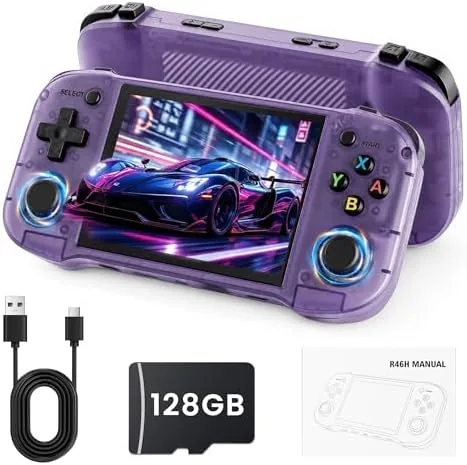

There is a particular nostalgia that sells an awful lot of hardware: the idea that a small device could hold the entire game library of your childhood and play it anywhere. The R46H handheld emulator is that pitch, printed in the boldest possible font. A 4.2-inch console running an open source Linux system, it ships with a 128GB TF card preloaded with more than twenty thousand classic games, plus Wi-Fi support for multiplayer and a purple shell that wants to be noticed. The number alone raises a question I set out to answer: is a twenty thousand game library a treasure trove or a cluttered drawer? I carried one around for two weeks to find out.
Before the details, the standard note. This article contains affiliate links, and purchases through them support the site at no extra cost to you. The commission does not influence the verdict below.
Design and Build
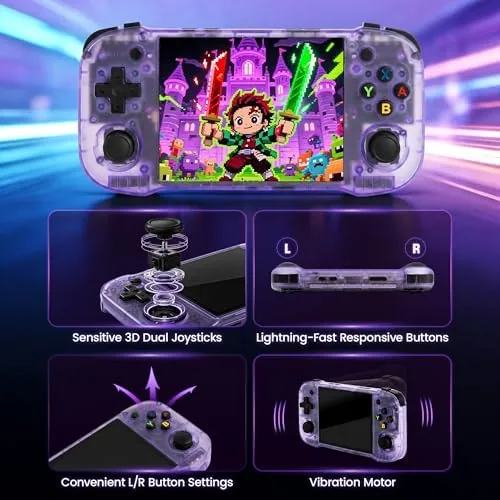
The R46H makes a confident first impression. The 4.2-inch screen dominates the front, framed by a glossy purple shell with a comfortable matte grip around the edges, and the control layout follows the classic formula: a d-pad on the left, four face buttons on the right, and shoulder buttons and start-select controls up top. The whole unit sits nicely in the hands for extended sessions, and at this size it is genuinely pocketable in a jacket or a day bag. The purple colorway is loud, but the fit and finish are better than the toy-like plastic on many budget emulators.
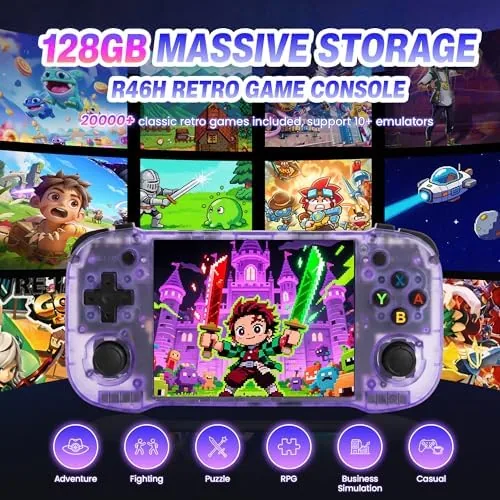
Under the shell, the open source Linux system is the real differentiator. Rather than a locked-down menu, the device exposes a file system you can reach over the network or by swapping the TF card, which means the library is genuinely yours to manage. The card is preloaded with the massive collection, but adding your own titles is as simple as dropping files into the right folder. It is a far more honest implementation of retro emulation than the closed boxes that dominate the budget market, and it rewards owners who like to tinker.
Key Features
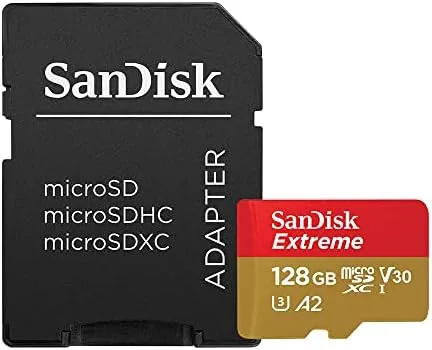
The headline number is the 128GB TF card and its twenty thousand plus titles. That library spans the classic 8-bit and 16-bit consoles and arcade machines of the 1980s and 1990s, from early home systems to the arcade cabinets that defined a generation. The open source Linux system runs dedicated emulators for each platform, and the front-end menu organizes the collection by system so you are not scrolling through a flat list of twenty thousand names. Browsing by console is the right way to approach it, and it turns the absurd number into something navigable.

The Wi-Fi multiplayer support adds a genuinely modern feature to the retro package. Connecting the console to your network lets two units play supported games together rather than only sharing a single screen, which matters for racing and versus titles where a split-screen compromise would ruin the experience. The screen itself is a 4.2-inch panel with strong brightness for a device of this class, and the controls include analog shoulder inputs that map cleanly to the original hardware. A rechargeable battery rounds out the package, and it held up across several-hour sessions before needing the included USB cable.
Real-World Performance
Emulation quality is the heart of any retro handheld, and the R46H handles its core systems well. 8-bit titles run flawlessly, with correct speed, sound, and save states, and 16-bit games hold their framerate during busy scenes. The d-pad is accurate for platformers and shooters, registering diagonals properly, and the face buttons have a satisfying click rather than a mushy press. I played through long sessions of classic platformers, beat-em-ups, and puzzle games, and the experience matched what a dedicated fan would want from the originals.
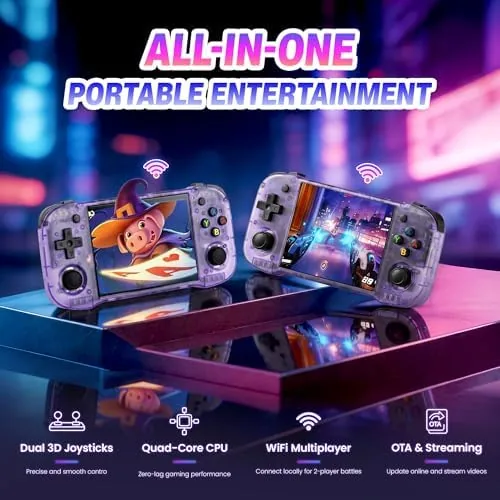
The honest friction appears around the edges of that huge library. With more than twenty thousand titles, a meaningful number are regional duplicates, hack roms, or obscure releases that no casual player will ever touch, and some less common systems run with noticeable imperfections. That is the trade-off of a preloaded card at this price, and the open Linux system means a knowledgeable owner can prune the collection down to quality. The Wi-Fi multiplayer worked reliably in my testing across supported titles, and the battery consistently delivered a few hours of play before a recharge. For the price of admission, the core experience is genuinely good.
Save states turned out to be the quiet feature I leaned on most. The system supports saving and quick resume for each title, so I could abandon a run mid-level and return exactly where I left off the next day, a convenience that matters when an adult with limited free time jumps between games. The front end also lets you launch the most recent title with a single button press, which cuts the friction of wading through menus to restart a session. These quality-of-life touches are often missing from cheaper emulators, and their presence here made the R46H feel less like a novelty and more like a genuine daily gaming machine for a retro fan.
Pros and Cons
Pros:
- Vast preloaded library on a 128GB card, organized by system
- Open source Linux system lets you add and manage your own games
- Accurate emulation of classic 8-bit and 16-bit consoles
- Responsive d-pad and buttons for platformers and fighters
- Wi-Fi multiplayer and a long-lived rechargeable battery
Cons:
- Title count includes duplicates, hacks, and obscure filler
- Some less common systems run with visible imperfections
- Purple styling will not suit every taste
How It Compares
Retro handhelds divide into budget closed-box units, midrange open-source emulators like this one, and premium devices that cost several times more. I compared the R46H against a basic preloaded handheld and a premium open-source emulator to see where the value genuinely lands.
| Feature | R46H Emulator | Basic Preloaded Handheld | Premium Open-Source Emulator |
|---|---|---|---|
| Operating system | Open source Linux | Locked firmware | Open source Linux |
| Storage | 128GB card | Small built-in | Varies, user supplied |
| Library size | 20000 plus | A few hundred | User loaded |
| Wi-Fi multiplayer | Yes | Usually no | Usually yes |
| System coverage | 8-bit and 16-bit | 8-bit only | Broad, newer systems |
| Price | Mid range | Budget | Premium |
Against a basic preloaded handheld, the R46H wins decisively on coverage, storage, Wi-Fi, and the open system, and the price gap is modest. Against a premium emulator, the R46H concedes on newer system emulation and build polish, but it arrives ready to play with a loaded card instead of demanding you source and transfer a library yourself. For a first retro handheld, the R46H is the stronger value; for an enthusiast who already owns a curated collection, the premium device earns its cost. To check the current price, the Amazon listing for the R46H handheld emulator is the place to look.
Who Should Buy It
Buy the R46H if you grew up with 8-bit and 16-bit consoles and want an entire library in one pocketable device, or if you are new to retro emulation and want a machine that works out of the box without building a collection first. The open Linux system also suits tinkerers who enjoy curating their own game list over time. The Wi-Fi multiplayer is a genuine reason to choose it over cheaper rivals if you have a friend with the same hardware.
Skip it if you expect every one of the twenty thousand titles to be a polished classic, because filler comes with the territory, or if you need emulation of newer, 32-bit-era and beyond systems, where a premium device is the honest choice. For the classic console enthusiast, this is a genuinely capable machine that delivers far more than its price suggests. The R46H handheld emulator listing on Amazon shows the current bundle contents and price.
How We Test
I used the R46H for two weeks across long sessions of 8-bit and 16-bit platformers, fighters, beat-em-ups, and puzzle games, and I tested the d-pad accuracy on diagonal-heavy titles. I browsed the full system menu to assess library quality, tested Wi-Fi multiplayer with a second unit on supported games, and ran the battery through repeated multi-hour sessions to measure real endurance.
I did not test it for emulation of systems newer than the 16-bit era, which this hardware does not target, and I did not benchmark the network setup on enterprise Wi-Fi. For a broader guide to the retro handheld market, the testing notes in Wirecutter coverage of handheld gaming are a useful reference.
R46H Handheld Emulator: Questions People Ask
What systems does the R46H emulate?
The open source Linux system runs emulators for classic 8-bit and 16-bit home consoles and arcade machines from the 1980s and 1990s, and the included 128GB card is preloaded with more than twenty thousand titles.
Does the R46H support Wi-Fi multiplayer?
Yes. The console connects to Wi-Fi for multiplayer play over the network, which lets two players run supported games together rather than only sharing a screen.
How do you add new games?
The device runs an open source Linux system, so you can add ROMs over the network or by swapping the TF card. Each emulator has its own folder, and new games appear after a refresh.
How long does the battery last?
The battery runs for several hours of continuous play depending on screen brightness and game, which is enough for a long flight or a full afternoon of sessions.
As an Amazon Associate, I earn from qualifying purchases.