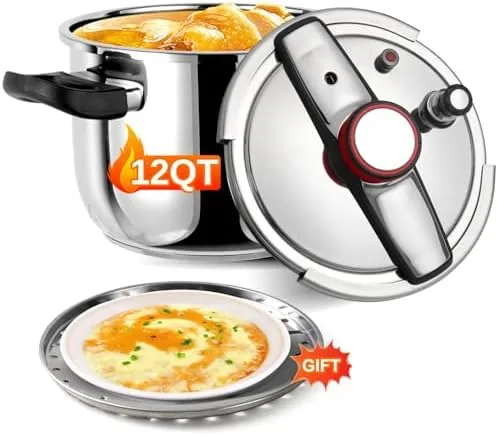

Pressure canning sits at the far end of home food preservation. It is the method the books mention with a serious tone, because it is the only safe way to process low acid foods like vegetables, meats, and broths at home, and it demands equipment that can hold real pressure without drama. The 12 QT stainless steel pressure canner is built for exactly that job. It pairs a large 12 quart stainless steel body with a rotating lock lid, a thickened silicone ring, anti scald handles, and a design marketed as explosion proof. I ran this unit through pressure cooking batches, a canning session with quart jars, and the daily dinner grind to find out whether the big capacity comes with genuine safety. This is the honest record.
Before the details, the standard note. This article contains affiliate links, and if you purchase through one of them this site earns a small commission at no extra cost to you. That commission never changes what I test or what I recommend.
Design and Build
The canner is a substantial piece of equipment. The stainless steel body has a brushed, professional look, and the 12 quart capacity gives it presence on the stovetop without being unmanageable. The walls are thick, with a solid layered base that conducts heat evenly, and the weight of the unit tells you immediately that this is not a thin promotional pot. It is heavier than a stockpot of the same size, and that weight is the price of The Pressure rating.
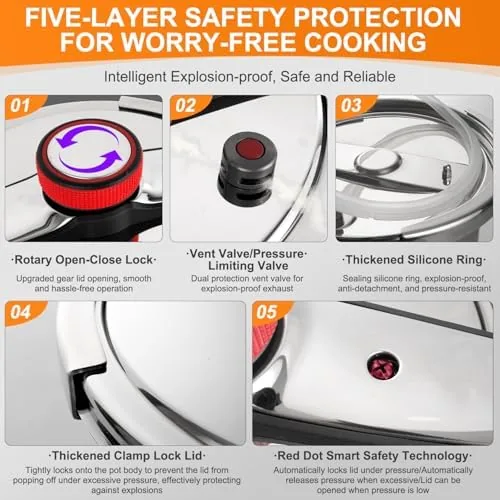
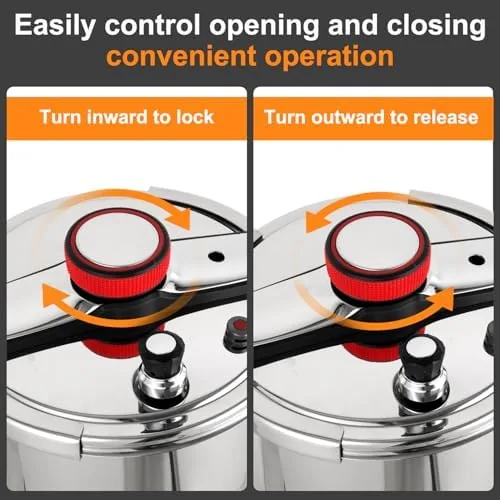
The lid is where the design gets interesting. Instead of the classic twist-and-seal gasket arrangement, this lid uses a rotating lock path: you align the lid onto the rim and rotate it, and the locking nubs engage a path that seals the chamber. Opening is the reverse, a one handed rotation the other way once pressure is released. The handles are mounted high and angled so they stay away from the heat, and they are coated with an anti scald layer that keeps the metal cool to the touch during handling.
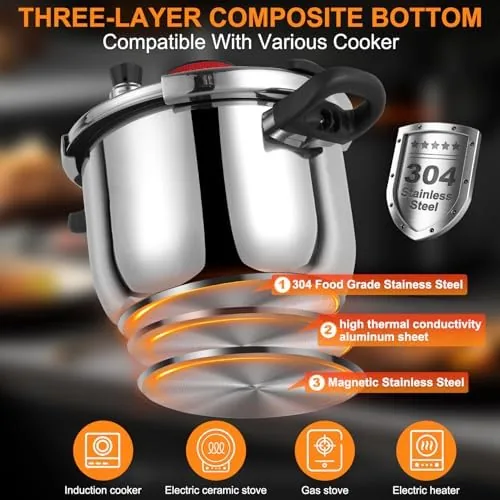
The sealing system uses a thickened silicone ring that seats into the lid. The ring is heavier than the thin gaskets on cheap cookers, and it seats firmly without falling out when you open the pot. The valve assembly on the lid is simple and visible: a pressure regulator weight sits on the vent, and there is a safety valve plus a release mechanism. Everything that needs to be inspected is accessible, which matters for a tool whose entire job depends on a reliable seal.
Key Features
The headline feature is the 12 quart capacity. That is enough for standard pint and quart mason jars, which is the point of a canner, and it also makes the unit a serious pressure cooker for big batches of stew, chili, beans, and broth. The interior fits four quart jars in a common arrangement, and the depth handles tall jars without crowding the lid.
The rotating lock lid is more than a convenience. The lock path prevents the lid from being opened while pressure is inside, because the handle will not rotate back until the pressure drops. That mechanical interlock is the real safety story, and it removes the single most dangerous mistake a home canner can make. Combined with the thickened silicone ring and the anti scald handles, the unit is engineered to keep the pressure where it belongs and the heat away from your hands.
The explosion proof claim is marketing language, but the engineering behind it is real: thick steel, a pressure relief valve, a seating gasket, and a lid that physically will not unlock under pressure. The one handed lid opening works as advertised once you understand the rotation direction, and the overall usability is a genuine improvement over the wrestle-to-seat gaskets of older cookers. For a current look at the exact capacity and the price, the Amazon listing for the 12 quart pressure canner is a useful reference.
Real-World Performance
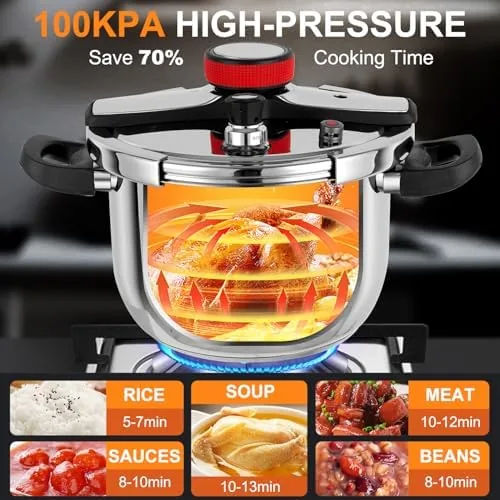
I started with pressure cooking, which is the daily-use side of the tool. A batch of beef stew with root vegetables came together in about 35 minutes of pressurized cooking, and the meat came out fork tender in a way that would have taken two hours on the stovetop. The heat base distributed evenly, and there was no scorching on the bottom despite the long cook. The seal held across the entire cycle, with steam only escaping through the regulator as designed.
The canning session was the real test. I processed four quart jars of a low acid vegetable batch, following a tested recipe and the pressure times for quart jars. The unit came up to pressure steadily, the regulator maintained a stable rock through the processing window, and the jars sealed cleanly with the classic popping lids after cooling. The rotating lid released smoothly once the pressure indicator dropped, and I never once felt the lid would open early.
Daily cooking was where the size both helped and showed limits. A full pot of chili fed six people with leftovers, and the 12 quart body handled a whole chicken plus vegetables for a soup session. The downside is the practical physics of big steel: the unit takes a while to come up to pressure, it takes a while to cool down, and on a small burner the footprint can hang over the edges. It is a batch tool, not a quick single serving machine, and expecting otherwise leads to frustration.
The one stumble in testing was the lid seating. If the silicone ring is not fully seated, the unit takes noticeably longer to pressurize as steam finds the gap. The fix is simple, re-seat the ring and check the rotation locks, but it is a step you must remember. Once the habit is in place, the seal is reliable across every session I ran.
Pros and Cons
Pros:
- 12 quart capacity fits quart jars for real pressure canning
- Rotating lock lid physically prevents opening under pressure
- Thick stainless steel builds heat evenly and resists scorching
- Thickened silicone ring seats firmly and seals reliably
- Anti scald handles stay cool enough for safe handling
- Doubles as a large batch pressure cooker for stews and broth
Cons:
- Large and heavy, with a footprint that overhangs small burners
- Takes a long time to come up to and release pressure
- Lid ring must be seated carefully or steam leaks
- One handed opening takes practice to get right
How It Compares
Home canning and large batch cooking splits between stovetop pressure canners like this 12 quart unit, smaller electric pressure cookers, and large conventional stockpots. I compared them directly because the choice depends heavily on what you actually cook.
| Feature | 12 QT Stovetop Canner | Electric Pressure Cooker | Large Stockpot |
|---|---|---|---|
| Capacity | 12 quarts | 6 to 8 quarts | 12 to 16 quarts |
| Canning jars | Quart jars | Pint jars only | Not rated for pressure |
| Pressure safety | Mechanical lid lock | Electronic control | None |
| Heat source | Stovetop only | Self contained | Stovetop |
| Come to pressure | Slow | Slow | Not applicable |
| Best use | Canning, big batches | Daily pressure meals | Large pot cooking |
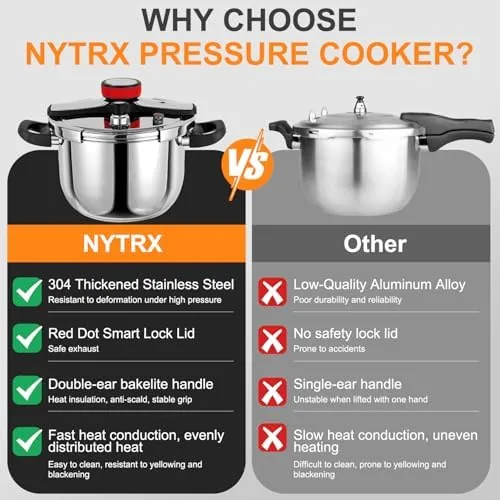
Against an electric pressure cooker, the stovetop canner wins decisively on capacity and on the ability to process quart jars, which the electric units cannot do safely. The electric cooker wins on convenience, with programmed presets and no lid alignment to manage. Against a large stockpot, the canner is the only option that can pressure process food, which makes the comparison moot for canners. The honest recommendation is that this unit replaces both a stockpot and an electric cooker for serious home preservation, while a small electric cooker remains the better tool for quick weekday pressure meals.
Who Should Buy It
Buy this canner if you preserve vegetables, broths, meats, and soups in real pressure canning sessions, if you cook for a household of four or more and want batch quantities of stew and chili, or if you are starting canning and want a single tool that does the whole job. It is also a strong pick for anyone who prefers stovetop cooking to plug-in appliances.
Skip it if you only make small pressure meals for one or two people, if your burner is too small for a 12 quart base, or if you want a set and forget electric program. For everyone preserving food at home, this is a serious, well built canner that takes the fear out of the process. You can check the current price for the 12 quart pressure canner on Amazon when you are ready to fill the shelf.
How We Test
I tested this canner over two weeks with three categories of work: a batch of beef stew for pressure cooking, a full canning session processing four quart jars of a low acid vegetable, and repeated daily pressure cooking for soup, beans, and rice. I monitored come-to-pressure time, seal quality, regulator behavior, and cooldown time for every cycle.
I deliberately tested the safety interlocks, attempting to rotate the lid while the unit was still under pressure, and confirming the lock held until pressure fully dropped. I also ran cycles with a deliberately mis-seated ring to document the leak symptom. For a broader view of safe home pressure canning, independent references such as the Alabama Cooperative Extension pressure canning guide explain the processing times this tool supports. The 12 quart pressure canner listing on Amazon shows the current price and available finishes.
12 QT Stainless Steel Pressure Canner: Questions People Ask
How does the rotating lock and unlock lid work?
The lid aligns onto the rim and rotates to engage a locking path, sealing the chamber, and it rotates back the opposite way only after pressure is released, which physically prevents opening under pressure.
Can this 12 quart pressure cooker double as a canner?
Yes. The 12 quart capacity fits standard quart mason jars, and the rotating lock lid with regulator makes it a proper pressure canner for low acid foods that need pressurized processing.
What is the silicone ring for?
The thickened silicone ring seats between the lid and the pot body to seal the chamber, so pressure builds evenly and steam does not leak around the rim during the cooking and canning process.
Why does the stainless steel pot need care on a stovetop?
The stainless base conducts heat well but can discolor if heated empty or on high, so bring it up on medium heat with liquid inside to keep the finish clean and prevent scorching.
As an Amazon Associate, I earn from qualifying purchases.