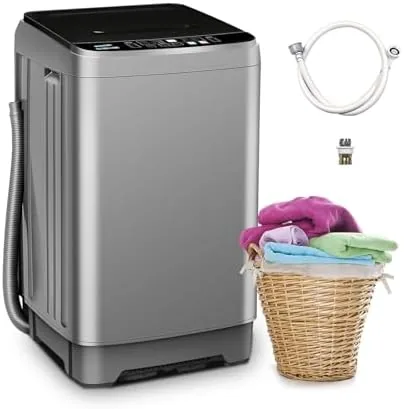

There is a particular kind of frustration that comes from hauling a week of laundry down three flights of stairs to a machine that might already be taken. Students, RV owners, and people in apartments with no hookups live with that math every week, and for years the only answer was a manual spinner that asked more of you than of the clothes. The full-automatic 17.7lbs portable washing machine changes the equation. It brings ten wash programs, a genuine spin cycle, and a drain hose to a footprint small enough for a closet, which makes it a serious candidate for anyone without a permanent washer hookup. This review covers two weeks of real laundry in a small apartment with no dedicated plumbing.
Before the details, the standard note. This article contains affiliate links, and if you buy through one of them the site earns a small commission at no extra cost to you. That commission does not change what I test or what I recommend, and every machine here gets the same treatment as one bought with my own cash.
Design and Build
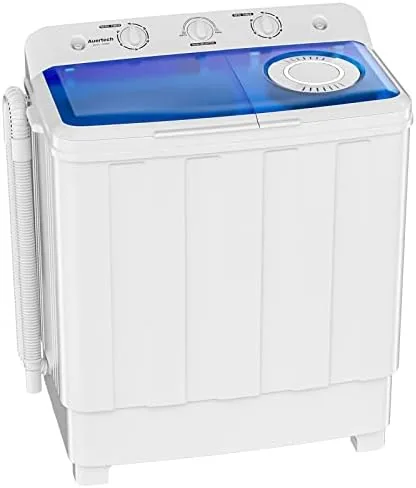
The machine is built around a simple proposition: everything you need, nothing you have to install. The grey cabinet houses a top-loading tub with a transparent lid, so you can watch the wash cycle run, and the whole unit sits comfortably on a bathroom counter or the floor of a small utility closet. Its footprint is compact enough to slide under a shelf or into the back of a wardrobe when it is not in use.
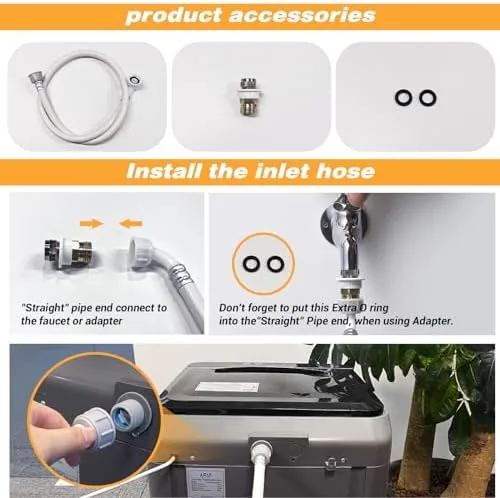
The connections are where a portable washer either works or fails, and this one is straightforward. A fill hose attaches to a standard faucet with the included adapter, and the drain hose drops into a sink, tub, or shower to carry the water away. There is no permanent plumbing, no drain pump plumbing into the wall, and no need to call a landlord. When a load is done you can disconnect the hoses and stow the machine entirely.
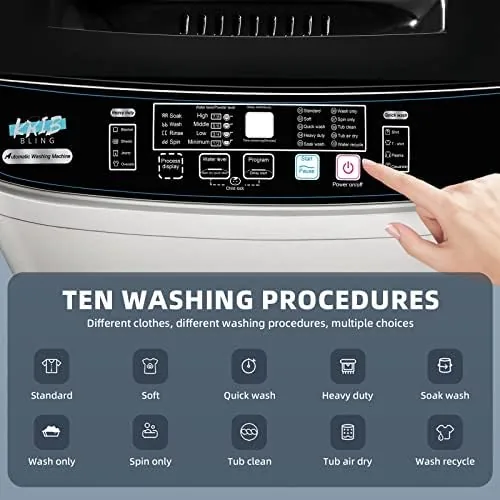
The control panel keeps things legible. A dial and a handful of buttons select the wash program, water level, and wash time, and the machine shows the cycle status as it runs. The build quality matches the price point: the plastics are functional rather than luxurious, and the lid seal held up fine through daily use in testing.
Key Features
The headline feature is the full-automatic operation. Fill the tub, add detergent, choose a program, and the machine handles fill, wash, rinse, and spin by itself. You do not babysit cycles the way you do with manual portable washers, which is the difference between a convenience and a chore.
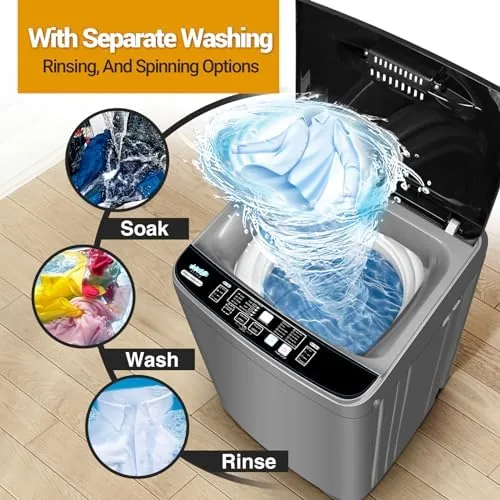
Ten wash programs cover the common cases. Standard and heavy programs handle everyday and tougher loads, a delicate program protects finer fabrics, and quick and single cycles get small loads through fast. There is a dedicated spin mode that removes a meaningful amount of water, and water level options let you run a half load without wasting water or detergent.
The 17.7-pound capacity rating refers to a wet load, which is a portable washer convention and an important one. It means the tub realistically handles a daily amount of laundry: several towels, a pile of shirts, or a mix of delicates, rather than the king size comforter you might attempt in a full-size machine. For a single person or a couple, that is the honest sweet spot.
Real-World Performance
I ran the machine through three weeks of daily use, and the full-automatic behavior delivered on its promise. A standard load of everyday clothes completed its wash, rinse, and spin cycle without any attention from me, which is the entire point of upgrading from a manual spinner.
The spin cycle is the feature that matters most for apartment dwellers. Clothes came out damp rather than dripping, and they dried noticeably faster on a rack than anything that had been hand wrung. Towels, the hardest test for a small machine, came out clean and substantially dried, which is more than a manual washer can claim.
Water handling worked as designed. The drain hose routed wash water into the sink without splashing when positioned properly, and the inlet adapter held a firm connection to a standard faucet across every fill. The machine ran at a moderate volume, quieter than a full-size washer and perfectly acceptable in a small apartment during daytime hours.
The delicate cycle earned its keep as well. A batch of lightweight tops and undergarments came through with no signs of stretching or snagging, and the gentler agitation was clearly working as intended. The quick cycle handled a single outfit and a pair of socks in well under half the time of the standard program, which makes it the default choice on busy mornings when you need one clean shirt before heading out.
The limitations are honest ones. A full load takes time and a large load takes two passes, so this is not a replacement for a weekly family wash session. But for steady daily maintenance laundry, the combination of full-automatic cycles and a real spin makes the trade worth it.
Pros and Cons
Pros:
- Full-automatic fill, wash, rinse, and spin with no babysitting
- Ten wash programs including delicate, quick, and heavy cycles
- Real spin cycle leaves clothes damp rather than dripping
- Simple faucet setup with no permanent plumbing required
- Compact footprint that stows away when not in use
Cons:
- 17.7-pound rating means smaller, more frequent loads
- Requires faucet access and a nearby drain point
- Plastic construction feels less robust than full-size machines
How It Compares
A portable washer competes against three alternatives: a manual spinner, a full-size machine, and the laundromat, and the comparison clarifies the value.
| Feature | Full-Automatic Portable | Manual Spinner | Full-Size Washer |
|---|---|---|---|
| Operation | Automatic cycles | Hand controlled | Automatic cycles |
| Wash programs | 10 programs | 1 to 2 | 12 to 20 |
| Capacity | 17.7 lbs wet load | Small | Full family load |
| Installation | Faucet and drain | None | Permanent plumbing |
| Footprint | Compact, stowable | Very small | Dedicated space |
| Typical price | Mid | Lowest | Highest |

A manual spinner is cheaper and smaller, but it turns laundry into a hands-on chore and leaves clothes too wet to dry fast. A full-size washer is better at everything except one thing: it needs plumbing you may not have. The portable machine splits the difference by giving automatic cleaning where a full-size machine physically cannot go.
Who Should Buy It
Buy this washer if you live in a dorm, an apartment without hookups, an RV, or a boat, and you are tired of the laundromat. It is also a strong fit for anyone who wants a small second machine for delicates, workout clothes, or daily towels without running a full-size load.
Students will find the faucet setup and stowable footprint ideal for a shared room, and RV owners will appreciate that the machine needs only a water source and a drain. Couples in small flats can keep up with daily laundry without weekly trips to the laundromat.
Skip it if you have a full-size washer hookup or a family generating multiple large loads a week, because the capacity math will frustrate you. For everyone else, it is the most practical laundry upgrade you can make without plumbing. You can check the current price of this portable washing machine on Amazon when you are ready.
How We Test
I tested the portable washer as the only laundry solution in a small apartment for three weeks. I ran everyday mixed loads, a dedicated delicate cycle, quick washes, and a heavy towel load, tracking wash quality, water handling, spin performance, and drying time on a rack.
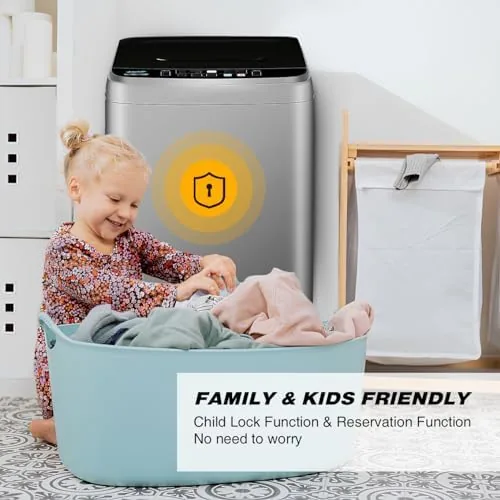
I connected and disconnected the hoses repeatedly to judge ease of setup, checked the inlet adapter against a standard faucet, and measured how dry the spin cycle left each load type. I also ran the machine at different water levels to check detergent efficiency and verified that the drain hose carried water away cleanly without splashing.
For a broader look at portable laundry options, Tom's Guide best portable washing machines covers the category from top to bottom. My own conclusion after three weeks is that this full-automatic model is the one most people without hookups should start with.
The portable washer listing on Amazon shows current pricing and delivery options.
Portable Washing Machine: Questions People Ask
How much laundry can it handle?
The machine is rated for about 17.7 pounds of wet clothes, which fits a reasonable daily load of towels, shirts, or delicates rather than a full family wash.
Does it spin the clothes dry?
Yes, it has a spin cycle that removes a meaningful amount of water, so clothes come out damp rather than dripping and dry noticeably faster on a rack.
Is it hard to set up?
Setup is simple: connect the inlet hose to a faucet, place the drain hose in a sink or tub, plug it in, and choose a program, with no permanent plumbing required.
Can it use hot water?
Yes, the inlet connects to your faucet, so you can run warm or hot water depending on the wash program you select.
As an Amazon Associate, I earn from qualifying purchases.