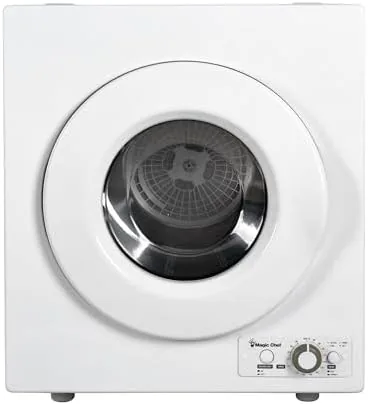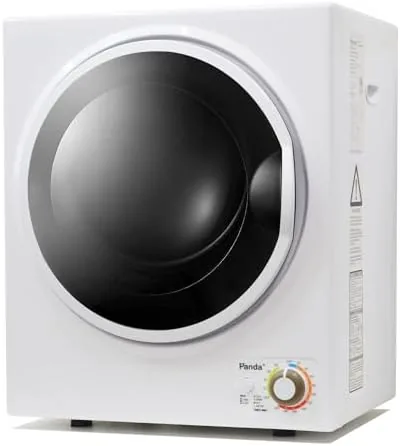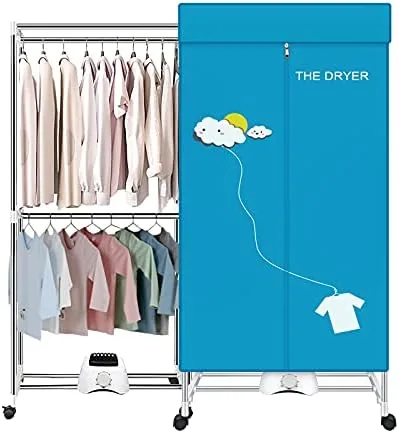

Laundry is the quiet battle of small living. An apartment without a dryer, an RV with no hookup for a full machine, a family that never seems to have enough drying space. The portable 110V 1000W electric clothes dryer steps into that fight with a compact, vent free design: a double layer, stackable stainless steel drum rated at 15 kilograms, with a front load door and a footprint that fits a corner of a small room. I dried a week of laundry in one, from delicates to towels, and this review is the honest record of how it performed, how long it took, and whether a 1000 watt dryer can really replace the full size machine.
Before the first load, the standard note. This article contains affiliate links, and if you buy through one of them the site earns a small commission at no extra cost to you. That commission does not change what I test or what I recommend, and the dryer reviewed here was used exactly as any owner would use it.
The dryer is a front loading electric machine that plugs into a standard 110 volt outlet and vents warm air through the unit rather than an external duct. It promises a full drying solution in a small space, and this review covers the design, the capacity, the real drying performance, and the honest limits of a vent free portable machine.
Design and Build
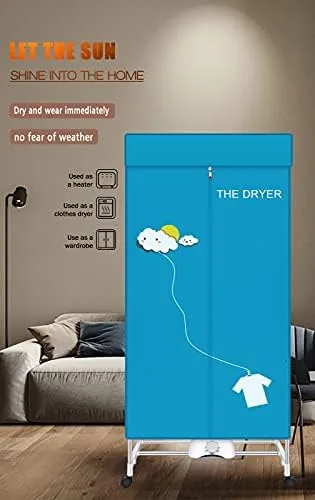
The dryer is compact and finished in blue, with a front load door, a stainless steel drum, and a second tier that stacks on top for extra drying surface. The unit is small enough to sit in a corner, a closet, or a bathroom, and the blue finish keeps it from looking like an appliance that belongs in a basement. The front door opens with a handle, and the control panel on top holds the cycle and temperature buttons.
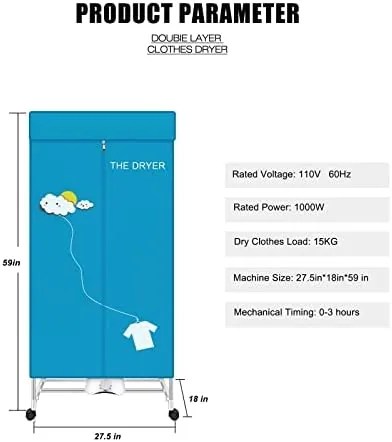
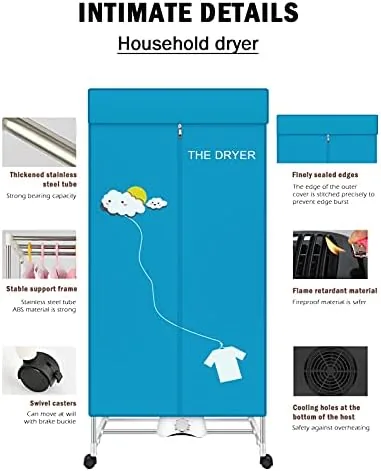
The build is light but serviceable. The stainless steel drum is smooth and easy to wipe down, and the outer shell feels solid enough for daily use without rattling. The unit plugs into a standard outlet and runs on a normal household circuit, which is the core advantage over full size dryers that need a 220 volt connection. The footprint is the real story here: it is roughly the size of a small washing machine or a large suitcase, which is the entire point of a portable dryer.
Key Features
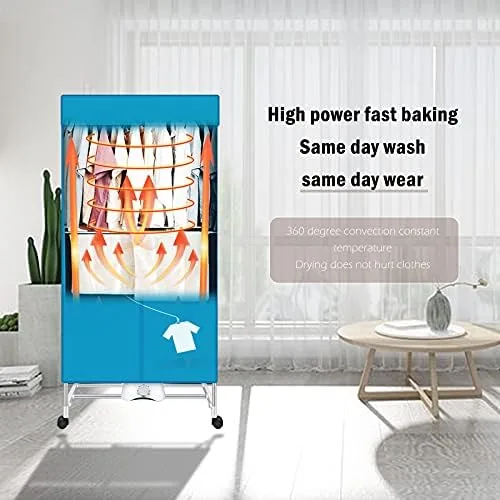
The headline feature is the vent free operation. The dryer does not need an external duct, because it vents warm air through the unit and collects the moisture in a removable tray. That means it runs in an apartment, an RV, a camper, or any space where a vented dryer cannot go. You plug it into the wall, set the cycle, and the machine does the rest without any permanent installation.
The double layer design is the second key feature. The lower drum tumble dries the main load, while the upper section provides an additional surface for hanging or air drying, so you can work through a larger amount of laundry in parallel. The stainless steel drum is gentle on fabric and easy to clean, and the front load door makes loading and unloading far more convenient than the top load lids on some portables.
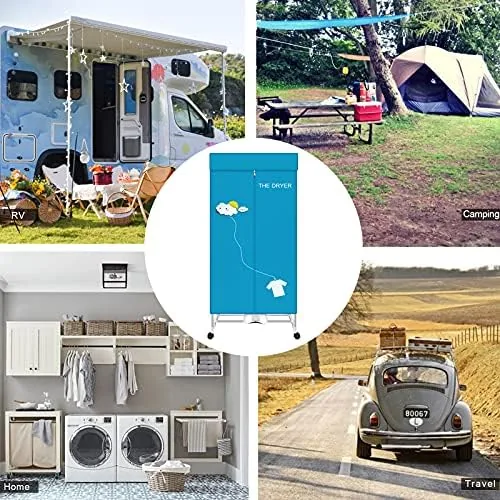
The 15 kilogram capacity is the number that sets expectations. In practice that is a generous figure, and a sensible load is a medium basket of everyday clothing rather than a full family wash. The 1000 watt heating element is the other technical headline, because it defines the drying time and the power draw, and it runs entirely on a standard 110 volt outlet, which is what makes the whole machine portable.
Real-World Performance
I dried a week of laundry in the dryer, working through shirts, undergarments, jeans, and towels. A mixed load of shirts and lighter items dried in roughly 90 minutes on the standard cycle, which is slower than a full size dryer but reasonable for a machine that plugs into a normal outlet. Lighter delicates finished faster, and heavier towels and jeans took longer, which is the expected curve for a 1000 watt element.
The vent free system worked as promised. The warm air vented through the front of the unit, and the moisture collected in the tray rather than soaking the room. I emptied the tray partway through each long load, and the room stayed comfortable throughout. The stainless steel drum tumbled the clothes gently, and nothing came out overly wrinkled or heat damaged, even on the higher temperature settings.
The limits are honest ones. The capacity is real but modest, and the 15 kilogram rating flatters the practical maximum, which is closer to a medium basket of clothing. The drying times are genuinely longer than a full size machine, so running a full family's laundry is a process rather than a single cycle. The unit is also audible while running, the kind of hum you hear in the next room, and it needs the water tray emptied during long loads. These are the trade offs of a machine this small.
One more detail earned respect over the week. The dryer kept working through a full week of loads without any hiccup, the drum stayed smooth, and the controls remained simple and reliable. For an apartment dweller or an RVer with no vented dryer, it turned laundry from a trip to a laundromat into something done at home. That is the entire value of the product, and it delivered.
Pros and Cons
Pros:
- Vent free operation runs in apartments, RVs, and campers
- Runs on a standard 110 volt outlet, no 220 volt hookup
- Double layer design adds drying surface for larger loads
- Stainless steel drum is smooth, gentle, and easy to clean
- Compact footprint fits a corner, closet, or bathroom
- Front load door makes loading and unloading convenient
Cons:
- 15kg rating is generous; a real load is a medium basket
- Drying times are longer than a full size machine
- Audible while running and needs the water tray emptied
- Not designed for large, full family washes
How It Compares
The portable dryer competes with the full size electric dryer and with air drying or a laundromat. I compared the practical trade offs of each approach for small space living.
| Feature | Portable 1000W Dryer | Full Size Dryer | Air Drying |
|---|---|---|---|
| Power source | 110 volt outlet | 220 volt hookup | None |
| Vent needed | No | Yes, external duct | No |
| Drying time | About 90 minutes | 40 to 60 minutes | Hours or a day |
| Capacity | Medium basket | Full family load | Whatever you hang |
| Best for | Apartments, RVs | Homes with hookups | Budget, delicate items |
The full size dryer dries faster and handles a full family load, but it needs a 220 volt hookup, a vent, and a room of its own. Air drying costs nothing but takes a day and leaves clothes stiff. The portable dryer sits between them: it plugs into a normal outlet, needs no vent, and finishes a medium load in about an hour and a half. For small space living, it is the only option that does the full job of drying without a laundry room.
Who Should Buy It
Buy the portable dryer if you live in an apartment without a dryer, if you travel in an RV or a camper, or if you want a machine that dries clothes at home without a 220 volt hookup. It suits singles, couples, and small families who wash a few loads a week, and it is a genuine convenience for anyone who currently makes trips to a laundromat.
Skip it if you need to dry a full family's laundry in one cycle, or if you have a proper dryer hookup already. For small space living, this is a practical way to bring drying home. You can check the current price of the portable electric dryer on Amazon to see where it sits today.
How We Test
I used the portable dryer for a week of real laundry, running mixed loads of shirts, undergarments, jeans, and towels. I timed each cycle to measure real drying times, emptied the water tray during long loads, and tested the different temperature settings to see how they affected fabric and drying speed.
I compared the machine directly against a full size dryer in the same household and against air drying, judging time, convenience, and the final feel of the clothes. For a broader look at laundry options for Small Spaces, The Spruce has a useful guide to portable clothes dryers that is worth reading. The portable electric dryer listing on Amazon shows the current price and available options.
Portable Electric Clothes Dryer: Questions People Ask
Does the portable dryer need a vent?
No, it vents warm air out of the front and releases moisture through the unit, so it runs without an external duct in apartments, RVs, and campers.
How much laundry fits in the 15kg dryer?
The 15kg rating is generous, and a sensible load is a medium basket of everyday clothing, with denser items like towels dried in smaller batches.
How long does it take to dry clothes?
A mixed load of shirts and undergarments dried in about 90 minutes on the standard cycle, with towels taking longer and light delicates finishing faster.
Can the two layers be used at once?
Yes, the double layer design lets the lower drum run while the upper section hangs or air dries, so you work through larger laundry in parallel.
As an Amazon Associate, I earn from qualifying purchases.