
A properly poached egg is one of the easiest breakfast foods to describe and one of the hardest to actually produce. The classic method, a pot of simmering water swirled into a vortex with the egg dropped into the center, rewards practice and punishes distraction, and most home cooks settle for a wispy, ragged approximation. The poached egg cooker sidesteps the whole performance with a set of four non-stick silicone cups that hold the egg in shape while it cooks. I used the cups in the microwave and on the stovetop for several weeks, and this review covers how well they shape the eggs, how cleanly they release, and whether they earn a place next to the skillet.
A disclosure before the first egg. This article contains affiliate links, and if you buy through one of them the site earns a small commission at no extra cost to you. That commission never changes my verdict, and the cups reviewed here were used the way a home cook would use them.
The idea is simple: crack an egg into a cup, float the cup in water, and let the silicone hold the white around the yolk while the heat sets it. The rest of this review walks through the build, the two cooking methods, and the results that matter, which means the first bite.
Design and Build
The set is four identical cups molded from food grade silicone, each about the size of a small ramekin. The silicone is soft and flexible, with a wide rim that keeps the cup level in a pan of water and a smooth interior that the listing describes as non-stick. The material feels reassuringly thick, not like the flimsy silicone that collapses under its own weight, and there are no seams or crevices where egg could hide.
The cups are BPA free, which matters for anything that touches hot food, and the material carries no odor when new, a common complaint with cheap silicone. Each cup has a stable base and flared sides, so a cracked egg settles naturally into a rounded shape rather than spreading into a flat disc. The design is simple to the point of obviousness, but the execution of that simplicity is what separates these cups from a muffin tin.
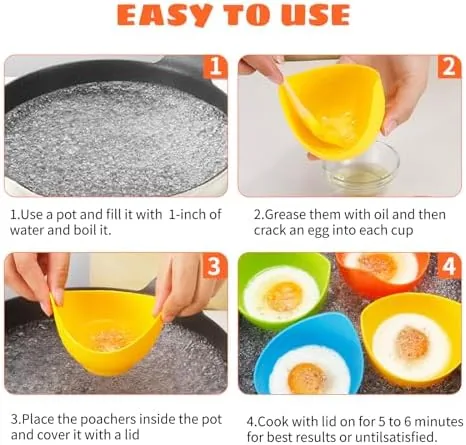
Versatility is built into the materials. Silicone of this grade is safe for the microwave, the stovetop water bath, and the dishwasher, so the cups fit whatever method a household prefers and clean up in the rack. The four cup count is a deliberate batch size, enough for a family of four or a couple of eggs per person for two.
Key Features
The headline feature is the shape holding. Each cup confines the egg white into a neat rounded dome while the yolk stays centered, which solves the two classic poaching failures of feathery whites and wandering yolks. The result is a restaurant shaped egg that looks as good on toast as it does in the photo.
The non-stick release is the second feature, and it is the make or break detail for any egg tool. A cooked egg that must be pried out with a fork ruins the whole process, and these cups release cleanly when given a light rinse or a thin smear of oil before cooking. The flexible silicone also flexes around the egg, so even a stubborn edge lifts free without tearing.
The dual cooking support is the third feature. Microwave cooking gives a poached egg in about a minute, while the stovetop water bath delivers a gentler, more traditional result. The same cups do both with no special inserts, no lids, and no extra parts, which keeps the tool cheap and the cleanup short.

Real-World Performance
I started with the stovetop method, since it is the traditional route and the one that flatters the tool. I filled a wide pan with an inch of water, brought it to a gentle simmer, and floated the four cups, each holding a cracked egg. In about four minutes the whites were set and the yolks were still soft, and each egg lifted out of its cup whole, round, and intact. The silicone kept the eggs beautifully shaped, and the simmering water never touched the eggs directly, so there was nothing to feather.
The microwave method was the bigger surprise. I added a splash of water to each cup, covered the batch loosely, and cooked on a low power setting. After roughly a minute the eggs were set, and with a little trial and error on timing, I produced consistent results every time. The microwave is faster and needs no stove watch, which makes it the weekday method, and the cups handled the microwave without any warping or hot spots.
Release and cleanup lived up to the non-stick claim. Eggs that slid out on their own were the norm once I got into the habit of a quick rinse before cracking, and the rare stuck edge released with a gentle flex of the silicone. After cooking, the cups wiped clean with warm soapy water or went straight into the dishwasher with no residue left behind.
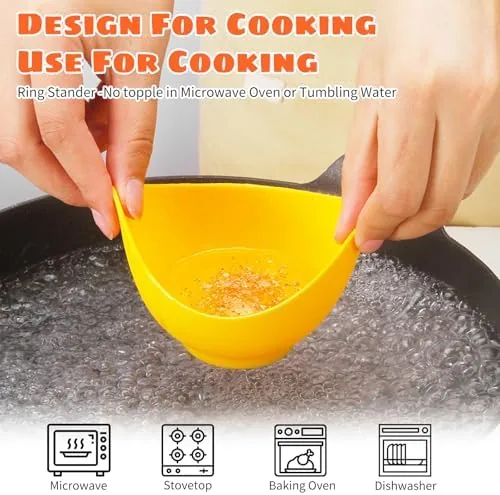
The limits are honest ones. The microwave takes tuning, since a full power minute overcooks the yolk and a short cook leaves the white runny, and the stovetop method needs a watchful eye on the simmer. The cups also hold only one shape, so a poached egg from these cups is round and tidy rather than the freeform kind some cooks prefer. None of these are serious, and all of them are learnable within a few tries.
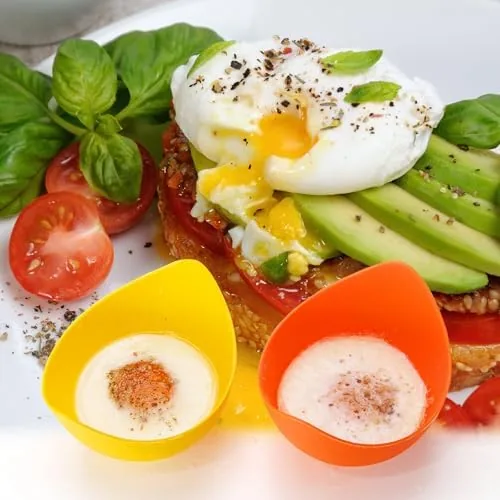
The value story is worth stating plainly. A set of four cups costs a fraction of a dedicated electric egg cooker, takes a fraction of the drawer space, and does the same job without a corded appliance on the counter. For the cook who wants tidy poached eggs a few mornings a week, the cups are the cheaper and simpler answer.
Pros and Cons
Pros:
- Produces round, tidy poached eggs without swirling water
- Non-stick silicone releases eggs cleanly with a quick rinse
- Works in the microwave and in a stovetop water bath
- BPA free food grade silicone, dishwasher safe
- Four cups poach a family batch at once
- Cheap and compact compared to an electric cooker
Cons:
- Microwave timing needs trial and error for soft yolks
- Cups must float in water, never sit on a dry hot pan
- Only produces round Eggs, Not freeform poached shapes
- Four egg batch caps larger breakfasts
How It Compares
The real comparison is between this set, the classic swirling water method, and a dedicated electric poacher. The table below lines up the three approaches.
| Feature | Silicone Cups | Swirling Water | Electric Poacher |
|---|---|---|---|
| Egg shape | Round and tidy | Freeform | Round and tidy |
| Skill needed | Minimal | Practice | Minimal |
| Cook time | 1 to 4 minutes | 3 to 4 minutes | 5 to 8 minutes |
| Counter space | None, stacks small | None | Permanent spot |
| Price | Low | Free | Higher |
The swirling water method is free and gives the most classic texture, but it is the hardest to master and the easiest to ruin. An electric poacher is reliable and hands off, but it costs more and takes counter space for a single trick. The silicone cups split the difference: they need no skill, no cord, and almost no space, and they deliver a dependable egg. You can check the current price of the poached egg cooker cups on Amazon.
Who Should Buy It
Buy these cups if you love poached eggs but the swirling method has never worked for you, if you want fast Microwave Eggs on busy mornings, or if you want a cheap gift for a breakfast lover who owns everything else. They are also a strong fit for a small kitchen where an electric poacher would be a waste of counter space.
Skip them if you prefer the freeform texture of a true water poached egg, if you only ever fry your eggs, or if you want a fully hands off appliance. For everyone else, four silicone cups are the lowest cost, lowest effort route to a tidy poached egg.
How We Test
I used the cups for several weeks, poaching eggs in the microwave and in a stovetop water bath, and I varied the cook times to map out the range from soft to firm yolks. I watched the release behavior, the cleanup, and whether the silicone held its shape across repeated use.
I did not test an electric poacher side by side, and I did not cook for a crowd beyond the four egg batch. For a deeper look at egg cookery and technique, Serious Eats explains the fundamentals of egg cookery in useful detail. The poached egg cooker listing on Amazon shows current pricing and bundle options.
Poached Egg Cooker: Questions People Ask
Can I use these egg cups in the microwave?
Yes, the cups are microwave safe, and a short cook in water produces a clean poached egg in about a minute when the settings are dialed in.
Are the cups really non-stick?
The silicone surface releases cooked eggs cleanly when the cups are lightly greased or rinsed first, and stuck edges lift off with a fingertip.
Are the cups safe on the stovetop?
The cups are heat safe and work in a pan of gently simmering water, but they must sit in the water and never directly on a dry, hot pan base.
How many eggs can I poach at once?
The four cups poach four eggs at a time, which covers a family breakfast or a couple of eggs per person in one batch.
As an Amazon Associate, I earn from qualifying purchases.