
Poached eggs have a reputation as the finicky breakfast, the one that turns into a ragged mess of scattered whites and watery yolks just when you are trying to impress someone. The traditional fix is a swirl of vinegar and a whirlpool of boiling water, which works but asks a lot of a weekday morning. Silicone poaching cups offer a shortcut: crack an egg into a cup, let the ring stander float it in water, and walk away. I tested the COZILIFE silicone egg poaching cups, a pack of four, through a full month of breakfasts to see whether they deliver a clean poached egg without the ceremony.
Before the eggs, the disclosure. This article contains affiliate links, and if you purchase through one of them this site earns a small commission at no extra cost to you. That commission never changes what I test or how I report it, and the cups here were used the way any home cook would use them.
The short version is that these cups work, and they make poached eggs easier than they have any right to be. The microwave method is nearly instant, and the stovetop method produces a genuinely restaurant looking egg. The rest of this review covers the cups themselves, both cooking methods, cleanup, and the small tricks that turn good results into great ones.
Design and Build
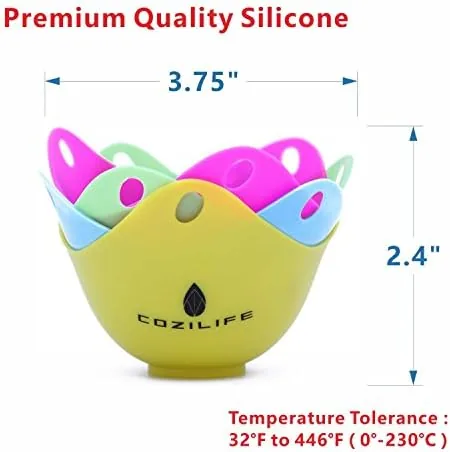
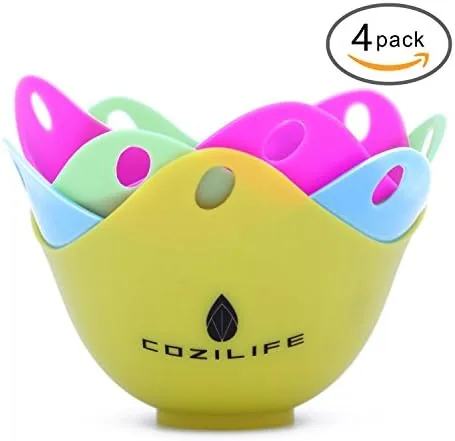
Each cup is a small silicone bowl with a flat bottom and gently flared sides, sized to hold a single egg with room to spare. The cups come with ring standers, flexible rings that act as a base to keep the cup upright in water, so the cup sits level in a skillet instead of tipping over. The silicone is soft, food grade, and BPA free, with no seams, crevices, or sharp edges where egg could hide during cleaning.
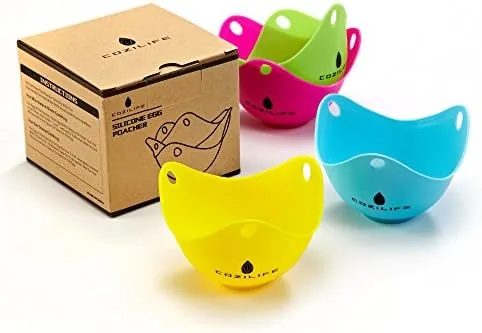
The set arrives in a kraft box with the cups stacked, which is a small detail but a nice one, because most egg cookers ship in wasteful plastic. The silicone is heat tolerant enough for simmering water and safe in the microwave, and the flexibility of the material is the whole trick: the finished egg releases by pressing gently on the cup from the outside, so the delicate white does not get torn pulling it out. The ring standers stay stable on a stovetop and keep their shape through repeated use.
Key Features
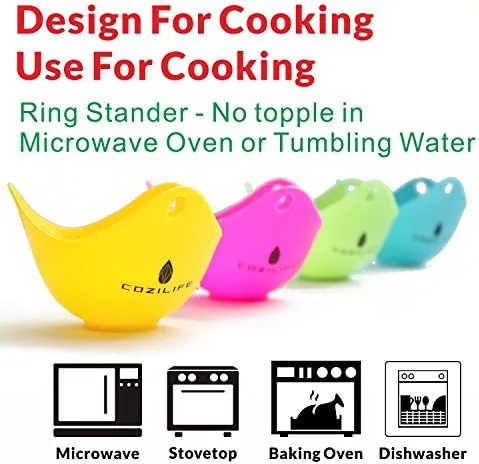
The defining feature is the dual cooking method. The cups work in the microwave, which makes a single poached egg in about a minute, and they work on the stovetop, floating in a shallow pan of simmering water for a more traditional result. That flexibility covers every scenario, from a rushed breakfast to a proper brunch spread, without needing a dedicated appliance that does one job only.
The pack of four is the second feature worth calling out. Four cups mean four eggs at once, enough for a family breakfast or for serving eggs benedict on a weekend. The eggs cook individually, so each one can be pulled from the water when it reaches the desired doneness without disturbing the others. The BPA free silicone also means no nonstick coating to scratch, no metal to react with the egg, and no oil required to release the finished egg cleanly.
Real-World Performance
I started with the microwave method, because it is the one most buyers will try first. One cup, a light brush of oil, one egg, and a ramekin of water beside the cup. At full power for about forty seconds, the egg came out with a set white, a still soft and runny yolk, and no explosions, no splatter, and no stuck egg glued to the silicone. The timing varies with the wattage of the microwave, so the first egg of any morning is a small calibration run, but after that it is repeatable and fast.
The stovetop method is where the cups really shine. I filled a wide skillet with about an inch of water, brought it to a gentle simmer, and placed the ring standers with the cups in place. Four eggs went in at once, and within three and a half minutes they were done. The whites set into a tidy, round shape with none of the ragged fringe that loose poaching produces, and the yolks stayed soft and bright. They looked like eggs from a brunch place, and they released from the cups with a simple squeeze.
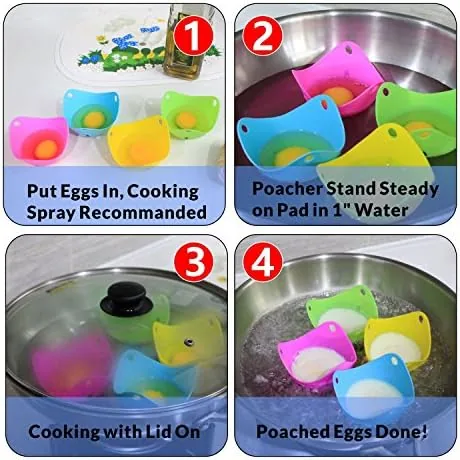
The cleanup was the quiet surprise. Egg residue wipes off the silicone with a rinse and a finger, and the cups shrug off the dishwasher as well. Nothing stains, nothing sticks, and the cups dry quickly because the material does not hold water. Over a month of near daily use, the cups showed no warping, no discoloration, and no loss of flexibility, which is more than many silicone kitchen tools manage.

The honest limits are timing and temperature. The microwave method needs a little practice to hit the exact yolk you want, because a few seconds change a soft yolk into a hard one. On the stove, the water must be a gentle simmer rather than a rolling boil, because aggressive boiling thrashes the cups and makes the whites set unevenly. The cups are also single egg sized, so anyone poaching for a crowd will run them in batches, which is fine for a household and slow for a dinner party.
Pros and Cons
Pros:
- Works in the microwave or on the stovetop
- Clean release with no oil required
- Food grade silicone is BPA free and durable
- Four cups cook a family breakfast at once
- Simple rinse or dishwasher cleanup
- No vinegar or whirlpool technique needed
Cons:
- Microwave timing takes a little practice
- Stovetop needs a gentle simmer, not a boil
- Single egg cups mean batches for larger groups
How It Compares
Poaching eggs can be done three ways, and it helps to see how the cups stack up against the alternatives.
| Feature | COZILIFE Cups | Loose Water Poaching | Electric Poacher |
|---|---|---|---|
| Setup time | Seconds | Minutes plus vinegar | Minutes |
| Egg shape | Tidy and round | Irregular | Tidy and round |
| Cleanup | Rinse or dishwasher | Water cleanup | Teardown and scrub |
| Cost | Low | None | Higher |
| Appliance footprint | None | None | Counter space |
Loose water poaching costs nothing but demands technique. An electric poacher does the job but eats counter space and needs cleaning after every use. The cups sit between them: cheaper than an appliance, easier than loose poaching, and they disappear into a drawer when the eggs are done.
Who Should Buy It
Buy these cups if you love poached eggs but skip them on weekdays because they take too long, or if you have never managed a clean poach and want a method that removes the guesswork. They are a great fit for breakfast for one, for weekend benedicts, and for anyone who wants a single kitchen tool that covers both the microwave and the stovetop.
Skip them if you only eat eggs scrambled, or if you cook for a large crowd every weekend and need volume over convenience. And if you hate any extra step in the morning, the microwave still needs the cup filled and a few minutes of practice before it is routine. For everyone else, these cups make poached eggs a weeknight food again. You can check the current price of the COZILIFE egg poaching cups on Amazon when you are ready.
How We Test
I used the cups for a month of breakfasts, cooking eggs by both the microwave and stovetop methods. I tracked cook times, yolk doneness, release quality, and cleanup, and I ran the cups through the dishwasher as well as hand washing to check durability.
Microwave results depend on wattage, so I calibrated against a standard household microwave rather than claiming a universal time. For a deeper look at egg cookery in general, Wirecutter has a guide to egg poachers that covers the broader category well. The COZILIFE egg poaching cups listing on Amazon shows the current price and packaging.
COZILIFE Egg Poaching Cups: Questions People Ask
Can I use these silicone cups in the microwave?
Yes, the cups are microwave safe, and a single egg cooks in roughly thirty to forty-five seconds depending on the wattage of your oven.
How do I stop the egg from sticking to the silicone?
A light brush of oil or butter before adding the egg helps, and letting the cup cool briefly before peeling makes the release even cleaner.
Are the cups safe for boiling water on the stove?
Yes, the food grade Silicone Handles simmering water easily, so the cups work in a wide skillet or shallow pan filled with gently boiling water.
How do I clean the poaching cups?
Rinse them immediately after use, then wash by hand or place them in the dishwasher, since the flexible silicone shrugs off egg residue without scrubbing.
As an Amazon Associate, I earn from qualifying purchases.