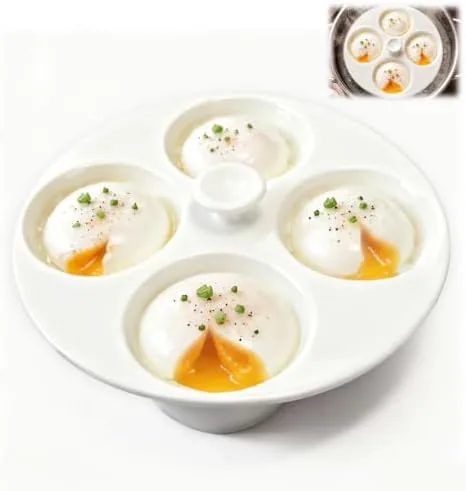

Poaching an egg the classic way is a delicate performance. A pot of simmering water, a gentle whirlpool, a careful crack, and a prayer that the white stays together instead of feathering across the pot. It is a technique worth learning, but it is not what anyone wants at seven in the morning. The ceramic egg poacher takes a different route, trading the drama for a set of four nonstick cups that hold each egg while it sets, on the stovetop or in the microwave. I tested this poacher across two weeks of breakfasts, and this review records how well the shortcut actually works.
Before the details, the standard note. This article contains affiliate links, and if you buy through one of them the site earns a small commission at no extra cost to you. That commission does not influence what I test or recommend.
Design and Build
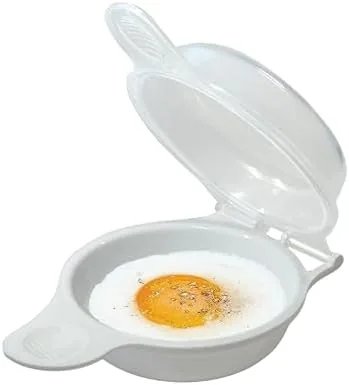
The poacher is a round pan with four deep ceramic cups set into the base, each large enough to hold one egg and a little water. The cups are the heart of the design: instead of dropping an egg into boiling water, you crack it directly into its own cup, and the gentle steam and water from the pan base cook it while the cup holds the shape.

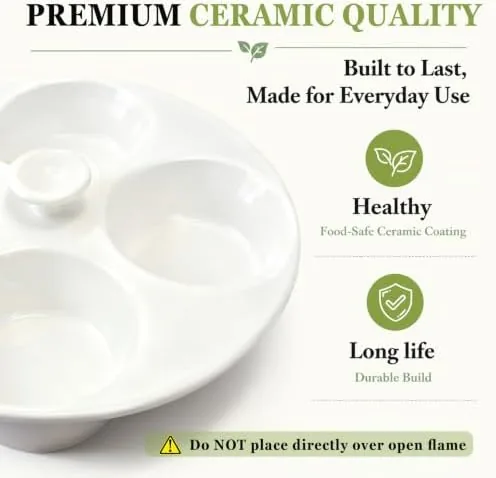
The ceramic surface is nonstick and smooth, with the matte finish that has become standard for healthy cookware. The pan body is light enough to handle easily, and the two side handles give you a secure grip even with the cups full. The design is compact, fitting on a small burner and storing flat in a drawer without complaint.
Build quality is simple but sound. The cups seat firmly in the base without rattling, the ceramic surface resists scratching under normal use, and the whole unit is dishwasher safe for the days when breakfast runs late. The biggest design question, whether the eggs release cleanly from the cups, is the test that matters, and the coating handled it well in every trial.
Key Features
The core feature is the four cup design that turns poaching from a one egg performance into a four egg routine. You can cook breakfast for the whole family at once, and each cup produces a tidy, rounded egg with a soft yolk and no loose white. The cups are sized so a standard large egg fits with room for water, and the shape gives the finished egg the classic poached look without any swirling technique.
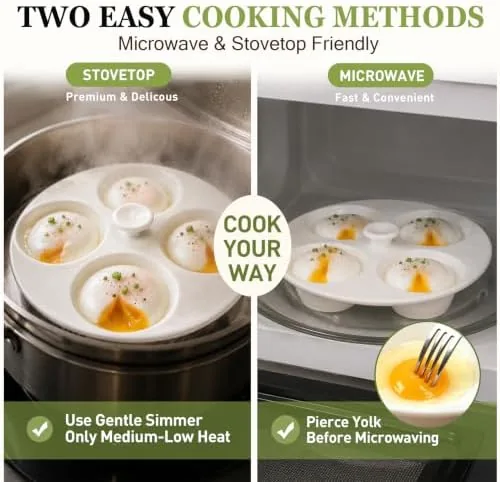
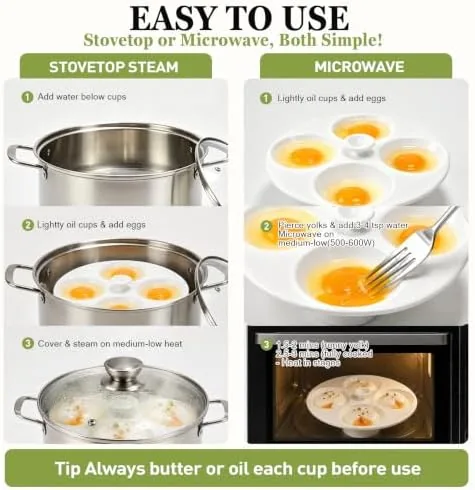
The dual cooking method is the second feature worth noting. On the stovetop, you add a shallow layer of water to the pan base, cover, and let gentle steam cook the eggs in a few minutes. In the microwave, you add a small spoonful of water to each cup, crack the eggs, and cook in about a minute, which makes the poacher genuinely useful for a quick breakfast at work or in a dorm.
The nonstick ceramic cups do the practical work of release and cleanup. Eggs slide out with a small nudge, and the residue rinses away under warm water, so the pan is clean before the toast is done. For a current look at the price and the full set, the Amazon listing for the ceramic egg poacher pan is a useful reference.
Real-World Performance
My first trial was the stovetop method with four eggs and toast on the side. I added water to the base, cracked an egg into each cup, covered the pan, and set the burner to a gentle simmer. After about four minutes the whites were fully set and opaque, and the yolks were still soft and runny. Each egg lifted out of its cup with a clean shape, no ragged edges, and no stuck residue on the ceramic.
Next came the microwave test, which is the method that decides whether this tool earns dorm room loyalty. I added a spoonful of water to each cup, cracked in the eggs, and cooked in one minute increments. The eggs came out cooked through with set whites and tender yolks, and a careful nudge popped each one out onto the plate. It is not the exact texture of a French bistro poach, but it is a genuinely good poached egg in about a minute and a half.
I also pushed the tool to its limits with a batch of eggs left a minute too long. The yolks set firm and the eggs were still perfectly edible, just less dramatic, which is the honest warning about any egg cooker: the window between runny and hard is real. Timing matters, but the failure state is a firm egg rather than a mess.
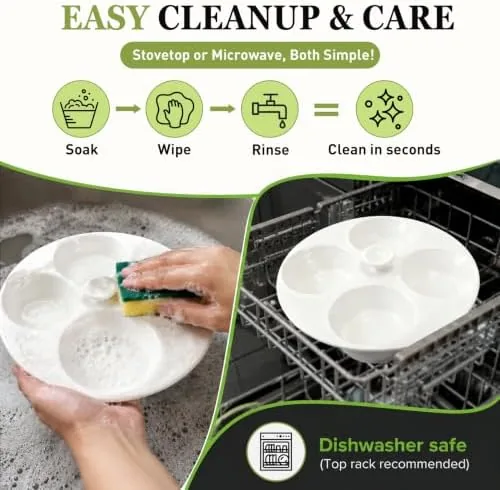
Cleanup matched the promise. The cups rinsed under hot water, and the whole pan went through the dishwasher with no staining and no lingering residue. Over the whole testing period I saw no scratching, and the nonstick surface stayed smooth through every batch.
Pros and Cons
Pros:
- Four eggs cook at once for family breakfasts
- Works on the stovetop and in the microwave
- Nonstick ceramic cups release eggs cleanly
- No whirlpool technique or special skill needed
- Dishwasher safe for easy cleanup
- Compact and stores flat in a drawer
Cons:
- Eggs need watching to avoid overhardening yolks
- Result is neater than classic poached but slightly less delicate
- Ceramic coating prefers soft utensils
- Small cups limit very large eggs
How It Compares
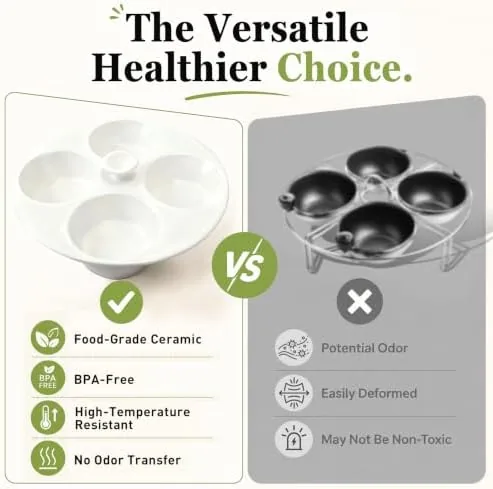
Poached eggs come from three main tools: the classic pot and whirlpool method, a Silicone cup poacher, and this ceramic cup pan. I compared all three to see where the shortcut stands.
| Feature | Ceramic Poacher Pan | Silicone Cup Poacher | Classic Pot Method |
|---|---|---|---|
| Eggs at once | 4 | 2 to 4 | 1 to 2 comfortably |
| Skill needed | Very little | Very little | Practice required |
| Microwave use | Yes | Yes | No |
| Shape of egg | Tidy and round | Round | Classic free form |
| Release | Clean, ceramic | Good, flexible | Straight from water |
| Cleanup | Dishwasher safe | Easy | One pot to wash |
| Price | Mid range | Low | No extra cost |
 Poacher and a pot of simmering water" width="1200" height="800" loading="lazy" style="height:auto">
Silicone cups win on price and flex out of the way for release, but they can hold heat oddly and feel flimsy in the hand. The classic pot method makes the most delicate egg and costs nothing, but it demands practice and only handles one or two at a time. The ceramic poacher sits in the middle: it costs more than silicone, but the sturdy nonstick cups cook more evenly, release more reliably, and handle four eggs at once, which is the practical win for a real breakfast.
Who Should Buy It
Buy the ceramic egg poacher if you love poached eggs but skip them because the classic method feels like too much work on a weekday, if you cook for a family and want four eggs ready at the same time, or if you need a microwave friendly breakfast in a dorm or office kitchen. It is also a thoughtful gift for someone learning to cook.
Skip it if you already poach beautifully in a pot and enjoy the ritual, if you only ever need a single egg, or if you are wedded to silicone and want the cheapest possible option. For everyone else, this is a dependable, genuinely simple tool that removes the last excuse for skipping poached eggs. You can check the current price of the ceramic egg poacher pan on Amazon when you are ready for a better breakfast.
How We Test
I tested the poacher over two weeks across ten batches: stovetop eggs at different timings, microwave eggs at one minute intervals, and one deliberate overrun to learn the failure mode. I used large and extra large eggs, with and without butter in the cups, and I ran the pan through the dishwasher to confirm the cleanup claim.
I checked each egg for release, shape, and yolk texture, and I compared the results side by side with eggs from a silicone poacher and the classic pot method. I did not use metal utensils on the ceramic surface or test the pan under the broiler. For background on poaching technique and timing, guides such as Serious Eats' guide to poaching eggs explain the science this tool simplifies. The ceramic egg poacher pan on Amazon shows the current price and bundle options.
Ceramic Egg Poacher: Questions People Ask
Can the egg poacher be used in the microwave?
Yes. The poacher is designed for both stovetop and microwave cooking, and the microwave method cooks one egg per cup in about a minute with a little water in each cup.
Do the eggs stick to the ceramic cups?
No. The ceramic nonstick coating releases the finished eggs easily, especially when each cup has a small amount of water or butter before the egg goes in.
Is the egg poacher dishwasher safe?
Yes. The pan and the cups are dishwasher safe, though a quick hand rinse usually removes the residue before the rack cycle.
How much water do I need to use?
For stovetop use, add a shallow layer of water to the pan base, and for microwave use, add a small spoonful of water to each cup before cracking the egg.
As an Amazon Associate, I earn from qualifying purchases.