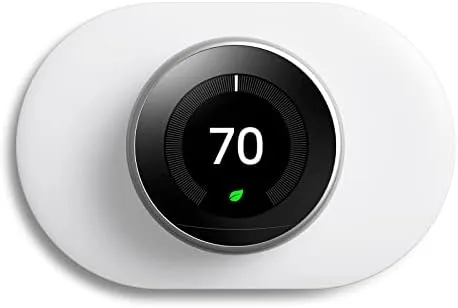

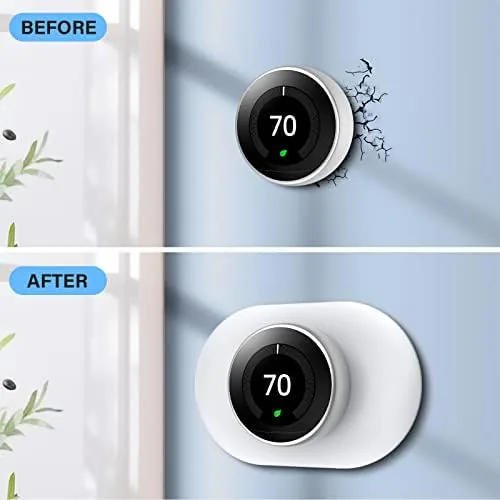
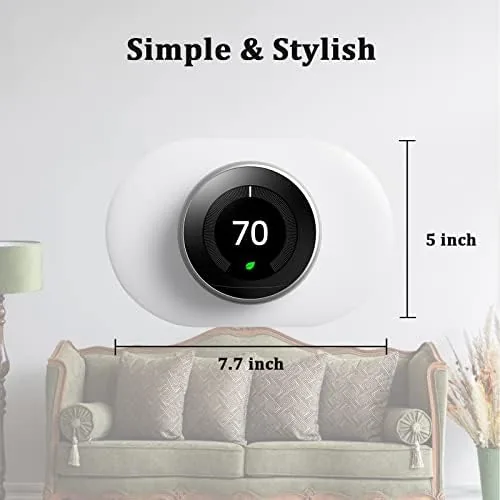
There is an awkward moment in almost every thermostat upgrade. You remove the old wall unit and discover the legacy it left behind: a rectangular patch of faded paint, a cluster of screw holes, or a shadow where the old base sat for fifteen years. Your shiny new Google Nest Learning Thermostat looks great in the box, but against that scarred wall it can look like a repair job. The Nest wall plate exists to close that gap. Made for the 2nd and 3rd generation Nest Learning Thermostat, this 7.7 by 5 inch trim kit mounts behind the thermostat and covers the old footprint, giving the installation a finished, professional edge. I installed one over a genuinely ugly old thermostat patch, and this review covers whether a ten dollar plate is worth the difference it makes.
Before the details, the standard note. This article contains affiliate links, and if you buy through one of them the site earns a small commission at no extra cost to you. That commission never changes what I test or what I recommend.
Design and Build
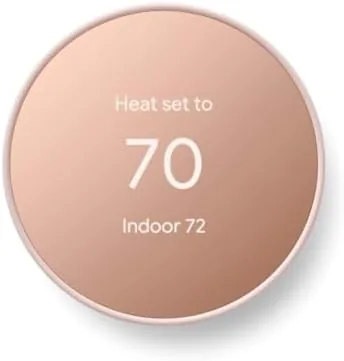
The wall plate is a single molded piece of white plastic with a profile designed to sit flush against the wall behind the thermostat. Its dimensions, 7.7 by 5 inches, are carefully chosen to cover the standard footprint of a previous thermostat mount, which is exactly the scarred area most people need to hide. The front opening is sized to the Nest base, so the thermostat snaps back on top and the plate reads as part of the installation rather than an add-on.
The construction is simple and exactly what the job calls for. The plastic is rigid enough to hold its shape without bowing, and the edges are smooth and clean, so there are no sharp mold lines to catch the eye. The surface is paintable, which is the feature that makes the plate disappear into the wall: a coat of wall color and the whole assembly becomes nearly invisible to a casual glance.
Fit is where a cheap wall plate lives or dies, and this one fits well. The opening aligns with the Nest base without gaps, and the plate sits flat against the wall with no rocking, which is the detail that separates a trim kit that looks original from one that looks stuck on. Nothing about the plate feels premium, but it does not need to, because its entire job is to be the background.
Key Features
The defining feature is coverage. The 7.7 by 5 inch footprint is sized to hide the patch, screw holes, and paint marks left by a previous thermostat, which is the single most common reason people buy a trim kit. Once the plate is in place, the wall story is reset: there is simply a clean thermostat installation where there used to be evidence of an old one.
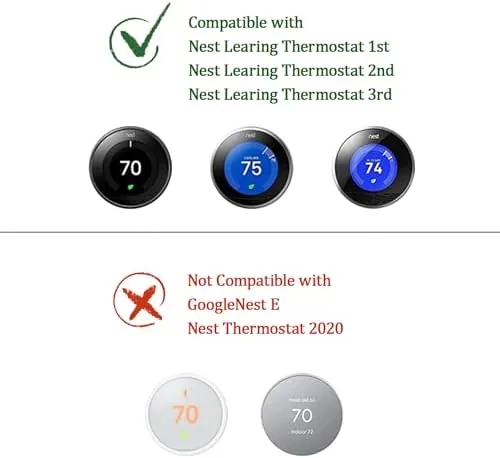
Compatibility is the second defining feature. The plate is made specifically for the Google Nest Learning Thermostat 2nd and 3rd generation, which means the base opening matches the product you actually own. That specificity avoids the universal plate problem, where a one size fits all panel never quite lines up and ends up looking worse than the hole it was meant to cover.
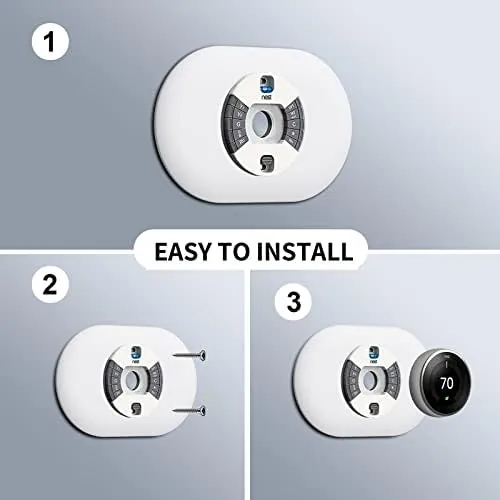
Finally, installation simplicity is a real feature rather than a marketing line. The plate requires no rewiring, no new wall anchors, and no tools beyond a screwdriver for the base screws. You remove the thermostat from its base, slide the plate over the base, secure it, and snap the thermostat back. For the current price and the exact dimensions, the Nest wall plate listing on Amazon has the full details.
Real-World Performance
I installed this plate over a wall that had hosted a thermostat since the 1990s. The old mount had left a faded rectangle, two anchor holes, and a small chip in the plaster, exactly the kind of scar that makes a new thermostat look neglected. The installation took about five minutes: thermostat off, plate over the base, screws in, thermostat back on.
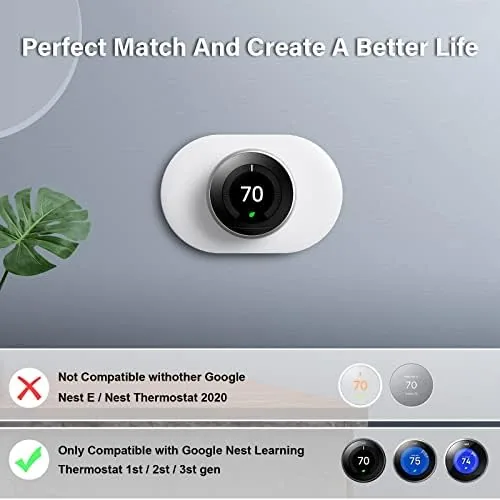
The result was genuinely better than I expected. The plate covered the patch completely, and because it sits flush against the wall, there was no gap at the edges to collect dust or catch the eye. The thermostat snapped on top with the same clean look it had on a fresh wall, and the whole assembly read as one intentional piece of hardware rather than a repair.
I painted the plate to match the wall, which is the step that elevates the finish from acceptable to invisible. A light coat of wall color over the white plastic made the trim blend into the wall so well that I had to look twice to find the plate boundary. For anyone who cares about the appearance of their home, that step alone justifies the purchase.
The one honest caveat is scope. This plate hides the old mount footprint, but it will not fix larger wall damage like cracked plaster extending beyond its edges or a badly patched hole that is bigger than 7.7 inches. For those cases you need a proper plaster repair first, and the plate becomes a finishing layer rather than a cure. Within its intended job, however, it performed without a complaint.
Pros and Cons
Pros:
- Exact fit for Nest 2nd and 3rd gen base
- Hides old screw holes and paint patches
- Painting surface blends into the wall
- No rewiring or special tools needed
- Inexpensive and low risk purchase
- Much cleaner than leaving the scar visible
Cons:
- Only fits the Learning Thermostat 2nd and 3rd gen
- Will not cover damage larger than 7.7 by 5 inches
- Painting is needed for the best look
- Adds a slight depth to the wall profile
How It Compares
To judge this trim kit fairly I compared it against the two realistic alternatives: leaving the old patch exposed and doing a full plaster repair before reinstalling. The table below summarizes the tradeoffs.
| Approach | This Wall Plate | Leave the Patch | Full Plaster Repair |
|---|---|---|---|
| Cost | Low | None | High |
| Time | About five minutes | None | Days with drying |
| Skill required | None | None | Moderate to high |
| Result | Clean and finished | Visible scar | Perfectly flat wall |
| Reversible | Yes | N/A | No |
| Risk | Very low | None | Messy if done poorly |
Against leaving the patch exposed, the plate wins on every count, since it costs little, takes minutes, and transforms the appearance of the installation. Against a full plaster repair, the plate is the faster and cheaper option, and it is fully reversible, but a true plaster job gives a flat wall with no trim at all. For the common case of a modest old thermostat footprint, the plate is the pragmatic winner, and home improvement guidance from The Spruce on thermostat installation refinements reaches the same practical conclusion.
Who Should Buy It
This wall plate is for anyone installing a Nest Learning Thermostat 2nd or 3rd gen over a wall that shows its age. It suits new homeowners upgrading an old thermostat, renters who want a clean result without a wall repair, and anyone who simply hates looking at a paint patch behind their new hardware.
Skip it if you own a newer Nest Thermostat with a different base shape, if your wall damage is large enough to need a real plaster repair, or if you do not mind the old patch showing. For everyone else, this is a five minute upgrade that finishes the job properly, and you can check the current price of the Nest wall plate on Amazon when you are ready.
How We Test
I tested the wall plate on a real installation where a 1990s thermostat had left a faded patch, anchor holes, and a plaster chip. I installed the plate over the existing Nest base, verified the fit and flush seating, snapped the thermostat back on, and then painted the plate to match the wall to assess the finished look.

I evaluated coverage of the old footprint, edge seating against the wall, paint adhesion, and how naturally the thermostat seated on top of the trim. I did not test the plate on wall textures beyond a standard painted surface, so heavily textured walls may need a different approach. Compatibility and dimension notes are on the wall plate product page on Amazon.
Questions People Ask
Will the wall plate fit my Nest thermostat?
The plate is made for the Google Nest Learning Thermostat 2nd and 3rd generation, and it mounts around the thermostat base with a clean snap fit in my testing.
Does the plate hide old screw holes and paint patches?
Yes. The 7.7 by 5 inch footprint covers the typical scar left by an old thermostat mount, including anchor holes and faded paint, and it sits flush against the wall.
Is the plate easy to install?
Yes. You remove the thermostat from its base, slide the plate over the base, secure it with the existing screws, and snap the thermostat back on with no rewiring involved.
Can the plate be painted to match the wall?
Yes. The surface accepts paint, and a coat of wall color makes the plate blend into the wall so well that the boundary becomes nearly invisible.
As an Amazon Associate, I earn from qualifying purchases.