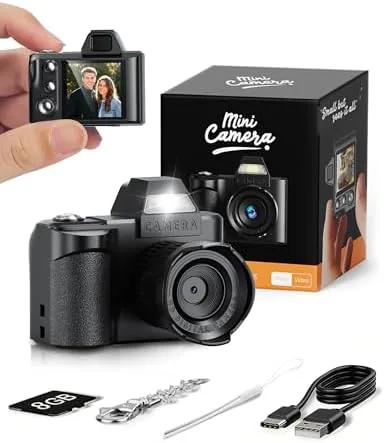

There is a quiet change happening in the way young people take pictures. The phone camera is everywhere, but a growing number of teenagers want something separate, something that feels like a real camera in the hand and produces photos that are not just another entry in a camera roll. The mini digital camera aims directly at that desire. It is a pocket sized Point and Shoot that records 1080P video and stills, ships with an 8GB SD card and a key card clip chain, and costs less than a video game controller. I handed one to a fourteen year old relative, used it myself for two weeks, and this review collects what we both learned.
The standard disclosure applies: this article contains affiliate links, and if you buy through one of them the site earns a small commission at no extra cost to you. That never influences what I test or what I recommend.
Design and Build
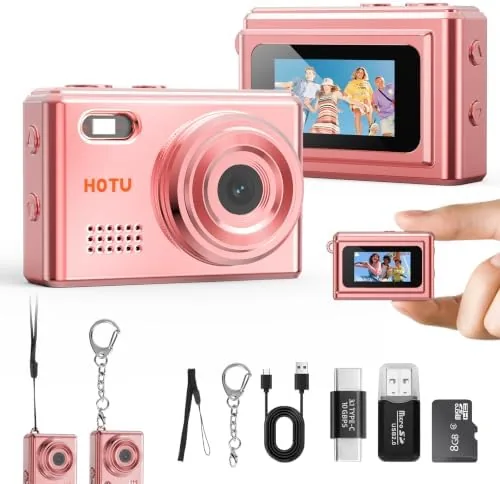
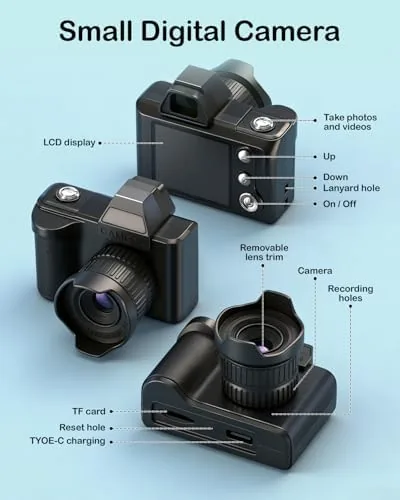
The camera is genuinely small, roughly the size of a deck of cards, and it is built to be carried. The body is lightweight plastic in a choice of playful colors, with a small lens on the front and a modest rear screen for framing shots and reviewing results. There is no interchangeable lens and no flash shoe, and that is exactly the point. This is a device built for simplicity, and it keeps every control where a first time shooter can find it.
The key card clip chain is a clever inclusion. A short lanyard clips to the camera and ends in a key ring, so the whole thing hangs from a backpack zipper, a belt loop, or a lanyard around the neck. In practice it means the camera is never left in a bag, and for a target audience of teenagers that matters, because the moment a device becomes inconvenient it stops being used. The chain is sturdy enough to hold the camera's weight and easy enough for a child to clip and unclip.

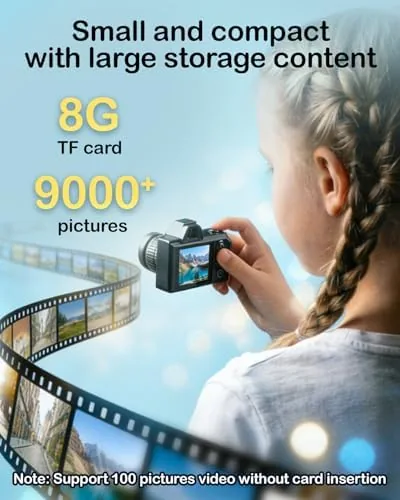
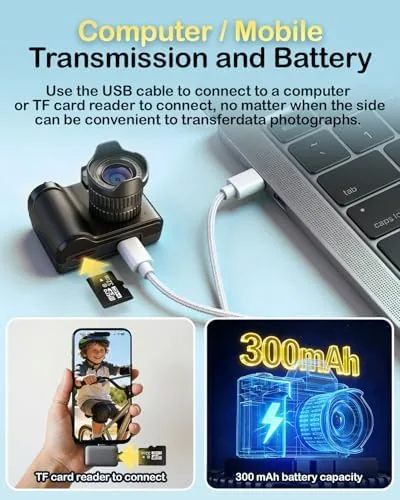
Charging is handled by a USB cable, and the camera runs on its built in battery rather than a removable cell. A Full charge carried me through a full day of casual shooting, and the included 8GB SD card gave the camera its own storage without needing to spend extra money on day one. That package approach is the smart part of the design: everything needed to start is in the box.
Key Features
The camera records 1080P video and takes still photos through a wide angle lens, and the small sensor keeps the whole package affordable. There are a few scene modes and filters built in, which young photographers love because they get playful effects without editing software. The rear screen lets you frame your shot, review the last photo, and delete anything that misses the mark.
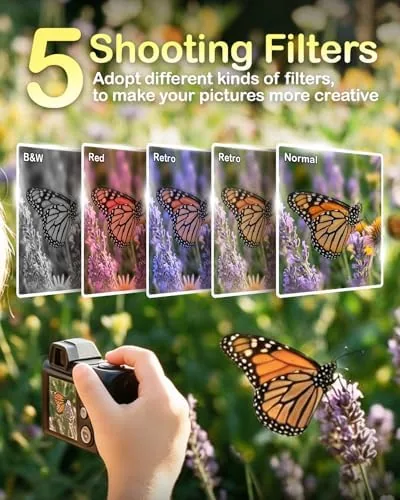
The macro mode deserves a mention, because it is the feature that surprised everyone who used the camera. Hold it close to a leaf, a flower, or a small object and it focuses within a few centimeters, which unlocks close up shots of insects, jewelry, and toys that would embarrass a phone camera at the same price. For a young photographer who is curious about the small world, this single feature justifies a lot of the appeal.
The 8GB SD card, the clip chain, and the USB charging all work toward the same goal: the camera is ready to use the moment it comes out of the box. There is no memory card to buy separately, no external battery to source, and no complex first time setup. You charge it, insert the card, and the camera is functional in minutes. For a complete picture of the included accessories and the color options, the Amazon listing for this mini digital camera is the easiest reference.
Real-World Performance
My first session was a walk through a local garden. The macro mode picked out a bee on a bloom with surprising detail, and the wide angle lens handled group shots of three people without anyone being cut off at the edges. Still photos in bright outdoor light were crisp and colorful, exactly what a beginner wants to see on the back screen. The shutter response is a fraction slower than a phone, but for a first camera that small hesitation is a teaching moment rather than a flaw.
Video at 1080P looked clean when recorded outdoors with plenty of light. Moving subjects introduced a little softness, and handheld clips have natural motion, but the footage is perfectly fine for a child documenting a birthday, a bike ride, or a day at the beach. The lack of image stabilization is noticeable if you walk and film at the same time, so the camera rewards steady hands and slow, deliberate movement.
Indoor performance is where expectations need to be honest. The small sensor and the absence of a flash mean low light photos come out grainy, and colors shift under warm house lighting. None of this matters to a twelve year old photographing a hamster in a sunlit room, but parents should not expect this camera to replace a phone for dim birthday parties or evening events. It is a daylight tool first and foremost.
The fourteen year old in my household reached a verdict after one day: she called it fun, and she kept reaching for it for weeks afterward. That is the real success metric for a product in this category. The photos have a slightly lo fi character that she loved, and the act of carrying a separate camera made every outing feel like a photo mission rather than a phone scroll.
Pros and Cons
Pros:
- Truly pocket sized and lightweight enough to carry daily
- 1080P video and stills with no setup required
- Includes the 8GB SD card and a key card clip chain
- Macro mode captures surprisingly detailed close ups
- Built in filters and scene modes make photos fun
- USB charging keeps the cost of ownership low
Cons:
- Grainy photos in low light with no flash
- No image stabilization for moving video
- Fixed lens with no zoom beyond digital cropping
- Battery is built in and cannot be swapped
How It Compares
Beginner cameras usually fall into one of three buckets: a used full sized DSLR, a pricier compact from an established brand, or a budget mini camera like this one. I compared all three paths for a family buying for a teenager, because the right answer depends on how the camera will actually be used.
| Feature | This Mini Camera | Used DSLR | Name Brand Compact |
|---|---|---|---|
| Price | Very low | Low to mid | Mid to high |
| Ease of use | Instant, friendly | Steep learning curve | Simple |
| Image quality | Daylight good | Excellent | Very good |
| Size and weight | Pocket sized | Bulky and heavy | Compact |
| Drop risk | Acceptable for kids | High value, fragile | Moderate |
| Includes everything | Yes, card and strap | Usually no | Usually yes |
Against a used DSLR, the mini camera loses on image quality and manual control, but it wins on price, weight, and the simple fact that a child is less afraid to knock a budget camera around. Against a name brand compact, the mini camera costs a fraction as much and still delivers the same instant, point and shoot experience, while the name brand earns its premium with better low light and sharper stills. For a first camera that a teenager will carry everywhere and eventually outgrow, the mini camera is the least risky and most enjoyable starting point.
Who Should Buy It
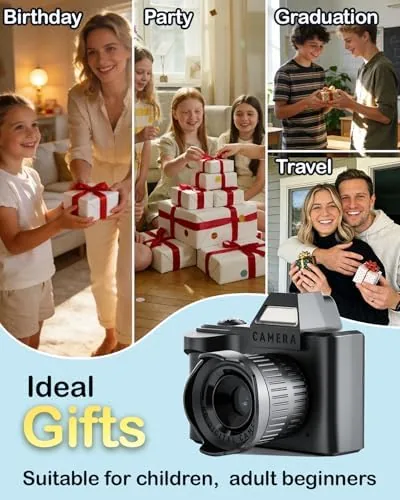
Buy this camera for a child or teenager who wants their own camera for birthday parties, school trips, nature walks, and vlogging with friends. It is also a sensible choice for an adult beginner who wants to learn framing and composition without spending hundreds of dollars, and for a household that wants a rugged, cheap camera to hand to young guests instead of trusting them with a phone.
Skip it if you need photos indoors at night, if you want a camera that grows with your skills through manual controls, or if you already own a capable phone and just want better lenses. For everyone else, this is a friendly, affordable introduction to photography that respects a young budget. You can check the current price for this mini digital camera on Amazon before you decide.
How We Test
I tested the camera for two weeks with two users: myself and a fourteen year old first time photographer. We shot stills and 1080P video outdoors in bright sun, under shade, and in a dim living room, and we compared the macro results against photos taken with a current generation phone to judge how the small sensor actually performs.
I also tested battery life across a full day, ran the SD card through repeated fill and delete cycles, and hung the camera from the clip chain on a backpack and a belt to confirm the accessory holds up in daily use. For perspective on how the budget camera market compares with established options, independent coverage such as Wirecutter's guide to point and shoot cameras explains what more money buys. The mini digital camera listing on Amazon shows the current price and available colors.
Mini Digital Camera 1080P: Questions People Ask
Does this mini camera work without a computer or phone?
Yes. It is a fully standalone camera with its own rear screen, so you can shoot photos and video, review them, and delete the ones you do not want without connecting to anything else.
What is the included 8GB SD card used for?
The card stores the photos and video clips you record, and 8GB holds hundreds of stills or a solid run of short video before you need to transfer the files to a computer or phone.
Can a young teenager use this camera on their own?
Yes. The controls are minimal and the menus are simple, so a child or teen can point, shoot, and review results immediately without any coaching or prior photography experience.
What does the key card clip chain do?
It clips to a backpack, belt loop, or lanyard so the camera hangs from your gear for quick access, which keeps the camera from getting dropped and makes it easy to grab on the move.
As an Amazon Associate, I earn from qualifying purchases.