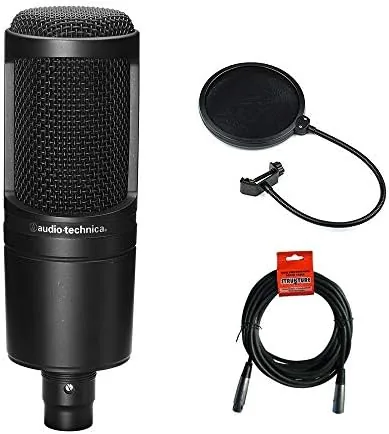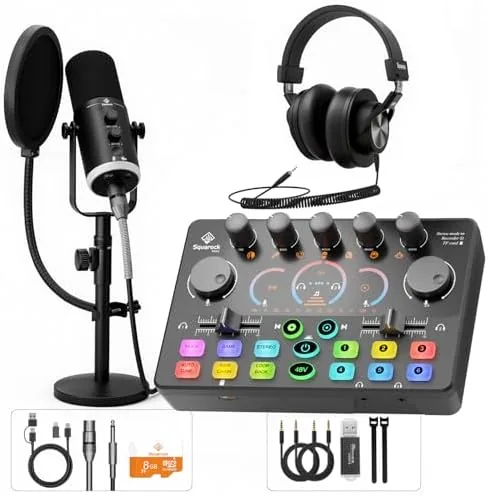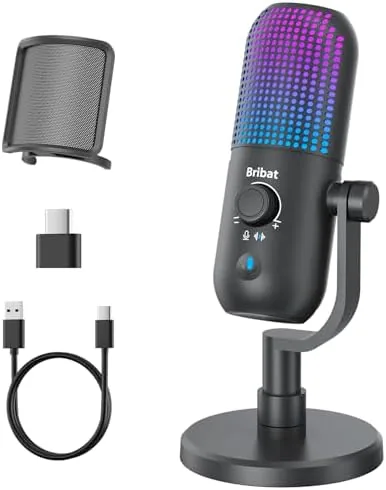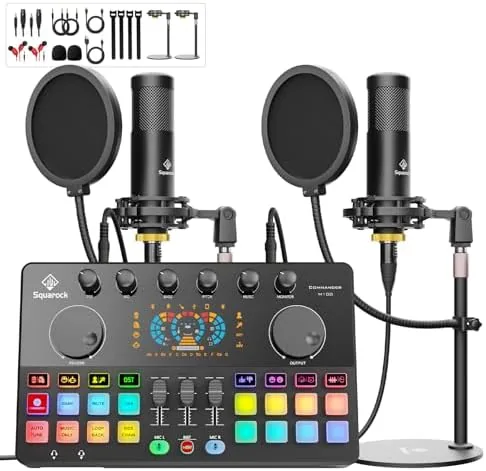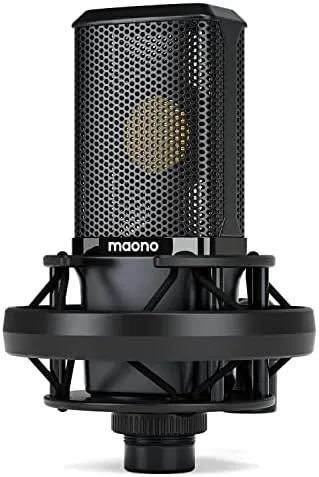

The affordable XLR microphone market has a formula: make the capsule small, cut the accessories, and call the result a bargain. The MAONO PM500 refuses the formula. For a price that sits well below the studio classics, it packs a 34mm large diaphragm capsule, a cardioid pickup pattern, a heavy metal shock mount, and a pop filter into a package aimed squarely at people who want professional vocal sound without paying professional prices. This review is the record of a month recording voice over, Podcast episodes, vocals, and an ASMR test with the PM500 running through a modest audio interface.
Before the details, the standard note. This article contains affiliate links, and if you buy through one of them the site earns a small commission at no extra cost to you. That commission does not change what I test or what I recommend.
Design and Build
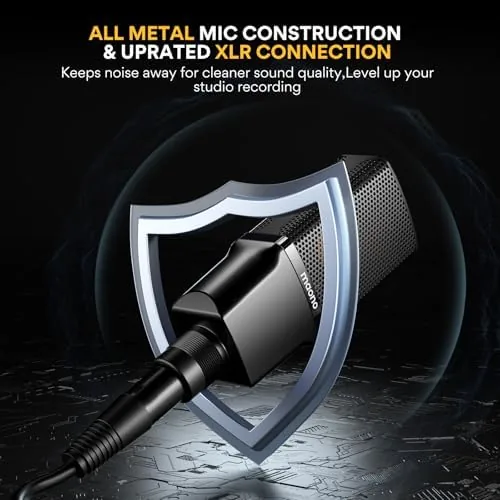
The PM500 is a large side-address condenser microphone with a heavy metal body that reads as a serious studio tool. The front grille protects the 34mm capsule, and the body has a solid weight to it that sits confidently in a shock mount. Nothing about the finish feels cheap, which is the first signal that MAONO spent the money where it counts.
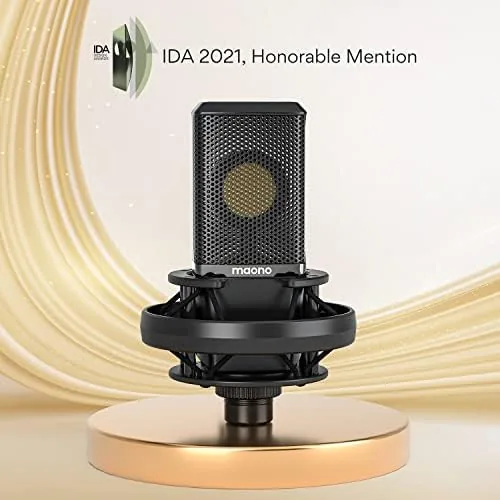
The bundle is genuinely generous. Inside the box are the microphone, a heavy metal shock mount with elastic bands that isolate vibration, a round pop filter, and a braided XLR cable. That is the full starter setup, so a new user needs only a boom arm and an audio interface to begin recording, which removes the usual frustration of buying a microphone and then hunting for the parts that make it usable.
The build quality holds up through daily use. The grille is firmly attached, the connector is solid, and the shock mount grips the mic body without sagging even when the boom arm is angled steeply. It is not a boutique microphone, but it is built to survive the life of an active home studio.
Key Features
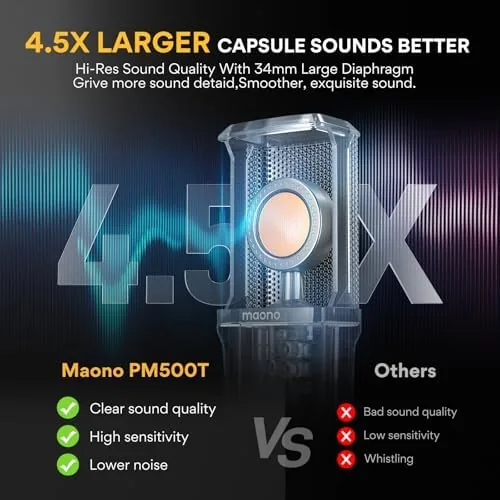
The headline feature is the 34mm large diaphragm capsule. Large diaphragm condensers capture more of the low end and body of a voice than their small diaphragm cousins, which produces a fuller, warmer character that flatters the spoken word and singing alike. That is the technical reason the PM500 sounds closer to a studio vocal mic than A Budget USB condenser.
The Cardioid pickup pattern is the second essential feature. It captures sound from the front of the microphone while rejecting most of what arrives from behind and the sides, which keeps room ambience, keyboard clatter, and background chatter out of the recording. For a home studio without acoustic treatment, that directionality is what saves a take.
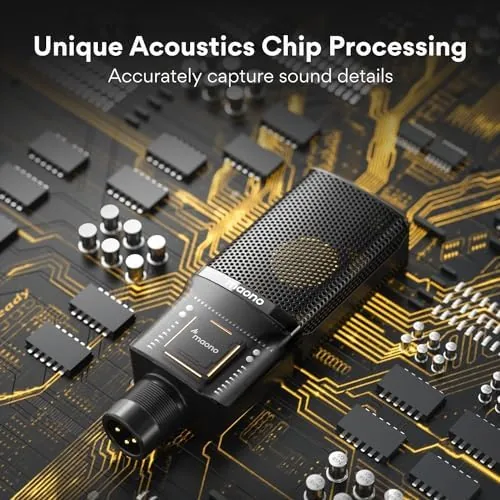
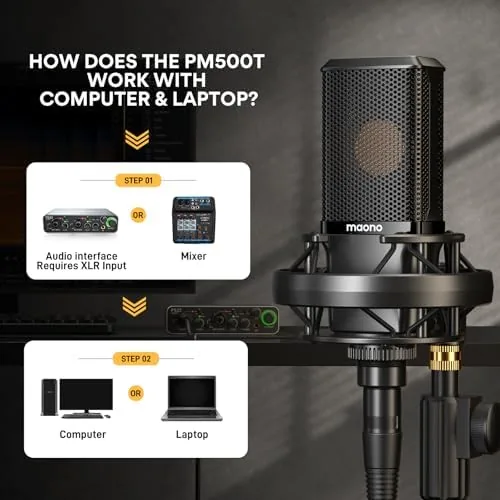
The microphone is pure XLR, which means it has no USB output and relies on an audio interface with 48V phantom power. That is a feature rather than a limitation for anyone planning to grow their studio, because an XLR microphone keeps working through interface upgrades and connects to the same gear professional studios use.
Real-World Performance
My first session was voice over, and the PM500 rewarded the close-mic position a narrator naturally adopts. Reading from about a fist and a half away, the tone was full and clear, with a present low end and no harshness in the upper range. The recording needed only light compression to sit ready for publication, which is the sign of a capable vocal microphone.
Podcast recording with two people traded around the microphone went smoothly. The cardioid pattern meant the speaker holding the mic came through clean while the second person sat quiet in the background, and the pop filter handled the plosives that would otherwise thump the capsule on hard consonants. In a room with a computer fan running, the fan stayed faint while the voice stayed forward, which is exactly the behavior a cardioid should deliver.
For vocals, the PM500 showed its full range. A male vocal at a moderate distance captured the body of the chest tone without losing the clarity of the consonants, and even a soft female vocal stayed detailed rather than thin. The ASMR test with the microphone close to the source captured quiet details with low noise, though the condenser's sensitivity means it also picks up room sound, so a quiet environment matters for that use. Across every take the microphone behaved predictably, and the shock mount absorbed the bumps of a wooden desk so well that I stopped worrying about knocking the boom arm mid-session.
The only genuine caveat is that this is a condenser microphone, so it is sensitive. In an untreated, noisy room it will capture more ambience than a dynamic microphone would, which is the tradeoff for the richer tone. Close positioning and a bit of noise reduction in editing solve the problem for most users, and the cardioid pattern already does the heavy lifting by rejecting the worst of the room before the sound ever reaches the capsule. Position the microphone with the front face toward your voice, keep it a hand span away, and the recording will arrive clean more often than not.
Pros and Cons
Pros:
- Warm, full voice reproduction from the 34mm diaphragm
- Cardioid pickup rejects room noise and background chatter
- Generous bundle includes shock mount, pop filter, and cable
- Solid metal build that survives daily studio use
- XLR design grows with your setup through interface upgrades
Cons:
- Requires an audio interface and phantom power to work
- Condenser sensitivity picks up room sound in untreated spaces
- Pop filter assembly can be fiddly to position at first
How It Compares
The most direct rivals are the USB condenser microphones that dominate the budget market and the entry-level XLR dynamic microphones. The comparison below shows where the PM500 fits.
| Feature | MAONO PM500 | Budget USB Condenser | Entry XLR Dynamic |
|---|---|---|---|
| Capsule | 34mm large diaphragm | Small diaphragm | Dynamic |
| Connection | XLR only | USB plug and play | XLR |
| Vocal tone | Warm and full | Neutral to thin | Clean, less body |
| Room noise rejection | Good via cardioid | Poor | Excellent |
| Upgrade path | Yes, interface based | No, replace the mic | Yes |
Against a budget USB condenser, the PM500 trades plug-and-play convenience for a noticeably richer vocal tone and a genuine upgrade path. Against an entry XLR dynamic, it offers more body and detail at the cost of capturing more room sound. For anyone who already owns an interface, or plans to buy one, the PM500 is the better-sounding investment.
Who Should Buy It
Buy the PM500 if you want studio-style vocal sound for voice over, podcasting, singing, or streaming, and you already have or plan to buy an audio interface. The microphone rewards the user who is willing to add the interface, because that is what unlocks the warm, detailed tone that sets it apart from USB condensers.
Skip it if you want the simplest possible setup with no extra gear, or if you record in a very noisy room where a dynamic microphone would serve you better. For the serious voice user building a real home studio on a budget, the PM500 is an easy recommendation. You can check the current price of the MAONO PM500 on Amazon when you are ready.
How We Test
I used the PM500 for a month of voice over, podcast episodes, vocal takes, and an ASMR test, running it through a modest audio interface with 48V phantom power. I recorded the same script at different mic distances, judged the tone for warmth and detail, and compared it against a budget USB condenser and an entry XLR dynamic in the same room.
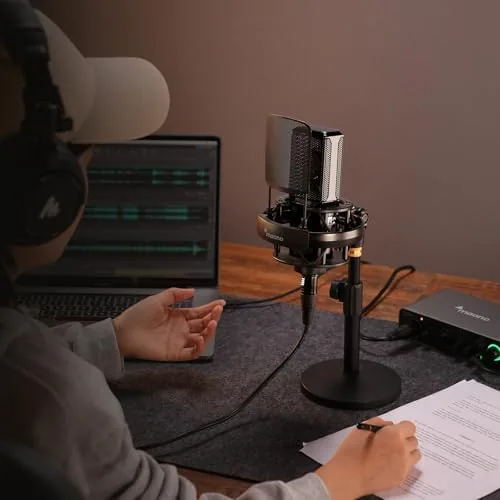
I evaluated the cardioid rejection with a fan running in the background, tested the shock mount by typing on the desk, and checked the pop filter on hard consonant takes. I did not measure frequency response in a lab, because how a microphone flatters a real voice matters more than a spec sheet. Independent testing such as PCMag's guide to podcasting microphones offers useful context for the category.
The MAONO PM500 listing on Amazon shows the current price and bundle contents.
MAONO PM500: Questions People Ask
Does the MAONO PM500 need an audio interface?
Yes. The PM500 is a pure XLR microphone with no USB output, so it requires an audio interface or mixer with 48V phantom power to deliver signal to a computer.
Is the PM500 good for podcasting?
Yes. The cardioid pickup keeps the sound focused on the speaker and away from room noise, and the capsule produces a rich voice tone that suits spoken word without heavy processing.
What does the 34mm large diaphragm do?
The larger diaphragm captures more of the low end and body of a voice than a small condenser, which gives recordings a fuller, warmer character that suits vocals and voice over.
Does the PM500 come with a shock mount?
Yes. The package includes a heavy metal shock mount, a pop filter, and an XLR cable, so the microphone is ready to mount on a boom arm and record out of the box.
As an Amazon Associate, I earn from qualifying purchases.