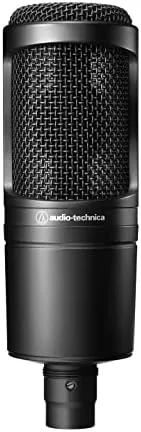

There are microphones that chase the top of the charts and microphones that simply get out of the way and let your voice do the work, and the Audio-Technica AT2020 has spent the better part of two decades proving that a modest price tag does not mean a modest result. Walk into almost any home studio, podcast rig, or voice over booth in the world and you will eventually find one, and there is a reason it survives where fancier models come and go. It is honest, neutral, and reliably good at the one job that matters most.
I have used the AT2020 on and off for years across voice over, acoustic guitar, vocals, and podcast setups, and I sat down with a fresh unit again specifically to write this review. This Audio-Technica AT2020 review covers the sound, the build, the real world limitations, and crucially, what you need to run alongside it, because this is an XLR condenser and the answer to several of your questions starts right there.
Before the depth, the evergreen note. The links in this review are affiliate links, so a purchase made through them helps keep this site going at no extra cost to you. That does not change a sentence of what follows, which comes from plugging this microphone into real audio interfaces and listening carefully.
Design and Build: A Study in Purposeful Simplicity
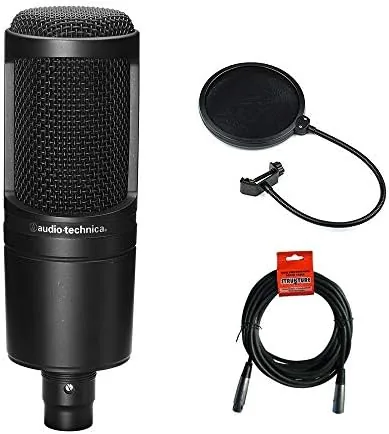
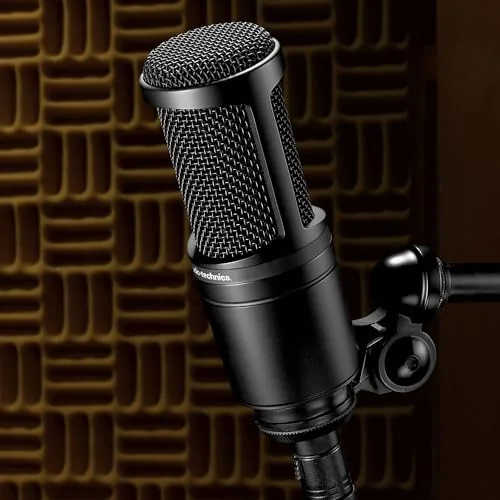
Everything about the AT2020 is deliberately restrained. It is a fixed cardioid pattern condenser microphone in a cylindrical black body, with a small protective grille up top. There is no shock mount in the box and no cable included, which surprises some new owners, but what you get is a clean, quiet signal path that has barely changed across its long production run. That consistency is itself a feature, because the mic you buy today sounds the way the mic on every tutorial was recorded.
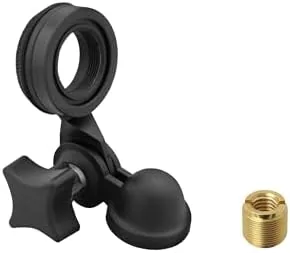
The build quality is excellent for the price. The body is a robust metal tube that feels far more expensive than it is, with a neat finish that sits on a stand without fuss. The mounting is a simple thread collar that accepts a standard shock mount or a desk boom, so you can hold it close to a seated speaker without crowding the desk. It is compact enough to place behind a podcast pair and light enough that a budget boom arm supports it comfortably.
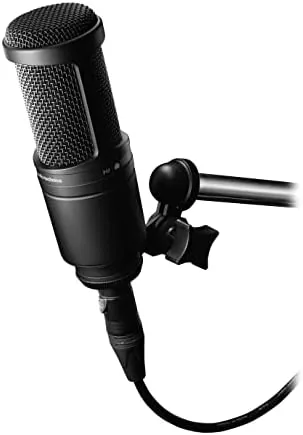
One detail that matters in real use is the orientation. This is a side addressed microphone, so you speak into the front of the grille rather than over the top, and that changes how you set up a booth. It is a small thing until someone spends their first session aiming from the wrong angle and wondering why the vocal sounds thin. Point the logo at the source and the microphone rewards you instantly with full, even sound.
Key Features: Specs That Stay Useful
- A cardioid pattern that rejects room noise from the sides and rear.
- A wide frequency response that flatters vocals, guitars, and podcast speech.
- A low self noise that keeps hiss out of quiet recordings.
- An XLR connection that pairs with an external audio interface for clean gain.
- A true condenser design, phantom powered, that delivers the detail of a studio capture.
The cardioid pattern is the star of the practical features. In a typical home studio, which is rarely a treated room, the ability of the microphone to ignore most of what is behind and beside it is what lets you record acceptable audio before you invest in acoustic foam. Point the front at the source and the microphone keeps the room out of the track, which makes a huge difference in a real, lived in space.
Sound Quality: Neutral, Transparent, Dependable
The sound is where the AT2020 wins. It is a transparent, neutral microphone, which means it does not add a thick weight or a bright sheen the way some colored condensers do. What it gives you is a clean, true capture that places the source in the middle and lets your recording and mixing shape the tone, which is exactly what most project studio owners want from a first condenser.
On voice, spoken word sounds open and natural, with a controlled presence that makes it a solid choice for voice over and podcasts. On acoustic guitar it captures the pick attack and the body without the brittle edge that plagues cheaper microphones. On vocals it handles a loud line with a clear, restrained top and no harsh distortion at sensible levels, which is a lot more than some budget condensers manage.
The only genuine caution is proximity effect. The AT2020, like most cardioid condensers, builds bass when you work close to the grille, so singers who work an inch from the mesh will notice a warm low end that must be managed. A pop filter and a couple of inches of working distance solve the problem, and most users find the natural curve easy to work with after a short session. The mic itself is flat on the stand, with no lift switch and no EQ, so what you put in is what you get out.
That is the real character of this microphone. It will not make a thin voice thick or a muffled voice clear, but if you bring it a good source it returns the full truth of that source. That transparency is exactly why it is so common in studios where nobody wants to fight the equipment. You always know what you are hearing, and that makes editing, comping, and mixing far easier than it is with a colored microphone.
Real-World Setup: The XLR Catch and the Noise Floor
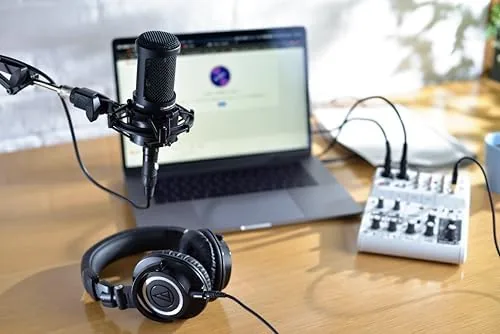
Here is the practical catch that trips up many buyers, and I want to be direct about it. The AT2020 is an XLR microphone, so it does not plug into a USB port and just work. You need an audio interface that provides 48 volt phantom power, and you need an XLR cable to connect them. For someone moving over from a fifty dollar USB microphone, that means buying more than the microphone. The interface and cable become part of the budget.
The reward for the extra equipment is a much lower noise floor and cleaner gain than most USB microphones reach. The AT2020 is quiet, and when you pair it with a decent interface you can raise the gain without being greeted by a wall of hiss. For the musician or podcaster who already owns an interface, this is one of the simplest and most affordable ways to step up to a proper studio capture.
One thing to underline is that the AT2020 will not work without phantom power, so an interface without 48 volt support is not enough. The other thing to remember is that a transparent condenser reveals the room as much as the voice, so the better your space sounds, the better your recordings will be. This is not a fault of the microphone, it is the nature of an honest capture.
Pros and Cons
- Pros: transparent, neutral sound that suits a wide range of sources; a quiet, low noise design; a rugged metal body; a true cardioid that copes with an untreated room; and value that has made it a studio standard for years.
- Cons: it needs an interface and phantom power, so the total cost is higher than a USB microphone; there is no built in volume control; and it needs a pop filter plus a reasonable room to reach its best.
How It Compares: The Entry Studio Standard
| Spec | Audio-Technica AT2020 | USB studio mic | Budget dynamic |
|---|---|---|---|
| Connection | XLR, interface needed | Direct USB | XLR or plug |
| Pattern | Cardioid condenser | Cardioid condenser | Dynamic cardioid |
| Phantom power | Required | Implicit | Not needed |
| Noise floor | Low | Low to moderate | Low |
| Best for | Vocals, guitar, podcast | Plug and play | Live, loud sources |
The direct comparison for most buyers is a USB condenser microphone. That route is simpler, you plug it in and record, but you lose the ability to scale your rig later and you are tied to a capsule and preamp you cannot upgrade. The AT2020 plus an interface is more gear, but it is also a genuine path into a full recording chain that grows with you. If your budget is extremely tight and you only want to record a quick take, a plug and play USB microphone gets you to the starting line faster. The AT2020 rewards the moment you add a proper interface with a better sound and a microphone that will still be relevant years from now.
Who Should Buy It
Buy the AT2020 if you are building your first serious recording rig, from podcast to demo vocals, and you are willing to pair it with a simple interface to unlock a clean, versatile, XLR microphone. It is the right buy for singers, voice actors, streamers, and musicians who want a clear, honest capture at a price that will not strain a beginner budget.
Skip the microphone if you only want plug and play recording with zero extra gear, then save the interface and choose a USB model. Skip it too if you want a colored, warm, or bright tone rather than neutrality, this microphone is deliberately honest. For a flat, truthful capture at a fair price, it remains one of the deepest values in studio audio. You can check the current price and the standard black finish on the AT2020 Amazon page.
Questions People Ask
Do I need an audio interface for the AT2020?
Yes. It is an XLR condenser without a USB output, so you need a phantom powered interface or mixer to get any signal out of it. That is the trade you accept for the cleaner, more scalable sound.
Is phantom power required?
It is. Like all condenser microphones the AT2020 needs 48 volt phantom power, which is standard on most interfaces. Without it the microphone stays silent, so check the switch before you record.
Is the AT2020 good for podcasting or vocals?
Both. The cardioid pattern keeps room noise out and the response flatters spoken word and most singing ranges, which is why it has been so common in podcast setups for years.
Does it need a pop filter?
I recommend one. Plosives on B and P puffer a little, and a pop screen or foam cap cleans them right up and keeps the recording clear.
How We Test
My test aims to reflect how most people actually use the microphone. I recorded the AT2020 on spoken word and acoustic guitar through a budget interface, compared it in the same room to a USB condenser and a cheap dynamic, and listened for color, noise, proximity, and truth. I did not add EQ or processing, because a studio microphone should survive the raw test and I wanted to hear what the capsule genuinely delivers.
My verdict is simple and it matches the reputation. The AT2020 is not the most flattering microphone money can buy, but it is one of the best value and best balanced studio microphones at its price. Pair it with a clean interface and a half decent room and it will stay in your rig for years. It is the sort of dependable workhorse that built the standard, and it is exactly the kind of trust the audio world has placed in it. For the latest kit options and the current black, you can see everything on the official listing here. For a deeper look at how condenser microphones behave in small rooms, the microphone guidance from Sound On Sound on condenser mics is a useful companion.
As an Amazon Associate, I earn from qualifying purchases.