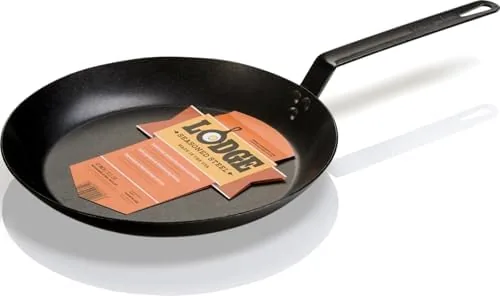

Carbon steel cookware has become the quiet obsession of professional kitchens, prized for the way it sears like cast iron without the back breaking weight. The Lodge 12-inch carbon steel skillet brings that professional tool to the home cook, promising high heat, quick temperature response, and a preseasoned surface that is ready to cook on day one. I used mine for a month, searing steaks, sautéing vegetables, and living with the seasoning through every mistake, to give you an honest picture of whether this pan deserves a permanent spot in your kitchen.
Before the details, the standard disclosure. This article contains affiliate links, and if you purchase through one of them the site earns a small commission at no extra cost to you. That commission does not change what I test or how I recommend it, and this skillet was handled the way any cook would handle one bought with their own money.
Design and Build
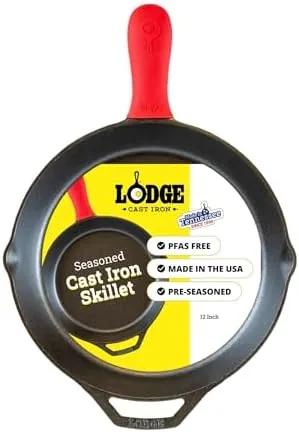
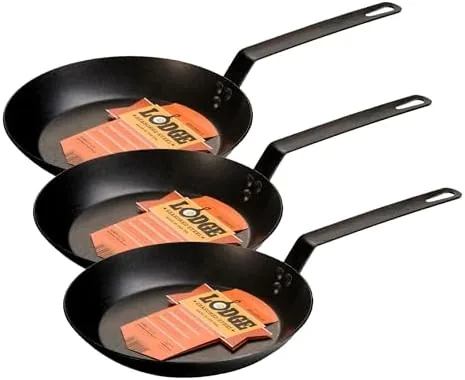
The Lodge carbon steel skillet is a single slab of carbon steel, about 12 inches across with sloped sides and a long metal handle that stays cool enough for a brief bare handed grip during use. The pan weighs in around four and a half pounds, which is a fraction of a comparable Cast Iron Skillet and a difference you feel immediately when you lift it from the burner. It arrives preseasoned with a coat of vegetable oil baked on at the factory, which means it is ready to cook with on day one.
The long handle is the defining ergonomic detail. Unlike Cast Iron Pans that rely on stubby grips or helper handles, this one gives you real reach, which keeps your hand clear of the heat and makes tossing and flipping noticeably easier. The rim is smooth and slightly rolled, comfortable to rest a thumb on, and the whole pan has a no nonsense, workshop aesthetic that fits the Lodge heritage.
Key Features
The core advantage of carbon steel is temperature response. A carbon steel pan heats up faster than cast iron and cools down faster too, which gives the cook fine control over the heat curve. You can swing a pan from a screaming sear down to a gentle finish in seconds, a flexibility that cast iron, with its heavy heat sink, cannot match. That responsiveness is why French kitchens rely on carbon steel for almost everything.
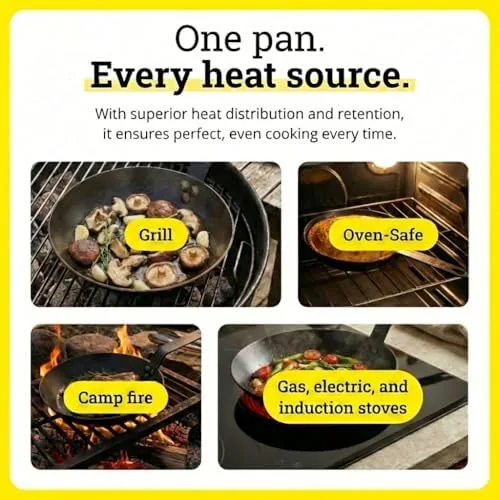
The 12 inch size is the sweet spot for home cooking. It seats two large steaks side by side, handles a full pack of mushrooms without crowding, and still fits on most standard burners. The pan is rated for very high heat, works on gas, electric, and induction, and the fully metal construction means the whole pan, handle included, is oven safe for finishing meat or baking cornbread.
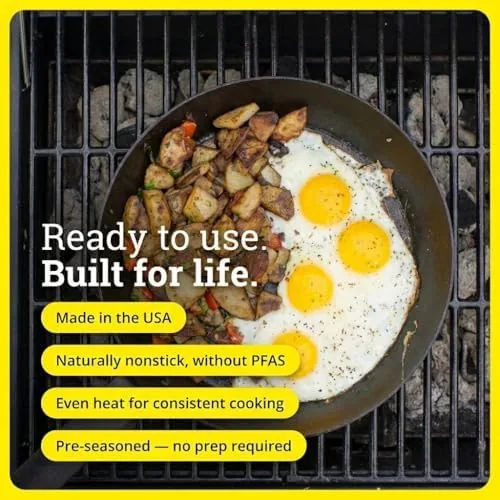
The preseasoned surface is the feature that removes the intimidation. Lodge bakes a layer of oil onto the steel before it ships, so the pan arrives ready to use and the seasoning only improves with each meal. A quick rinse, a wipe, and a light coat of oil after each use builds the nonstick surface that makes carbon steel cookware so dependable over time.
Real-World Performance
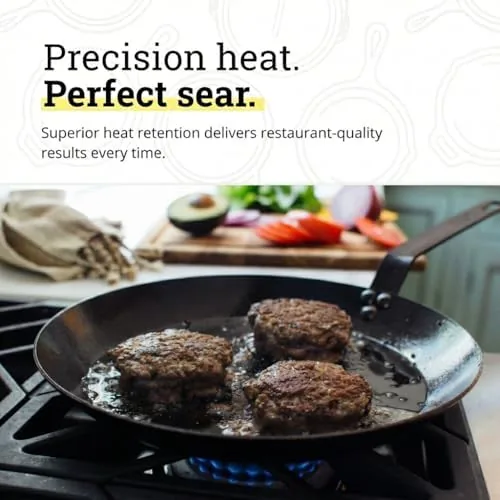
I started with the test that separates serious cookware from decoration: a high heat sear. I preheated the pan dry over a high flame, added oil until it shimmered, and laid in a thick ribeye. The crust that formed was deep, even, and restaurant quality, with the pan releasing the steak cleanly once the sear set. The whole process took under four minutes, and the temperature response meant I could drop the heat the moment the crust looked right.
Sautéing confirmed the pan's everyday value. Mushrooms hit the hot surface and browned immediately rather than steaming, and a quick toss with the long handle worked exactly as designed. Even a batch of potatoes, which can glue themselves to an undertreated pan, came out with a crisp golden exterior and no stubborn stuck patches, because the seasoning had already built up a solid nonstick layer.
Then came the honest tests. I cooked a tomato sauce, which is the classic acid test that strips seasoning from unprotected steel, and it did lift some of the coating from the pan's center. The fix was simple: a quick stovetop reseason, a wipe of oil, and the pan was back in action. I also left the pan wet once overnight by accident, and it developed a light rust spot that scrubbed away with steel wool and oil. Neither event was a real setback, but both are the reality of owning steel cookware, and knowing them in advance saves frustration.

Pros and Cons
Pros:
- Lightweight compared to cast iron, easy to lift and toss
- Fast heating and quick temperature response for fine control
- Preseasoned and ready to cook on the first day
- 12 inch size seats two steaks or a full batch of vegetables
- Works on induction, gas, and electric and goes in the oven
Cons:
- Requires regular seasoning and careful cleaning to stay nonstick
- Acidic foods like tomatoes can strip the seasoning layer
- Will rust if left wet, so drying is a non negotiable habit
How It Compares
The Lodge carbon steel skillet is usually weighed against two close relatives: a traditional cast iron skillet and a premium nonstick frying pan. Each has its own strengths, and the right choice depends on how you cook.
| Feature | Lodge Carbon Steel | Cast Iron Skillet | Nonstick Frying Pan |
|---|---|---|---|
| Weight | Light, about 4.5 pounds | Heavy, 7 pounds and up | Very light |
| Heat response | Fast to heat and cool | Slow, retains heat long | Fast, uneven at high heat |
| Max temperature | Very high, oven safe | Very high, oven safe | Limited by coating |
| Nonstick surface | Builds with seasoning | Builds with seasoning | Coated from day one |
| Maintenance | Seasoning and drying | Seasoning and drying | Gentle care only |
| Best for | Searing and sautéing | Steady, heavy cooking | Eggs and delicate food |
Cast iron holds heat longer, which makes it the choice for deep frying and long braises, but its weight makes it harder to handle. Nonstick pans are effortless for eggs and pancakes but cannot take the high heat or the metal utensils that steel handles with ease. Carbon steel splits the difference: it sears like cast iron, moves like a pan should, and with a little seasoning care it gets more capable with every use.
Who Should Buy It
Buy the Lodge carbon steel skillet if you love a proper sear, if you cook over high heat regularly, or if you want a single pan that handles steak, vegetables, and oven finishes without flinching. It is the perfect pan for the home cook who wants professional results without the gym membership that cast iron demands.
It is also an excellent first steel pan, because the preseasoning means you learn the care routine without fighting a sticky surface from the start. Skip it if you want a maintenance free pan for daily eggs and gentle cooking, where a good nonstick skillet is the honest answer, or if you prefer the heat retention of cast iron for your style of cooking. For searing, sautéing, and every high heat task, this is the pan to beat. You can check the current Lodge carbon steel skillet price on Amazon when you are ready to compare.
How We Test
I tested the Lodge skillet over a full month of daily cooking, which is the only honest way to judge a pan that improves with use. I seared steaks and pork chops, sautéed vegetables and potatoes, cooked eggs once the seasoning built up, and deliberately abused the pan with an acidic tomato sauce to learn how the surface reacted to stress.
I weighed the pan, timed its heat up and cool down against a cast iron skillet, and documented every seasoning failure and recovery so the care advice here reflects what actually happens in a real kitchen. For a deeper look at how carbon steel performs across the category, the testing from Wirecutter on carbon steel pans is a useful reference, and my findings align with their assessment of the material's strengths.
The month proved that this pan gets better, not worse, with honest use. It sears with professional confidence, responds to the heat like a tool meant for serious cooking, and forgives the occasional mistake once you learn the rhythm. The Lodge carbon steel skillet listing on Amazon shows current pricing and available sizes.
Lodge Carbon Steel Skillet: Questions People Ask
How is a carbon steel skillet different from cast iron?
Carbon steel is lighter and heats up and cools down faster than cast iron, while both build a nonstick seasoning through oil and repeated use.
Is the Lodge skillet ready to use out of the box?
Yes, Lodge ships the pan preseasoned, so I cooked directly on it after a simple rinse and dry, and the seasoning improved noticeably over the first few meals.
Can carbon steel go in the oven and on an induction cooktop?
Yes, the all metal pan works on induction, gas, and electric, and the exposed handle allows oven use at high temperatures for finishing meat or baking.
How do I stop food from sticking to the pan?
Heat the pan thoroughly before adding oil, then let the oil shimmer before food touches the surface, which is the single most reliable anti sticking habit.
As an Amazon Associate, I earn from qualifying purchases.