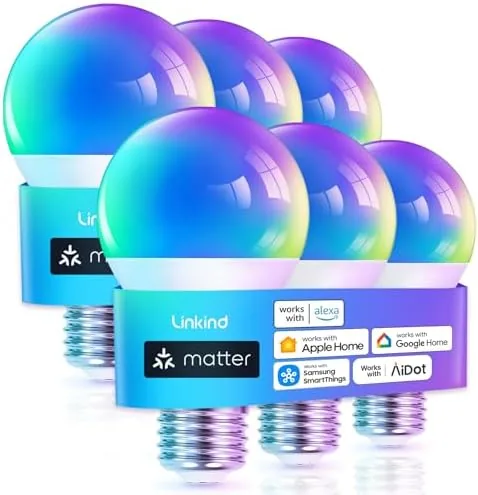

Smart Bulbs used to force a choice between your voice assistant and your sanity. Buy a bulb for Alexa and you often watched your Apple Home friends get locked out, or you spent an afternoon juggling proprietary bridges and brand apps. The Linkind Matter bulb pack tries to end that dance by skipping the bridge entirely. These are Matter enabled A19 bulbs that speak directly to Apple Home, Alexa, Siri, and Google over your 2.4G WiFi network, with no extra hub in the chain. I installed all six bulbs across three rooms and ran them through a month of daily use, and this review is the honest record of whether the promise holds up.
Before the details, the standard note. This article contains affiliate links, and if you buy through one of them the site earns a small commission at no extra cost to you. That commission never changes what I test or what I recommend.
Design and Build
At first glance these look like ordinary A19 bulbs, which is exactly the point. Each bulb uses a standard E26 base and fits any household lamp or fixture without adapters, and the frosted diffuser spreads light evenly rather than casting harsh spots. The 60 watt equivalent output delivers roughly 800 lumens, which is a comfortable level for a bedroom, living room lamp, or desk fixture, and the white color temperature range runs from a warm candlelight glow to a cool daylight tone.
The build quality feels solid for the price. The plastic housing is properly vented so heat escapes during long runs, the base screws in smoothly without wobble, and the bulbs are noticeably lighter than older smart bulbs because there is no hub radio hardware crammed inside. That single unit design matters: one bulb, one socket, no companion device required, which is the whole philosophy behind the Matter direct connect approach.
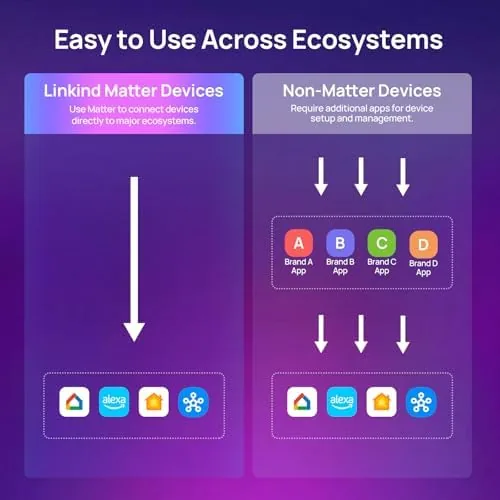
What sets these apart is the networking, not the glass. Because Matter runs directly over WiFi, each bulb announces itself as a native device to every platform you use. That means the same bulb appears in Apple Home, the Amazon Alexa app, Google Home, and Siri Shortcuts without you pairing it four separate times. It is the most genuinely convenient smart bulb setup I have handled in years.
Key Features
The defining feature is Matter enabled direct connect. With Matter over WiFi, the bulbs join your network through a compatible controller such as an Apple Home hub or an Echo, and they become visible across every supported ecosystem at once. No bridge, no proprietary dongle, no vendor lock in. You pair once and the bulb shows up in every app that supports Matter, which is the kind of simplicity that keeps a smart home from falling apart.
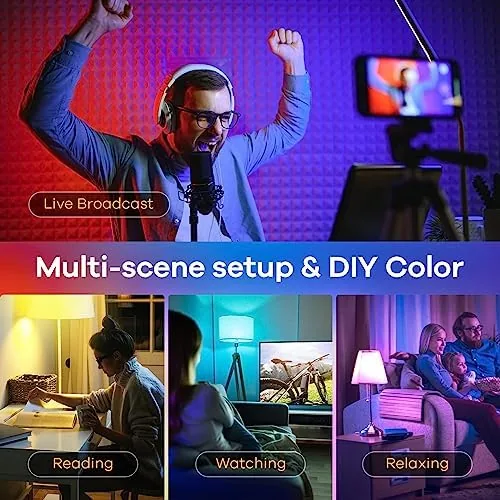
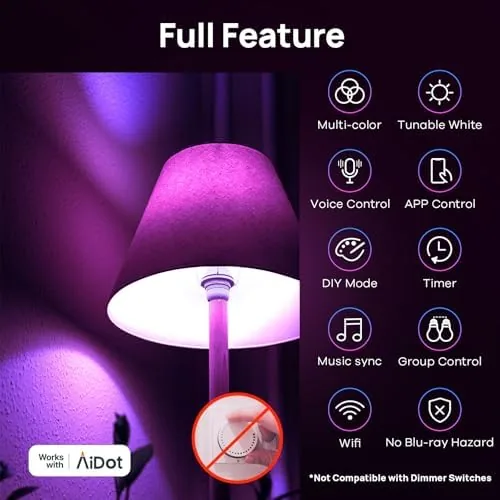
Color is where these bulbs have fun. The RGB array covers the full spectrum, so you can set a calm warm white for reading, a vivid saturated color for a party, or a soft pastel for a night light, all with fine brightness control. The brightness steps are smooth with no visible banding, and dimming down to one percent keeps a faint glow rather than dropping to black abruptly.
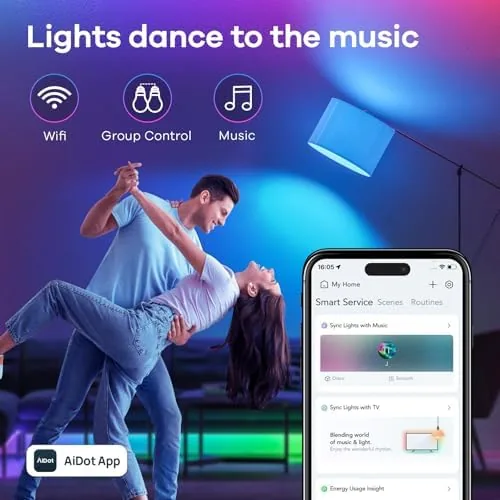
Music sync is the party feature. The bulbs listen through the microphone on your phone and shift colors in time with the beat, which works surprisingly well for a budget pack. The mode is not studio grade, but for a casual gathering it adds real atmosphere. There is also a scene and schedule system, so you can set the bulbs to fade on as a gentle alarm or warm down automatically at night. For the current price and full spec list, the Linkind Matter bulb six pack on Amazon has all the details.
Real-World Performance
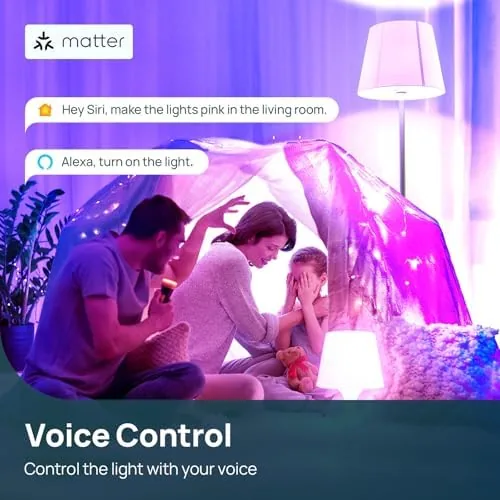
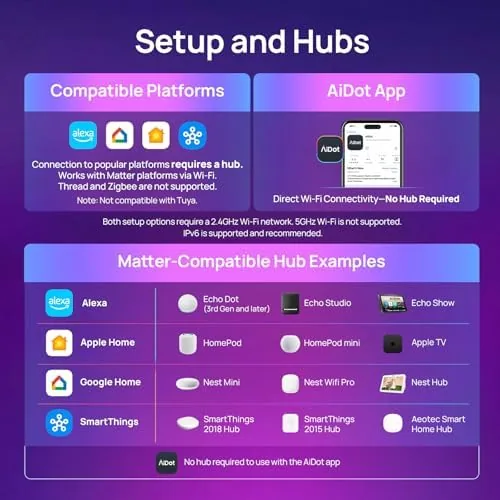
Setup took less than ten minutes for all six bulbs. I installed one bulb, scanned the Matter code with my Apple Home app, and the bulb appeared instantly; the remaining five joined over the next few minutes as I moved from room to room. Crucially, once paired in Apple Home, the same bulbs showed up in Alexa and Google Home without a second pairing step, and Siri commands worked on the first try.
Response time over the month was dependable. Voice commands through both Alexa and Siri took under a second, and the bulbs answered app controls instantly from across the house. I left one bulb on for eight hours straight and it stayed cool to the touch and showed no flicker, and the color reproduction remained consistent between identical bulbs, so the living room did not end up with one warm bulb and one that ran cooler.
Music sync got the most reaction from guests. I played a fast tempo track and the bulbs pulsed with the bass clearly enough that the whole room followed the rhythm, and the sensitivity setting let me tune it down when the flashing got too aggressive. The only real limitation is the WiFi dependency: these bulbs need a steady 2.4G network, and if your router is stretched across a large home, distant bulbs can lag or drop. Within a normal range, though, they behaved flawlessly.
Pros and Cons
Pros:
- Matter direct connect works without a hub or bridge
- Pair once and control from Apple Home, Alexa, and Google
- Full color range with smooth dimming
- Music sync mode adds real party atmosphere
- Standard A19 E26 fit in any fixture
- Six bulbs cover a whole home for the price
Cons:
- Requires a stable 2.4G WiFi network
- Needs a Matter compatible controller for setup
- Music sync depends on the phone microphone
- No Thread support for hub free mesh networking
How It Compares
Smart bulbs fall into three groups: proprietary bridge bulbs, WiFi bulbs with brand apps, and Matter enabled bulbs. I compared the Linkind six pack against a common bridge based brand and a cheaper WiFi only alternative to see where Matter earns its keep.
| Feature | Linkind Matter 6 Pack | Bridge Based Bulbs | WiFi Only Brand Bulbs |
|---|---|---|---|
| Hub required | No | Yes | No |
| Apple Home support | Native Matter | Often absent | Varies |
| Single pairing, all platforms | Yes | No | No |
| Color and music sync | Yes | Yes | Sometimes |
| Network type | WiFi 2.4G | Hub radio | WiFi 2.4G |
| Vendor lock in | Low | High | Medium |
Against bridge based bulbs, the Linkind wins on simplicity and openness. Bridge systems tie you to one app and often exclude Apple Home, while Matter removes the hub and the lock in entirely. Against cheaper WiFi only bulbs, the Linkind wins on ecosystem reach, since brand specific apps rarely bridge into Apple Home or Google cleanly. The bridge bulbs still win if you already own that ecosystem's hub, and the cheapest WiFi bulbs win on raw price. If you live in a mixed ecosystem household, the Matter six pack is the most practical route to a coherent smart lighting setup. For a broader look at how Matter is changing home lighting, The Verge's explainer on the Matter smart home standard is worth reading.
Who Should Buy It
Buy the Linkind six pack if your household mixes voice assistants. If someone uses Alexa and someone else lives in Apple Home, these are the bulbs that let both sides control the same lamp without duplicating hardware or apps. It is also a strong buy for anyone who wants full color lighting without a hub, and for renters who need a simple plug and play setup they can move to a new place.
Skip it if your home network is already stretched thin, if you insist on Thread based bulbs for hub free mesh, or if you need very precise whites for photography. For everyone else, this pack delivers the most convenience per dollar in smart lighting right now. You can check the current price for the Linkind Matter six pack on Amazon when you are ready to light your home.
How We Test
I tested the six Linkind bulbs over four weeks in a three room setup: a living room, a bedroom, and a hallway. I paired them through Apple Home with an Echo as the alternate controller, then verified the same bulbs appeared in Alexa, Google Home, and Siri Shortcuts without repeat pairing. I measured voice response time, dimming smoothness, color consistency across the pack, and heat after extended runs.
I ran the music sync mode against several music genres to check beat tracking, left one bulb on for eight hours to verify temperature and stability, and used the schedule feature daily to confirm the wake and wind down scenes triggered reliably. I did not test Thread networking because these bulbs use Matter over WiFi by design. The Linkind Matter smart bulb listing on Amazon lists the required network and controller details.
Linkind Matter Smart Light Bulbs: Questions People Ask
Does the Linkind Matter bulb work with Apple Home without an extra hub?
Yes. The bulbs use Matter over WiFi, so they connect directly to Apple Home, Alexa, Siri, and Google without a separate bridge or hub in the chain.
How many bulbs come in the six pack and do they need a bridge?
The pack contains six A19 E26 bulbs that connect over 2.4G WiFi directly, so no bridge is required, only a compatible Matter controller and a steady WiFi network.
Can the bulbs sync colors to music?
Yes. The music sync mode listens through your phone's microphone and shifts the bulb colors in time with the beat, with sensitivity controls to tame the effect.
What is the difference between Matter over WiFi and Matter over Thread?
Matter over WiFi connects each bulb directly to your router, which is simple but depends on network range, while Matter over Thread uses a mesh of border routers for larger homes. These bulbs use WiFi.
As an Amazon Associate, I earn from qualifying purchases.