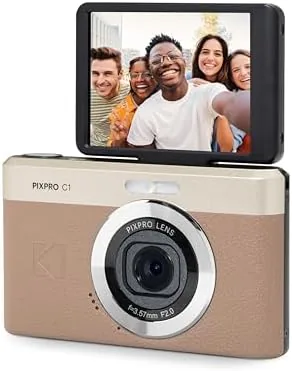

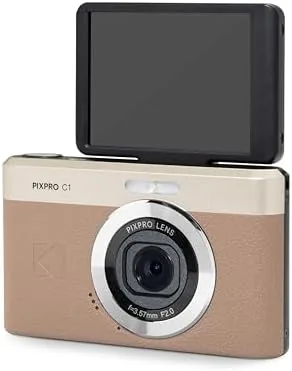
There is a strange joy in a camera that fits in a pocket. Modern phones photograph brilliantly, but they push you toward the same wide, flat look, and they vanish the moment you want a dedicated device that simply works. The KODAK PIXPRO C1 arrives as a small, friendly digicam with a 13MP sensor, a fast 26mm F2.0 fixed lens, and a 2.8 inch screen that flips 180 degrees for selfies. It is not trying to replace a mirrorless camera, and it is not trying to outshoot your phone. It is trying to be the camera you actually carry, and in the brown and leather trim version it looks like it belongs in a jacket pocket. I spent two weeks with one across street walks, cafes, and a long afternoon of self-portraits, and this is what I found.
Before the details, the standard disclosure. This review contains affiliate links. If you purchase through one of those links, the site earns a small commission at no extra cost to you, and that commission never affects what I write.
Design and Build
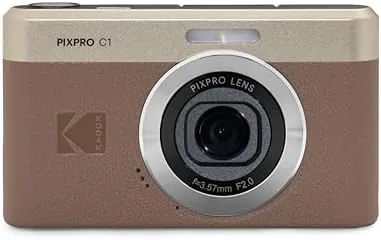
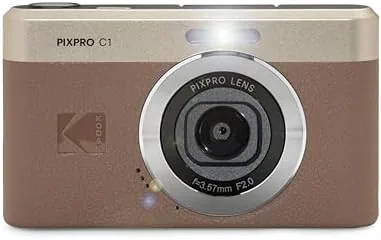
The C1 is genuinely pocketable. It measures small enough to slip into a shirt pocket or a jeans coin pocket, and at a light weight it disappears on a lanyard around the neck. The brown edition wraps the body in a warm, leather like texture that reads retro without feeling like a costume, with silver trim around the lens barrel and a clean face that hides almost every control behind the screen.
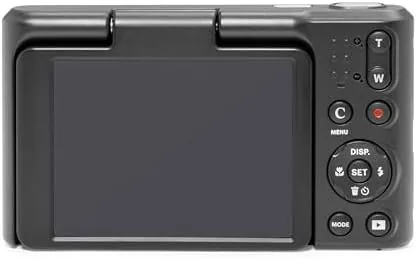
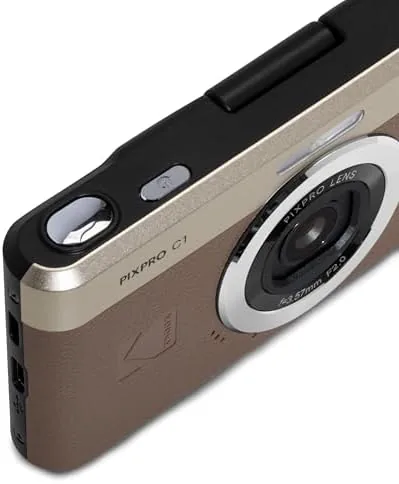
The build is simple by design. There is a shutter button, a power button, a playback key, and a single mode switch that toggles between Photo and Video. The controls are small but usable, and the placement suits a camera that is meant to be grabbed quickly rather than studied. The lens barrel extends slightly when the camera powers on, giving the C1 the satisfying mechanical ritual of a real camera turning to life.
The rear is dominated by the 2.8 inch screen, which occupies most of the back panel. There is no viewfinder, which is standard at this price, so the screen is the only way to frame a shot. The plastic shell feels solid for the class, with no creaks, and the finish resisted scuffs during a week of pocket carry. The bottom houses the USB port for charging and a tripod thread, a small but welcome inclusion for longer exposures.
Key Features
The headline is the 180 degree flip screen. The 2.8 inch display rotates on a hinge at the top of the camera, swinging fully forward so you can frame selfies and vlogs while watching yourself in real time. The hinge feels sturdy and holds any intermediate angle, and the screen stays bright enough to compose in daylight, though like most budget displays it struggles a little in direct sun.
The 26mm F2.0 fixed lens is the other feature that separates the C1 from cheaper digicams. The fast aperture gathers light well enough for indoor and low light shots, and the fixed focal length keeps the body slim. F2.0 also gives a shallow depth of field at close distances, which produces the soft, creamy background blur that phone cameras fake with software. For casual portraits and street scenes, the character of the lens is the C1's most endearing quality.
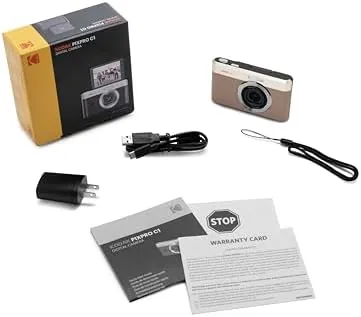
The 13MP sensor records 1080p Full HD video with the built in microphone, and the camera handles stills in a standard JPEG format that plays nicely with any photo app. The built in Li-Ion battery charges over USB and lasted the better part of a day of mixed use, with video recording draining it noticeably faster. For a current look at the price and available colors, the Amazon listing for the KODAK PIXPRO C1 is worth checking.
Real-World Performance
Outdoor shots in good light were the camera's best work. The 26mm lens captured street scenes with decent detail, colors that leaned slightly warm and pleasant, and none of the oversharpened look that plagues budget sensors. Daylight shots printed well and looked natural on a phone screen, which is the audience this camera serves. The F2.0 lens kept shutter speeds fast enough that handheld blur was rare even under trees.
Low light is where the sensor's limits show. The bright lens helps, but the 13MP sensor gets noisy as the light drops, and the autofocus slows noticeably at dusk. Indoor shots under warm room light came out usable for social posts but soft on close inspection, and the camera had to be held steady for anything slower than a bright room. Anyone expecting phone level computational low light should adjust expectations; the C1 rewards good light and steady hands.
Selfies were the most fun. The flip screen made framing trivial, the F2.0 lens produced flattering portraits with background blur, and the results felt far more deliberate than a front facing phone camera. Video at 1080p looked smooth in daylight, with acceptable audio from the built in mic for casual clips, and the mode switch made photo to video transitions instant. The fixed 26mm focal length is the main restriction, since you cannot zoom in, and framing wide scenes requires stepping back.
Pros and Cons
Pros:
- 180 degree flip screen makes selfies and vlogs easy
- Fast F2.0 lens performs well in low light for the class
- Truly pocketable body with retro styling
- Simple controls suit casual shooters
- Built in rechargeable battery with USB charging
- Compact tripod thread for longer exposures
Cons:
- Fixed 26mm lens cannot zoom at all
- Small 13MP sensor gets noisy in low light
- No viewfinder for bright outdoor composing
- Autofocus slows in dim conditions
How It Compares
Budget digicams compete against phone cameras and against slightly larger point and shoots. I compared the C1 against a flagship phone camera and a larger zoom point and shoot to map where it stands.
| Feature | KODAK PIXPRO C1 | Flagship Phone | Zoom Point and Shoot |
|---|---|---|---|
| Lens | 26mm F2.0 fixed | Multiple cameras | Optical zoom |
| Low light | Moderate | Excellent | Moderate |
| Flip screen selfies | 180 degrees | Front camera | Varies |
| Dedicated feel | Yes | No | Yes |
| Pocket size | Excellent | Excellent | Good |
| Price | Low | Very high | Moderate |
Against a flagship phone, the C1 loses on raw image quality, low light, and zoom, and it would be the wrong choice for anyone chasing maximum sharpness. What it wins is the experience: a dedicated camera that forces deliberate composition, offers real background blur, and lets a child use it without unlocking a phone. Against a zoom point and shoot, the C1 wins on size and simplicity and loses on reach, since a zoom lens covers far more framing options. The trade is honest: the C1 trades versatility for character and pocketability. Independent advice on choosing a first camera from Wired's beginner camera guide suggests exactly this kind of simple, fixed lens camera for learning the fundamentals before buying expensive glass.
Who Should Buy It
Buy the C1 if you want a camera that lives in your pocket and gets used, if you are gifting a first camera to a teenager who is selfie obsessed, or if you simply want the tactile joy of a dedicated device on a night out. The flip screen and bright lens make it a genuine alternative to reaching for your phone in social moments.
Skip it if your photography happens after sunset, if you need optical zoom for travel and wildlife, or if you expect the file quality of a full size camera. For casual users who want to photograph more deliberately, the C1 is a charming and affordable entry point. When you are ready, check the current price for the KODAK PIXPRO C1 on Amazon.
How We Test
I tested the C1 for two weeks in daylight, at dusk, and indoors. I shot street scenes and portraits, recorded 1080p video clips, and used the flip screen for self portraits across a full afternoon. I reviewed every file on a phone screen and a calibrated monitor, checking detail, color, and noise.
I measured battery life across mixed still and video use, tested the flip screen hinge over hundreds of rotations, and checked the tripod thread with a compact tripod. I did not test underwater durability, extreme heat, or the camera against professional editing workflows, and I judged image quality within the realistic expectations for a camera in this price class.
Questions People Ask
Does the KODAK PIXPRO C1 have a zoom lens?
No. The C1 uses a fixed 26mm lens, so you zoom by moving closer to the subject. That keeps the camera small and the aperture fast at F2.0, and wide angle scenes are its natural strength.
How do you use the 180 degree flip screen?
The 2.8 inch screen rotates on a hinge at the top of the camera and can swing fully forward to face the subject. That makes selfies and vlogging visible while you frame and shoot.
What video quality does the C1 record?
The camera records 1080p Full HD video with the built in microphone for casual clips. Daylight footage looks smooth and natural, while low light video softens like the stills.
Does the C1 use AA batteries?
No. The C1 has a built in rechargeable Li-Ion battery that charges over USB, so there are no disposable batteries to buy, and a full charge covers most of a day of casual shooting.
As an Amazon Associate, I earn from qualifying purchases.