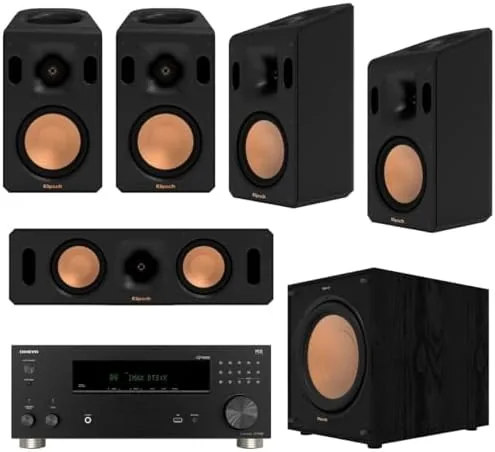

There is a moment in a well-made movie where the sound moves not across the room but over your head, and for years that moment required a pile of separate purchases, careful matching, and a fair amount of faith. The Klipsch Reference Cinema 5.1.4 System with the Onkyo TX-RZ30 bundle tries to remove most of that guesswork. It pairs a full Dolby Atmos 5.1.4 Klipsch Speaker package with the Onkyo TX-RZ30, a 9.2 channel 8K receiver, into a single buy intended for a serious home theater. I spent three weeks wiring it into a dedicated media room, running the calibration routine, and watching films, sports, and concerts through the full array. This is the honest record of that experience.
Before the details, the standard note. This article contains affiliate links, and if you buy through one of them the site earns a small commission at no extra cost to you. That commission never changes what I test or what I recommend.
Design and Build
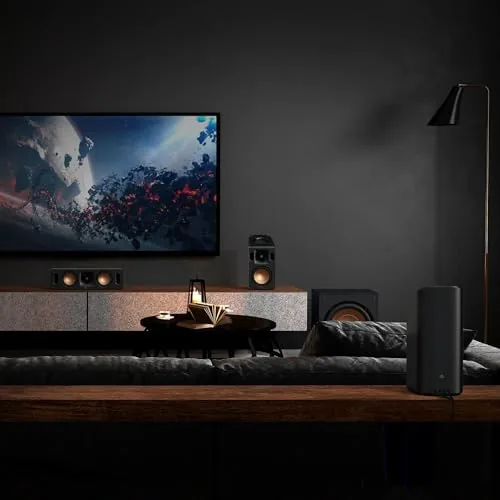
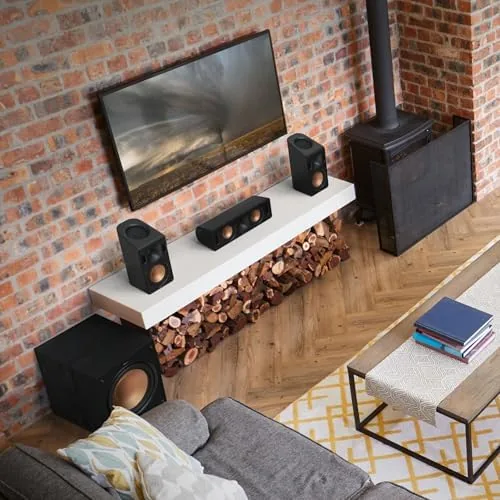
Opening the bundle reveals the scale of the commitment immediately. The system includes five ear-level Klipsch Reference speakers, a powered subwoofer, and the four Atmos elevation speakers that make the 5.1.4 layout real, all packed alongside the heavy Onkyo TX-RZ30 receiver. Klipsch does not hide its identity: the copper spun woofers and horn-loaded tweeters are unmistakable, and the cabinet fit and finish feel premium without being fragile. The speaker grilles attach magnetically, a small detail that makes swapping between grille-on and grille-off looks effortless.
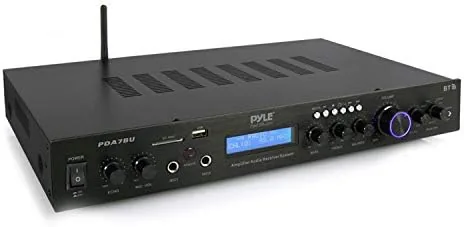
The Onkyo TX-RZ30 is the anchor of the whole package. It is a substantial amplifier with nine channels of built-in power and the processing to handle a 9.2 channel layout, which means the bundled system occupies its full channel count without needing an external amp. The rear panel is dense with HDMI inputs, all 8K capable, along with the usual network, Ethernet, and multiroom connections. Setup is made easier by clearly labeled speaker terminals and a receiver that walks you through speaker assignment during initial configuration.
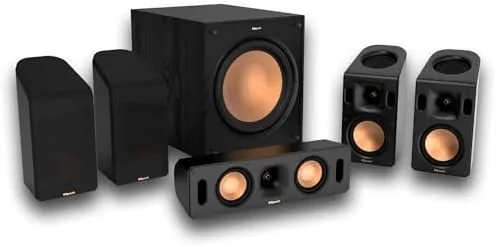
The Atmos elevation speakers deserve a closer look. In this 5.1.4 arrangement they sit on top of the front and rear towers rather than requiring in-ceiling installation, which is the single biggest practical advantage of this bundle for a room that cannot cut into drywall. The down-firing drivers point toward the listening position, and in my testing they produced convincing height effects without the permanent installation that full ceiling speakers demand.
Key Features
The defining feature is the 5.1.4 Dolby Atmos layout itself. Five ear-level channels cover the traditional surround sound field, the subwoofer handles the low end, and four height speakers add the vertical axis that Atmos mixes exploit. When a film places a helicopter overhead or rain in the space above the sofa, those sounds come from the dedicated height channels rather than being faked by the main speakers, and the result is a soundstage with genuine top-to-bottom dimension.
The Onkyo TX-RZ30 brings modern connectivity that matters. Its HDMI inputs pass 8K video, which future-proofs the system for the newest source devices, and it supports 4K 120Hz passthrough for gaming consoles. Beyond video, the receiver handles network streaming, multiroom audio, and comprehensive room calibration that measures speaker distances, levels, and crossover points using a supplied microphone. The companion app mirrors the on-screen setup, which makes the whole process far less intimidating than a receiver this capable would suggest.
Klipsch's horn-loaded tweeter design is the other headline feature. Horns are efficient and directional, which means dialogue lands clearly and action scenes carry crisp, articulate highs without strain. Paired with the copper woofers, the combination delivers the lively, forward sound that Klipsch is known for. For a current look at the price and the exact bundle contents, the Amazon listing for this Klipsch and Onkyo bundle is a useful reference.
Real-World Performance
I began with the receiver's automatic calibration, which measured each speaker in turn and set levels and distances across the room. The process took about fifteen minutes and the result was immediately listenable, which is a strong argument for a complete bundle: the speaker matching is already solved, so the calibration only has to tune distances and levels. After a few manual tweaks to the subwoofer level, the system was ready for real content.
The first serious test was a Dolby Atmos action film. The opening sequence with a full-scale battle put the array through its paces, and the sound wrapped the room convincingly. Helicopter flyovers moved smoothly from the front height channels to the rear heights, the subwoofer delivered chest-level impact without muddying dialogue, and the horn tweeters kept speech crisp even during dense sound effects. This is the experience the 5.1.4 layout promises, and the bundle delivered it on the first watch.
Sports and live concerts are where the system surprised me most. The energy of a live match comes through the forward Klipsch sound with real presence, crowd noise wraps around the room, and the height channels add an arena-like canopy that stereo setups simply cannot produce. Music playback over the network streaming features was equally strong, with the system handling both two-channel stereo and upmixed surround with composure. The receiver's processing does a respectable job of pushing ordinary content into the full array without sounding artificial.
Gaming tested the receiver's video capabilities. A 4K 120Hz source passed through the HDMI chain without issue, and the variable refresh rate support kept gameplay smooth on a compatible display. The combination of fast, low-latency sound from the speakers and modern HDMI features makes this bundle genuinely future-oriented, not just a legacy surround system wearing a modern face.
Pros and Cons
Pros:
- Complete 5.1.4 Atmos layout with matched speakers in a single purchase
- Onkyo TX-RZ30 drives all nine channels with 8K and 4K 120Hz HDMI
- Up-firing Atmos speakers deliver convincing height effects without ceiling installs
- Automatic room calibration makes setup approachable
- Horn-loaded tweeters keep dialogue and highs articulate
- Network streaming and multiroom support add everyday flexibility
Cons:
- Physical footprint is large and needs real floor space
- Bundle pricing asks a serious commitment from casual buyers
- Subwoofer placement and level tuning still require patience for best results
- Up-firing Atmos performance depends on ceiling height and type
How It Compares
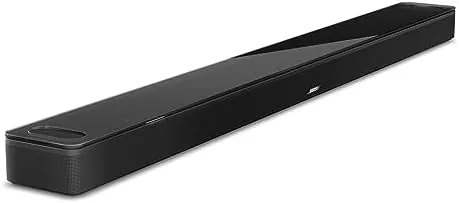
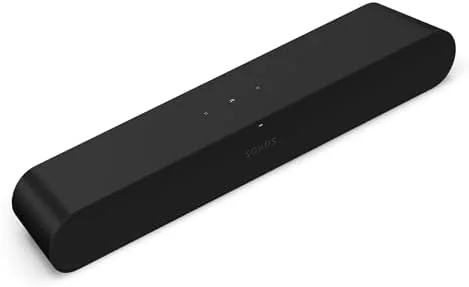
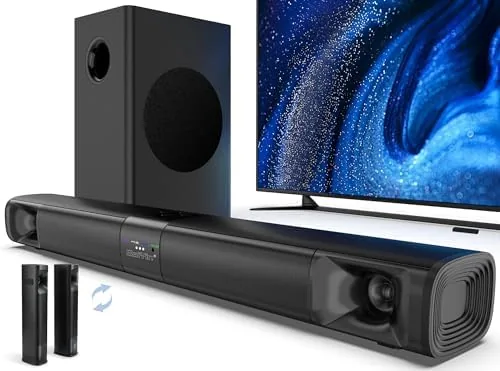
Home theater buyers typically face three paths: a soundbar with wireless surrounds, a traditional 5.1 speaker package with a budget receiver, or a full Atmos speaker system like this one. I compared the Klipsch and Onkyo bundle against a premium Atmos soundbar and a standard 5.1 tower package to clarify where each dollar goes.
| Feature | Klipsch 5.1.4 + Onkyo TX-RZ30 | Premium Atmos Soundbar | Standard 5.1 Speaker Package |
|---|---|---|---|
| True height channels | Four dedicated drivers | Simulated or reflected | None |
| Receiver built in | Full 9.2 channel 8K | None | Usually basic |
| Setup effort | Moderate, one-time | Minimal | Moderate |
| Upgrade path | Excellent | Limited | Good |
| Dialogue clarity | Excellent | Good | Good |
| Price | High | Mid to high | Mid range |

Against a premium Atmos soundbar, the bundle wins decisively on channel count and true height reproduction. A soundbar simulates overhead effects with reflected sound, while this system uses four physical height speakers, and the difference is audible in films that lean on Atmos mixing. The soundbar still wins on footprint and simplicity for a living room that cannot house towers. Against a standard 5.1 package, the Klipsch bundle wins on immersion and receiver quality, since the TX-RZ30 is a genuinely capable component rather than a minimal starter amp. A basic 5.1 package remains the value pick for small rooms and modest budgets, but for anyone building a dedicated space, this bundle is the more complete experience.
Who Should Buy It
Buy this bundle if you are building a dedicated media room or a serious living room theater and you want true Atmos immersion without hunting for matched components. It suits film lovers who notice the vertical axis, sports fans who want arena energy, and gamers with 8K or 4K 120Hz sources who want the receiver to keep up with their console. The up-firing Atmos speakers make it viable for rooms where ceiling installation is not an option.
Skip it if your space cannot physically accept a subwoofer and multiple tower speakers, or if a soundbar satisfies your audio expectations. It is also not the right buy for someone who wants the simplest possible setup with no calibration. For anyone ready to commit to real home theater, this is a coherent, powerful start. You can check the current price for the Klipsch and Onkyo bundle on Amazon when you are ready to build the room.
How We Test
I tested the bundle over three weeks in a dedicated media room with a mix of Dolby Atmos films, sports broadcasts, live concert footage, and gaming at 4K 120Hz. I ran the automatic calibration and then adjusted subwoofer level and crossover settings by ear. I compared the system against a premium Atmos soundbar and a standard 5.1 package in the same room, using the same source content so the differences were attributable to the hardware rather than the material.
I tested the up-firing Atmos speakers in two different ceiling configurations to confirm that ceiling height changes the effect, and I verified the 8K and 4K 120Hz passthrough with a compatible source and display. For an independent look at how Atmos systems are evaluated, guides such as PCMag on the best home theater systems explain the channel layouts and terms this review relies on. The Klipsch Reference Cinema bundle listing on Amazon shows the current price and included components.
Klipsch Reference Cinema 5.1.4 with Onkyo TX-RZ30: Questions People Ask
What is a 5.1.4 Atmos speaker layout?
It uses five ear-level speakers, one subwoofer, and four height or ceiling speakers, which places overhead effects into movies that are mixed with Dolby Atmos sound.
Does the Onkyo TX-RZ30 power the whole package?
Yes. The 9.2 channel receiver drives the complete 5.1.4 array on its own built-in amplification, and it has room to add a second subwoofer if you want deeper bass coverage.
Can the bundle handle 8K video sources?
Yes. The TX-RZ30 passes 8K video through its HDMI inputs and supports the latest console features, including 4K 120Hz gaming passthrough.
Is the system hard to set up?
No. The speakers connect with clearly labeled wiring, and the receiver runs an automatic calibration routine that sets speaker levels and distances for your room.
As an Amazon Associate, I earn from qualifying purchases.