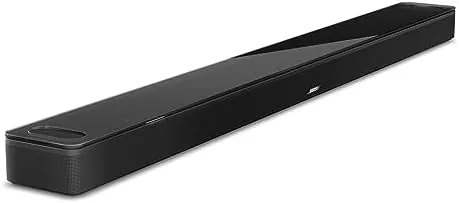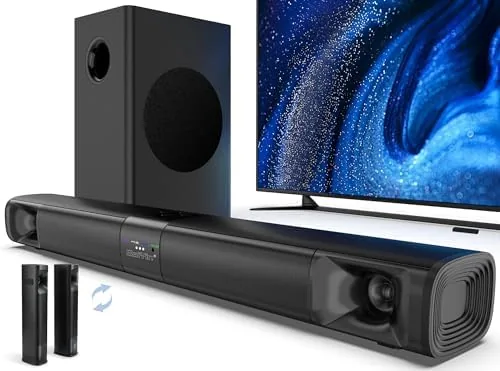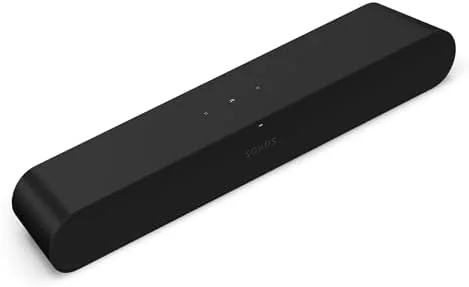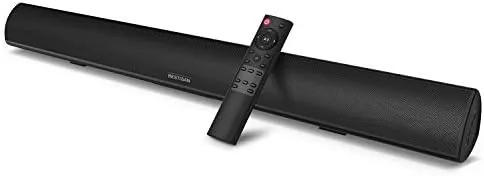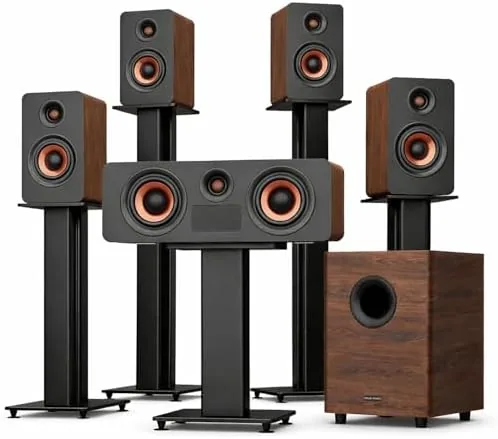

A Soundbar used to be a compromise: better than TV speakers, sure, but a pale imitation of a real home theater. The Flagship True 5.1.4 system aims to close that gap. It packs 900 watts into a long bar and a wireless subwoofer, with five channels at ear level and four height drivers on top for Dolby Atmos. The result is a home theater upgrade that slides under a TV instead of filling a room with speakers and wire. I ran it through a stack of movies, shows, and music for two weeks, and this review covers how the height channels perform, how the subwoofer feels, and whether the whole system earns its flagship name.
A quick note before the details. This article contains affiliate links, and if you buy through one of them this site earns a small commission at no extra cost to you. That commission does not change the verdict, and the soundbar reviewed here is the standard retail system available on Amazon.
Most people upgrade a TV for the picture and forget the audio, which is a mistake, because the sound does more than the pixels to pull you into a scene. The rest of this review walks through the hardware, the Atmos effect, and how this bar stacks up against a traditional surround setup.
Design and Build
The soundbar is a long, low unit designed to sit in front of a television, with a cloth grille covering a row of drivers and a solid metal and plastic body that feels heavier and more rigid than typical budget bars. The wireless subwoofer is a compact cube that can stand against a wall or slide behind a couch, and it connects to the bar without a cable. That one detail removes the biggest annoyance of home theater setup.
Connections are handled on the back of the bar: HDMI with eARC for modern TVs, an optical input for older sets, and Bluetooth 5.4 for wireless playback from a phone or tablet. The included remote covers volume, inputs, and sound modes, and the bar also works with the standard TV remote through eARC. The height drivers sit recessed on top of the bar, aimed at the ceiling, which is how a compact bar tries to create sound above the listener. The subwoofer pairs with the bar automatically on power up, so there is no pairing ritual or hidden switch to discover, a convenience that matters when you set the system up at night and simply want it to work.

Key Features
The headline feature is the 5.1.4 channel layout. Five drivers at ear level cover left, center, right, and surround duties, a subwoofer handles the low end, and four upward firing drivers generate the height layer that Dolby Atmos uses. This is a genuinely ambitious configuration for a soundbar, because most bars stop at 3.1 or 5.1 and leave the vertical dimension to the processor.
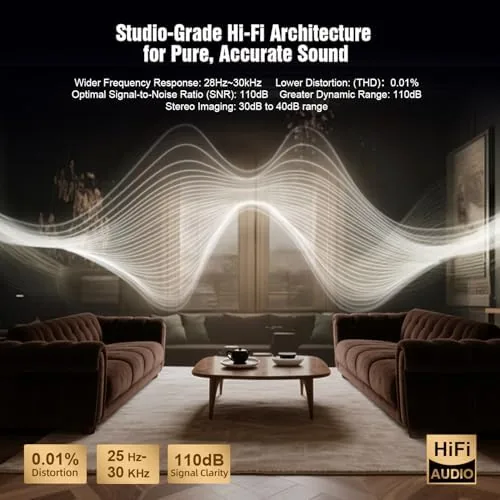
The 900 watt amplifier rating signals the system's intent. Bass has real weight, dialogue gets a dedicated center channel, and the surround channels spread effects around the room rather than all firing forward. The Hi-Fi crossover design is the quiet hero of the system, because it decides which frequencies go to which driver, and a clean crossover is what separates a natural sounding bar from a honky one. eARC passthrough keeps the connection simple for modern setups, and Bluetooth 5.4 adds a stable wireless path for music.
Real-World Performance
The first film was the moment the system proved itself. An action scene with helicopters circling the room produced genuine movement in the surround channels, and the subwoofer delivered the low end with a punch that pressed the couch rather than merely rattling it. Dialogue stayed pinned to the center channel, so voices remained clear even with the effects roaring around them, which is the single most important job of a home theater speaker and one that cheap bars routinely fail.
Dolby Atmos content brought the height effect into play. Helicopter blades and rain moved above the listening position, and the effect was convincing for a soundbar. It is not identical to a ceiling mounted speaker system, because the upward firing drivers rely on the ceiling to reflect sound down, so rooms with high, angled, or heavily textured ceilings soften the effect. In a normal eight foot ceiling room the results were satisfying, and the system proved that Atmos does not require speakers bolted to the ceiling.
Music playback showed the Hi-Fi crossover at work. Streaming through Bluetooth 5.4, the bar rendered vocals, guitars, and drums with separation that makes most bars sound muddy by comparison. Dialogue heavy TV shows stayed clear at low volume, which matters for evening viewing. The main limitation appeared with overly compressed streams and very loud volume, where the bar pushed toward brightness, a trait shared by most soundbars in this class.
Setup itself took under ten minutes. The bar slid onto the TV stand, the subwoofer tucked against a side wall, and the eARC connection brought picture and sound together with a single cable. Sound modes for movies, music, and dialogue are one button away on the remote, and the subwoofer level control lets you tune the bass to the room instead of living with a factory preset that never quite fits.

Pros and Cons
Pros:
- Real surround immersion with separate surround channels
- Height drivers produce a convincing Atmos effect
- Wireless subwoofer adds deep bass without cable clutter
- Clear dialogue through the dedicated center channel
- eARC, optical, and Bluetooth 5.4 cover most setups
- Hi-Fi crossover keeps music sounding natural
Cons:
- Height effect depends on ceiling type and bounce
- Large footprint needs a wide TV stand
- Loud compressed streams can sound bright
How It Compares
The real question for any soundbar buyer is how the all in one approach stacks up against a full speaker system. The table below lays out the differences.
| Feature | Flagship 5.1.4 Bar | Full Surround Speaker Kit | Basic 2.1 Soundbar |
|---|---|---|---|
| Setup effort | Two boxes, plug in | Five speakers plus receiver | Single unit |
| Atmos height layer | Upward firing drivers | Dedicated ceiling speakers | None |
| Room footprint | Compact | Large | Smallest |
| Subwoofer | Wireless included | Often separate purchase | Usually tiny or none |
| Bass impact | Strong | Strongest | Weak |
| Best for | Movie nights | Dedicated theater rooms | Small rooms and price |

A full kit with an AV receiver and separate speakers still wins for extreme fidelity and true height effects, but it costs far more, fills a room with gear, and demands serious setup patience. A basic 2.1 bar is cheaper and simpler, but it cannot create surround or height immersion at all. The Flagship system lands in the middle ground: most of the cinema experience with a fraction of the hassle, which is exactly what most living rooms need.
Who Should Buy It
Buy the Flagship True 5.1.4 system if you watch movies and series on a smart TV, if you want real surround and Atmos without running speaker wire, or if you host movie nights where the bass and the sense of being inside the scene matter. It is also a strong choice for anyone who already has a big TV and wants the audio to finally match the picture.
Skip it if you have a dedicated theater room where a full speaker kit makes sense, or if your living room has extremely high ceilings where upward firing Atmos loses its effect. For a typical modern living room, this bar delivers a genuine cinema upgrade with a clean setup. You can check the current price of this Dolby Atmos soundbar on Amazon when you are ready.

How We Test
I connected the soundbar to a smart TV over eARC and ran it through a mixed test: two full length action films with Atmos mixes, an evening of dialogue heavy series, and a day of music streaming over Bluetooth 5.4. I adjusted the crossover and subwoofer level for different room positions, tested the system at low evening volume and at party volume, and moved the subwoofer between a corner and an open wall to hear the difference.
I tested in a room with a standard eight foot ceiling, so tall ceiling and outdoor results may differ. For a deeper look at how Dolby Atmos works in home audio, CNET explains Dolby Atmos in plain language. The Flagship 5.1.4 soundbar listing on Amazon shows the current price and available inputs.
Flagship Dolby Atmos Soundbar: Questions People Ask
What does 5.1.4 mean on a soundbar?
It means five ear level channels, one subwoofer, and four height speakers that Dolby Atmos uses to place sound above you.
Do I need an Atmos source to use the height channels?
Atmos content activates the full height effect, while ordinary TV audio still plays in solid surround and stereo modes.
Will the soundbar work with my older TV?
Yes, it connects through eARC when available or through an optical cable, and Bluetooth 5.4 handles wireless streaming from a phone.
Is the subwoofer wired or wireless?
The subwoofer is wireless, so it can sit anywhere near a wall outlet without running a cable across the room.
As an Amazon Associate, I earn from qualifying purchases.