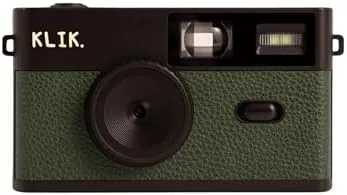

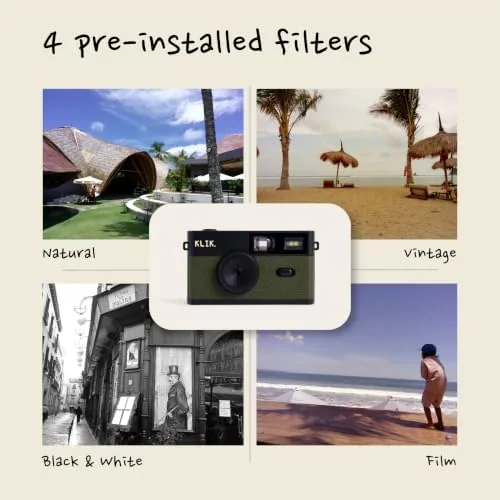
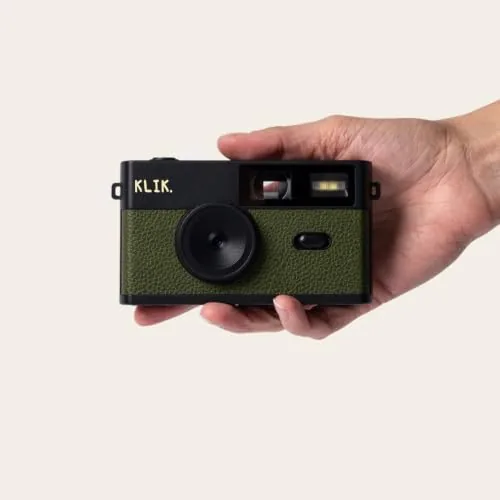
Hand a child a phone and the camera app is a black hole; they shoot a hundred frames, delete half, and show you nothing, because the screen and the gallery pull them back in. The Klik screen-free digital camera takes the opposite approach. There is no screen at all, just a shutter, a flash, and three film style filters, so a child points the lens at what they actually see and moves on. The reward arrives later, when the photos transfer over USB-C and the family sits down to look at them together. I gave this green Klik to my two kids for a month to see whether removing the screen really changes how children photograph their world. It did, and the results were more charming than I expected.
Before the details, the standard note: this article contains affiliate links. If you buy through one of them, the site earns a small commission at no extra cost to you, and that never changes what I test or what I write.
Design and Build
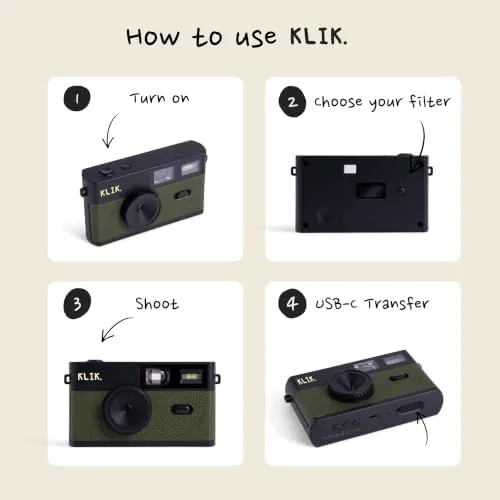
The Klik is clearly designed for small hands. It is a compact, rounded block of a camera, around the size of a deck of cards, with a chunky shutter button that lands under a small thumb and a simple mode dial for the three filters. The green finish is bright and cheerful, and the body is made of a rubbery plastic that shrugs off the drops that are inevitable with A First Camera for a child. After a month of being tossed into backpacks, dropped on sidewalks, and once left in the rain, ours still works perfectly.
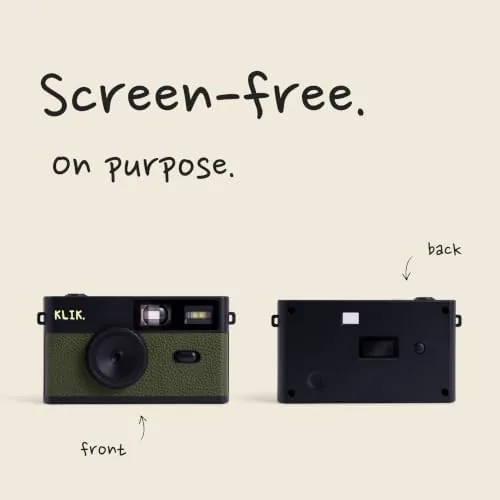
There is a small viewfinder on top, which children use to aim, and the built in flash sits beside it for indoor shots. The USB-C port on the side handles charging and photo transfer with one cable, which is a welcome modern touch after years of fiddly micro USB connectors on kids' cameras. The power switch is a simple slide that even a four year old can manage, and there is a tiny LED that shows the battery state without the distraction of a full screen.
Key Features
The headline feature is what is missing: the screen. With no display to review shots, children point, press, and move on, which means they stay in the moment rather than chasing the perfect retake. The reward for that patience is the reveal later, when the photos load onto a computer or phone and the family looks at them together for the first time.
The 8 megapixel sensor produces the soft, slightly imperfect vintage style images that parents have come to expect from this kind of camera, and the three film style filters, likely a color, black and white, and sepia or warm tone, let children pick a mood before they shoot. The rechargeable battery is rated for 500 shots per charge, which is a genuinely long run for a camera of this kind, and the built in flash brightens indoor shots without any settings to learn. Photo transfer is a single USB-C cable away, and the images are ready to share or print the moment they arrive. If you want to see the current price and color options, the Amazon listing for the Klik screen-free camera is the best reference.
Real-World Performance
I gave the Klik to my six year old and my four year old, which is a brutally honest test audience, and watched what they photographed over a month. The screen-free design changed the behavior exactly as advertised. Instead of firing off a hundred thumbnails and scrolling through them, they took a handful of careful shots of the dog, the garden, the birthday cake, and each other, then put the camera down and went back to the actual activity.
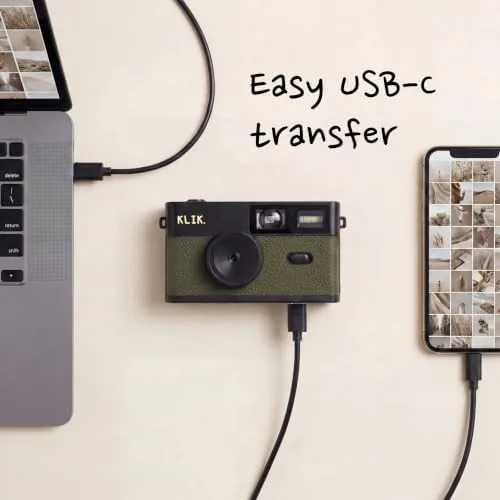
The battery claim held up. Across a month of daily use, including the classic mistake of leaving the camera on in a backpack, we charged it only a handful of times, and the 500 shot rating looked realistic for typical use. The built in flash worked well indoors, and the USB-C transfer took seconds per full card. The moment the photos appeared on the laptop screen was the point of the whole product; the kids asked to print their favorites, and we actually did, which is more than any phone gallery ever produced.
The honest limits are the ones this design accepts on purpose. The photos are soft and low resolution by adult standards, with the grainy vintage charm of A Disposable Camera, so this is not a tool for sharp family photography. There is no zoom, no video, and no way to delete a bad shot in the camera, so children shoot without feedback until transfer. The viewfinder is small and hard to frame through, so composition is a guess. For the intended audience, those are features; for an adult wanting a real camera, they are not.
Pros and Cons
Pros:
- No screen keeps children present and engaged with the moment
- Three film filters give photos a ready made vintage look
- 500 shots per charge lasts through days of play
- Sturdy, rubbery build survives drops and backpacks
- Simple USB-C photo transfer and charging
- Reveal later turns photos into a family moment
Cons:
- Photos are soft and low resolution by adult standards
- Small viewfinder makes framing a guess
- No zoom, video, or in camera photo review
- Cannot delete bad shots until transfer
How It Compares
To place the Klik I compared it against a typical Kids Digital Camera with a small screen and against a disposable film camera, the two alternatives parents usually consider.
| Feature | Klik Screen-Free | Kids Camera With Screen | Disposable Film Camera |
|---|---|---|---|
| Screen | None | Small LCD | None |
| Photos | 8MP digital | Digital, varies | Film, 27 shots |
| Filters | Three film styles | Varies | Fixed film stock |
| Battery | 500 shots rechargeable | Varies, rechargeable | One roll, disposable |
| Transfer | USB-C | USB or card | Print development |
| Best for | Present, patient kids | Kids who want review | Vintage feel, one trip |
Against a kids camera with a small LCD, the Klik loses on immediate feedback but wins on behavior, because the screen is exactly what turns a camera into another device to stare at. Against a disposable film camera, the Klik wins on cost per photo and on the reusable battery, while the film camera offers a more authentic grain. For parents who want the charm of film without the constant expense, the Klik is the best of the three. You can check the current Klik screen-free camera price on Amazon when you are ready to compare.
Who Should Buy It
Buy the Klik if you want your child to experience photography without screen time, if you are tired of the phone camera becoming another app to be pulled away from, or if you want a reusable alternative to disposable cameras that still produces the soft vintage look. It is the right first camera for children from around four years old up to the early teens.
Skip it if your child is ready for a sharper camera with a review screen, or if you want video recording and zoom, in which case a standard kids digital camera or an old smartphone is a better fit. For the family that wants to see what their kids actually notice, the Klik is a genuinely different idea that works. You can see the current price for the Klik screen-free camera on Amazon if you are ready to order.
How We Test
I tested the Klik for a month in the hands of my own two children, aged four and six, and I judged it on how children actually used it, battery endurance, transfer speed, durability through drops, and the quality of the photos it produced. I charged it only when the battery LED warned it was low, and I transferred photos after each day to review the results.
I compared the Klik against a screened kids camera and a disposable film camera to map the tradeoffs parents care about. I did not test it as a serious photography tool, because that is not what it is, and I did not judge image sharpness by adult standards. For independent context on cameras for children and photography for kids, The Verge guide to cameras for kids is a useful read.
Klik Screen-Free Camera: Questions People Ask
Why does the Klik camera have no screen?
The screen-free design keeps children focused on the moment instead of reviewing every shot, and it builds patience because the results arrive only when the photos are transferred. That is the core idea of the product, and it works.
How do you view the photos taken on the camera?
Photos transfer to a computer or phone through the USB-C port, and the three built in film filters apply the vintage look in camera, so the images are ready to share, print, and keep the moment it is in an adult hands.
How long does the battery last on a charge?
The rechargeable battery is rated for about 500 shots per charge, and in testing that covered several days of heavy use by children, including the occasional forgotten power on, before the camera needed a top up.
Is the Klik camera suitable for young children?
Yes. The simple shutter and flash controls are easy for young children to master, and the sturdy rubbery build handles the drops and bumps of everyday play, which makes it an ideal first camera for ages four and up.
As an Amazon Associate, I earn from qualifying purchases.