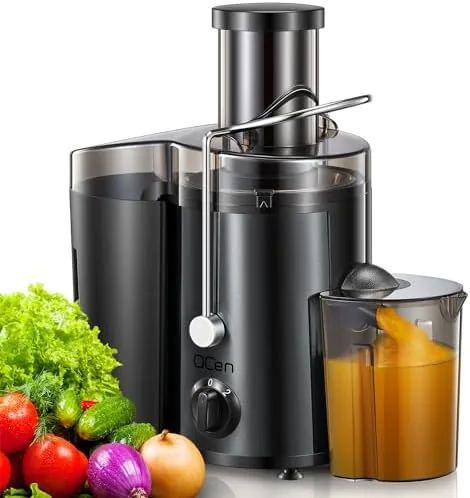

The most honest question you can ask about a juicer is not how fast it spins. It is how much time you spend chopping vegetables before the machine ever turns on. Most juicers demand that you cut apples into quarters, core them, and trim every stalk, which turns a glass of juice into a prep project. This cold press juicer attacks that friction with a 6.5 inch feed chute, a mouth wide enough to swallow a whole apple, a whole carrot, or an entire celery bunch without any knife work. It is a masticating machine that promises high juice yield through slow crushing rather than fast shredding, and I spent a month putting it through daily juice sessions to find out whether the promise holds.
Before the results, the disclosure: this article contains affiliate links, and if you buy through one of them the site earns a small commission at no extra cost to you. That never changes what I test or what I recommend.
Design and Build
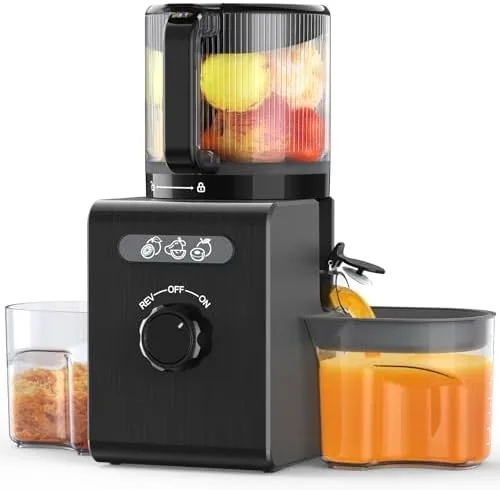
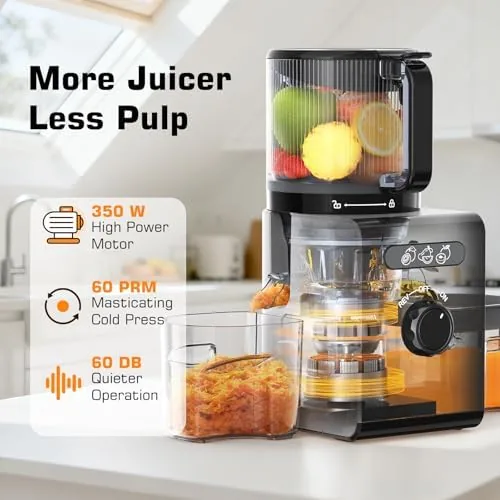
The machine is a vertical masticating juicer in a black housing, with a wide top opening that is the first thing anyone notices. The 6.5 inch feed chute changes the entire rhythm of juicing, because whole produce drops straight in instead of being pre chopped. There is a pusher for the occasional item that needs a nudge, but in my testing most fruits and vegetables fell through on their own weight. The design clearly favors convenience, and it delivers on that priority.
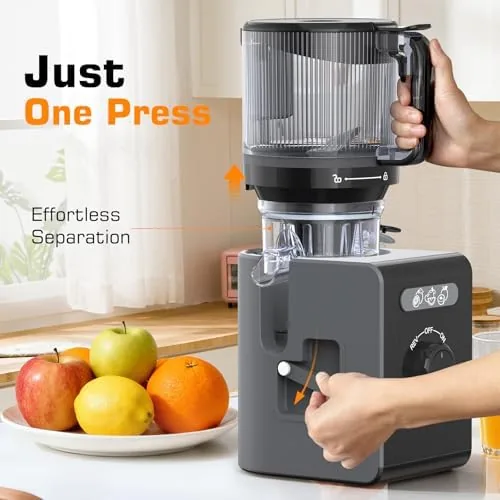
The parts that touch the food are food grade materials, and the whole system comes apart into a handful of components for cleaning. There is a juice jug with a froth separator, a pulp container, and the strainer basket that does the real filtering work. Nothing about the build feels fragile; the housing is solid, the locking mechanism clicks into place with confidence, and the base does not slide across the counter even under load.
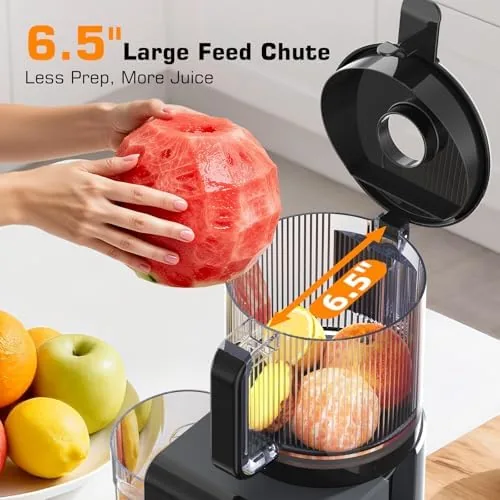
The controls are simple: an on switch, an off switch, and a reverse function for clearing jams. That restraint is welcome, because a juicer is a tool you operate before your first coffee, not a panel you want to study. The footprint is moderate, larger than a blender but smaller than most countertop ovens, and it sits comfortably at the back of a standard counter.
Key Features
The core of the machine is the slow masticating auger. Instead of shredding produce against fast spinning blades like a centrifugal juicer, it crushes and squeezes at low speed, pressing the juice out of the pulp rather than whipping it with air. That process produces more liquid per pound of produce, which is the "high juice yield" claim, and it generates very little heat, which is why the category is called cold press.
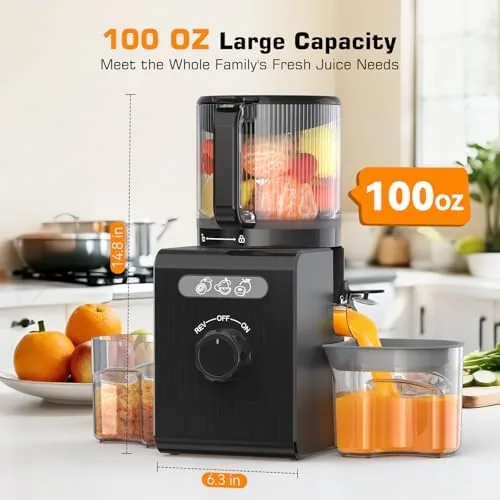
The 6.5 inch feed chute is the feature that most changes daily life. Whole apples, whole carrots, celery stalks, cucumbers, oranges, and beet halves fit through without cutting. For someone who abandoned juicing because of prep time, this single design decision removes the biggest barrier. The juice jug separates the foam and froth from the liquid, so the glass you pour is clear and smooth rather than topped with a layer of foam.
The machine handles leafy greens as well as hard produce. Kale and spinach go through the auger and come out as high yield green juice with minimal waste, which matters for anyone who makes the classic apple, ginger, and greens blend every morning. The reverse button clears the occasional jam quickly, and the pulp comes out dry, a sign that the press is actually extracting the liquid rather than pushing it through half used.
Real-World Performance
My baseline test was a simple orange juice, which exposes every juicer immediately. The machine produced a bright, clean juice with no bitter white pith and almost no foam, and it did so from whole peeled oranges dropped directly into the chute. The yield was noticeably better than a centrifugal machine I compared it against, and the flavor was rounder because the slow crush does not introduce the heat that can turn orange juice flat.
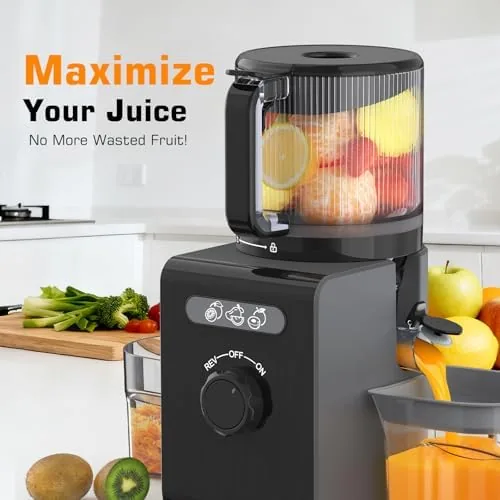
The daily green juice was where the machine earned its keep. A blend of whole apples, celery, kale, cucumber, and ginger came together in about four minutes, with no chopping and no mess. The froth separator kept the glass looking clean, and the taste stayed fresh and sweet rather than oxidized and brown. I left a small amount of juice in the fridge for 24 hours and the color barely shifted, which speaks to the low oxidation that cold press delivers.
Harder produce was the real test. Raw beets, which are dense and often cause jams, went through after a quick halving, and carrots fed through whole in a steady stream. The motor slowed but never stalled, and the reverse button handled the single occasion when a thick beet wedge stopped the auger. The dry pulp left behind came out in crumbly chunks, confirming that the machine was pressing for every drop.
Cleanup is the other half of the daily equation. The parts rinse under running water in a few minutes, and a quick scrub with the included brush handles the strainer basket. It is not dishwasher free, but it is close, and for a machine that gets used daily that ease matters more than any single feature.
Pros and Cons
Pros:
- 6.5 inch chute accepts whole apples, carrots, and celery
- Slow masticating press delivers a high juice yield
- Cold press creates little heat and low oxidation
- Froth separator pours clean, smooth juice
- Dry pulp confirms full extraction
- Reverse button clears jams without disassembly
Cons:
- Slower than a centrifugal juicer per glass
- Dense items like whole beets still need halving
- Parts need hand rinsing after each use
- Larger footprint than a compact blender
How It Compares
Juicers fall into two broad families: fast centrifugal machines and slow masticating machines, with a third option being high speed blender strainers. I compared this cold press machine against a standard centrifugal juicer and the hand straining method to measure what the slow approach actually costs and delivers.
| Feature | This Cold Press Juicer | Centrifugal Juicer | Blender and Strainer |
|---|---|---|---|
| Prep time | Minimal, whole produce | Needs chopping | Needs chopping |
| Juice yield | High | Moderate | Moderate |
| Heat and foam | Very low | High, foamy | High |
| Speed per glass | Slow and steady | Very fast | Fast |
| Cleanup | Few minutes | Quick rinse | Quick rinse |
| Shelf life of juice | Longer | Shorter | Shorter |

Against a centrifugal juicer, this machine loses on speed but wins on yield, foam, and freshness. A centrifugal machine turns out a glass in seconds, but it whips air into the juice, generates heat, and leaves noticeably more liquid in the pulp. Against a blender and strainer, the juicer wins on consistency and on how little the greens get bruised, though the blender doubles as a kitchen tool already owned by most homes. If you juice daily, the slower pace is a fair trade for more juice and better taste.
Who Should Buy It
Buy this juicer if you make juice most mornings, if your kitchen prep time is what stops you from eating more produce, or if you want a machine that accepts whole fruit without a cutting board. It is a strong pick for green juice fans, for families that work through a lot of carrots and apples, and for anyone upgrading from a centrifugal model who wants more juice per pound.
Skip it if you juice only occasionally and want the fastest possible glass, or if you value the smallest possible footprint above yield. For daily juicing households, the wide chute and high yield make this machine genuinely worth the counter space. You can check the current price for this cold press juicer on Amazon when you are ready to start pressing.
How We Test
I tested this juicer for one month with daily sessions covering oranges, apples, carrots, celery, kale, cucumber, ginger, and raw beets. I weighed the produce before pressing and the pulp after to estimate yield, timed each session from feed chute to finished glass, and compared the results directly against a centrifugal juicer using the same produce.
I also stored juice samples in the fridge for 24 hours to check oxidation, ran a deliberate jam test with thick beet wedges, and timed cleanup from start to finish on every session. For balanced context on the differences between juicer types, independent guidance such as Wirecutter's guide to choosing a juicer explains the trade offs in detail. The cold press juicer listing on Amazon shows the current price and available options.
Cold Press Juicer with 6.5 Inch Feed Chute: Questions People Ask
Why does a cold press juicer give higher yield than a centrifugal one?
The slow masticating auger crushes and squeezes produce rather than spinning and shredding it, so more juice is pressed out and less is lost to foam and heat. The dry pulp left behind is the visible proof of that extraction.
Can I really feed whole fruits without chopping them?
Yes, for most produce. The 6.5 inch chute accepts whole apples, carrots, celery stalks, and similar items without cutting, though very dense items like whole beets may still need a quick halving to avoid jamming the auger.
Does cold press juicing preserve more nutrients?
Cold press operates at low speed and creates very little heat and oxidation, which preserves more vitamins and enzymes compared to the high speed action of centrifugal juicing. That is why the juice stays colorful and fresh tasting for longer.
How hard is the juicer to clean?
The parts disassemble into a few components and rinse under running water in a few minutes, and the included brush handles the strainer basket. Most food contact surfaces are smooth food grade material that does not stain easily.
As an Amazon Associate, I earn from qualifying purchases.