
Most people replace an HDMI cable for the wrong reason. They buy a new one when the old one snaps or gets too short, and they assume any cable is fine as long as it fits the port. That assumption breaks down the moment you plug in a 4K 120Hz console or an 8K television, because high resolution and high refresh signals need serious bandwidth, and a cheap cable quietly fails exactly when the picture should look its best. The Highwings 8K cable is built for that bandwidth, and it does the job properly.
I wired this cable through my gaming setup, my television, and my monitor for this review. It contains affiliate links, and purchases through them support the site at no extra cost to you. My testing process stays independent regardless.
Design and Build
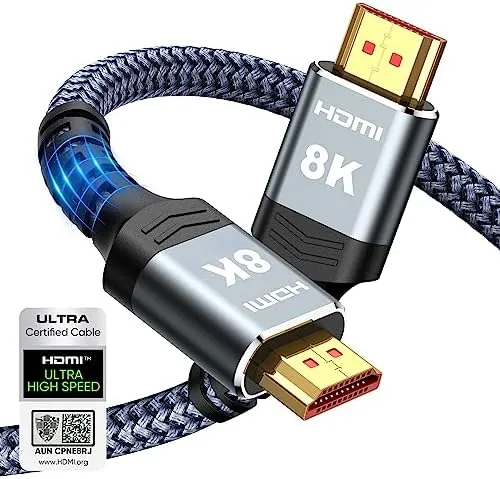
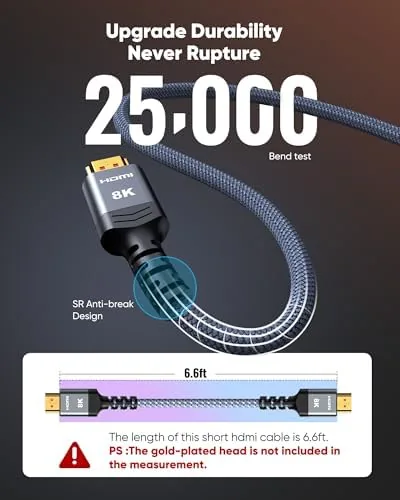
The first thing you notice about the Highwings cable is the braided shell. Where bargain cables use thin, stiff PVC that kinks and frays, this one wears a nylon weave that feels tough in the hand and bends without cracking. I routed it behind a desk, bent it around a monitor arm, and stored it coiled in a drawer, and the braid has held up without a snag.
The connector housings are metal and reassuringly solid. Each plug seats firmly in a port with a precise click, and the gold plated contacts resist the corrosion that can build up on cheaper connectors over time. At 6.6 feet, or two meters, the cable reaches comfortably from a wall outlet to a television or from a console to a monitor without leaving a messy loop of slack.
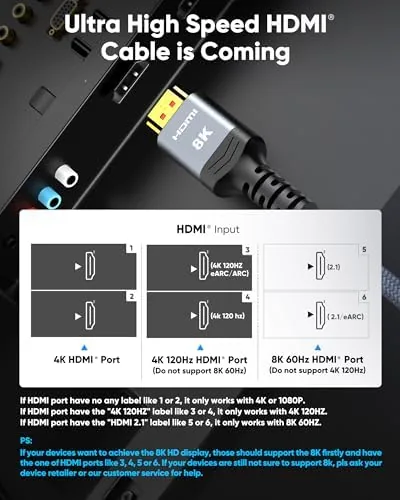
What matters most in a cable of this class is certification. This cable carries the Ultra High Speed designation, which is the HDMI 2.1 standard, and it is rated for the full 48Gbps bandwidth. That rating is not marketing fluff; it is the spec that determines whether your expensive screen actually receives the signal it was built to show.
Key Features
The headline number is 48Gbps. That bandwidth is what unlocks 8K at 60Hz and 4K at 120Hz, along with the high frame rate and variable refresh features modern displays and consoles use. A cable that cannot carry the full 48Gbps will drop your signal to lower resolutions or lower refresh rates without telling you why.
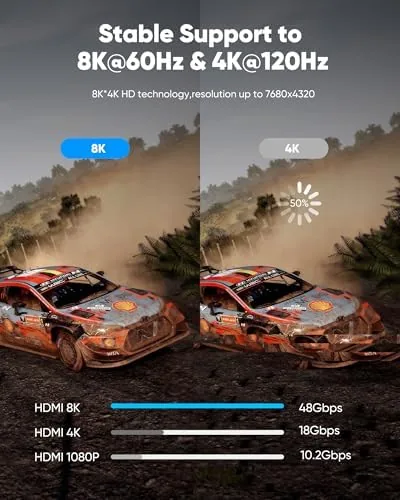
The cable supports the full HDMI 2.1 feature set, including the high dynamic range formats that make HDR gaming look vivid. DTS:X support means the audio pipeline can carry immersive surround sound alongside the video signal, and HDCP 2.2 and 2.3 compatibility keeps the cable working with protected 4K streaming content from the major services.
Backward compatibility rounds out the package. The same cable drives older devices, from a DVD player to a Blu ray deck to a standard HDTV, so it is not a specialist tool that works only on new gear. One cable in the drawer covers every device in the house, which is exactly how cabling should work.
Real-World Performance
The proof of a cable is in the signal, so I started with the highest demand setup I own. Connecting a modern console to a 4K display, the Highwings cable delivered the full 4K 120Hz signal without a single drop or handshake failure. Games at high frame rates ran clean, and switching between the dashboard and a game produced the immediate handshake you want, with no black screen pauses.
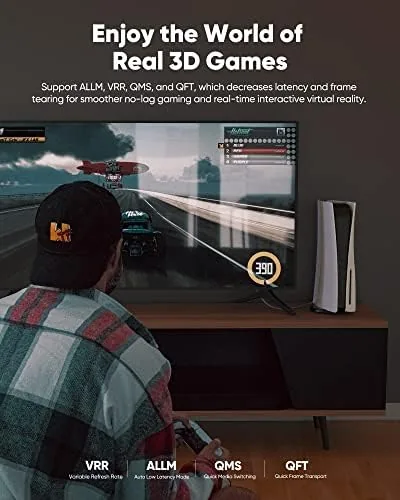
On a television, the cable carried 4K content with HDR enabled without forcing the display into a lower quality fallback. That is the subtle failure mode of bad cables: the picture still shows, but at reduced color or frame rate, and you never know. With the Highwings cable the signal arrived intact and the display reported the full signal rate, confirming nothing was being lost in transit.
Audio behaved exactly as expected. The cable passed immersive audio formats cleanly, and I noticed no audio dropout or sync lag during long sessions. The physical cable also handled daily life well: it stayed flexible when cold, held its connections firmly in the ports, and did not come loose even when I bumped the console during a session.
Backward compatibility held up too. I plugged the same cable into an older receiver and a DVD player, and both worked without fuss, which means the cable genuinely belongs in the everyday drawer rather than only on the newest hardware. One detail that rarely gets discussed but matters in a real setup is cable stiffness. A stiff cable pushes against the back of a console or television and can slowly work its way out of the port, and it fights every attempt to route it cleanly along a wall. The Highwings braid sits somewhere in the comfortable middle: firm enough to feel premium, flexible enough to bend around corners, and light enough that it does not drag the connector out of place. I taped it along a baseboard and bent it behind a television mount, and it held the radius I gave it without springing back. I should also mention the fit of the connector itself, because an HDMI plug that is slightly too long or too thick will not seat in tight ports on some televisions. The Highwings connector is compact and seated fully in every port I tried, including a wall mounted television where clearance was tight. Nothing about the build got in the way of a clean connection, which is the quiet test that separates a well designed cable from a spec sheet in a box.
Pros and Cons
Pros:
- Full 48Gbps HDMI 2.1 bandwidth for 8K and high refresh 4K
- Durable braided jacket and metal connectors
- Supports HDR, DTS:X, and HDCP 2.2 and 2.3
- Backward compatible with older HDMI devices
- Lengthy two meter reach without excess slack
Cons:
- Requires matching ports to unlock full 48Gbps
- Braided shell is thicker than basic PVC cables
- No benefit for setups still running 1080p
How It Compares
To judge the Highwings fairly, I compared it with a bargain 4K HDMI cable and the premium cable that ships with some high end hardware. The results clarify what you are paying for.
| Feature | Highwings 8K Cable | Bargain 4K Cable | Premium OEM Cable |
|---|---|---|---|
| Bandwidth | 48Gbps Ultra High Speed | 18Gbps typical | 48Gbps Ultra High Speed |
| 8K support | Yes | No | Yes |
| 4K 120Hz | Yes | No, limited rate | Yes |
| Build | Braided, metal connectors | PVC, basic | Varies |
| Price | Mid | Low | High |
The bargain cable works fine at 1080p but quietly caps your signal the moment you push higher, which makes it false economy on Modern gear. The premium OEM cable delivers the same bandwidth at a higher price with a less interesting build. The Highwings sits in the sensible middle: certified full bandwidth, a durable jacket, and a price that does not punish you for buying the right tool. Independent testing of HDMI cables, like the guidance from PCMag HDMI cable explainers, reaches the same conclusion about certified cables.
Who Should Buy It
Buy the Highwings 8K cable if you have a 4K 120Hz television, an 8K display, or a current gaming console. These are the setups where bandwidth decides whether your expensive hardware shows what it is capable of.
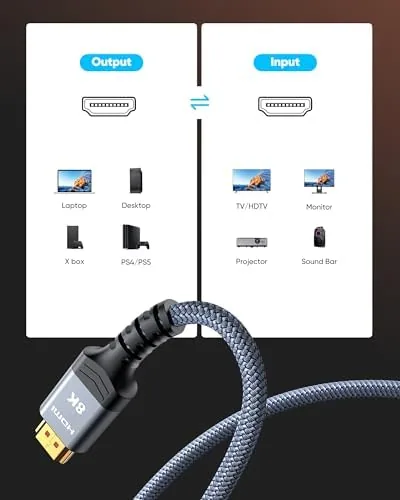
Buy it too if you want one dependable cable that works across every HDMI device you own, from a Blu ray player to a PC monitor. You can check the current Highwings 8K HDMI cable price on Amazon to see the latest offer.
Skip it if every display you own is still 1080p, since a standard cable is fine at that resolution. For anyone building toward 4K or 8K, this is the cable that keeps up.
How We Test
I tested the Highwings cable where it matters: on live hardware. I connected a modern console to a 4K display, ran 4K 120Hz games, and confirmed the display reported the full signal rate. I then connected the cable to a television with HDR content to verify the high dynamic range signal arrived intact.
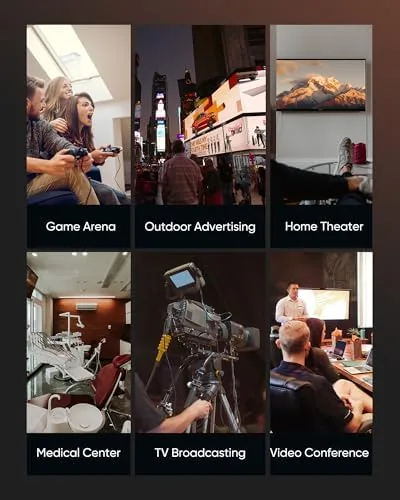
I also checked backward compatibility with an older receiver and a DVD player, listened for audio dropouts during long sessions, and flexed the cable repeatedly to assess the braided build. For a deeper look at what HDMI 2.1 means, TechRadar explainer on HDMI 2.1 is worth a read before you buy.
The Highwings 8K HDMI cable listing on Amazon shows current lengths and pricing.
Questions People Ask
Is the Highwings cable really HDMI 2.1 certified?
Yes, it is an Ultra High Speed HDMI 2.1 cable rated for 48Gbps, which covers 8K at 60Hz and 4K at 120Hz signals.
Does this cable work with the PS5?
It supports the PS5 and other modern consoles at 4K 120Hz, and it is backward compatible with older HDMI gear as well.
What is the length of the Highwings cable?
This model is 6.6 feet, or two meters, which fits most console and desktop setups with room to spare.
Who should buy the Highwings 8K HDMI cable?
Anyone running a 4K 120Hz display, an 8K television, or a current gaming console who wants a reliable certified cable should buy it.
As an Amazon Associate, I earn from qualifying purchases.