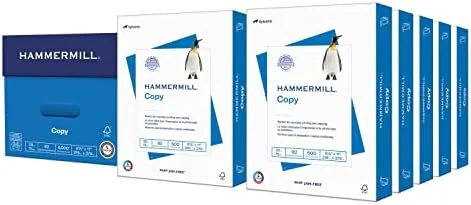

Most printer paper is bought on autopilot, grabbed at the office supply store because the tray is empty and the deadline is not. That reflex works fine until the cheap stuff starts shedding fiber, curling at the edges, and jamming the copier at the worst possible moment. Hammermill has built its name on the opposite promise, a paper that behaves in the machine so you do not have to think about it, and the 20 lb copy paper is the plainest expression of that idea. This is the record of a full case, 5,000 sheets, put through a month of home office, laser, inkjet, and copier duty.
Before the details, the standard note. This article contains affiliate links, and if you buy through one of them the site earns a small commission at no extra cost to you. That commission never changes what I test or what I recommend.
Design and Build
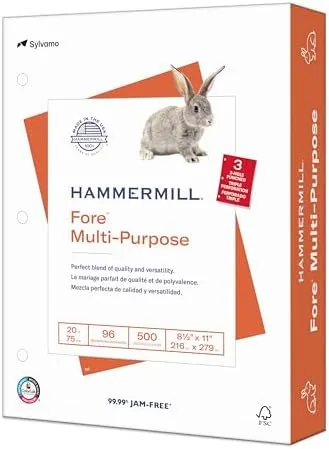
The case arrives as a plain corrugated box holding ten individual reams, each wrapped in the familiar white and blue Hammermill sleeve. The packing is the practical kind: each ream is sealed against dust and humidity, so a case bought in bulk can sit in a closet for months without the paper picking up moisture that makes it curl in the tray. Each 500-sheet ream lifts out cleanly, which is exactly the unit a printer tray wants.
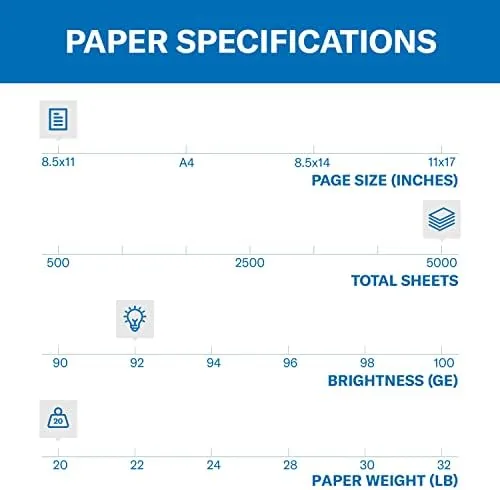
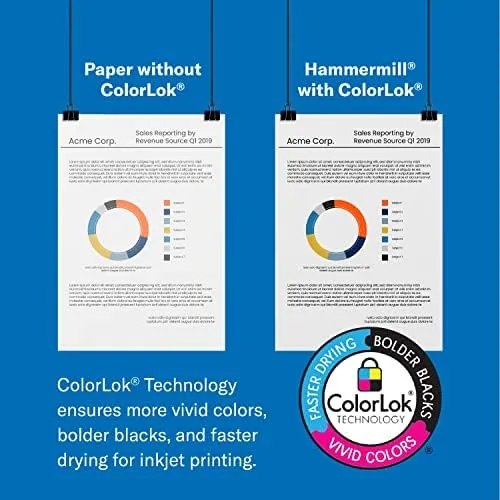
Open a ream and the first impression is the edge. The sheets cut clean, with none of the fuzzy fiber dust that budget reams shed into your hands and, eventually, into the printer rollers. The paper has the smooth, lightly coated feel of ColorLok stock, and at 20 lb bond weight it carries enough body to feel real in the hand without turning a case into a weightlifting event. The 92 brightness sits in the sensible middle, a neutral white that photographs well and reads cleanly without the clinical glare of a 98 brightness premium sheet.
Key Features
The core spec is unglamorous and exactly right for daily work: 8.5 x 11 inches, 20 lb bond, 92 brightness, and 5,000 sheets packed as ten 500-sheet reams. Hammermill also makes a point of the Made in the USA origin, printing it right on the sleeve, and the mill sourcing matters to buyers who want domestic production rather than the cheapest import.
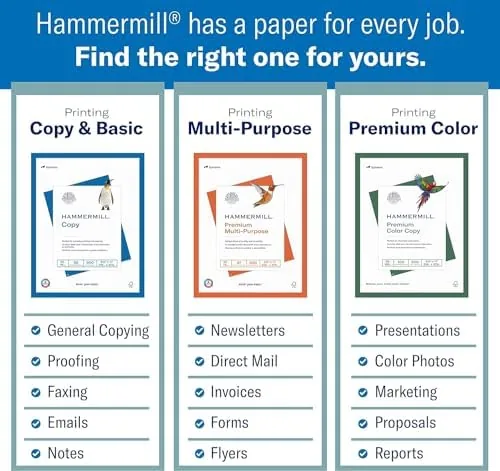
ColorLok technology is the hidden feature that does the heavy lifting. The finish keeps ink on the surface of the sheet instead of letting it bleed into the fibers, which means sharper edges on inkjet prints, faster drying, and less show-through when you print both sides. The paper is engineered to run in laser printers, inkjet printers, and copiers alike, so a single case covers a mixed fleet of machines without anyone tracking which tray holds which stock. If you want to compare the current price per sheet against other 20 lb options, the Amazon listing for the Hammermill copy paper case is a useful reference.
Real-World Performance
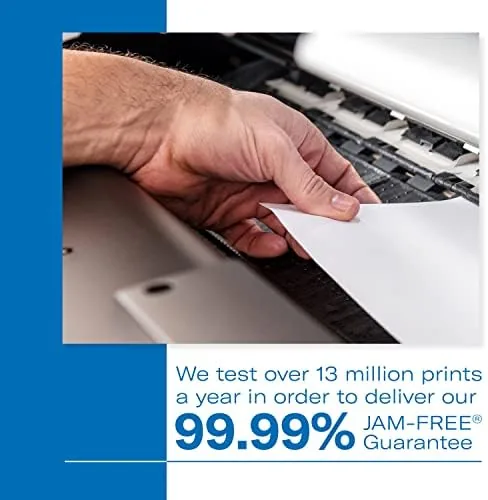
I started in the laser printer, where feeding is the true test. Over several hundred sheets I logged not a single misfeed, double-feed, or jam. Pages came out flat and stable rather than curled at the corners, and the toner bonded cleanly with no speckling, which is the failure mode that shows up when a cheap sheet cannot handle the heat of the fuser. Paper dust in the tray stayed negligible, which keeps the pick rollers happy over the long run.
The inkjet round was where ColorLok showed its value. A test page with small text, a fine-line table, and a color block printed with tight edges and no feathering, even on basic cartridges. The sheet dried fast enough that I could fold and stuff envelopes within a minute, and a dense double-sided report showed only the faintest hint of the reverse side, nothing that interfered with reading. The copier ran a 60-page double-sided job without complaint, and the finished stack came out in perfect order.
The one honest caveat is brightness. At 92, this is a working white, not a paper for glossy color presentations or photo prints, and buyers who need exhibition whites should look at premium stocks. That is the correct trade for an everyday paper, and the per-sheet cost reflects it. After a month and the better part of a case, the Hammermill sheets earned their reputation: they stay out of the way and let the printing happen.
Pros and Cons
Pros:
- Zero jams or misfeeds across laser, inkjet, and copier testing
- Clean paper edges with minimal dust to protect printer rollers
- ColorLok finish keeps ink crisp and dries fast on double-sided jobs
- Made in the USA, a real draw for domestic production buyers
- 10 individual reams make the case easy to distribute and store
Cons:
- 92 brightness is a working white, not a presentation finish
- The full case is heavy to move in one trip
- Photo and color-critical printing still needs specialty stock
How It Compares
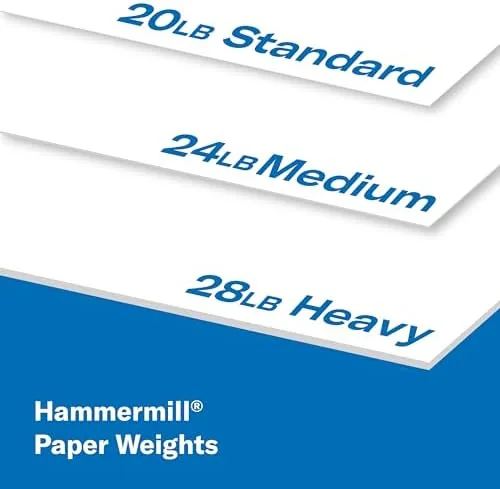
Every office has to choose between a name-brand 20 lb sheet and a cheaper generic ream, and the difference rarely shows up on the first page. I ran the Hammermill paper against a generic budget ream and a 24 lb premium stock to see where the money actually goes.
| Feature | Hammermill 20 lb Copy Paper | Generic 20 lb Budget Paper | 24 lb Premium Paper |
|---|---|---|---|
| Weight | 20 lb bond | 20 lb bond | 24 lb bond |
| Brightness | 92 | 90 or lower | 96 to 98 |
| Origin | Made in the USA | Often imported | Varies |
| ColorLok finish | Yes | No | Varies |
| Edge cleanliness | Little to no fiber dust | Sheds noticeable dust | Very clean |
| Feeding reliability | Zero jams in testing | Occasional curl and misfeed | Zero jams in testing |
Against the generic ream, the Hammermill paper wins on the quiet details: cleaner edges, steadier feeding, and better ink behavior on double-sided work. The 24 lb paper is whiter and stiffer in the hand, and it earns its higher price for presentations, but routine printing never uses that extra body. For high volume copying and standard office jobs, the Hammermill case is the better everyday value, and it is the one I kept loaded after the month ended.
Who Should Buy It
Buy this case if you run a home office, a school printer, or a small business that goes through more than a ream a month, and you want one dependable box that covers every machine in the building. It is also the right pick if you print a lot of forms and reports double-sided, where the ColorLok finish keeps both sides sharp, and if the Made in the USA origin matters to you.
Skip it if you need brighter paper for client presentations, if you print mostly high-resolution color work, or if you print only a few pages a week and want a single ream rather than a full case. For everyone else, the Hammermill 20 lb copy paper is a safe, dependable bulk buy. You can check the current price for the Hammermill 5,000-sheet case on Amazon when you are ready to stock the tray.
How We Test
I ran the full case across a laser printer, an inkjet, and a multifunction copier over a month. I logged every misfeed and jam, checked text sharpness on both sides of double-sided jobs, timed inkjet drying, and watched for curl, show-through, and paper dust buildup in the tray. I also compared the Hammermill sheets against a generic budget ream and a 24 lb premium stock to see how the differences show up in daily use.
I did not test this paper in a commercial press or for photo printing, where 20 lb stock is the wrong tool, and long-term storage behavior depends heavily on the humidity of the closet where the case sits. Independent guidance such as Wirecutter's review of printer paper is a useful way to understand how weight and brightness ratings translate into real print quality. The Hammermill copy paper listing on Amazon shows the current price and shipping details.
Hammermill Copy Paper: Questions People Ask
Is Hammermill copy paper made in the USA?
Yes. Hammermill produces this 20 lb copy paper in American mills, which is a genuine selling point for buyers who prefer domestic manufacturing and want to know where their paper comes from.
Does 20 lb copy paper work for double-sided printing?
Yes. The 20 lb bond weight with a ColorLok surface keeps dense text from showing through, and the sheets feed cleanly for two-sided jobs in both laser and inkjet machines.
How many sheets come in the case?
The case holds 5,000 sheets, split across 10 individual reams of 500 sheets each, so you can store a sealed ream per desk or per printer as the tray runs low.
Why does brightness matter for printer paper?
Brightness measures how much light the paper reflects, and a 92 rating produces a clean neutral white that keeps text crisp without the harsh glare of higher numbers.
As an Amazon Associate, I earn from qualifying purchases.