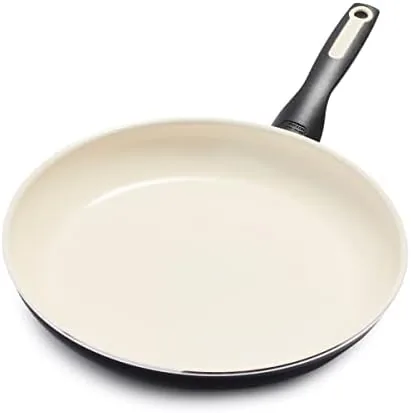

Nonstick pans are everywhere, and for good reason. Eggs release, pancakes flip, and cleanup is a quick wipe rather than a soak and a scrub. But traditional nonstick coatings carry a baggage of PFAS chemicals that many home cooks now want to avoid, and that has pushed a generation of pans toward ceramic coatings. The GreenPan Rio is one of the most popular answers. It is a 12 inch Frying Pan with a Thermolon ceramic nonstick coating that is free of PFAS, PFOA, lead, and cadmium, and it claims dishwasher safety on top of the healthy pitch. After cooking a month of eggs, pancakes, fish, and vegetables across this black skillet, I have a clear view of how the healthy nonstick promise holds up in a real kitchen.
Before the details, the standard note. This article contains affiliate links, and if you buy through one of them the site earns a small commission at no extra cost to you. That commission does not change what I test or what I recommend. The pan was used as a daily skillet for a full month.
The Rio presents itself as an everyday workhorse, large enough for a family breakfast or a single pan dinner and finished in a clean black that suits most kitchens. The rest of this review covers the design, the coating, real cooking results, and how it compares with the traditional nonstick pans it competes with.
Design and Build
The Rio is a straightforward, functional skillet. The 12 inch cooking surface sits over a lightweight aluminum body, the handle is long and comfortable with a gentle curve, and the whole pan is finished in a matte black that hides cooking marks well. The pan is noticeably lighter than a cast iron or stainless skillet of the same size, which makes it easy to lift and toss for anyone who prefers stovetop cooking.
The build quality is good for the price. The aluminum body conducts heat evenly, the handle is attached securely with no wobble, and the pan sits flat on the stovetop without rocking. The black ceramic coating is applied smoothly across the cooking surface and up the sides, giving a clean look that also makes the pan easy to judge while cooking.
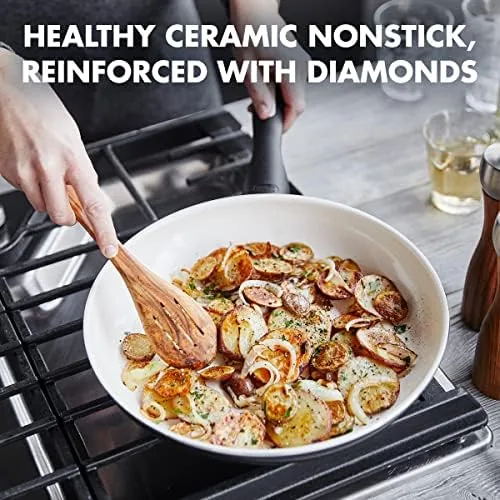
The design detail that matters most is the handle and the weight. The long handle keeps hands clear of the heat, and the lightweight body means a full pan of food is still manageable to pour or flip from. It is a sensible everyday shape with no gimmicks, built for the breakfast and dinner jobs that a home cook does daily.
Key Features
The headline feature is the Thermolon ceramic nonstick coating. Unlike traditional PTFE nonstick, which is applied as a chemical coating, Thermolon is a ceramic based coating that is free of PFAS, PFOA, lead, and cadmium. That makes the pan the go-to choice for anyone who wants a nonstick surface without the class of chemicals that has raised health concerns in recent years.
The 12 inch size is the practical centerpiece. It is large enough for a full family portion of eggs, a half dozen pancakes, a batch of sauteed vegetables, or a piece of fish with room to spare. The wide surface also makes it a good single pan dinner skillet, where a protein and a side cook together.
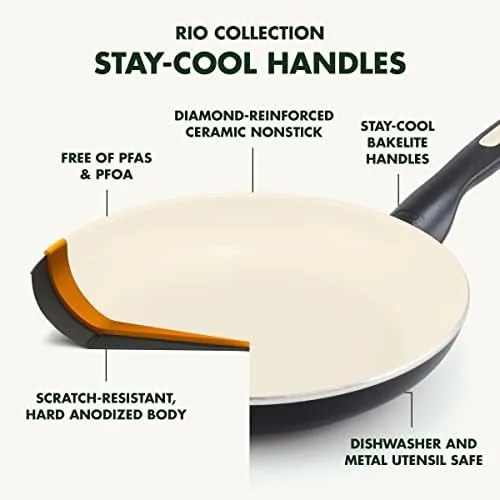
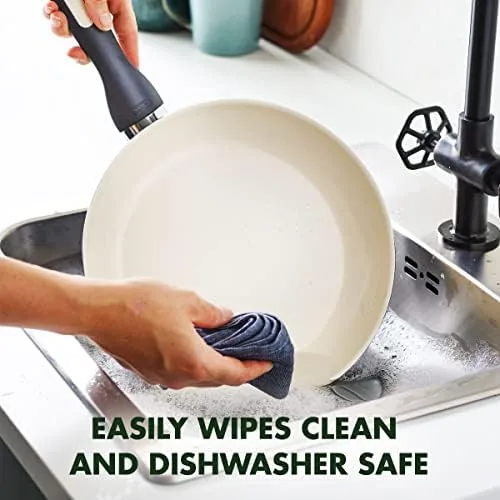
The Rio is also dishwasher safe, which is a genuine convenience for a pan this large, and it is designed to work on most stovetops. The ceramic coating is free of the chemicals in question, and the pan is lightweight enough for daily use, which rounds out a feature set aimed squarely at the health conscious home cook.
Real-World Performance
I started with the classic nonstick test, eggs. A fried egg slid off the Rio with no butter and no sticking, and a batch of scrambled eggs cooked cleanly with just a light wipe of oil. The ceramic coating performed exactly as the marketing promised on the daily breakfast jobs, and the pan cleaned up with a quick rinse and a soft sponge.
Pancakes were the next test, and the Rio handled a stack without a single stuck cake. The wide surface held three medium pancakes at once, the heat spread evenly so the edges cooked at the same rate as the center, and the release was clean on every flip. For anyone who cooks breakfast regularly, the pan earns its keep in the first week.
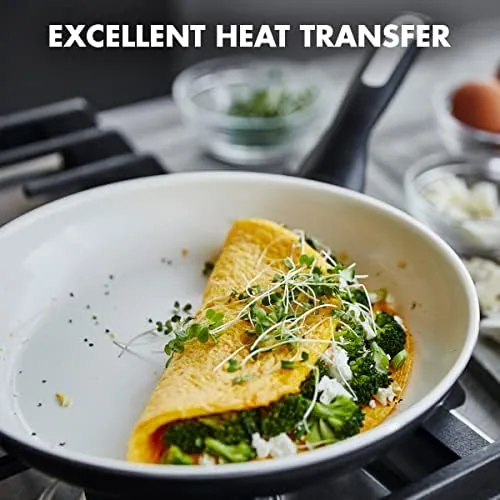
Fish and vegetables rounded out the picture. A fillet of salmon seared on one side and released without sticking, and a pan of sauteed peppers and onions cooked without burning, with the coating holding up through a month of daily use. The lightweight body made tossing vegetables easy, and the even heat meant no hot spots at the edge of the pan.
The honest limitations are the standard ones for ceramic nonstick. The coating releases food Beautifully while it is new, but ceramic does wear faster than traditional nonstick, and the slickness will fade over a year or two of regular use. The pan also prefers moderate heat, because overheating any nonstick pan, ceramic included, will shorten the coating's life, and I found the pan worked best on medium heat rather than high.
Dishwasher use is convenient, but it is worth noting that hand washing extends the life of the ceramic surface. I ran the pan through the dishwasher several times during the month and saw no immediate damage, but the gentler the cleaning, the longer the coating holds its slide. That is the practical tradeoff behind the healthy selling point.
Pros and Cons
Pros:
- PFAS-free Thermolon ceramic coating
- Food releases cleanly with little or no oil
- Even heat distribution across the wide surface
- Lightweight and easy to handle
- Dishwasher safe for easy cleanup
- Large 12 inch surface for family cooking
Cons:
- Ceramic coating wears faster than traditional nonstick
- Best used on medium heat, not high
- Hand washing extends the life over dishwasher use
- Not induction compatible on all stovetops
How It Compares
The Rio competes with traditional nonstick skillets, stainless steel pans, and the wider ceramic market. The table below lines up the options.
| Feature | GreenPan Rio | Traditional Nonstick | Stainless Steel |
|---|---|---|---|
| Coating | Ceramic, PFAS-free | PTFE | None |
| Food release | Excellent when new | Excellent | Needs oil |
| Chemical free | Yes | No | Yes |
| Dishwasher safe | Yes | Varies | Yes |
| Heat tolerance | Moderate | Moderate | Very high |
| Weight | Light | Light | Heavy |
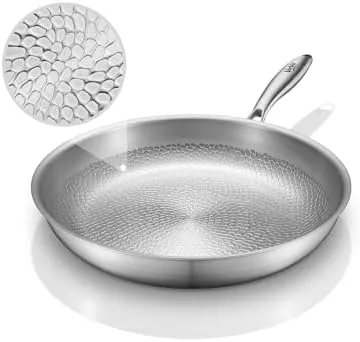
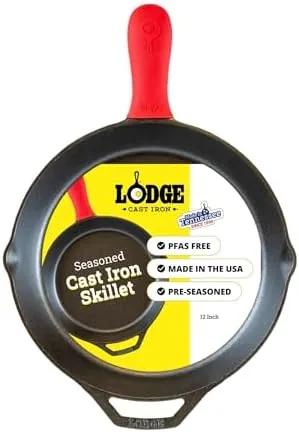
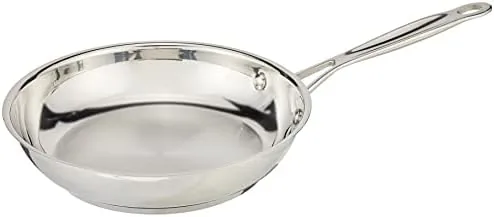
Against traditional nonstick, the Rio gives up some long term slickness and heat tolerance but wins on the PFAS-free coating that many cooks now demand. Against stainless steel, it loses searing and durability but wins on food release and easy cleanup. For the health conscious home cook who still wants nonstick convenience, the Rio is the balanced answer, and cookware guides at sites like Wirecutter's nonstick skillet guide cover this category thoroughly.
Who Should Buy It
Buy the GreenPan Rio if you want a nonstick skillet without the PFAS class of chemicals, if you cook eggs, fish, and vegetables that need a clean release, or if you want one large pan that handles both breakfast and dinner. The 12 inch surface and lightweight body make it a genuine everyday skillet for a family kitchen. You can check the current price of the GreenPan Rio 12 inch skillet on Amazon.
Skip it if you need a pan for very high heat searing, because stainless or cast iron is the better tool, or if you expect a ceramic coating to outlast a traditional nonstick pan, because it will not. For a healthy everyday skillet, the Rio is a strong and popular choice.
How We Test
I cooked with the GreenPan Rio daily for a month, covering eggs, pancakes, fish, vegetables, and one pan dinners. I tested the release of each food group with minimal oil, checked the heat distribution across the wide surface, ran the pan through the dishwasher several times to verify the claim, and monitored the ceramic coating for wear through a month of regular use.
For a broader look at the best nonstick pans and how ceramic coatings compare with traditional ones, the Wirecutter nonstick skillet guide is a useful reference. The GreenPan Rio listing on Amazon shows the current price and available sizes.
GreenPan Rio Skillet: Questions People Ask
Is the GreenPan Rio truly PFAS-free?
Yes, the Thermolon ceramic nonstick coating on the Rio is free of PFAS, PFOA, lead, and cadmium, which is the main reason to choose ceramic over traditional nonstick.
Can the GreenPan Rio go in the dishwasher?
Yes, the pan is dishwasher safe, though hand washing with warm soapy water will keep the ceramic coating performing its best for longer.
How long does ceramic nonstick last?
Ceramic coatings lose their slickness faster than traditional nonstick, typically lasting a year or two of regular use, which is the tradeoff for the healthier coating.
What is the size of this GreenPan skillet?
This model is a 12 inch frying pan, which is large enough for a full family portion of eggs, pancakes, or a single pan dinner.
As an Amazon Associate, I earn from qualifying purchases.