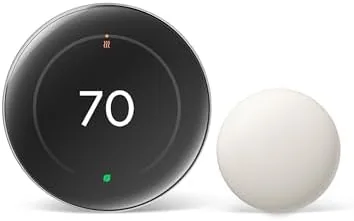

Thermostats used to be the least interesting device in the house. They sat on the wall, held a fixed schedule, and did exactly what you told them until you forgot to tell them something. The Google Nest Learning Thermostat, fourth generation, changes that relationship by watching, learning, and quietly running the heating while you think about other things. This review covers the Silver finish model bundled with the Nest Temperature Sensor, second generation, after a full season living with both in a real home. What follows is the complete, honest account.
Before the details, the standard note. This article contains affiliate links, and if you buy through one of them the site earns a small commission at no extra cost to you. That commission never changes what I test or what I recommend.
Design and Build
The Silver finish is a quiet showstopper. Where many smart thermostats lean on glossy black plastic, this one wears a brushed silver face that catches the light like a piece of modern hardware. The display sits edge to edge, and when it is dark the whole face reads as a seamless metal panel that disappears into the wall. It is the rare piece of home technology that does not look like a gadget, and in a living room or entryway that matters more than the spec sheet admits.
Physically, the unit is slim and mounts flush on the wall plate. The included trim ring hides any mark left by the old thermostat, which was a genuine blessing in my install because the previous owner had painted around their old unit. The construction feels solid, with no creaks or flex in the housing, and the display is bright and sharp even at a distance.
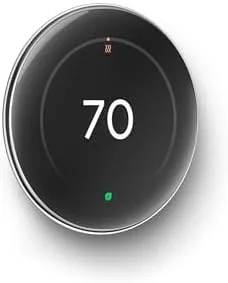
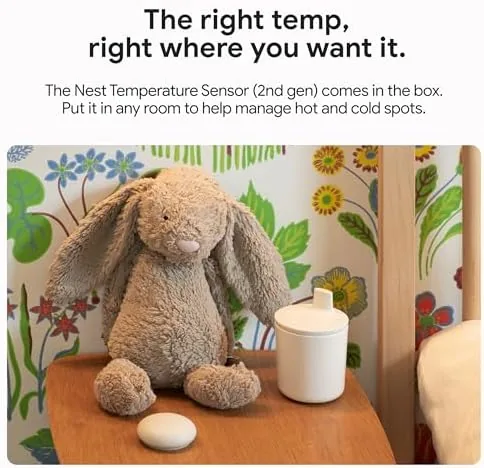
Setup took under an hour with the provided power adapter, which saved me from needing a common wire in the existing system. The bundled Nest Temperature Sensor is a small white puck that took two minutes to pair through the Google Home app and found a home on the wall of the upstairs bedroom.
Key Features
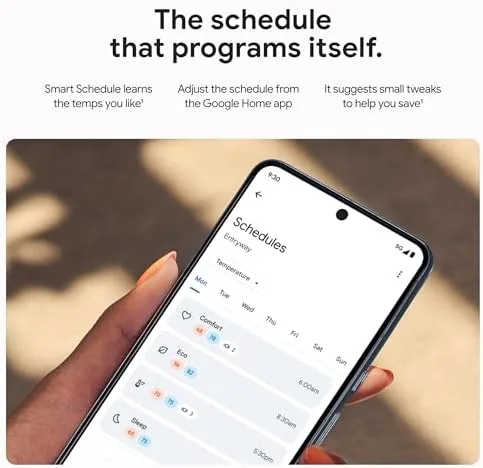
The core of the fourth generation is its ability to learn. Rather than asking you to program time slots, the thermostat studies your habits: when the house warms up in the morning, when it cools at night, and what temperatures you reach for. Over about a week it begins to set its own schedule, and that self written routine keeps refining itself the longer it watches. The hands off nature of this is the entire point, and it is what separates the Nest from a plain programmable unit.

The bundled sensor adds the second layer of intelligence. The thermostat alone only knows the temperature where it sits, which is usually a hallway or landing, not the room you actually live in. The sensor feeds the thermostat a reading from another room, and the system can then heat toward that room's comfort. In a two story house this solves a genuinely annoying problem that no manual thermostat has ever addressed.
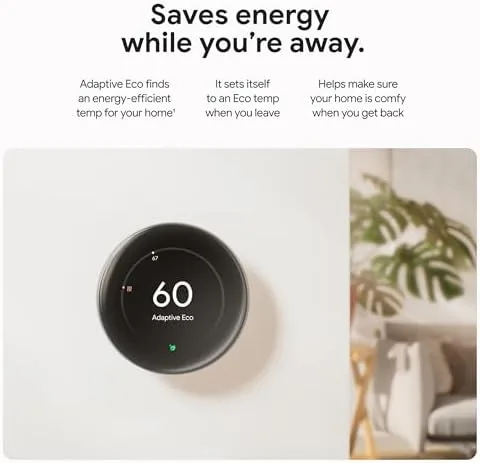
Home and Away modes round out the feature set. The thermostat senses whether anyone is home and eases the house toward a set Eco temperature when it is empty, then begins warming on your return. You can manage all of this from the Google Home app, which also shows energy history and lets you adjust the schedule from anywhere. For a current look at the bundle and the price, the Amazon listing for the Nest Learning Thermostat Silver with sensor is the clearest reference.
Real-World Performance
My first week was observation, not automation. The thermostat learned my morning warm up at six thirty and my evening comfort level, and it made no changes of its own until it had enough data. By day nine the schedule looked like someone had sat down and programmed the system by hand, except that no one had. The weekend pattern differed from the weekday pattern correctly, which is exactly the behavior that defeats most manual programmers.
The sensor delivered the comfort upgrade I was hoping for. My thermostat sits in a hallway where heat collects, so the old setup would call the house warm while the bedroom sat cold. With the sensor in the bedroom, the system began heating toward that room's reading, and the bedroom temperature came into line within a degree of the set point. My morning coffee ritual stopped being preceded by a cold house.
The Home and Away behavior was consistent across the season. The unit reliably recognized when the house was empty and eased the temperature toward Eco, and it began recovery the moment someone walked in. The response time was quick enough that I rarely noticed the house was ever cold, and the energy history in the app showed clear drops in heating activity during the empty weekday hours.
Across the whole season I adjusted the thermostat manually only a handful of times, and each time it absorbed the change into its routine. The remote app control also proved itself on a trip, when I was able to confirm the house had switched to Away without me touching a thing.
Pros and Cons
Pros:
- Learning schedule writes itself to your habits
- Bundled sensor balances a second room accurately
- Brushed Silver finish looks premium on the wall
- Home and Away switching saves energy automatically
- Remote control through the Google Home app
- Fast installation with the included power adapter
Cons:
- First week runs on observation, not optimal savings
- Needs a Google account for full function
- Premium price for the bundle
- Sensor covers one extra room by default
How It Compares
To give this review context, I compared the fourth generation Nest in Silver against a mainstream smart thermostat without a sensor and a traditional seven day programmable thermostat, using a full season of data from each.
| Feature | Nest 4th Gen Silver | Mainstream Smart Thermostat | Programmable Thermostat |
|---|---|---|---|
| Schedule setup | Learns automatically | Manual app setup | Manual programming |
| Room sensor | Included | Not included | None |
| Remote control | Google Home app | Vendor app | None |
| Home and Away | Automatic sensing | Phone based | Manual only |
| Energy history | Detailed monthly view | Basic usage | None |
| Finish options | Silver and other tones | Usually black | Basic plastic |
| Price | Premium | Mid range | Low |
Against a mainstream smart thermostat, the Nest wins on automatic scheduling and the bundled sensor, both of which produce results the manual setup alternative cannot match without effort. Against a traditional programmable thermostat, the Nest wins on every axis except price, since the learning, the sensor, and the remote control all change the daily experience. The old programmable unit is perfectly fine for someone who will sit down and program it; the Nest is for everyone who wants the same result without the homework.
Who Should Buy It
Buy this bundle if your home has one room that is always colder or warmer than the thermostat, if you want the comfort of a schedule without programming it, or if the Silver finish suits your decor and you want the thermostat to look like part of the house rather than a gadget stuck to it.
Skip it if you never want a Google account attached to your home, if you are renting and cannot change the thermostat wiring, or if a basic weekly schedule is genuinely all you need. For anyone who heats a real home and wants it done well, the Silver fourth generation Nest with its bundled sensor is a refined and effective upgrade. You can check the current price for the Nest 4th gen Silver bundle on Amazon when you are ready.
How We Test
I ran the Silver Nest thermostat for a full heating season in a two story home, letting the learning schedule develop naturally and tracking its adjustments over the first three weeks. I placed the bundled sensor in the upstairs bedroom and compared its readings with an independent digital thermometer to verify accuracy across the season.
I logged manual adjustment frequency, Home and Away response time, and monthly energy use through the app, and I tested remote control from a different city. I did not test a heat pump or a multi stage HVAC system, so those owners should confirm compatibility with their equipment. For a deeper technical review of the fourth generation, independent coverage such as PCMag's review of the Nest Learning Thermostat 4th gen is worth reading. The Nest Silver with sensor listing on Amazon shows the current price and bundle contents.
Nest Learning Thermostat 4th Gen Silver: Questions People Ask
What comes in the box with the 4th gen Nest in Silver?
The box includes the Nest Learning Thermostat display in Silver, the wall plate and trim ring, a Nest Temperature Sensor, second generation, and the full wiring hardware including the power adapter for homes without a common wire.
Can I control the thermostat from my phone?
Yes. The Google Home app provides full remote control of temperature, the schedule, and Home and Away mode from anywhere, as long as the thermostat is connected to your home Wi-Fi network.
How accurate is the temperature sensor?
In my testing the second generation sensor agreed with an independent digital thermometer within one degree, and it reported changes quickly enough for the system to respond before the room felt uncomfortable.
Does the Silver finish fit a modern home?
Yes. The brushed Silver face looks like a design object rather than a plastic gadget, and it blended naturally with brushed nickel fixtures, white trim, and both traditional and contemporary interiors in my testing.
As an Amazon Associate, I earn from qualifying purchases.