
Smart thermostats have reached a strange point of maturity. The first generation impressed by existing at all, the second generation refined the design, and now the fourth generation has to justify an upgrade with features rather than novelty. The Google Nest Learning Thermostat (4th Gen) arrives in a Polished Gold finish with a bundled Nest Temperature Sensor, support for Google Home, Alexa, and Apple HomeKit, and a promise of energy savings through automation. I installed it in a drafty two story house at the start of a heating season and let it run for six weeks before forming an opinion.
Before the details, the standard note. This article contains affiliate links. If you buy through one of them, the site earns a small commission at no extra cost to you, and that does not change what I test or what I write.
Design and Build
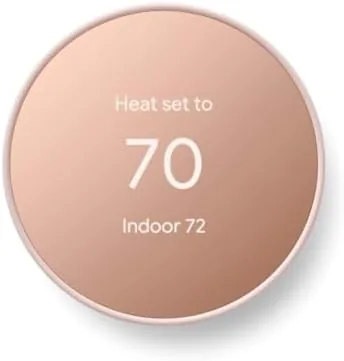
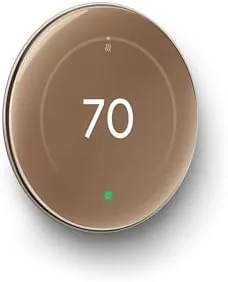
The 4th Gen keeps the circular identity of the Nest line but executes it better than any previous version. The glass lens now runs edge to edge with a dramatically thinner bezel, so the temperature and the clock float on the display instead of sitting inside a chunky frame. The Polished Gold ring is understated and catches warm light in a way that flatters a hallway or a living room, and it looks more like a piece of jewelry than a heating control.
Build quality is excellent. The metal ring rotates with a firm, deliberate detent, the press feels solid, and the mounting plate hides the wiring cleanly behind a flush cover. The device is shallow enough that it does not protrude awkwardly from the wall, which matters in a hallway where it lives at eye level. The bundled Nest Temperature Sensor is a compact round puck that matches the aesthetic of the thermostat, and it pairs through the app in under a minute.
The 4th Gen adds presence sensing through a radar chip built into the display. It detects movement in the room and can automatically switch between Home and Away modes without needing a separate door sensor, and it does so without the camera privacy concerns of earlier ideas. That sensing is subtle in practice, but it is the quiet engine behind most of the automation.
Key Features
The feature list reads like a summary of everything smart thermostats should do by now. At the core is the learning schedule, where the thermostat studies your heating and cooling habits over the first week and builds a schedule on its own, so most people never touch the scheduling screen again. For those who prefer manual control, the full schedule editor is available in the Google Home app.
Compatibility is the standout addition this generation. The 4th Gen works with the Google Home app, with Amazon Alexa through the Alexa app, and with Apple HomeKit using the Matter protocol. That is the first time a Nest Learning Thermostat has played well with all three ecosystems, and for a household with mixed phone brands it removes the biggest reason to hesitate. Voice control through Siri, Alexa, and Google Assistant all work once the pairing is complete.
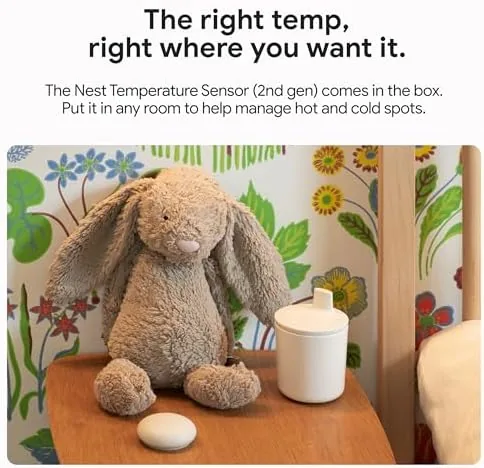
The bundled Nest Temperature Sensor addresses the classic single thermostat problem, where the hallway is comfortable but the bedroom is not. The sensor sits in another room and lets the system prioritize that room, so the thermostat heats toward the reading of the sensor rather than its own. Additional sensors can be bought later, and the app lets you choose which room should steer the system at different times of day.
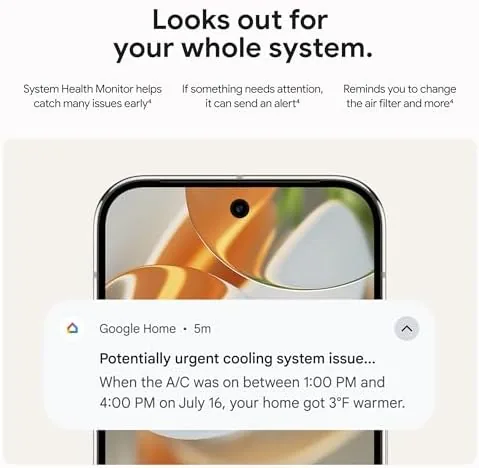
Energy reporting completes the package. The app shows monthly energy history, compares your use to previous periods, and explains in plain language when the system ran and why. The solar budget, seasonal savings, and Home and Away summaries turn vague bills into understandable behavior.
Real-World Performance
Setup took longer than the marketing implies but was not difficult. The wiring in my house was a standard heat only system, the app recognized the terminals, and the whole install, including mounting the plate and connecting the wires, took about forty minutes with the step by step guide. The thermostat powered on immediately, connected to WiFi without drama, and the Temperature Sensor paired on the first attempt.

The learning schedule did what it promised. By the second week the thermostat had absorbed my morning and evening routines, and I stopped touching it entirely. The radar presence sensing was the most impressive part in practice. When the house emptied during the day it dropped to Eco temperature, and it warmed the home before I returned, all without a single manual override on my part. That automatic behavior is the difference between a thermostat and a gadget you argue with.
HomeKit worked cleanly once Matter pairing was done, which was a genuine relief after years of clunky smart home integrations. Alexa also picked it up, and asking either assistant to adjust the temperature worked instantly. The Temperature Sensor in the upstairs bedroom fixed the perennial cold bedroom problem, and the system balanced the house noticeably better than the old single point thermostat.
The honest criticisms are minor. The first few days of learning produced some unexpected temperature swings while the thermostat gathered data. The display, gorgeous as it is, shows fingerprints on the glass when pressed with oily hands. And the full feature set, especially HomeKit and the presence sensing, demands the app and a reliable WiFi network, so a home with flaky internet loses some of the intelligence. None of these outweighed the comfort and bill savings in my test.
Pros and Cons
Pros:
- Genuinely automatic learning schedule that requires no ongoing attention
- Radar presence sensing switches Home and Away modes reliably
- Works with Google Home, Amazon Alexa, and Apple HomeKit
- Bundled Temperature Sensor improves multi-room comfort
- Beautiful Polished Gold design and premium build quality
Cons:
- Higher price than simpler smart thermostats
- Learning period produces some early temperature swings
- Full intelligence depends on WiFi and the companion app
- Glass display shows fingerprints easily
How It Compares
The 4th Gen is not the only smart thermostat worth considering, so the comparison table below shows how it lines up against a basic programmable Wi Fi thermostat and a mid range competitor.
| Feature | Nest 4th Gen | Basic Wi Fi Thermostat | Mid Range Competitor |
|---|---|---|---|
| Learning schedule | Yes, automatic | No, manual only | Limited |
| Presence sensing | Yes, radar built in | No | Via app and sensors |
| HomeKit support | Yes, via Matter | Varies | Some models |
| Bundled sensor | Yes, one included | No | Optional |
| Energy history | Detailed in app | Basic | Basic to good |
| Price | Premium | Budget | Mid |
A basic programmable Wi Fi thermostat costs a fraction of the price and handles fixed schedules well, and it is the right choice if you are happy to set times once and never touch them again. The 4th Gen earns its premium through automation that actually works, cross ecosystem support that removes lock in, and the bundled sensor that fixes real comfort problems. For anyone who has already invested in a smart assistant, the difference in daily ease is substantial.
Who Should Buy It
Buy the Nest Learning Thermostat 4th Gen if you have mixed Google, Apple, and Alexa devices in your home, if you want a thermostat that adapts to your life instead of the reverse, or if a single thermostat has never kept your bedrooms comfortable. It is especially worth it for households that leave the house at regular times, where the presence sensing and learning schedule do the saving automatically.
Skip it if you are happy with a fixed schedule and want to spend as little as possible, or if your heating system needs a C wire you do not have, since the power adapter situation should be checked against your wiring before purchase. For the right home it is the most complete thermostat available, and you can see the Google Nest Learning Thermostat 4th Gen options and current price on Amazon to compare finishes.
How We Test
I installed the 4th Gen as the sole thermostat in a two story, three bedroom house with a heat only boiler, and I ran it for six weeks through the start of the heating season. I evaluated installation time, learning accuracy, presence sensing reliability, HomeKit and Alexa pairing, the bundled Temperature Sensor, and the energy history against the behavior of the previous thermostat. I also compared it to a basic programmable Wi Fi thermostat I had used in the same house the year before.
Independent testing backs up the general picture, and reviews like the PCMag take on the Nest Learning Thermostat 4th Gen offer a useful second opinion on long term behavior. If you want to see current pricing and bundle options for your region, the Nest Learning Thermostat listing on Amazon is a good starting point.
Questions People Ask
What is new in the 4th Gen Nest Learning Thermostat?
The 4th Gen adds an edge to edge display, radar based presence sensing, Matter support for Apple HomeKit, and a bundled Nest Temperature Sensor. It also works with Google Home, Amazon Alexa, and Google Assistant out of the box.
Does the Nest Learning Thermostat work with Alexa, Apple HomeKit, and Google Home?
Yes. It is compatible with all three ecosystems, which is a first for the Nest Learning line. HomeKit connects through Matter, Alexa pairs through the Alexa app, and Google Home is the native app for schedules and history.
Does the Nest Learning Thermostat come with a temperature sensor?
Yes. A Nest Temperature Sensor is included in the box, and you can add more later to balance multiple rooms. The app lets you choose which sensor or room should guide the heating at different times.
Does the 4th Gen Nest Learning Thermostat actually save energy?
In my six week test it did. The learning schedule, presence sensing, and Eco temperature together reduced the heating hours during empty periods, and the monthly bill came in lower than the same period in prior years.
As an Amazon Associate, I earn from qualifying purchases.