
The barrier between most people and a daily juice habit is not the taste; it is the prep. Peel the orange, core the apple, chop the carrot into pieces that fit the opening, then feed them one by one while the machine sputters. The Godspeeds cold press juicer tries to remove most of that friction with a 5.8 inch feed chute that claims to accept whole fruits and vegetables, plus a slow masticating auger that promises high yield without the heat of a centrifugal spinner. I put it through a week of morning juices, leafy green blends, and a heavy root vegetable session to find out which claims hold. This review is the honest result.
Before the details, the standard note. This article contains affiliate links, and if you buy through one of them the site earns a small commission at no extra cost to you. That commission does not change what I test or what I recommend.
Design and Build
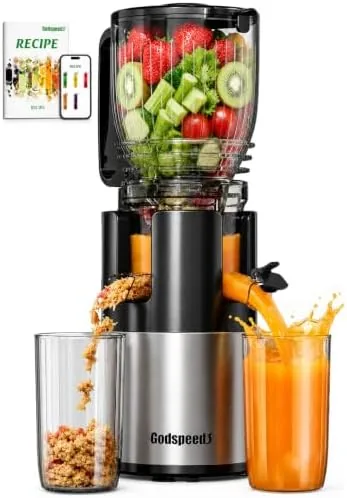
The Godspeeds juicer has the tall, upright silhouette of a modern masticating machine, with a motor base, a wide hopper on top, and a clamp that locks the parts together. The body is a matte plastic that resists fingerprints, and the finish looks more expensive than the price point suggests. The controls are simple: a single dial for reverse, off, and on, with the reverse position being the machine's answer to a jammed feed.
The wide feed chute is the centerpiece, and it dominates the top of the machine. At 5.8 inches across, it is large enough that a whole apple disappears into the hopper with room to spare, and that design choice is the reason the machine works. There is a small pusher included for stubborn produce, and the pulp cup and juice jug slide into place with a satisfying click.
Stability is solid during operation. The machine walks slightly on the counter at the highest pressure, but the suction feet hold it in place through normal use, and the locking clamp kept the hopper sealed through every session in my test week. The juice comes out of a spout on the front, and the pulp collects in a separate cup, which keeps the counter mess contained.
Key Features
The 5.8 inch feed chute is the feature that changes the workflow. Whole apples, halved pears, and small carrots drop in without pre cutting, which cuts the prep time for a morning juice from ten minutes to about three. For anyone who has lost a juice habit to the chopping board, this is the feature that wins the argument.
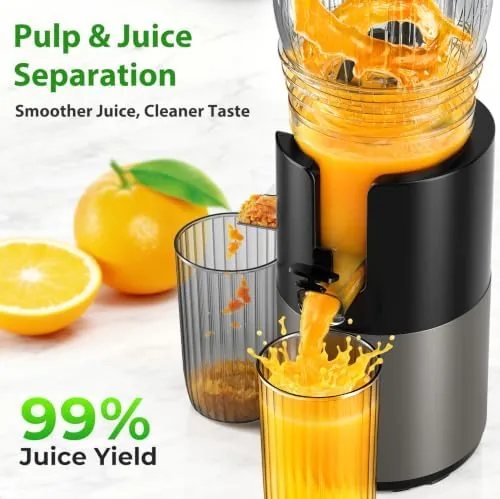
The slow masticating auger is the second headline. Instead of the high speed blades of a centrifugal juicer, a slow auger crushes and presses the produce, which keeps heat and oxidation low. The result is a richer juice that holds its color and flavor longer, and a noticeably drier pulp that means more of the fruit makes it into the glass.
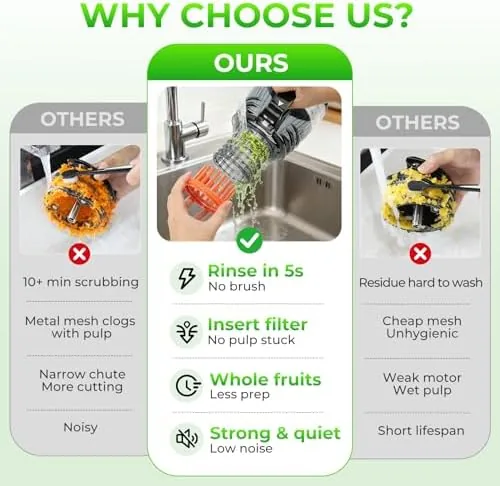
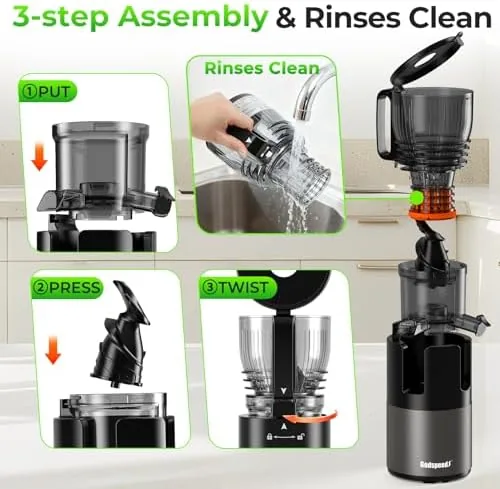
The easy to clean design is the third pillar. The juicer breaks into a handful of parts, the hopper, the auger, the mesh drum, and the cups, and most of them rinse clean under the tap. The mesh drum needs a quick brush to clear trapped pulp, but there is no maze of crevices and no motor that needs wiping, which puts Cleanup well below the average for the category.
Real-World Performance
The first test was the whole apple juice, the purest measure of the wide chute promise. I dropped three whole apples into the hopper one at a time, and each one fed through with only the pusher giving the final nudge. The yield was generous, with dry, crumbly pulp left behind, and the juice came out clear and bright. That is the test that sells the machine.
A green blend pushed the machine harder. Kale, celery, cucumber, and a green apple produced a rich, smooth juice with no fiber separation, and the slow action kept the drink tasting fresh rather than warmed by friction. The greens did create more pulp, and the mesh drum needed a brush between batches, but the machine never jammed and the reverse function was never needed.
The root vegetable session was the stress test. Beets and carrots came through cleanly, though whole beets were too dense for the chute and needed halving, an honest caveat the box does not shout about. The juice yield from the carrots was excellent, and the beet juice ran a deep, clear red. The machine handled the pressure without strain, though it was audibly louder on the dense roots than on soft fruit.
Cleanup was the daily deal breaker test, and it passed. The parts stacked into the sink, rinsed in about two minutes, and the mesh drum took one extra minute with the brush. The machine never needed a full disassembly mid week, and it dried quickly on the counter. That is the routine that makes a daily juice habit possible, and the Godspeeds clears it.
Pros and Cons
Pros:
- 5.8 inch feed chute accepts whole apples and small carrots
- Slow masticating auger delivers rich, low oxidation juice
- High yield with noticeably dry pulp left behind
- Cleanup takes a few minutes with simple rinse and brush
- Simple controls with a reverse function for jams
Cons:
- Dense roots like whole beets still need halving
- Audibly louder on hard, dense produce
- Mesh drum needs a brush, not just a rinse
How It Compares
Against the juicer market, the Godspeeds competes on whole fruit convenience, while facing a choice between high speed centrifugal models and premium slow masticating machines. The table below puts it in context.
| Feature | Godspeeds Masticating | Centrifugal Juicer | Premium Masticating |
|---|---|---|---|
| Feed chute | 5.8 inches, whole fruit | Wide, whole fruit | Smaller, pre cutting needed |
| Juice quality | Rich, low oxidation | Warm, quicker to spoil | Very rich |
| Yield | High, dry pulp | Moderate, wetter pulp | Very high |
| Cleanup time | A few minutes | Quick rinse | More parts, longer |
| Noise | Moderate, louder on roots | Loud and high pitched | Quieter |

The centrifugal juicer wins on raw speed and whole fruit chutes, but its high speed blades heat the juice and leave it spoiling faster, which defeats the wellness purpose. The premium masticating machine produces the finest juice and runs quieter, but its narrow chutes demand heavy prep and its cleanup is longer. The Godspeeds splits the difference: the wide chute removes the prep of a premium machine, while the slow auger keeps the juice quality of one. For daily wellness juicing, that balance is exactly right.
Who Should Buy It
Buy the Godspeeds cold press juicer if you want to build a daily juice habit without spending the mornings chopping, if you juice leafy greens and want the yield and richness of a masticating machine, or if a simple cleanup routine is the only thing keeping you from juicing more. The wide chute makes it the easiest masticating juicer to use daily.

Skip it if you want the maximum speed of a centrifugal machine, if you juice mostly whole beets and other dense roots, or if you want the premium quiet and finesse of a top end masticating model. For the everyday juicer, the Godspeeds is a balanced and capable pick. You can check the current Godspeeds juicer price on Amazon when you are ready.
How We Test
I ran the Godspeeds juicer through a week of daily sessions covering whole apple juice, a kale and celery green blend, and a carrot and beet root session. I weighed the produce before and the juice after to gauge yield, timed the prep and cleanup, and compared the juice against a centrifugal model on color and shelf life.
I did not run laboratory nutrient analysis, and I did not test the machine for thousands of cycles or through a full durability marathon. My focus was the daily experience, from feeding whole fruit to rinsing the parts. For broader guidance on juicer types, independent coverage such as The Spruce Eats juicer guide is a useful read before you spend.
The Godspeeds juicer listing on Amazon shows the current price and color options.
Godspeeds Cold Press Juicer: Questions People Ask
Does the wide feed chute really accept whole fruit?
In my testing the 5.8 inch chute swallowed whole apples and small carrots without pre cutting, though very dense roots like beets still did better when halved.
Is the juice really cold pressed?
Yes, the slow masticating auger crushes rather than spins at high speed, which keeps heat and oxidation low and the juice richer than a centrifugal juicer.
How hard is the juicer to clean?
The parts come apart into a handful of pieces that rinse clean in a couple of minutes, though the mesh drum needs a quick brush to clear trapped pulp.
How much juice yield can I expect?
Yield depends on the produce, but in my tests the masticating action produced noticeably more juice from greens and softer fruit than a high speed juicer.
As an Amazon Associate, I earn from qualifying purchases.