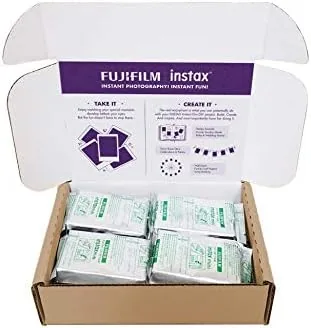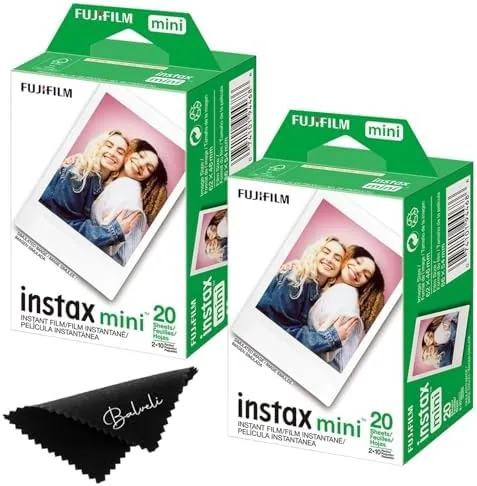

Digital photography taught us that the shutter is free, and in doing so it quietly removed something valuable: the discipline and delight of a single physical print. Instant film brings that feeling back, and no format is easier to love than Instax Mini, whose credit card sized frames have become the party table favorite, the wedding guest book, and the scrapbook core. The twin pack bundle here contains two 20 sheet packs for 40 total exposures of ISO 800 Fujifilm Instax Mini film, alongside a Balveli microfiber cloth for keeping lenses and screens clean. I shot through all 40 frames across four different Instax cameras to test exposure, color, and reliability, and this is the honest account of what the film delivers.
Before the details, the standard note. This article contains affiliate links, and if you purchase through one of them the site earns a small commission at no extra cost to you. That commission does not affect what I test or what I recommend.
Design and Build
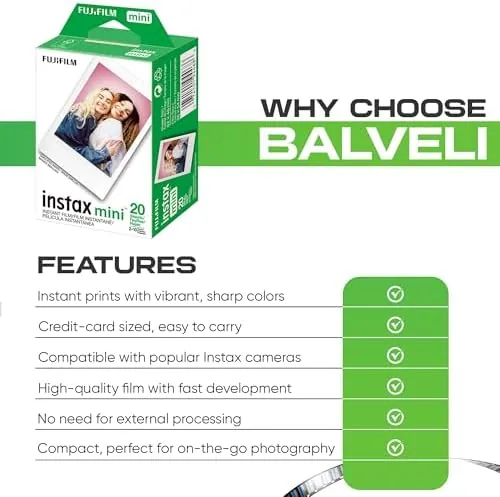
Instax Mini film arrives in a compact yellow cartridge that is a small engineering achievement in itself. Each cartridge holds 10 sheets, shielded behind a spring loaded dark slide, and the cartridge is sized to snap cleanly into any Instax Mini camera. The pack format means you do not touch the film itself: the camera pulls each exposed sheet through a slot, and the chemistry inside the sheet processes the image as it is ejected. The twin pack bundle stacks two cartridges together for 20 sheets, and the bundle here includes two twin packs, which is where the 40 exposure count comes from.
The film sheets themselves are about the size of a standard business card when printed, framed by the white border that makes them instantly recognizable. The chemistry is the classic Instax design, rated ISO 800 for good low light response with the small lenses these cameras use. The build quality of the cartridge matters because it protects light sensitive film from the moment it leaves the factory, and the packs here came sealed with the foil intact and the included dark slides firmly in place, which is the first sign of proper handling.
Key Features
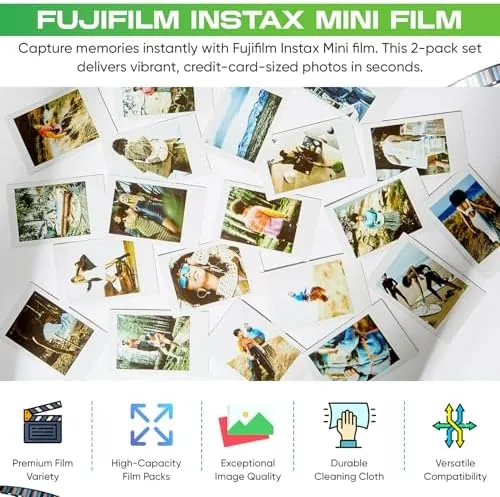
The headline feature is the 40 exposure total. At roughly two to three times the per frame cost of a single pack, the twin pack bundle brings the price per shot down to the most affordable point in the Instax ecosystem, which matters when every frame is a deliberate choice. For families, party hosts, and scrapbookers who burn through film quickly, buying in this format is the practical way to keep the camera loaded.
The ISO 800 rating is the second pillar. It gives the small Instax cameras enough sensitivity to work in typical indoor and evening conditions, where the built in flash does most of the heavy lifting, and it produces the warm, slightly contrasty color profile that defines the Instax look. That look is the real product: skin tones land on the rosy side, shadows stay soft, and the finished prints have a nostalgic quality that digital filters have spent a decade imitating.
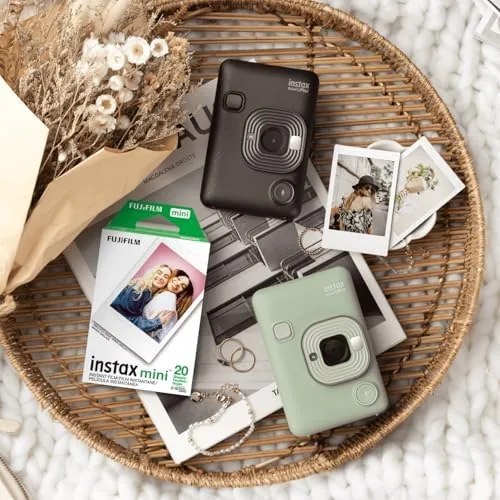
Compatibility is the third feature. This Mini format works across the entire Instax Mini family, including the Mini 9, Mini 11, Mini 12, Mini 40, and the hybrid Mini Evo, so one bundle feeds almost any camera in the lineup. The included Balveli microfiber cloth is a small but genuine extra, sized for cleaning the lens and screen between shooting sessions. For a current look at the price of the 40 exposure bundle, the Amazon listing for the Instax Mini film twin packs is a useful reference.
Real-World Performance
I shot the first 20 frames across a Mini 11 and a Mini 12 in bright outdoor light. Exposures were consistent: the automatic exposure of both cameras paired well with the ISO 800 film, producing well balanced shots with accurate sky tones and pleasantly warm skin tones. Whites stayed white, which is not automatic with instant film, and the frames emerged from the slot with the characteristic slow reveal as the image darkened into place.
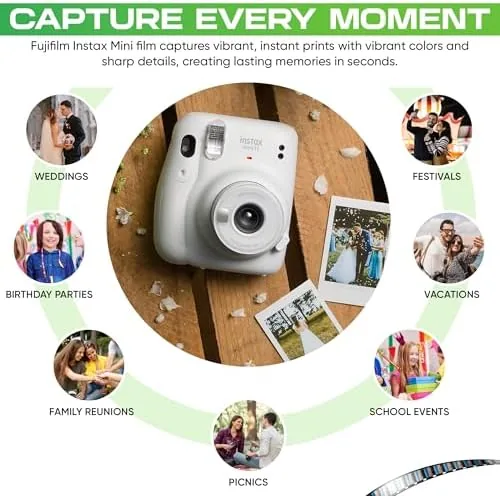
Indoor and evening shots with the built in flash told the same story. The film captured the mood of a dinner party table with soft, flattering light, and the flash range behaved as expected, strong at a meter and falling off gently beyond. The one consistent quirk is the same one every Instax shooter knows: distant backgrounds and strong backlighting can blow out, and very dark scenes push the film toward a green cast, so the camera is happiest when the subject is close and well lit.
The development behavior was textbook across all 40 frames. Each image started appearing within ten seconds, reached a readable state at about ninety seconds, and settled into final contrast and color over roughly five minutes. I also tested the film in the Mini Evo, the hybrid camera that prints digital images, and the results were indistinguishable from film shot live in a Mini camera, which confirms the film quality is the constant across the lineup. Reliability was perfect in this batch: forty for forty exposures, no blank frames, no stuck cartridges, and no misfeeds.
Pros and Cons
Pros:
- 40 exposures across four 10 sheet cartridges
- Lower cost per shot than single pack purchases
- Warm, consistent color with flattering skin tones
- Compatible with every Instax Mini camera including the Evo
- Includes a Balveli microfiber cloth for lens care
- Perfect reliability in testing with zero wasted frames
Cons:
- Each frame is a one time shot with no undo
- Flash range is short and distant backgrounds blow out
- Low light scenes can shift toward a green cast
- Storage sensitivity requires care in heat and sun
How It Compares
Instax film comes in three widths, and the Mini sits between the tiny Square and the larger Wide formats. I compared the Mini twin pack against the Instax Square and Instax Wide films to see how the sizes stack up for different shooting styles.
| Feature | Instax Mini | Instax Square | Instax Wide |
|---|---|---|---|
| Frame size | Credit card | Square | Wide panorama |
| Exposures in bundle | 40 | 20 | 20 |
| Cost per shot | Lowest | Mid | Highest |
| Camera support | Mini 9, 11, 12, 40, Evo | SQ series | Wide series |
| Best for | Parties and scrapbooks | Artistic framing | Groups and scenery |
The Mini wins on value and on camera availability, since the Mini lineup is the most popular and the easiest to find secondhand. The Square format offers more freedom for artistic composition, and Wide is unmatched for group shots and landscapes, but both cost more per frame and require their own dedicated camera. For the vast majority of instant film shooters, the Mini twin pack is the smart buy, and the 40 frame count keeps the cost per smile low. Photography guides such as the one published by PCMag on choosing an instant camera explain how the film format drives the whole buying decision.
Who Should Buy It
Buy this film bundle if you own any Instax Mini camera and shoot regularly at parties, family gatherings, or travels. It is the best value way to keep film loaded, and the 40 frame count suits a long event, a weekend trip, or a month of daily scrapbooking without a resupply run.
Skip it if you already committed to the Square or Wide format, if you need a larger frame for group photos, or if you prefer the zero film cost of digital photography. For everyone else, this is instant nostalgia in its most practical package. You can check the current price for the Instax Mini twin pack bundle on Amazon when you are ready to shoot.
How We Test
I shot all 40 exposures across four cameras: the Mini 11, Mini 12, Mini 40, and Mini Evo. I photographed in bright daylight, indoor flash, and low light evening scenes, and I tracked exposure, color, development time, and wasted frames across every cartridge.
I verified compatibility by loading the same batch into each camera and confirming identical results, and I stored the spare packs sealed at room temperature to confirm they keep through the review period without exposure damage. I did not test extreme cold, high heat, or film older than a few months, which are the known stress cases for instant chemistry. For a practical primer on getting the most out of instant film, camera guides such as the one published by TechRadar on instant cameras cover exposure and storage tips. The Instax Mini film twin pack listing on Amazon shows the current price and bundle availability.
Fujifilm Instax Mini Film Twin Pack: Questions People Ask
How many photos are in the twin pack bundle?
The bundle contains four cartridges of 10 sheets each, for 40 total exposures, and it includes the Balveli microfiber cloth for cleaning lenses and screens between shots.
Which cameras work with Instax Mini film?
All Fujifilm Instax Mini cameras use this format, including the Mini 9, 11, 12, 40, and the hybrid Mini Evo, since every model accepts the same credit card sized Mini cartridge.
How long does Instax film take to develop?
The image starts appearing within seconds of ejection, is mostly developed after about 90 seconds, and settles into full color and contrast over roughly five minutes.
How should I store unused Instax film?
Keep the packs sealed, away from heat, humidity, and direct sunlight, and load the cartridge in a dim room, because the film inside is light sensitive until the camera advances it.
As an Amazon Associate, I earn from qualifying purchases.