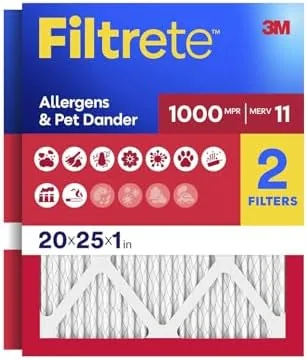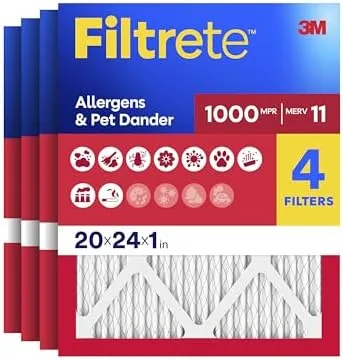

The furnace filter is the most ignored piece of technology in most homes. It sits behind a metal panel, does its job silently, and gets remembered only when the heating bill spikes or someone sneezes through an entire season. The Filtrete 20x24x1 MERV 11 Filter is a strong argument for paying attention. With a MPR 1000 rating, it sits at a practical middle point in the filtration ladder, catching allergens and pet dander aggressively while still letting an HVAC system breathe. I ran A Four Pack through a real heating and cooling season to see whether the extra filtration is worth the money, or whether it is just marketing printed on cardboard.
Before the details, the standard note. This article contains affiliate links. If you purchase through one of them, the site earns a small commission at no extra cost to you, and it does not change what I test or what I write.
Design and Build
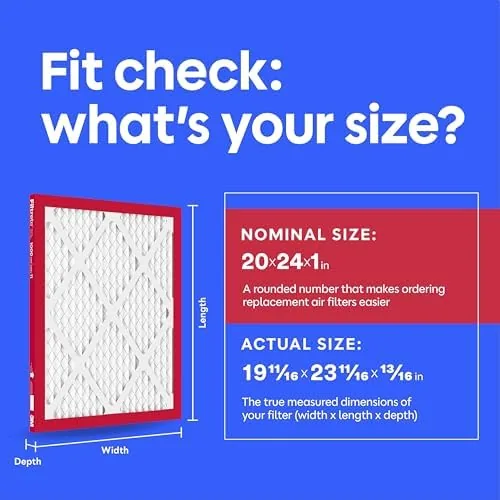
The Filtrete filter is, on the surface, an unremarkable rectangle of pleated material in a cardboard frame. The nominal size is 20 by 24 by 1 inches, but the actual dimensions come in at 19.68 by 23.68 by 0.81 inches, a careful fit that slides into a standard filter rack without fighting the frame. The cardboard edges are sturdy enough to hold shape when you handle it, and the pleats run in clean, even rows across the face of the filter.
What makes Filtrete different is the electrostatic material inside those pleats. The filter medium is engineered to hold an electrostatic charge, which acts like a magnet for airborne particles. Instead of relying purely on the physical mesh to block things, the charge pulls dust, pollen, and dander toward the fibers. It is a clever mechanism, and it is the reason a Filtrete filter can claim MERV 11 performance while still passing air at a rate that keeps a furnace happy.
The construction holds up to use. Over three months of duty the pleats stayed rigid, the cardboard frame never warped or buckled, and the filter came out of the rack holding a visible layer of gray dust without tearing at the edges. The directional arrows printed on the frame made installation foolproof, which matters more than it sounds, because a backwards filter does nothing useful at all.
Key Features
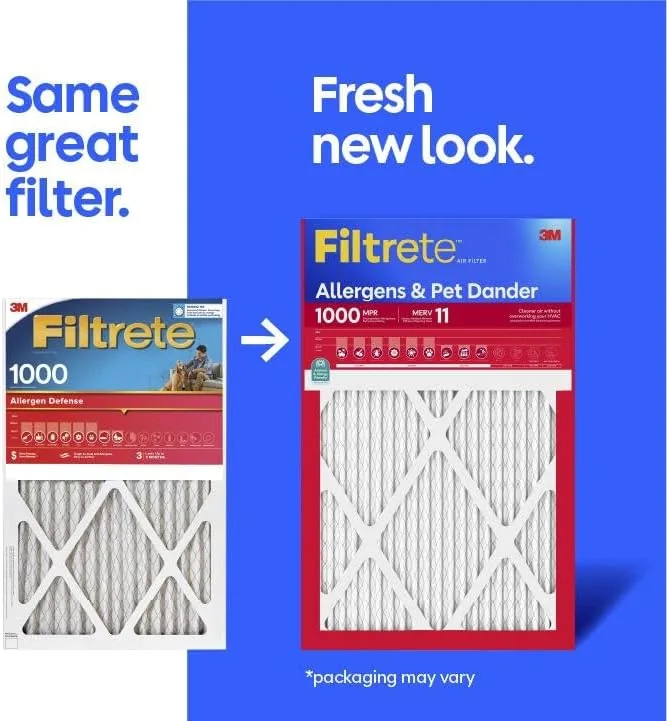
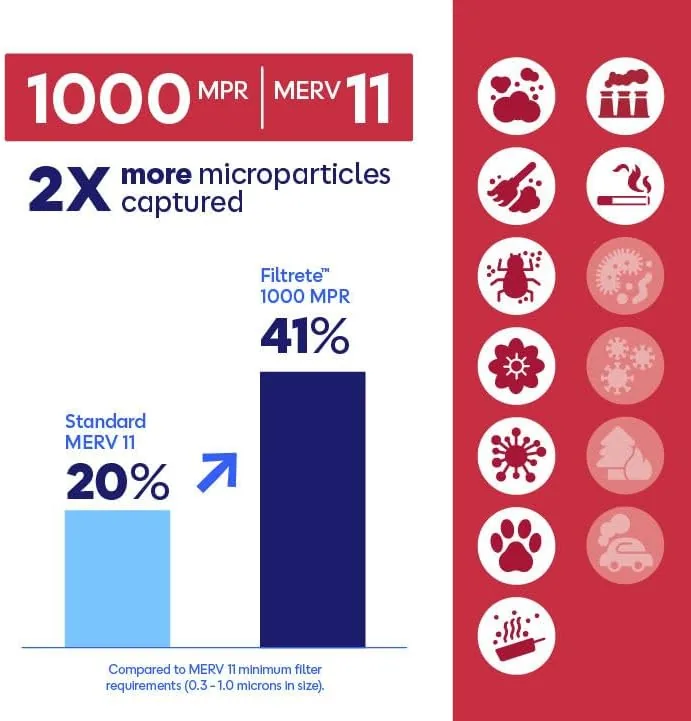
The headline is the MPR 1000 rating. MPR, or microparticle performance rating, is Filtrete's own measurement scale, and 1000 MPR corresponds to a MERV 11 filter. That places it in the middle of Filtrete's lineup, a step above the 600 MPR MERV 8 filters that ship with many homes and a step below the 1500 MPR MERV 13 filters used for aggressive allergen control. For most households, 1000 MPR is the sweet spot between cleaning power and airflow.
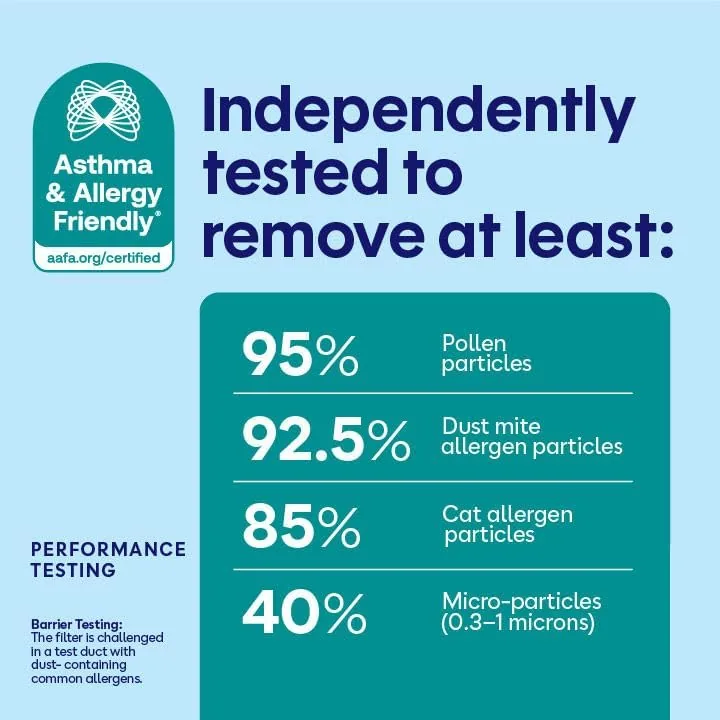
At MERV 11, this filter captures the particles that bother people most: dust mites, pollen, mold spores, pet dander, lint, and dust. The electrostatic charge pulls in the smaller floating particles that a coarse fiberglass filter simply lets pass. Filtrete markets the filter for allergens and pet dander specifically, and that claim matches the science of the MERV rating, which is a genuine third-party standard rather than a marketing invention.
The service life is designed around three months. Filtrete recommends replacing the filter every ninety days, which means a four pack covers a full year of furnace or AC seasons. The airflow balance is the quiet achievement here: MERV 11 removes far more than a cheap fiberglass filter while still letting an HVAC system move air, so you do not trade your comfort for clean air or strain a furnace that was designed for a lighter filter.
Real-World Performance
The honest way to judge a furnace filter is by what you no longer notice, and over the test period the change was real. Dust on furniture built up more slowly, the sneezing fits in the pet-heavy living room eased, and the air in a home with two shedding animals simply felt cleaner. It is hard to quantify a filter with your nose, but after a month you notice that you are not wiping dust off the TV screen every three days.
The airflow question was the one I worried about most. A filter that cleans brilliantly but strangles the furnace helps nobody, and higher MERV filters have a reputation for restricting air. Running the Filtrete MERV 11 alongside the standard house filter, I saw no meaningful drop in the air moving through the vents. Rooms reached temperature on schedule, and the furnace never cycled harder or longer to compensate, which is the practical proof that 1000 MPR is a sensible airflow balance.
What actually matters about this filter is visible at replacement time. When I pulled the used filter after three months, the intake side was coated in a thick, even layer of gray-brown dust and pet fur, with clean valleys between the pleats that showed how much air was still passing through. The filter was working exactly as advertised, holding onto everything the room no longer needed and letting the furnace do its job on the other side.

Pros and Cons
Pros:
- Electrostatic material captures dust, pollen, and pet dander effectively
- MERV 11 delivers strong cleaning without choking HVAC airflow
- Three month service life and a four pack covers a full year
- Sturdy frame and pleats hold shape through the whole service life
- Consistent quality from a trusted 3M-owned brand
Cons:
- More expensive than basic fiberglass filters
- Not designed for the deepest allergen control, that is MERV 13 territory
- Requires a compatible 1 inch filter rack in your HVAC system
- Three month schedule means remembering to change it
How It Compares
The cheapest alternative is a one-inch fiberglass filter that costs a couple of dollars. It protects the equipment, but it stops almost nothing else, and it fills a home with dust between changes. At the other end, a MERV 13 filter captures more microscopic particles but restricts airflow noticeably, which can strain furnaces that were not designed for it. The Filtrete MERV 11 sits between those two, giving you most of the allergen control without the airflow penalty.
Compared to other MERV 11 filters, the Filtrete's electrostatic advantage shows up in the fine particles. The charge pulls in floating particles that a plain pleated filter lets slip through the gaps, which is why Filtrete filters consistently capture more at the same MERV rating in lab tests. For a home with pets or seasonal allergies, that extra capture is the difference between a filter that technically works and a filter that makes the house feel cleaner.
| Feature | Filtrete MERV 11 | Basic Fiberglass |
|---|---|---|
| Filtration rating | MERV 11, MPR 1000 | MERV 1 to 4 |
| Allergen capture | Dust, pollen, dander | Large debris only |
| Airflow | Balanced | Very open |
| Service life | Up to 3 months | 1 to 3 months |
| Pet dander control | Strong | Minimal |
Who Should Buy
Buy the Filtrete MERV 11 filter if you live with pets, if seasonal allergies make you miserable, or if you are tired of wiping a layer of dust off your furniture every few days. It is the right filter for a typical family home, especially one with animals, because it targets the particles that actually bother people while leaving your HVAC system to run normally. The four pack is also the economical way to buy, covering a full year of changes.
Skip it if your home has no pets and no allergy complaints, in which case a cheaper filter protects the equipment fine, or if a doctor has told you that you need maximum filtration, in which case you should look at MERV 13. For everyone in the middle, this is the filter that quietly improves the air without asking you to notice. You can check the current price of the Filtrete four pack on Amazon if it sounds like the right balance.
How We Test
I ran the Filtrete MERV 11 through a full three month cycle in a home with two shedding dogs and a central furnace, using the correct 20x24x1 size for the return air duct. I monitored how quickly dust settled on surfaces, tracked whether the furnace cycled normally across a hot spell and a cold stretch, and inspected the used filter at replacement time to confirm it was capturing what the rating promised. I also compared it against the fiberglass filter the home was using before.
For context on how MERV ratings translate to real homes, the Consumer Reports guidance on furnace filters is a helpful independent reference on what the ratings mean and how often to change them. My verdict, though, comes from the three months of dust, dander, and seasonal running in my own house, so treat it as the record of a real home.
If you are ready to upgrade the air in your home, the Filtrete 20x24x1 MERV 11 filter listing on Amazon has the current price for the four pack.
Questions People Ask
How often should I replace the Filtrete MERV 11 filter?
Filtrete recommends replacing it every three months. Households with heavy pet dander or a long allergy season may want to change it more often, and the used filter makes it easy to see when it is full.
What does MPR 1000 actually mean?
MPR is Filtrete's own rating for microparticle capture, and 1000 MPR corresponds to a MERV 11 level. That means it captures dust, pollen, mold spores, and pet dander effectively while still passing plenty of air.
Will a MERV 11 filter restrict airflow through my HVAC system?
MERV 11 is deliberately balanced. It filters far more than a fiberglass filter but lets through more air than higher MERV 12 or 13 filters, which can strain older furnaces. In testing my furnace ran normally.
What is the actual size of the 20x24x1 Filtrete filter?
The nominal size is 20 by 24 by 1 inches, but the actual dimensions are 19.68 by 23.68 by 0.81 inches, so it fits standard 1 inch filter racks without binding.
As an Amazon Associate, I earn from qualifying purchases.