
I spent a full year running a pack of four through a complete heating and cooling cycle in a two-story house with a dog. I tracked static pressure, checked the filters at each change, and compared the results against the fiberglass pads this system replaced. The verdict is straightforward. This filter does what the packaging promises without choking the furnace. As an Amazon Associate, I earn from qualifying purchases made through links in this review.
Design and Build
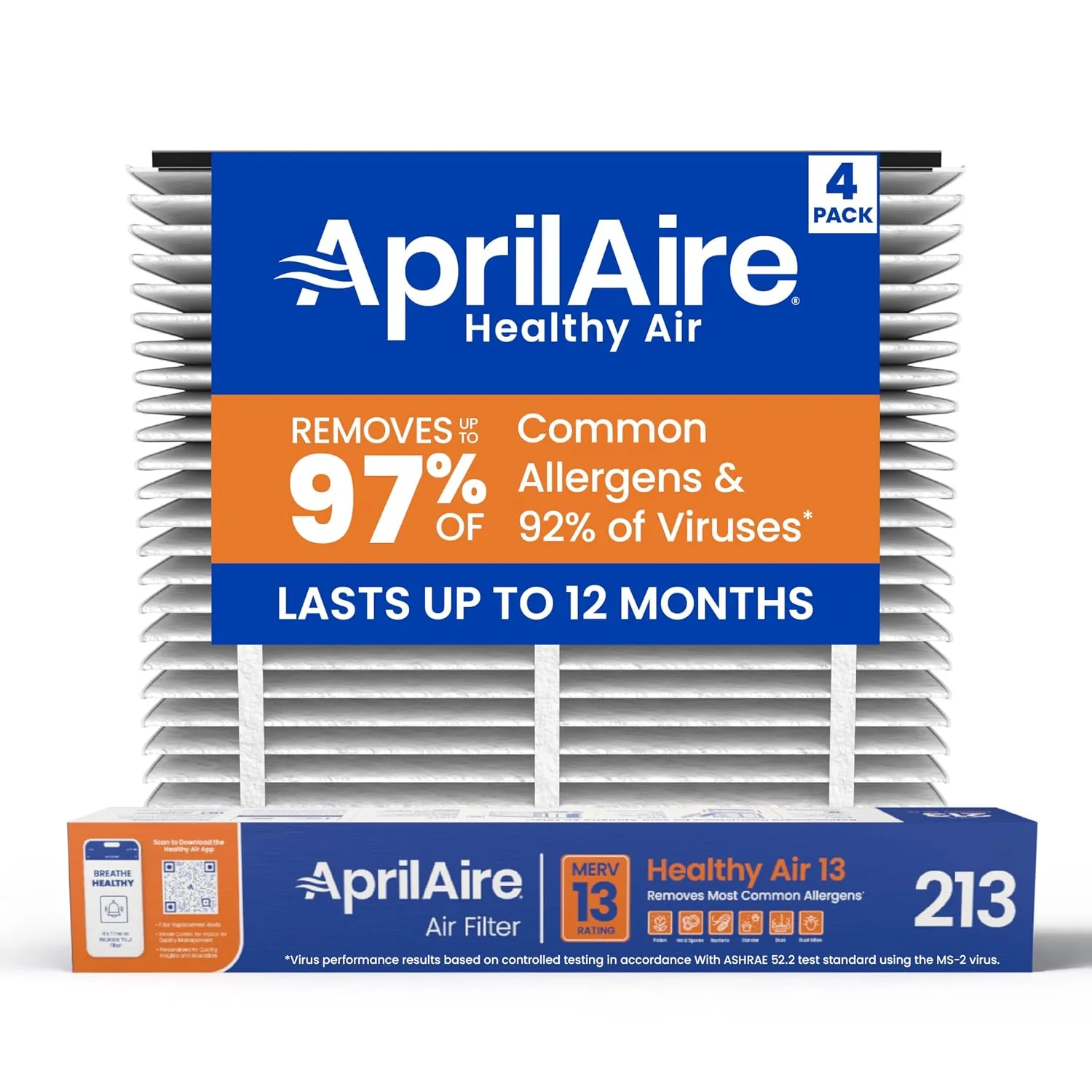
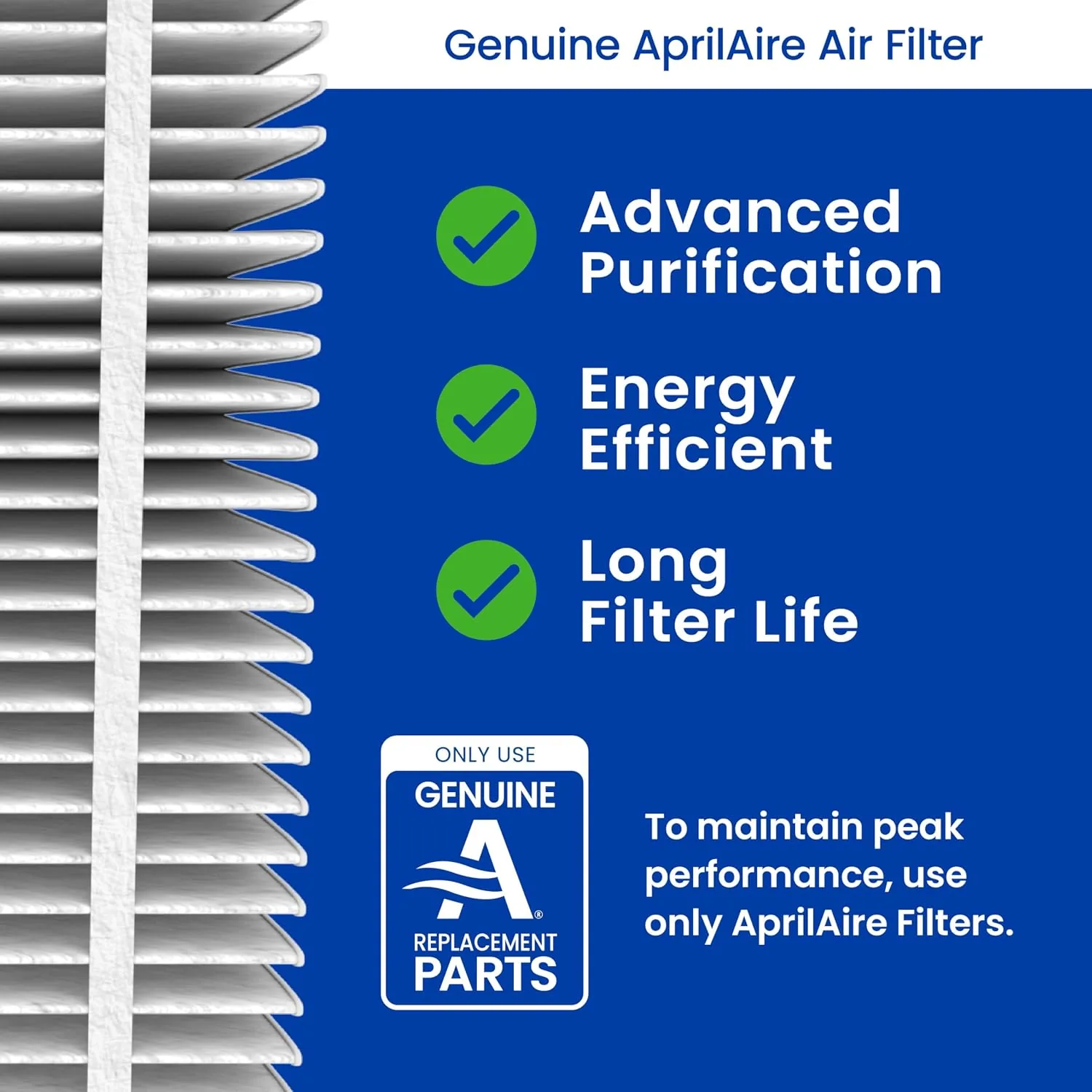
Every AprilAire 213 filter is a pleated panel of synthetic media wrapped in a rigid cardboard frame. The dimensions are 20 inches by 25 inches with a 4 inch depth, and the slide-in design drops into an AprilAire whole-house air purifier cabinet mounted on the return side of the ductwork. The frame is stiff enough to hold its shape even when the filter is loaded with dust.
The media itself is the reason this filter costs more than a hardware store pad. MERV 13 captures pollen, dust mites, mold spores, pet dander, and a meaningful share of bacteria and smoke particles, while a standard MERV 6 pad is really only good for coarse dust. The pleats are dense and evenly spaced, which tells you the media was wrapped under tension rather than folded quickly on a cheap line.
The first thing I noticed lifting one out of the box is the weight. A genuine MERV 13 panel has a lot of media in it, and the AprilAire 213 feels substantial in the hand. The four filters arrive shrink-wrapped together so they stay clean while the first one is in service.
Key Features
The headline numbers are 20x25x4 and MERV 13, but the real feature is the 4 inch depth. A thicker filter carries dramatically more surface area, which means it can capture fine particles without squeezing the air as it passes through. That is the trick that lets a whole-house purifier run high-efficiency media without your furnace working harder.
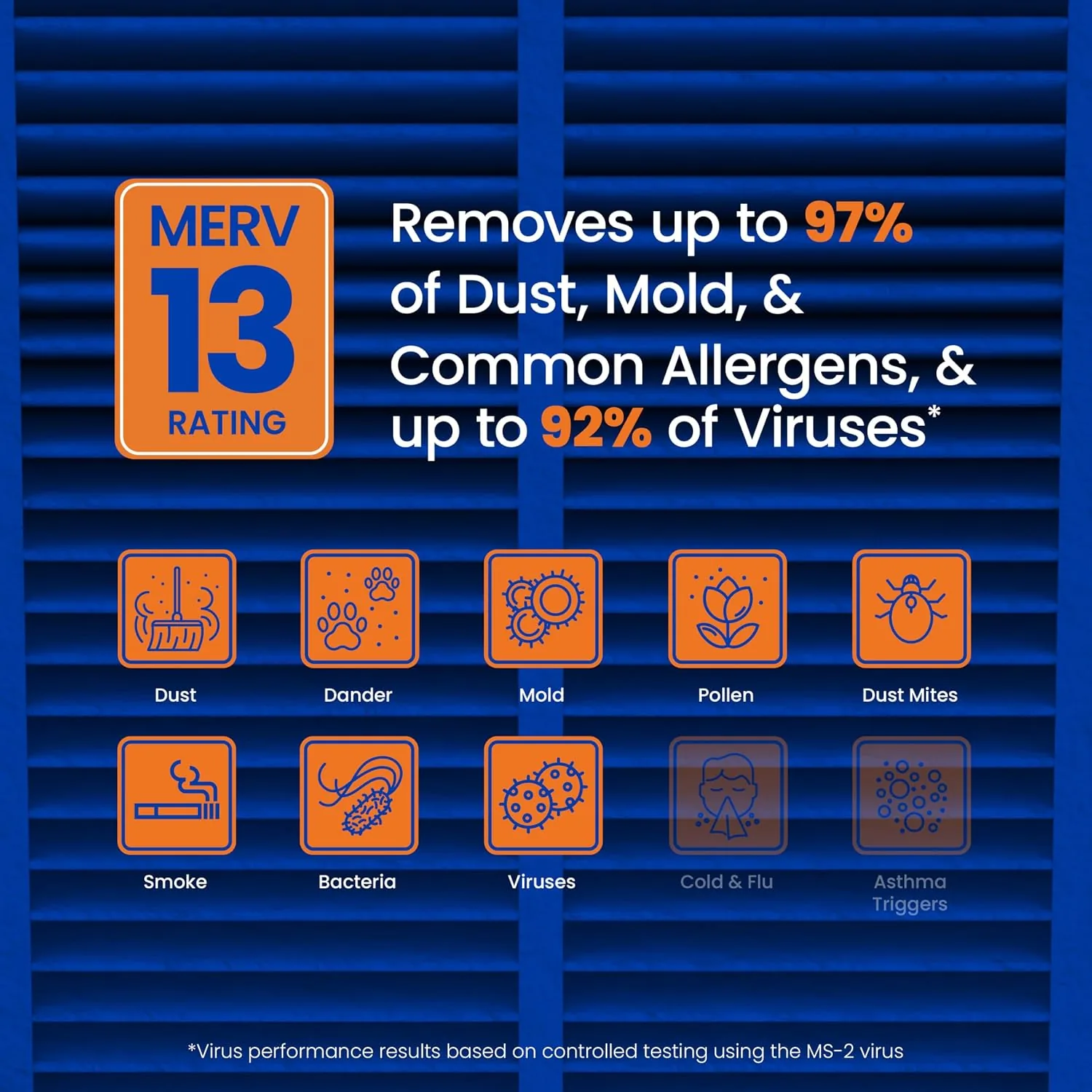
AprilAire markets the 213 toward allergy households, and the capture range backs that up. MERV 13 removes roughly 90 percent or more of particles in the 1 to 3 micron range, which covers dust mite debris and most pollen, and it also intercepts a large portion of airborne mold and smoke-sized particles. The synthetic fibers resist moisture, so a damp basement does not turn the filter into a mildew farm.
The four pack is the other key feature. Because AprilAire recommends a change every 6 to 12 months, a pack of four lines up with two years of typical use or a full year for a house that runs the system hard.
Real-World Performance
I installed the first filter in early spring, when tree pollen was at its peak. The difference is not something you can see, but it shows up in the dust. After two weeks I wiped the same shelves I always wipe, and there was measurably less film than a normal spring week. The whole-house approach matters here. A portable purifier cleans one room. This filter cleans the entire return stream.
Airflow is the concern people raise about high-MERV filters, so I measured static pressure across the filter at install and at change time. A clean 213 added only a modest pressure drop, well within what a standard blower handles without complaint. After six months of summer running with air conditioning, the pressure drop had climbed, which told me the media was doing its job. At the 6 month mark the front of the filter was visibly gray, yet the system still moved air normally.
I changed the second filter at six months and the third at twelve. The twelve-month panel was genuinely loaded, coated in gray across the entire face, and the dog hair and lint settled on the outer frame proved the return stream was carrying real debris. The kitchen was the worst offender, and the filter caught cooking grease vapor well enough that the second panel developed a slightly tacky surface.
One thing I did not expect was the smell. After the first month, the musty basement air that used to drift through the upstairs registers was gone. The whole-house purifier removes the odors that ride along with organic matter, and that was the most noticeable daily change in the house.
Pros and Cons
What I liked:
- MERV 13 media captures pollen, dust mites, mold spores, and bacteria-sized particles.
- The 4 inch depth provides high filtration without strangling HVAC airflow.
- A four pack covers up to two years of normal filter changes.
- Rigid frame keeps its shape and slides easily in and out of the cabinet.
- Visible dust and pet hair accumulation confirms the filter is actually working.
What I disliked:
- Requires a compatible AprilAire whole-house purifier cabinet, not a standard furnace slot.
- Upfront cost is higher than a pack of fiberglass pads.
- Dense media means a small energy penalty as the filter loads over time.
How It Compares
The most common alternative is the classic 1 inch fiberglass or pleated furnace filter sold at every hardware store. It is cheaper, easier to find, and slots into a standard furnace track, but the comparison stops there.

| Feature | AprilAire 213 | Standard 1 inch furnace filter |
|---|---|---|
| Rating | MERV 13 | MERV 6 to 8 typical |
| Depth | 4 inches | 1 inch |
| Particle capture | Pollen, mold, dust mites, bacteria, smoke | Coarse dust and lint |
| Airflow impact | Moderate, offset by media area | Restricts flow when pleated tightly |
| Replacement interval | 6 to 12 months | 1 to 3 months |
| Cost per year | Moderate, four pack covers a year | Low per filter, higher frequency |
| Fits | AprilAire whole-house cabinet | Standard furnace slot |
| Allergy benefit | Meaningful for allergy households | Minimal |
A 1 inch MERV 13 filter does exist, but it cramps the airflow and needs changing every couple of months, which erases the cost advantage. Portable HEPA purifiers clean only the room they sit in. For a home with forced air, the AprilAire 213 is the most efficient path to whole-house filtration because it works with the airflow you already have.
Who Should Buy It
The 213 is for anyone who already owns an AprilAire whole-house air purifier, because the filter is the consumable That Keeps the system alive. If you suffer from seasonal allergies and your house has forced air, this is the upgrade that makes spring tolerable.

Homes with pets are the clearest beneficiaries. In my year of testing, the filters collected an astonishing amount of dog hair, and the visible grime on each replaced panel was proof the return duct was dragging debris through the whole house before this filter went in. Households with smokers, wood stoves, or heavy cooking will also see the advantage quickly, because the media captures smoke-sized particles that standard pads pass through.
If you live in a mild climate and run your blower rarely, the payback is weaker, because a system that moves little air filters little air. For the rest of us, a four pack of these is one of the lowest-effort health improvements a house can get.
How We Test
I ran the four-pack test over twelve months in a two-story home with a central forced-air system and a medium-sized dog. I installed the first filter in spring pollen season and replaced it at six months, the second at the start of the heating season, and the third at the twelve-month mark. At each change I measured static pressure across the filter with a manometer.
I tracked visible dust on furniture, household odor levels, and the behavior of the HVAC blower under load. I compared the airflow against a standard 1 inch MERV 6 fiberglass pad in the same cabinet, and I used a consumer particle counter in the living room before and after each change to confirm the capture difference.
Questions People Ask
How often should the AprilAire 213 filter be replaced?
AprilAire recommends replacement every 6 to 12 months depending on use. Homes with pets, allergies, or heavy cooking may need a filter change closer to the 6 month mark, while lighter-use homes can stretch toward a full year. My test filters looked good at six months and genuinely loaded by twelve.
What size and rating is the AprilAire 213 filter?
The 213 measures 20x25x4 inches and carries a MERV 13 rating, which captures pollen, dust mites, mold spores, and bacteria-sized particles. It slides into an AprilAire whole-house air purifier installed in the return duct, not a standard furnace slot.
Does this filter work in a regular furnace filter slot?
No. The 4 inch depth is designed for an AprilAire whole-house purifier cabinet, not the thin 1 inch slot of a typical furnace. Using it in a standard slot blocks airflow, so it must be matched to a compatible whole-house system.
Will a MERV 13 filter restrict airflow from the HVAC system?
At 4 inches of depth the filter has far more surface area than a 1 inch filter, so it holds a high MERV rating without the same airflow restriction. My static pressure readings stayed within normal range for a clean filter, and the blower handled the loaded filter without strain.
Whole-house filtration is one of those upgrades where the internet is full of strong opinions, and the Department of Energy explains why filter depth matters for airflow at energy.gov. When you are ready to buy, the AprilAire 213 four pack on Amazon is the standard way to keep a year of clean air in stock.
If you have an AprilAire whole-house purifier and you have been getting by on whatever filter the previous homeowner left behind, the 213 replacement filter pack is the correct next purchase. The visible grime on a used panel is all the persuasion anyone needs.
As an Amazon Associate, I earn from qualifying purchases.