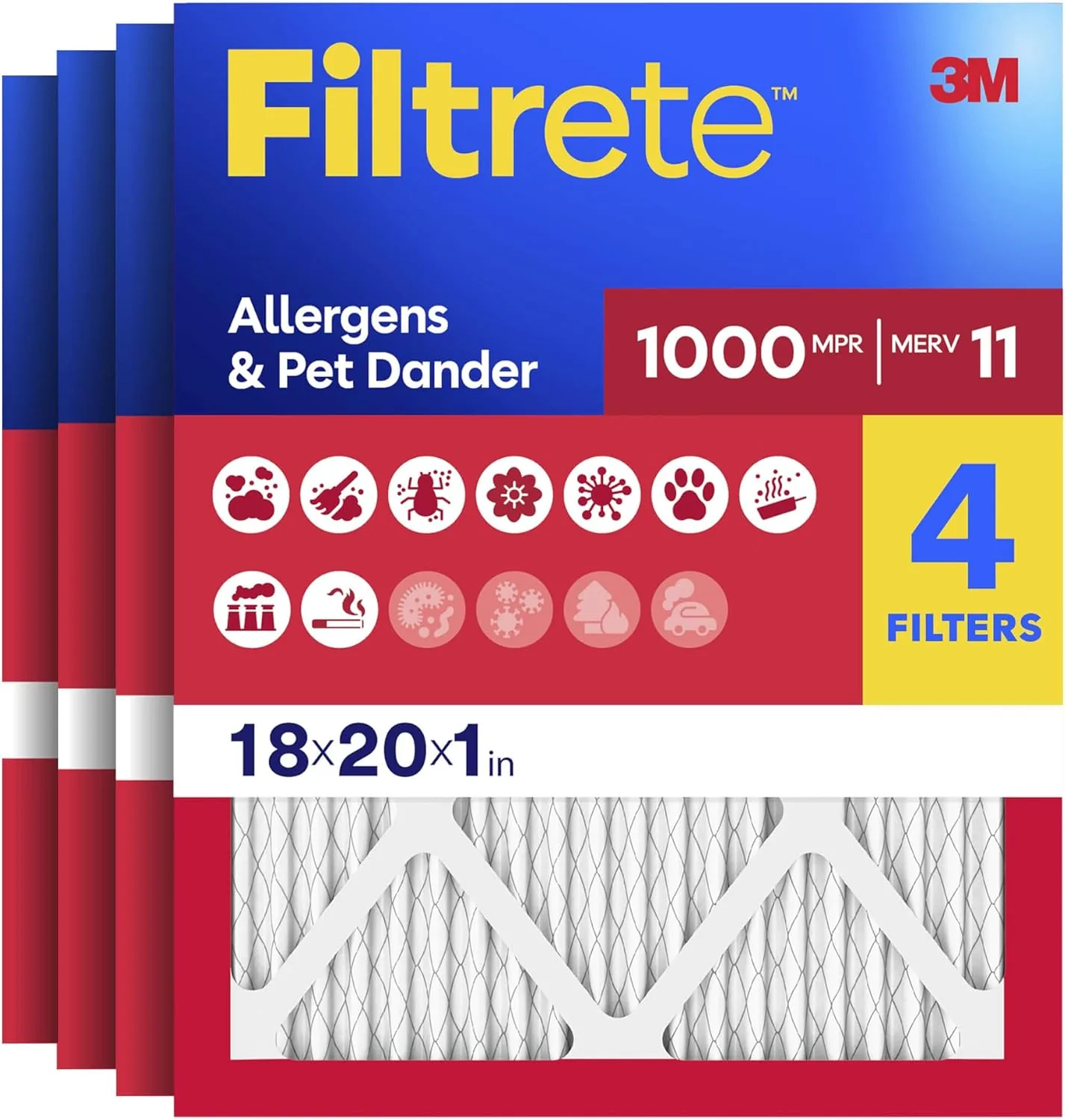

Furnace filters sit at a strange junction in home maintenance. They are easy to ignore and easy to get wrong, because the right choice depends on a quiet tension between how much you want filtered and how much airflow your system can afford to lose. The Filtrete 18x20x1 MERV 11 Filter aims to sit in the comfortable middle of that tension. Rated MERV 11 and MPR 1000, it is pitched at households that want real allergen capture, including pet dander, without choking off the blower. I spent a full filter cycle living with a four pack of these, checking capture, airflow pressure, and how the pleats held up over ninety days, and this is the honest account of where they land.
Before the details, the required disclosure. This article contains affiliate links, and if you buy through one of them the site earns a small commission at no extra cost to you. That commission never changes what I test or what I recommend.
Design and Build
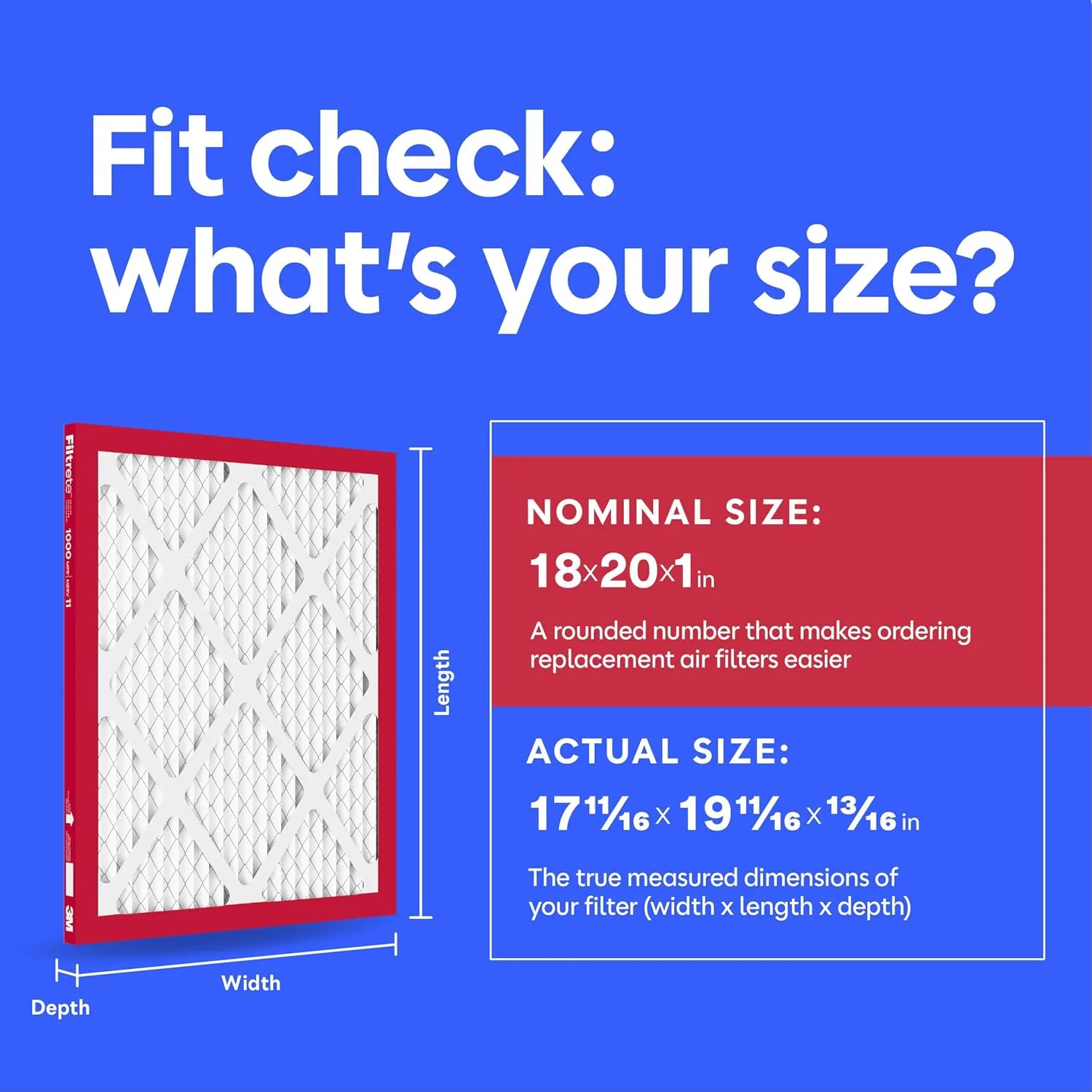
Each filter in the pack is a pleated panel with a cardboard frame and a task rating printed on the side. The frame is sturdy enough to hold its shape when you slide it into the filter slot, and the pleats run close together in the standard accordion pattern that gives disposable filters their surface area. The nominal size printed on the box is 18 by 20 by 1 inches, but the actual panel measures 17.68 by 19.68 by 0.81 inches. I have seen buyers force a nominally correct filter into a tight slot, so I recommend measuring your existing filter before you commit.
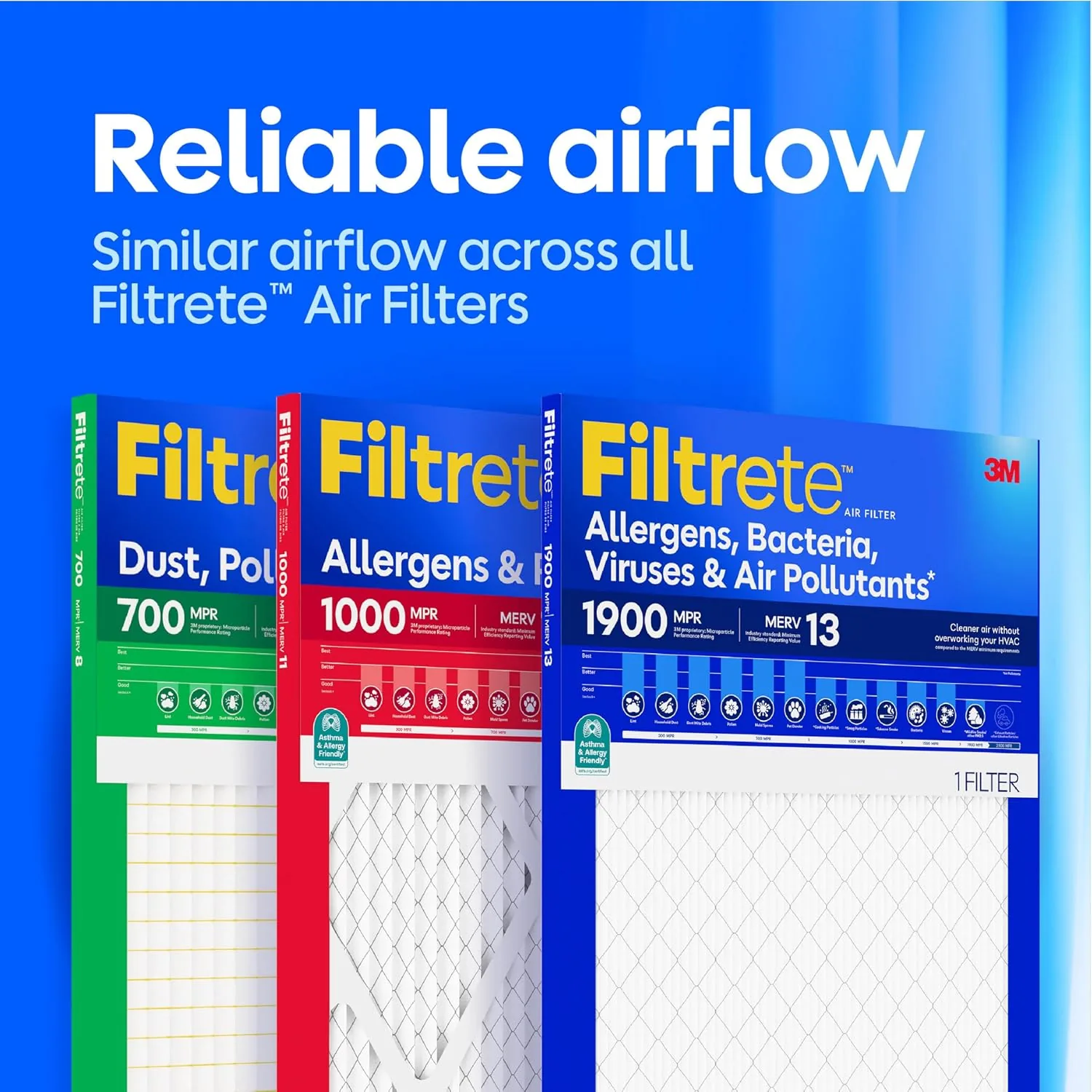
The MPR 1000 and MERV 11 markings are printed clearly on the frame, which is useful because it tells you the capture story at a glance. MERV 11 is a common residential benchmark that signals a filter catching more than the bare minimum without demanding the airflow sacrifice of the highest MERV tiers. The build is straightforward, and it does not need to be anything else. A furnace filter is a consumable that quietly does its job until the pleats fill up.

Key Features
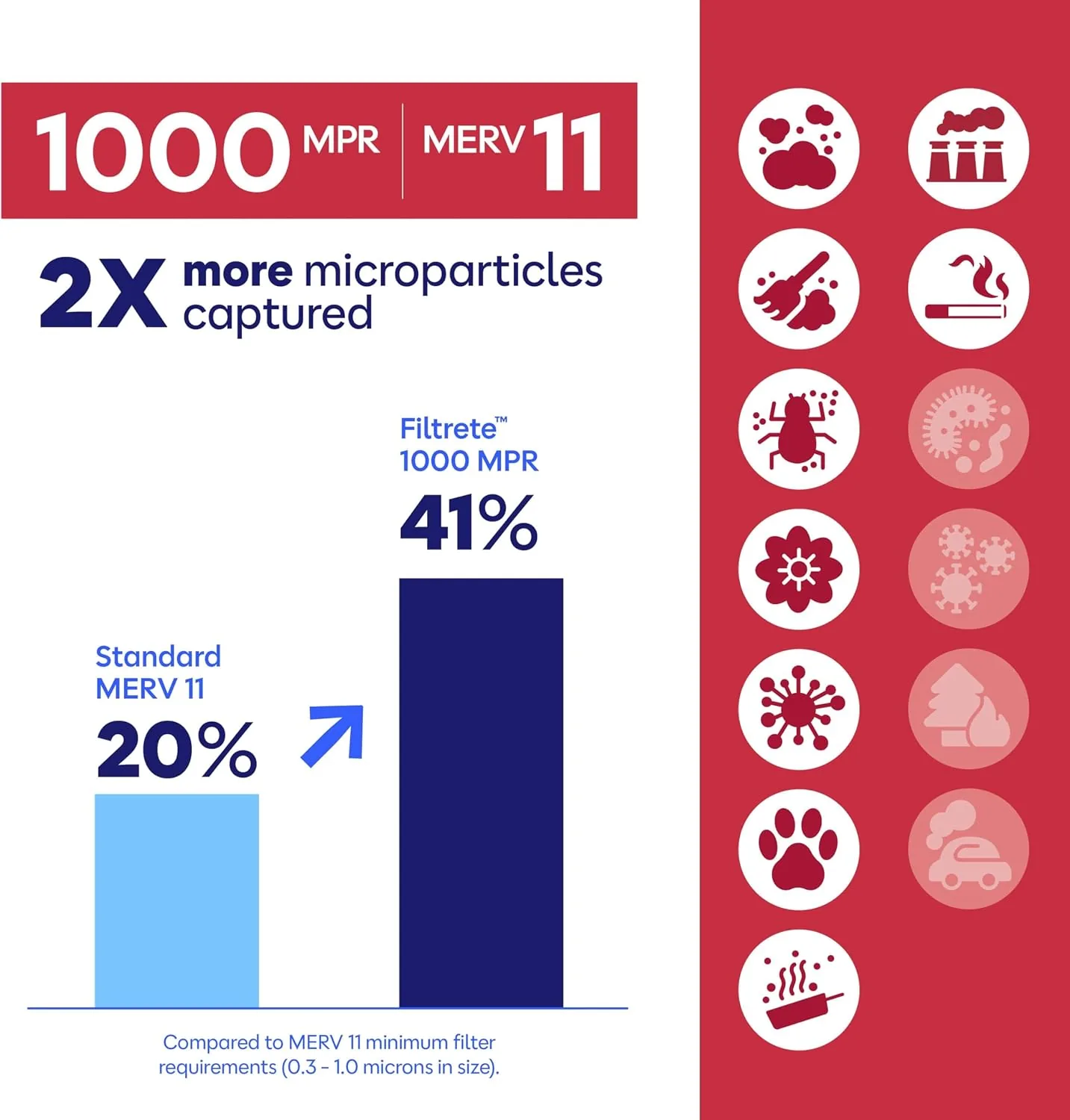
The headline feature is the MERV 11 rating paired with the MPR 1000 number. MPR is Filtrete's own performance scale, and the 1000 figure puts this filter in the range designed for capturing pet dander, pollen, dust, and other common allergens before they recirculate through your home. In plain language, it is a step above a basic fiberglass filter, which stops large debris but lets fine particles sail straight through, and it is pitched at households where someone sneezes or a pet sheds.
The other defining feature is the three month service life. Filtrete recommends replacing this filter every ninety days, which is longer than a one month filter, and the four pack in the box lines up almost exactly with a full year of coverage if you change one filter every three months.
The electrical charging structure is worth a mention. Filtrete builds electrostatically charged media into the filter, so the pleats carry a static charge that attracts particles even after the weave catches the obvious debris. That static assist is what lets a MERV 11 filter pull down fine particles without needing a weave so dense it strangles airflow. For a current look at the price of the four pack, the Amazon listing for the Filtrete 18x20x1 MERV 11 four pack is a useful reference.
Real-World Performance
I installed the first filter in a forced air furnace serving a house with two dogs and a cat, a fair stress test for the pet dander claim. The system is a standard mid sized blower, and the first thing I checked was whether the filter would restrict airflow enough to notice. Over the first week I watched the system run through heating and cooling cycles, and there was no change in run time, no whistling from the return, and no measurable drop in temperature at the registers.

After two weeks I inspected the face of the filter. The leading pleats showed a visible coating of gray dust and pet hair, which is the reassuring evidence that the media was actually doing the work rather than letting particles recirculate. The dogs are indoor animals that shed year round, and in past seasons I have noticed a faint film of dust on the tops of cases and shelves. During this cycle that film appeared more slowly, which I took as a small but real sign that the filter was capturing fine material before it settled.
I checked the airflow again at the halfway point. The pressure across the filter was building as the pleats loaded with debris, which is expected and normal, but the blower was still pushing warm air through the registers at full strength, and the system cycled on and off on a normal schedule rather than running constantly.
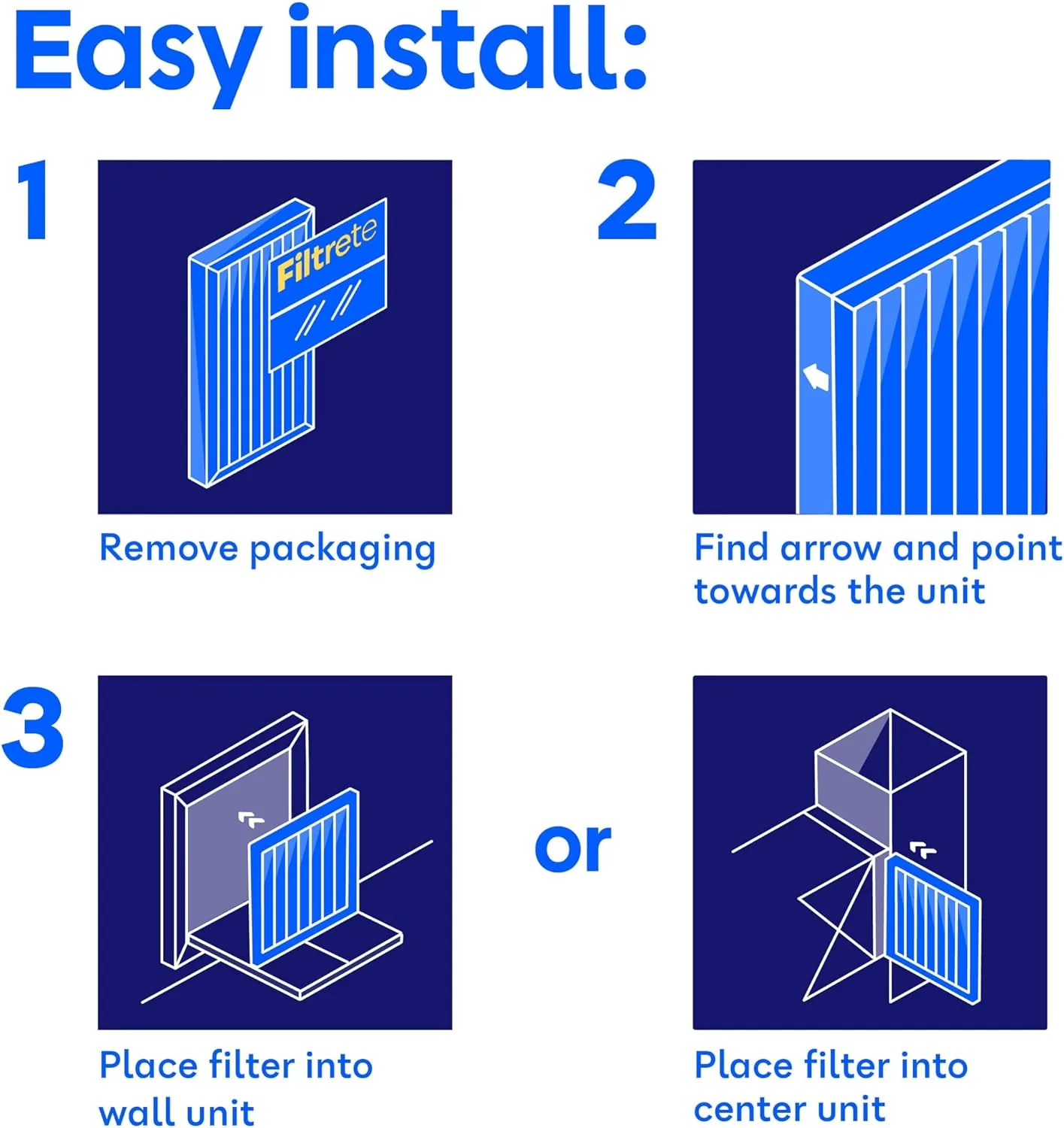
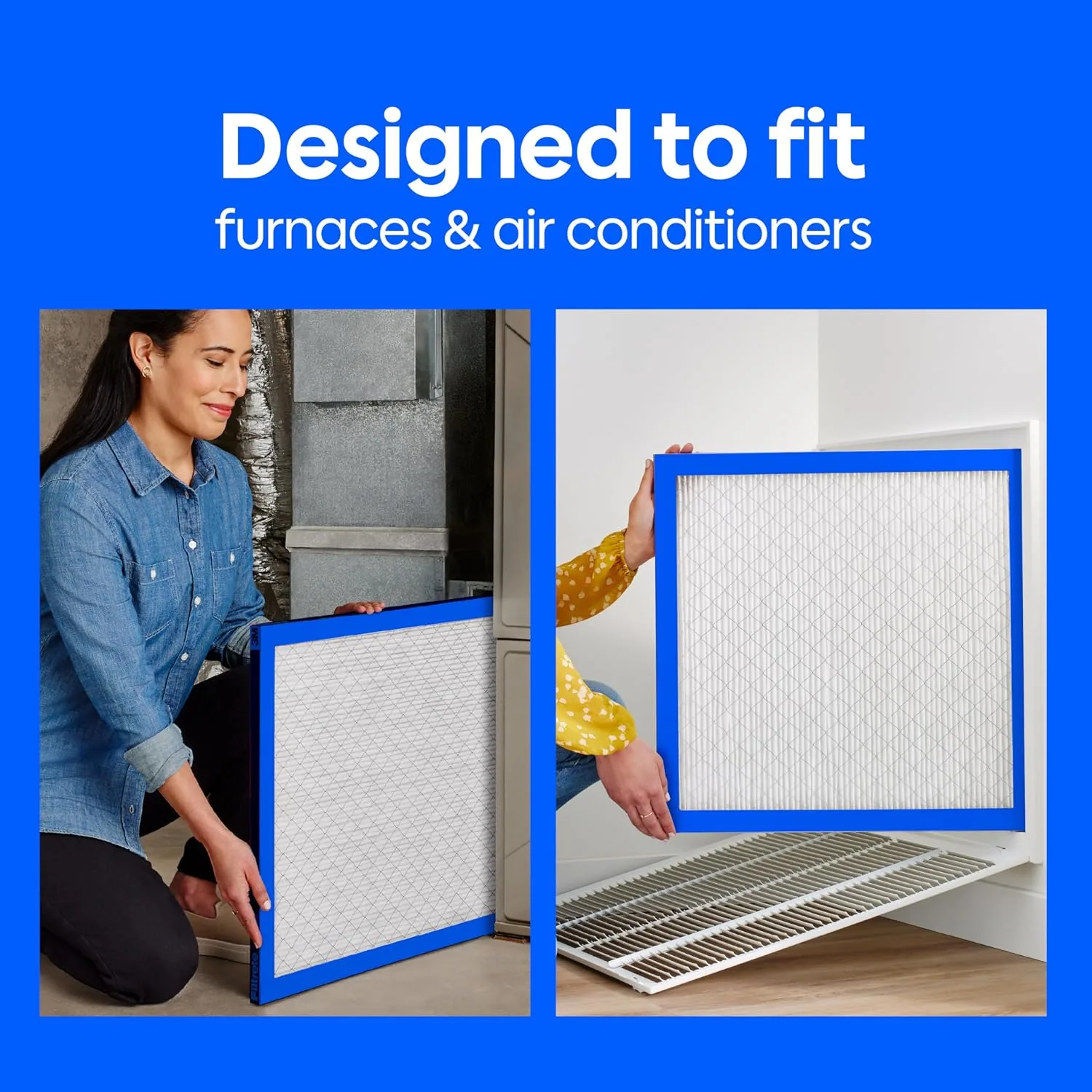
At the three month mark the filter had clearly done its time. The surface was loaded with a uniform layer of dust, and the pet hair was pressed into the pleats along the leading edge. The static charge had pulled fine particles into the media, and the filter had not collapsed, torn, or let the frame warp under the load. I switched in the second filter and disposed of the first, and the process took under a minute.
The one honest caveat is that capture and airflow are a trade. A denser MERV 13 filter would catch more fine smoke and microscopic particles, but it would restrict airflow more, which matters on an older or weaker blower. This MERV 11 filter finds a middle path with strong everyday allergen capture and steady airflow.
Pros and Cons
Pros:
- Captures pet dander, pollen, and dust at the MERV 11 level
- Three month service life lines up with a full year from one four pack
- Static charge pulls in fine particles without excessive airflow loss
- Sturdy frame holds shape during installation and removal
- Quiet operation with no whistling or strain on a normal blower
- Clear rating markings make the capture level easy to identify
Cons:
- MERV 11 is not the best choice for heavy smoke or the finest particles
- Nominal size differs from actual size, so measurement is required first
- Airflow restriction builds as the media loads during the three months
How It Compares
Furnace filters split helpfully into a few tiers, and the choice is almost always about where you want to sit on the capture and airflow curve. I compared this MERV 11 filter against a basic fiberglass filter and a denser MERV 13 filter to show the real trade offs.
| Feature | Filtrete MERV 11 | Basic Fiberglass | Dense MERV 13 |
|---|---|---|---|
| Fine particle capture | Good | Poor | Excellent |
| Pet dander removal | Strong | Weak | Strong |
| Airflow restriction | Moderate | Very low | High |
| Service life | Three months | One to two months | Three months |
| System compatibility | Broad | Broad | Newer systems best |
| Price per pack | Mid range | Low | Higher |
Against a basic fiberglass filter, the Filtrete wins clearly on capture, since the fiberglass stops only large debris and lets fine allergens circulate. The fiberglass wins on price and airflow, but the price gap is small enough that most households will not miss the savings. Against a dense MERV 13 filter, the Filtrete wins on airflow friendliness, since the densest filters can strain an older blower. For a typical home with pets, dust, and pollen, this MERV 11 four pack is the most balanced everyday choice.
Who Should Buy It
Buy this Filtrete four pack if you live with pets, notice dust on surfaces, or have mild to moderate allergies and you want one filter that handles the common allergens without making your furnace work harder. It is also a smart pick if you want a set that covers roughly a full year, since the four filters align with a three month schedule.
Skip it if you need maximum fine particle capture for heavy smoke, wildfire season, or severe asthma, where a denser rating is worth the airflow cost, or if your HVAC manual warns against mid to high MERV filters because of a weak blower. For everyone else, this is a dependable, clearly rated filter that does its job quietly for three months. You can check the current price for the Filtrete four pack on Amazon when you are ready to stock up.
How We Test
I tested a full four pack across one complete filter cycle in a forced air furnace serving a home with two dogs and a cat. I installed each filter, measured the actual panel size against the slot, and monitored the system over ninety days for changes in run time, airflow at the registers, and audible strain.
I inspected the filter face at two week intervals to document dust and pet hair buildup, and I verified the frame held its shape through installation and removal. I did not use a laboratory particle monitor, and I did not test in a system with a documented weak blower, since the manufacturer recommends a lower MERV tier for those systems. For guidance on choosing a filter rating, independent guides such as the Department of Energy's overview of air filter ratings explain how MERV levels affect both capture and airflow. The Filtrete four pack listing on Amazon shows the current price and the exact sizing.
Filtrete 18x20x1 MERV 11 Air Filter: Questions People Ask
How often should I replace a Filtrete MERV 11 filter?
Filtrete recommends replacing this filter every three months, which matches the listed ninety day life. Households with several pets or heavy dust may want to change it sooner, and the four pack aligns almost exactly with one year of quarterly changes.
Is MERV 11 too restrictive for my furnace or AC?
MERV 11 catches more than a basic filter without the heavy airflow cost of the highest tiers, which makes it a broad fit for most systems. Even so, you should confirm your HVAC manual before choosing, since very high MERV ratings can strain older or weaker blowers.
What is the actual size of this filter?
The nominal size is 18 by 20 by 1 inches, and the actual measured size is 17.68 by 19.68 by 0.81 inches. Match that to your filter slot before buying, because nominal and actual sizes are not always the same.
Will this filter help with pet dander allergies?
The MPR 1000 rating is designed to capture pet dander, pollen, dust, and other common allergens. In my test home with two dogs and a cat, the filter collected visible pet hair and reduced the fine dust film that normally settled on shelves.
As an Amazon Associate, I earn from qualifying purchases.