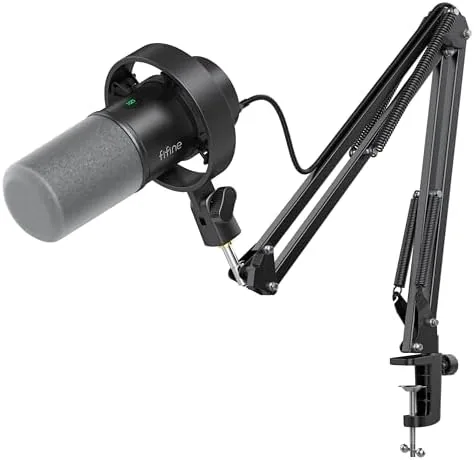

Starting a podcast or a streaming channel used to mean spending hundreds on a microphone, an interface, a boom arm, and the cables to join them all. The FIFINE AmpliTank K688CT takes a different path. It is a complete kit, a dynamic microphone, a boom arm, and all the accessories, that connects over USB to a PC or over XLR to a mixer, all in one box. I used it for three weeks of podcast recordings, streaming sessions, and voice-over work to see whether a budget all-in-one can sound professional.
This review contains affiliate links. If you buy through one of them, the site earns a small commission at no extra cost to you, and that never shapes my verdict. The kit I tested was a production unit, and every audio claim below is based on recordings I made with it.
The microphone market is crowded with condenser mics that sound thin and pick up every keyboard click in the room. The K688CT is a dynamic microphone, which is the traditional choice for broadcast and podcasting, because a dynamic capsule focuses on the voice close to it and rejects the room noise around it. The kit is built around that idea, and the rest of this review covers the sound, the build, and whether the included accessories hold up.
Design and Build
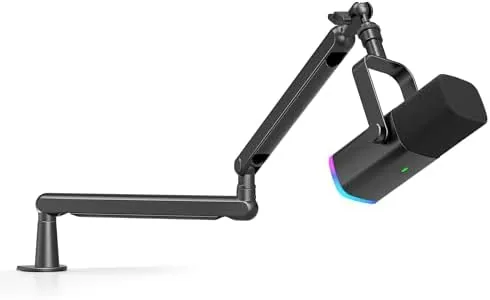
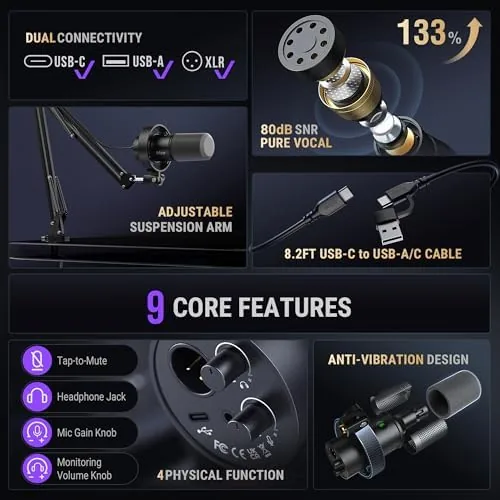
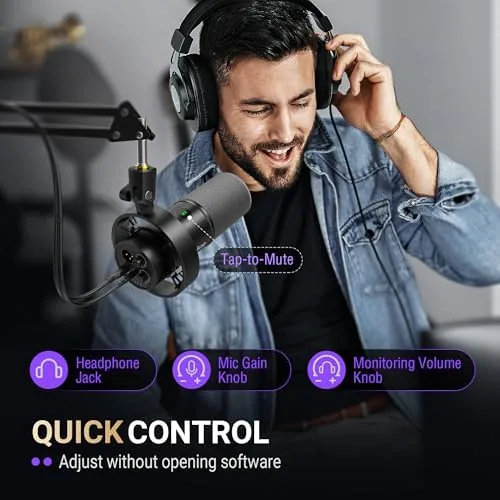
The kit is thoughtfully put together. The centerpiece is the K688 dynamic microphone, a sturdy metal-bodied mic with a grille on top, a mute button, a headphone jack, and a gain knob on its body. The mic mounts to a shock mount that isolates it from desk vibration, and the whole assembly hangs from a heavy-duty boom arm that clamps to the edge of a desk.
The boom arm is a pleasant surprise for this price range. It has three joints, a solid desk clamp, and cable-routing channels that hide the wire along the arm, so the setup looks clean rather than a tangle of cables. The arm held the microphone steady during three weeks of use, with no droop and no sagging even when I adjusted it during recordings.

The kit also includes a pop filter, a windscreen, a USB cable, an XLR cable, and a manual. Everything you need for a desktop recording setup is in the box, which is the main selling point of the kit over buying parts separately. The XLR cable matters, because it means this microphone is not locked into USB, and it can grow with you when you eventually buy a proper audio interface or mixer.
Key Features
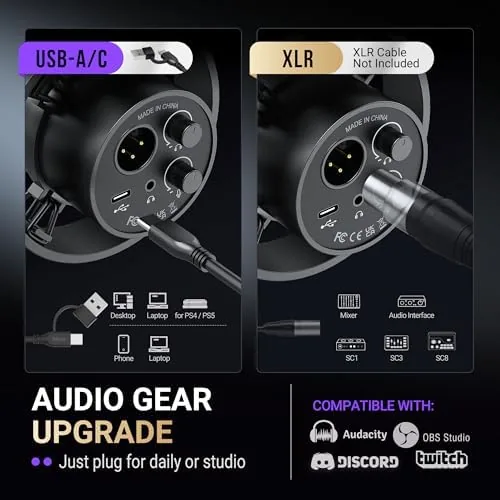
The dual connectivity is the feature that sets the K688CT apart. Over USB, the microphone plugs straight into a PC or Mac and works as a class-compliant audio device, no drivers needed. Over XLR, it feeds a mixer or an audio interface as a traditional dynamic mic, which is the path serious podcasters eventually take. Having both means one microphone covers the beginner stage and the upgrade stage.
The controls on the body are genuinely useful during a live stream. The mute button is a large, tactile switch that instantly cuts the audio, which is perfect for a cough or a side conversation, and it sits where your hand finds it without looking. The gain knob adjusts input level on the mic itself, and the headphone jack provides zero-latency monitoring so you hear yourself as you speak.
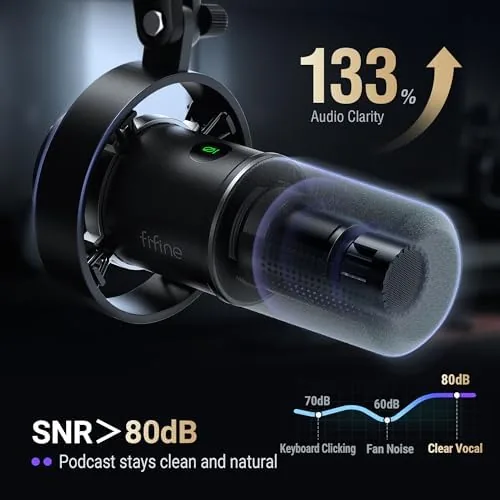
The dynamic capsule is designed to favor the voice. Where a condenser mic captures the whole room, the dynamic design rejects background noise and focuses on the sound source up close, which makes it ideal for noisier home environments. The microphone is tuned for vocal clarity, with a warm low end and a clear presence in the midrange that suits speech.
Real-World Performance
The sound quality is genuinely good for the price. I recorded a podcast episode with the K688CT over USB, and the voice came through warm, clear, and close, with no room echo and no laptop fan noise leaking into the track. Compared to the built-in laptop microphone, the difference is night and day, and even compared to more expensive condenser mics, the K688CT holds its own for speech because it rejects background noise so well.
For streaming, the mute button and headphone monitoring shine. During a live session I could cough, drink water, and answer a knock at the door without any of it reaching the stream, and the gain knob let me adjust levels on the fly without opening software. The zero-latency headphone monitoring is a feature that usually costs extra on other setups, and it is included here, which is a genuine value win.
On the XLR side, I connected the K688CT to a small mixer and it worked exactly like a proper dynamic broadcast mic. The gain on the mixer had to be set fairly high, which is normal for dynamic microphones, but the resulting sound was full and usable, and it gave me confidence that this microphone will not be the thing I outgrow in a year.
There are small trade-offs, as there must be at this price. The gain knob has a limited range, and the microphone benefits from a software boost in quieter setups, which introduces a little noise if you push it too far. The shock mount and boom arm are good but not studio-grade, and the arm will wobble slightly if your desk is not solid. None of these stopped me from producing clean recordings, but they are honest limits.
Pros and Cons
Pros:
- Dynamic capsule rejects room noise and keyboard clatter
- USB and XLR connectivity covers beginner and pro setups
- Complete kit With Boom Arm, pop filter, cables, and mount
- Mute button and zero-latency headphone monitoring on the mic
- Warm, clear vocal sound for podcasting and streaming
- Metal build that feels more expensive than the price
Cons:
- Gain range is limited, quiet setups need a software boost
- Arm wobbles slightly on less stable desks
- Not for recording instruments or wide-sounding sources
- Headphone output is fine but not audiophile grade
How It Compares
The K688CT competes with the other popular USB microphones that dominate the budget podcasting market, so it is worth a direct comparison.
| Feature | FIFINE K688CT | Typical USB Condenser | USB Dynamic Starter |
|---|---|---|---|
| Capsule type | Dynamic | Condenser | Dynamic |
| Connectivity | USB and XLR | USB only | USB only |
| Boom arm | Included | Sold separately | Sold separately |
| Mute button | On microphone | Varies | Varies |
| Monitoring | Headphone jack | Headphone jack | Headphone jack |
| Room noise | Rejects well | Picks up room | Rejects well |
| Best for | Voice in a noisy room | Silent studios | Voice on a budget |
The typical USB condenser picks up more detail in a silent room, which is why they remain popular, but they also pick up every noise in a normal home. The K688CT trades that detail for practical noise rejection, which is the better trade for most Streamers and podcasters. The included boom arm and XLR output are extras that the USB-only competition simply does not offer.
Who Should Buy It
Buy the FIFINE AmpliTank K688CT if you are starting a podcast, streaming on Twitch or YouTube, or doing voice-over work from a normal home office where you cannot control the background noise. It is the ideal first serious microphone because the kit has everything you need, the dynamic capsule fits real home conditions, and the XLR output means you will not outgrow it. It is also a strong budget pick for remote workers who want to sound professional on calls.
Skip it if you record in a fully treated silent studio and want maximum detail, in which case a condenser microphone is the better tool, or if you need to record guitar, acoustic instruments, or wide room ambience. For everyone doing voice work in a real room, the K688CT is one of the best values in the category, and you can check the current price of the FIFINE AmpliTank K688CT kit on Amazon.
How We Test
I used the FIFINE K688CT for three weeks across podcast recording, live streaming, and voice-over work. I recorded over USB into a PC and over XLR into a mixer, compared the sound against a typical USB condenser microphone, tested the mute button and headphone monitoring during live sessions, and evaluated the boom arm and shock mount for stability over sustained use.
I judged the sound with and without software processing, and I set gain both on the microphone and in the recording app to find the practical limits of the design. For independent context on budget microphones, the Wirecutter guide to USB microphones is a useful reference, and FIFINE official specifications are on the FIFINE AmpliTank K688 product page.
FIFINE AmpliTank K688CT: Questions People Ask
Can I use the K688CT with both USB and XLR at the same time?
Yes, the mic connects over USB to a PC or over XLR to a mixer or interface, and you can use either input depending on your setup.
What do the mute button and gain knob do?
The mute button instantly silences the feed for a quick cough or side conversation, and the gain knob adjusts the input level right on the mic body.
Is the included boom arm sturdy?
The kit ships with a full boom arm that clamps to a desk and holds the mic where you want it, with the cable threaded through the arm for a clean look.
Why choose a dynamic microphone over a condenser for streaming?
A dynamic capsule focuses on your voice and rejects room noise and keyboard clatter far better than most condenser mics, which matters for livestreams.
You can see the current price and kit contents for the FIFINE AmpliTank K688CT on Amazon if a complete streaming setup sounds right for you.
As an Amazon Associate, I earn from qualifying purchases.