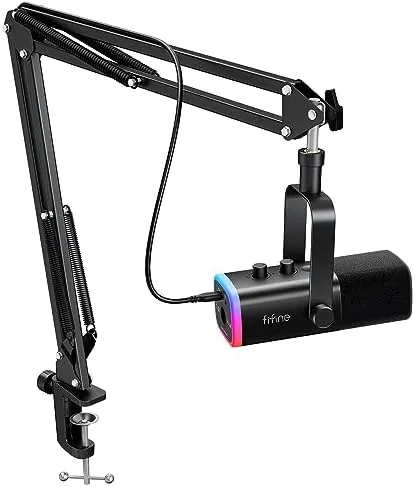

Every new streamer makes the same mistake. They spend hours on lighting and overlays, and then their audience hears the keyboard clacking, the room echo, and the dog in the next room, because the microphone was an afterthought. The FIFINE AmpliGame AM8T is designed to solve that problem in one box: a dynamic microphone, a boom arm, and a shock mount, all bundled with both USB and XLR outputs so it can grow with a setup. I built the AM8T onto my desk, ran it through streams, podcasts, and voice over sessions, and this review is the record of how it sounds and where it stumbles.
Before the details, the standard disclosure. This article contains affiliate links, and if you buy through one of them the site earns a small commission at no extra cost to you. That commission does not influence what I test or what I recommend, and the microphone reviewed here was set up and used exactly as a customer would use it.
The AM8T is a dynamic microphone, which is a meaningful design choice in a market flooded with condenser mics. A dynamic capsule is less sensitive to the room around it, which makes it forgiving in a normal home office full of hard surfaces and computer fans. This review covers the design, the dual outputs, the included accessories, sound quality in real use, and who should spend money on it.
Design and Build
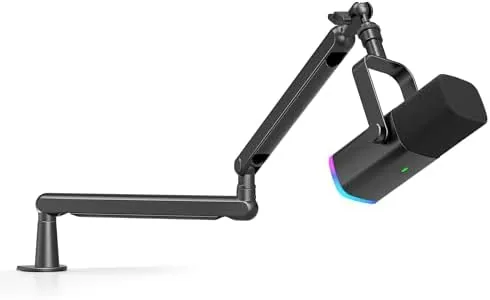
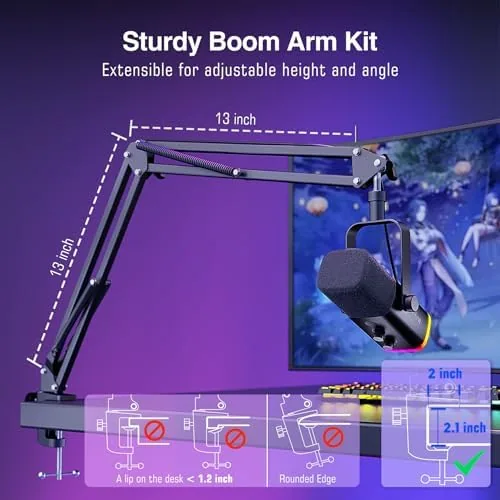
Out of the box, the AM8T feels more like a kit than a microphone. The mic itself is a chunky metal cylinder with a grille that hides the dynamic capsule, and it sits on the included boom arm with a shock mount and a foam windshield already attached. The boom arm is a genuine desktop studio arm rather than a cheap flexible tube, with a solid desk clamp and springs that hold the arm in place even when you push it around. Assembly took about fifteen minutes, and most of that was tightening the desk clamp.
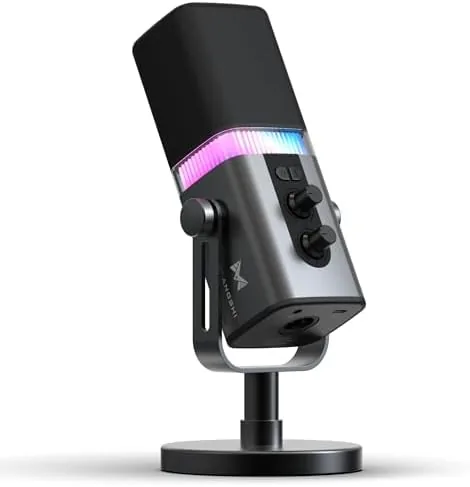
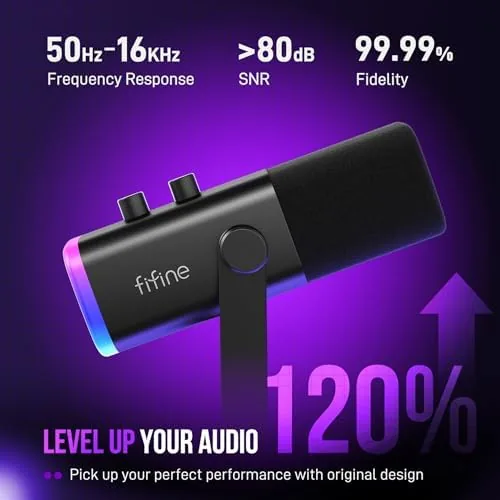
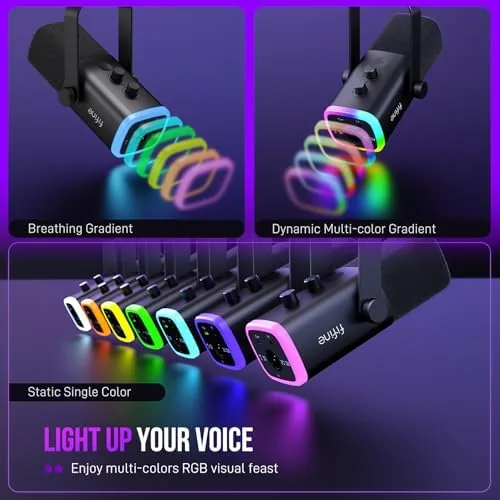
The styling is aimed squarely at a streaming rig. A ring of RGB lighting glows around the base of the capsule, and it cycles through colors or holds a solid tone, with the lighting controlled by a button on the front. Next to that button sit the mute toggle and the gain dial, and a headphone jack on the bottom lets you monitor your own voice with no lag. The metal body feels robust, and the whole assembly has the visual presence of a microphone twice the price.
Key Features
The defining feature is the dual output. The AM8T connects to a computer over USB with a built in audio interface, so it works out of the box with no extra hardware, and it also offers a balanced XLR output for when you want to run it through a dedicated audio interface or mixer. That makes it a rare budget microphone that does not need to be replaced when a streamer graduates from USB to a proper studio chain.
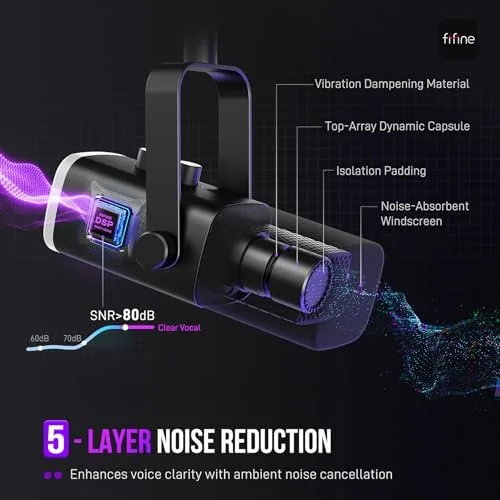
The dynamic capsule has a cardioid pickup pattern, which captures the voice in front of the mic while rejecting sound from the sides and rear. That pattern is what keeps mechanical keyboards and room noise out of the recording. The kit also includes the boom arm, the shock mount, and the pop filter, which are the accessories most competitors sell separately, and the mute button provides instant silence during a stream without touching the software.
Real-World Performance
Sound quality is where the AM8T earns its keep. In USB mode, my voice came through warm and centered with good presence, and the cardioid pattern did exactly what it should: a friend typing on a mechanical keyboard a foot away barely registered on the recording. In an untreated room with bare walls, the dynamic capsule kept the sound clean where a condenser would have picked up the entire space. For streaming and podcasting, that behavior matters more than any spec sheet number.
The XLR path is where the mic shows its range. I ran the AM8T through a small audio interface and compared the sound to the USB output. The XLR signal was slightly quieter and required gain from the interface, but it gave the same clean, present voice with a touch more headroom for processing. If you already own an interface, the AM8T integrates without a second thought, and if you do not, USB mode means you never need one.
In daily use the small things added up. The mute button sat within reach and worked instantly, the headphone monitoring had no perceptible latency, and the boom arm held position all day without sagging. The RGB lighting is a matter of taste, but it can be turned to a static color or dimmed, and it does not glow into the eyes of the person in front of it.
The weaknesses are honest ones. The gain dial on the front is easy to brush accidentally when adjusting the boom, which can change your level mid stream if you are not careful. The USB connection sometimes needs a moment to be recognized by certain apps on a fresh boot, and the included windshield sits close to the capsule, so plosive pops are tamed but heavier breathing in very close use can still register. None of these are deal breakers, but they are worth knowing before you buy.
Pros and Cons
Pros:
- Both USB and XLR outputs for easy upgrading later
- Dynamic capsule rejects keyboard and room noise well
- Boom arm, shock mount, and windshield included
- Warm, present voice quality in USB mode
- Instant mute button and low latency headphone monitoring
- Solid metal build with RGB lighting for streaming setups
Cons:
- Front gain dial can be nudged accidentally
- USB connection occasionally needs re recognition in apps
- RGB styling may not suit a professional studio look
How It Compares
The AM8T sits between the USB condenser mics that dominate the budget market and the pricier XLR studio microphones. The table below lines it up against both.
| Feature | FIFINE AM8T | USB Condenser | XLR Studio Mic |
|---|---|---|---|
| Capsule type | Dynamic | Condenser | Dynamic or condenser |
| Outputs | USB and XLR | USB only | XLR only |
| Room noise rejection | Strong | Weak | Strong |
| Accessories included | Boom arm and mount | Stand only | Varies |
| Needs interface | No in USB mode | No | Yes |
| Price | Mid budget | Budget | Premium |
Against a typical USB condenser, the AM8T wins on noise rejection and on the XLR path, which means you can keep the mic when you outgrow USB. Against a dedicated XLR studio mic, the AM8T gives away a little refinement at the high end, but it bundles everything you need to start, and it costs a fraction of a comparable studio chain.
Who Should Buy It
Buy the FIFINE AM8T if you are starting a streaming, podcasting, or voice over setup and want one microphone that will not need replacing soon. It is a strong fit for gamers who stream from a mechanical keyboard, for podcasters recording in a normal room, and for anyone who wants the option to move to XLR later without buying a second mic.
Skip it if you need a professional studio microphone with the highest possible fidelity, or if you prefer a completely unlit, minimalist look on camera. For the streaming and podcasting crowd, the AM8T is a sensible buy, and you can check the current price of the FIFINE AM8T microphone kit on Amazon when you are ready.
How We Test
I set the AM8T up on my desk and used it across two weeks of streaming, a recorded podcast episode, and several voice over sessions. I tested both the USB and XLR paths, compared the recorded audio against a USB condenser and a studio dynamic mic, and judged the boom arm, mute button, and monitoring in daily use. I also recorded test samples from an untreated room to check the cardioid pattern.
For more on choosing a microphone for streaming and podcasting, PCMag maintains a guide to the best USB microphones that is useful context for any purchase decision. The FIFINE AM8T listing on Amazon shows the current price and what is included in the box.
FIFINE AM8T: Questions People Ask
Can the FIFINE AM8T be used as both XLR and USB?
Yes, the microphone outputs through either a standard USB connection or a balanced XLR line, so it works with a computer or a dedicated audio interface.
Is the AM8T good for gaming and streaming?
The dynamic capsule rejects keyboard and room noise well, and the RGB lighting plus boom arm make it a practical fit for a streaming setup.
Do I need an audio interface for the AM8T?
Not with USB, since the mic has a built in interface that works straight out of the box, but an XLR interface unlocks the analog path for advanced setups.
How does the AM8T sound for voice over work?
Voices come through warm and centered with good presence, and the dynamic pickup pattern keeps the recording clean even in a modest untreated room.
As an Amazon Associate, I earn from qualifying purchases.